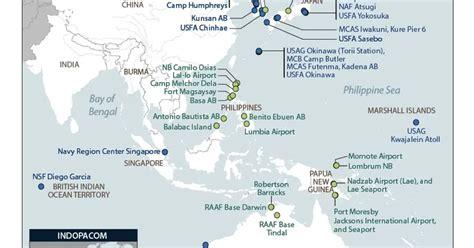
The Indo-Pacific has become the center of global military competition, with air bases serving as some of the most important pieces on the strategic chessboard. In any potential major conflict involving the United States, China, and regional allies, the opening hours could be determined not only by aircraft numbers or missile inventories but by which airfields remain operational.
Modern warfare depends heavily on speed, intelligence, logistics, and the ability to project power across vast distances. Air bases positioned along the first and second island chains provide the launching points, command networks, and logistical support required for sustained operations. These facilities allow fighter aircraft to respond quickly, surveillance platforms to monitor enemy movements, and transport aircraft to keep forces supplied.
The United States and its allies have spent decades developing a network of strategically located installations stretching from Japan and South Korea to Guam. These bases are not simply runways with aircraft parked on them. They are complex military ecosystems containing command centers, maintenance facilities, intelligence networks, missile defenses, and thousands of personnel.
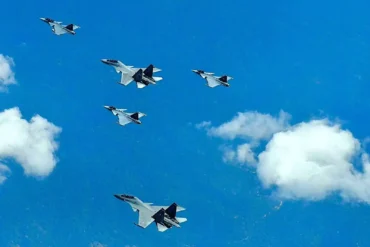
China’s rapid military modernization has made these locations even more significant. The People’s Liberation Army Air Force (PLAAF) and People’s Liberation Army Navy (PLAN) have expanded their capabilities through advanced fighter aircraft, long-range missiles, aircraft carriers, electronic warfare systems, and increasingly sophisticated surveillance networks. As a result, both sides understand that controlling the skies in the opening stages of a conflict could determine the outcome of later operations.
Among the many military facilities across the region, six air bases stand out because of their geographic positions, aircraft capabilities, and roles within the wider Indo-Pacific defense network.
Kunsan Air Base: The Forward Fighter Shield on the Korean Peninsula
Located on South Korea’s western coast, Kunsan Air Base represents one of the most forward-positioned American fighter installations in the Indo-Pacific. Operated by the United States Air Force’s 8th Fighter Wing, the base sits only a few hundred miles from China and remains within a strategically sensitive area surrounded by potential flashpoints.
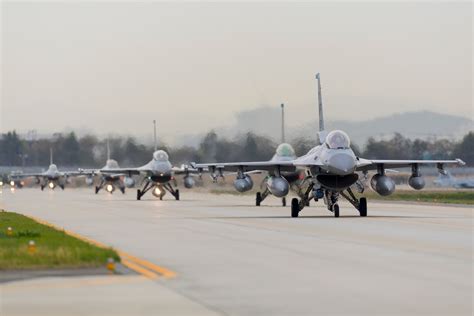
Kunsan’s primary mission is centered around rapid air combat operations, including counter-air missions, close air support, and attacks against enemy ground and maritime forces. Its location gives aircraft stationed there the ability to respond quickly during a crisis, but that same proximity also makes the base vulnerable to missile attacks and air strikes.
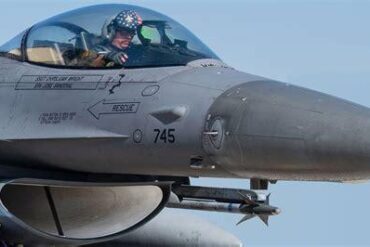
Historically, Kunsan was strongly associated with the F-16 Fighting Falcon, a multirole fighter known for reliability and flexibility. However, the base is transitioning toward the F-35A Lightning II, reflecting the changing nature of modern air warfare.
The move toward fifth-generation aircraft is largely driven by the growing sophistication of Chinese air defenses and fighter fleets. The PLAAF has expanded its fleet of stealth-capable Chengdu J-20 Mighty Dragon fighters, creating a more challenging operating environment for older aircraft.
The F-35 provides Kunsan with advanced sensors, stealth characteristics, and networked warfare capabilities. Rather than relying only on speed or weapons, modern fighters increasingly depend on information dominance. The ability to detect, track, and share battlefield information before an opponent does has become one of the most important advantages in air combat.
In a major conflict, Kunsan would likely serve as a forward strike platform, allowing allied aircraft to engage threats quickly across the Korean Peninsula and surrounding waters.
Osan Air Base: The Command Center of Western Pacific Air Operations
Just north of Kunsan sits another critical South Korean installation: Osan Air Base. While Kunsan focuses heavily on fighter operations, Osan serves as the command and control hub for much of America’s air activity in the region.
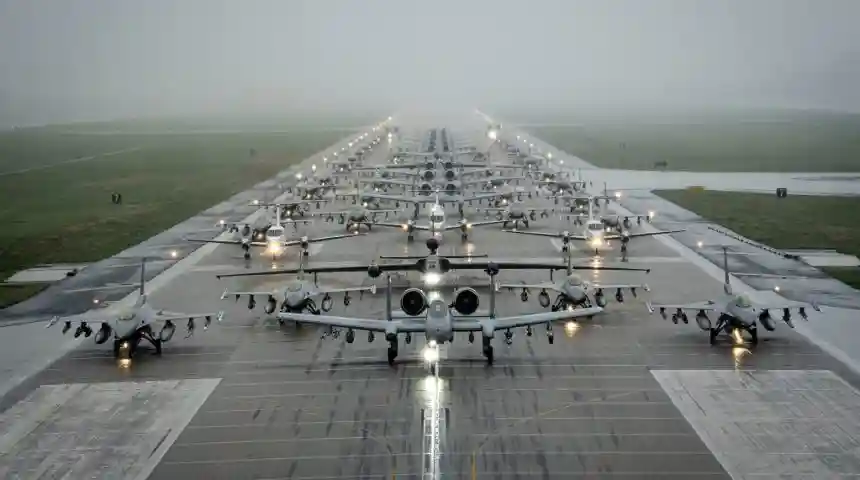
Home to the 51st Fighter Wing and the headquarters of the 7th Air Force, Osan functions as the operational brain coordinating air missions across the Korean Peninsula and the broader Western Pacific.
The importance of Osan is not limited to the aircraft stationed there. Its greatest value comes from its intelligence, surveillance, and reconnaissance capabilities. The base connects information from aircraft, satellites, drones, and allied military networks to create a constantly updated picture of the battlespace.
This information advantage allows commanders to understand enemy movements, identify threats, and coordinate responses much faster than traditional military systems could allow.
For years, the F-16 Fighting Falcon has been a major component of Osan’s fighter force. These aircraft continue to receive upgrades, including advanced radar systems and improved electronic warfare capabilities, allowing them to remain effective alongside newer stealth platforms.
The base previously hosted the A-10 Thunderbolt II, a close-air-support aircraft famous for its ability to destroy armored vehicles. Although the A-10 has left Osan, the installation remains one of the most important locations for American air operations in Asia.
If conflict erupted, Osan would likely become a central node for coordinating defensive and offensive air missions, making it a high-value target from the earliest moments of hostilities.
Kadena Air Base: The Keystone of Western Pacific Air Superiority
Among all American air bases in Asia, few are as strategically important as Kadena Air Base on Japan’s Okinawa Island. Often described as the “Keystone of the Pacific,” Kadena occupies a critical position near the Taiwan Strait and the East China Sea.
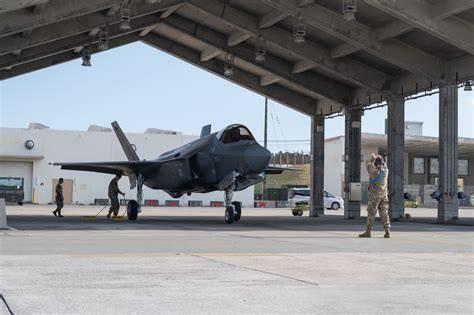
The base hosts the 18th Wing and supports one of the most powerful concentrations of air assets in the region. Its location allows aircraft to operate close to potential conflict zones while maintaining access to Japan’s broader military infrastructure.
Kadena’s importance comes from its combination of fighter power, surveillance capabilities, and joint operations. The base supports aircraft from multiple branches of the United States military and works closely with Japanese forces.
The transition away from older F-15C/D Eagle fighters toward newer F-15EX Eagle II aircraft represents a major modernization effort. These aircraft provide advanced sensors, greater weapons capacity, and improved capabilities against increasingly sophisticated threats.
Kadena also serves as a major intelligence hub. Aircraft such as the RC-135 Rivet Joint, E-3 Sentry, and P-8A Poseidon provide critical surveillance information across the Pacific.
In a potential Taiwan Strait conflict, Kadena’s survival would be crucial. If the base were disabled, allied aircraft would need to operate from more distant locations, increasing flight times, reducing combat effectiveness, and placing additional pressure on tanker aircraft.
The base’s strategic value makes it one of the most likely locations targeted during the opening phase of a major confrontation.
Misawa Air Base: The Northern Guardian of Japan’s First Island Chain
Located in northern Japan’s Aomori Prefecture, Misawa Air Base protects the northern section of the first island chain. Unlike Kadena, which focuses heavily on the southern Pacific approaches, Misawa provides a strategic position closer to the northern Pacific region.
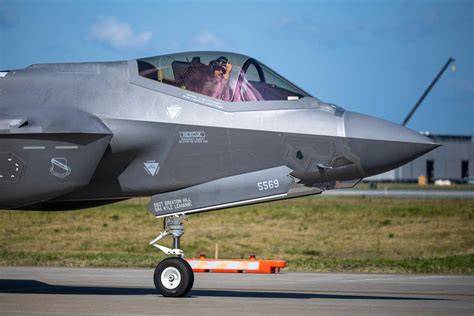
The base is home to the 35th Fighter Wing and plays a particularly important role in electronic warfare operations.
Misawa has historically hosted Wild Weasel squadrons designed to locate and destroy enemy radar systems and surface-to-air missile networks. These missions are essential in modern warfare because advanced air defenses can prevent conventional aircraft from operating freely.
The transition from the F-16 to the F-35A Lightning II gives Misawa enhanced stealth capabilities and improved battlefield awareness. Japan is also operating its own F-35 fleet, creating closer integration between American and Japanese air forces.
The base’s location also supports maritime surveillance operations. Aircraft operating from Misawa can monitor movements across the northern Pacific and contribute to broader intelligence networks.
Because disabling enemy air defenses would be a priority during any major air campaign, Misawa would likely become one of the first strategic targets in a conflict involving China and its regional opponents.
Yokota Air Base: The Pacific Air Bridge and Command Lifeline
Unlike fighter bases designed primarily for combat missions, Yokota Air Base in Tokyo serves a different but equally important purpose: keeping the entire military network connected.
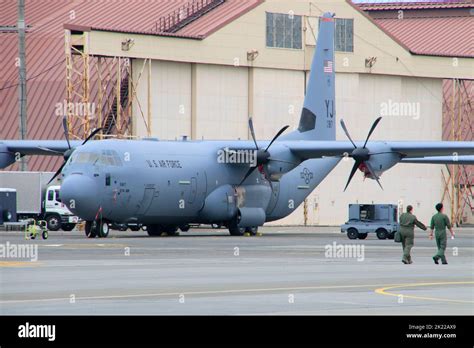
Home to the 374th Airlift Wing, Yokota is the main logistical artery supporting American operations across the Western Pacific.
A modern military campaign requires enormous quantities of fuel, spare parts, ammunition, medical supplies, and personnel. Without reliable transportation networks, even the most advanced fighter aircraft cannot maintain combat operations.
Yokota operates transport aircraft including the C-130J Super Hercules and supports larger aircraft such as the C-17 Globemaster III, C-5M Super Galaxy, and tanker aircraft when required.
The base also hosts the headquarters of United States Forces Japan, making it an important command location. Its proximity to Tokyo gives it political and strategic significance beyond its military functions.
If an adversary successfully damaged Yokota’s runways or disrupted its operations, the impact would extend far beyond the base itself. The ability to move forces and supplies throughout the region would be severely affected.
In a prolonged conflict, logistics often determines victory. Yokota represents the infrastructure required to sustain air power after the first missiles are launched.
Andersen Air Force Base: America’s Long-Range Strike Fortress
Located on Guam, Andersen Air Force Base occupies a unique position within the Indo-Pacific defense structure. Unlike bases in Japan and South Korea, Andersen sits deeper within the second island chain, providing strategic depth against potential attacks.
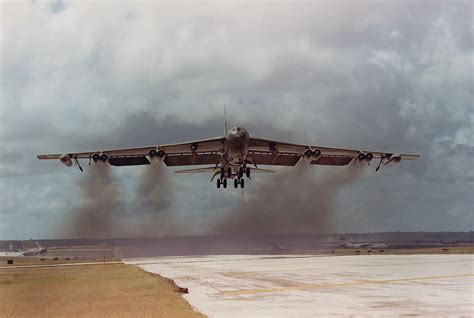
Operated by the 36th Wing, Andersen is designed to support long-range military operations across the Pacific.
The base is particularly important because it hosts strategic bombers such as the B-52 Stratofortress and supports advanced aircraft deployments. These platforms can carry large quantities of long-range weapons, including anti-ship missiles designed to threaten enemy naval forces.
Unlike fighter bases closer to potential battle zones, Andersen provides a secure location where heavy aircraft can prepare for missions covering thousands of miles.
However, Guam’s importance also makes it a likely target. China’s growing inventory of long-range ballistic missiles gives it the ability to threaten American facilities across the Pacific.
To improve resilience, Andersen has received major investments in infrastructure upgrades and missile defense systems, including expanded protection against ballistic missile threats.
If a major Indo-Pacific conflict occurred, Andersen would serve as one of America’s most important long-range strike platforms and reinforcement points.
Why These Six Bases Matter in a Future Conflict
The opening hours of a major Indo-Pacific war would likely depend on more than aircraft performance or missile numbers. The ability to maintain functioning airfields, preserve command networks, and continue moving forces would determine which side could generate combat power.
These six bases represent different parts of the same military system. Kunsan and Osan provide forward fighter capability and command control. Kadena and Misawa anchor the first island chain. Yokota keeps the logistics network alive. Andersen provides strategic reach across the Pacific.
The future battlefield will be shaped by stealth aircraft, artificial intelligence, unmanned systems, cyber warfare, and long-range missiles. Yet despite technological advances, geography remains one of the most powerful factors in military strategy.
Air bases are the foundations from which air forces operate. In the Indo-Pacific, these installations could decide whether the first hours of a major conflict produce rapid escalation or successful deterrence.