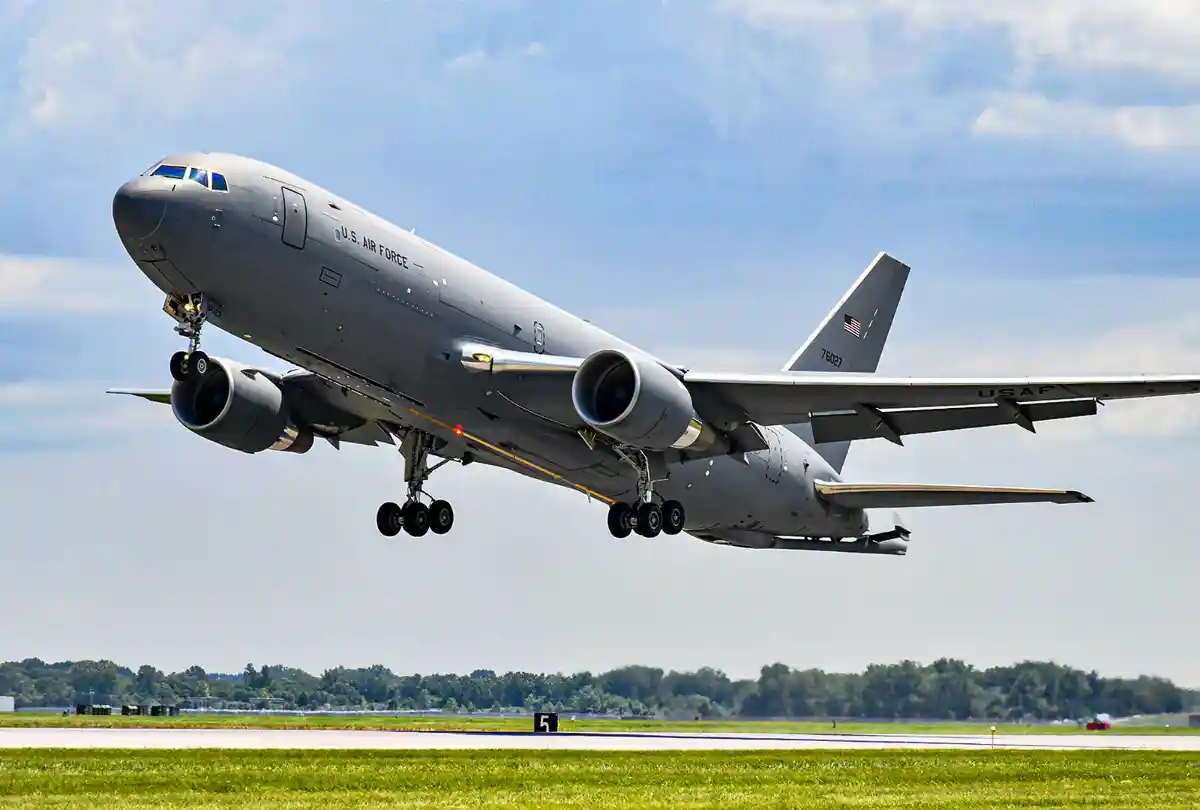
The United States Air Force has one of the world’s largest aerial-refueling fleets, but a major war in the Indo-Pacific could consume that advantage with surprising speed. A conflict involving China, the United States, Japan, Australia, and other regional partners would stretch tanker aircraft across enormous distances while simultaneously exposing them to an opponent capable of attacking airfields, logistics hubs, command networks, and the tankers themselves.
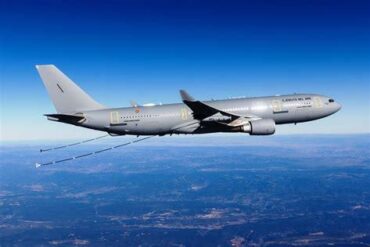
The central issue would not simply be how many KC-135 Stratotankers and KC-46 Pegasus aircraft the USAF owns. The more important question would be how many could actually be generated for combat operations at the right place, at the right time, and for as long as the war required. A fleet of roughly 475 large jet-powered tankers sounds enormous until those aircraft must support operations across a theater spanning thousands of miles.
For this analysis, the focus is on large jet-powered USAF tankers capable of supporting the flying-boom refueling system used by aircraft such as American fighters, bombers, transports, and other large aircraft. Smaller or specialized refueling platforms, including KC-130s, carrier-based buddy tanking systems, and V-22-based systems, are excluded because their missions, operating characteristics, and refueling methods are substantially different.
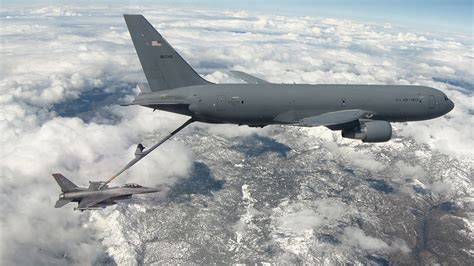
The US Air Force Tanker Fleet Is Enormous on Paper
The scale of the American tanker fleet is difficult to appreciate without considering the historical context. The USAF operates roughly 475 large tanker aircraft, overwhelmingly consisting of KC-135s and KC-46s. Budget planning for fiscal year 2027 indicates a force of approximately 370 KC-135s and 105 KC-46s. That gives the United States an aerial-refueling capability unmatched by almost any other air force.
The statutory minimum fleet is also scheduled to increase. The requirement stands at 466 aircraft in September 2026, rising to 478 from October 2026, 490 from October 2027, and 502 from October 2028. Those numbers demonstrate that Washington already recognizes the importance of maintaining a large tanker force even during peacetime.
But aircraft ownership and combat availability are two very different things. A tanker undergoing scheduled maintenance cannot support a fighter package. Neither can an aircraft requiring an inspection, suffering battle damage, waiting for spare parts, or assigned to training and qualification missions. Crews also require rest, and tankers need maintenance personnel, fuel, spare parts, secure communications, and suitable airfields.
That distinction becomes particularly important after combat begins. During Operation Epic Fury against Iran, several KC-135s were reportedly damaged or lost, while others experienced the inevitable wear associated with intensive operations. Some damaged aircraft may return to service, and stored KC-135s can potentially be brought back from long-term storage, but neither process is instantaneous.
The United States also has access to a small commercial aerial-refueling sector. Companies such as Omega Air Refueling Services and Metrea operate tanker aircraft that can support training, testing, exercises, qualification, and selected operational requirements. Their aircraft can provide useful additional capacity, but they cannot simply be counted as another 23 combat-ready USAF tankers. Their availability, missions, contracts, crews, and equipment are different.
The Pacific Turns Distance Into a Tanker Problem
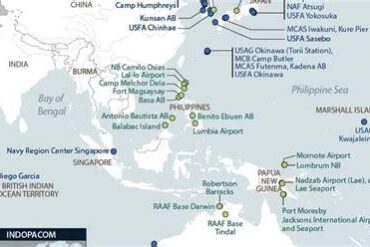
The Indo-Pacific is fundamentally different from many theaters in which the US military has operated large air forces during the post-Cold War period. Distances between bases, targets, and logistical hubs are enormous, and the geography creates an unusual dependence on aerial refueling.
A fighter based at a relatively close airfield may not require a tanker for every mission. But if that airfield becomes vulnerable to ballistic missiles, cruise missiles, drones, or other attacks, the aircraft may have to operate from a more distant location. Every additional mile between the aircraft and its operating area increases the value of tanker support.
Consider the difference between operating from a forward base in Okinawa and operating from Guam or another more distant location. The latter may offer greater operational depth, but aircraft must travel farther simply to reach the fight. A mission that would previously have required one relatively short transit can become a much longer sortie with multiple aerial-refueling requirements.
This effect compounds across an entire air campaign. Tankers are not merely supporting individual fighters. They are creating the range necessary for the entire force to remain connected to the battlefield.
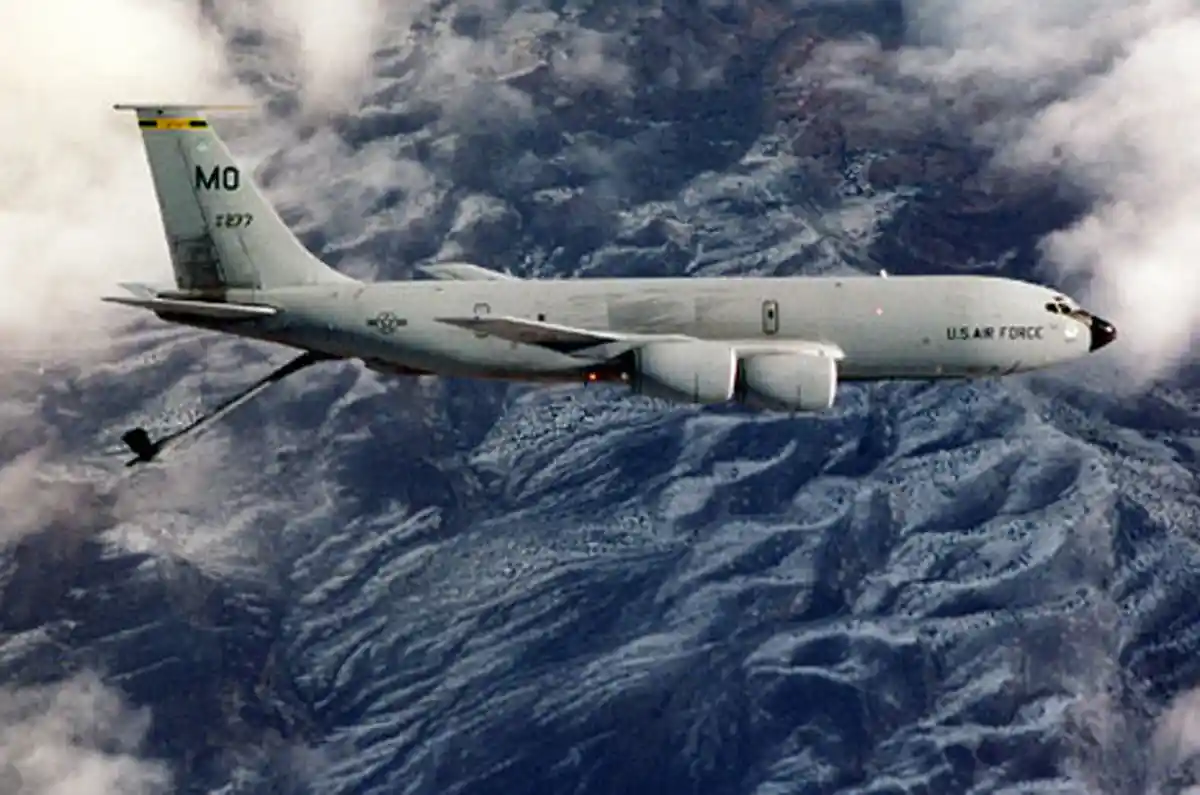
Agile Combat Employment Makes Tankers More Important
The USAF’s Agile Combat Employment (ACE) concept is designed partly around this problem. Instead of concentrating aircraft at a handful of enormous bases, American forces can distribute aircraft and personnel across a larger network of airfields and operating locations.
That approach can make it harder for an adversary to eliminate the entire force with attacks on a few major bases. However, dispersion creates its own logistical complications, and tankers are one of the clearest examples.
A fighter can operate from a relatively austere location with a small support team. A KC-46 or KC-135 cannot be treated in quite the same way. A large tanker requires substantial runway infrastructure, aviation fuel, maintenance equipment, communications, security, and ground personnel. The aircraft also needs somewhere to receive fuel and somewhere to remain between missions.
As a result, ACE can make tankers more valuable while simultaneously making their operations more complicated. A dispersed fighter force may depend on tankers as the connective tissue linking distant operating locations to the combat zone.
There is another problem: the tankers themselves become attractive targets. An enemy does not necessarily need to destroy an F-35 if it can disrupt the tanker network supporting that F-35. Suppressing or forcing tankers farther away from the battlespace can reduce fighter endurance without directly attacking the fighters.
China Has Fewer Tankers but Different Requirements
China’s tanker force is considerably smaller than America’s, although its fleet has been expanding. Depending on how different variants and sources are counted, China could have approximately 50 to 60 or more tanker aircraft, including older H-6-derived tankers, Y-20-based tankers, and three legacy Il-78 aircraft acquired from Ukraine.
The Y-20-based Y-20U and YY-20A represent an important development because they provide China with a modern strategic tanker based on a large transport aircraft. The expansion of this fleet gives the People’s Liberation Army Air Force greater ability to conduct long-range operations beyond the immediate Chinese mainland.
Yet a numerical comparison between American and Chinese tankers can be misleading.
China’s geographic position changes the problem. A Chinese fighter operating against Taiwan, the South China Sea, or Japan’s southwestern islands may begin its mission relatively close to the mainland. China’s extensive network of airfields also provides multiple operating options, while many Chinese combat aircraft have substantial internal fuel capacity.
The United States faces the opposite problem. Its most important bases may be thousands of miles from the continental United States, while forward bases could become dangerous or unusable once the shooting starts. American aircraft therefore have to bridge much greater distances between secure rear areas and the combat zone.
That means the USAF could require hundreds of tankers to support operations even though the Chinese military has far fewer aircraft performing similar missions.
Allied Tankers Would Help, but They Cannot Replace the USAF Fleet
American allies could contribute meaningful aerial-refueling capacity. Japan operates KC-46A and KC-767J tankers, while Australia operates seven Airbus A330 MRTTs. Singapore and South Korea also operate A330 MRTTs, and the United Kingdom maintains a larger A330 MRTT fleet.
If Japan and Australia directly participated in a major conflict, roughly 17 additional allied large tankers could potentially contribute to the regional effort. That would be valuable, but it would not eliminate America’s dependence on its own tanker fleet.
Allied aircraft also have their own national requirements. They would not necessarily be available for unrestricted American tasking, and their crews, bases, maintenance cycles, and operational priorities would remain national responsibilities.
The geography of allied tankers matters too. A Japanese tanker operating close to Japan can provide support that would be difficult for an aircraft based thousands of miles away. Conversely, an Australian tanker may be especially useful for operations connected to northern Australia and the approaches to the South Pacific.
The real advantage would therefore come from creating a network rather than simply adding numbers together.
The Tanker Fleet Would Have to Support More Than Fighters
It is easy to imagine every tanker orbiting near a fighter formation, but that is not how a large air campaign would work. Tankers would support fighters, bombers, airborne early-warning aircraft, transports, special-mission aircraft, and other high-value platforms.
Bombers operating from Australia would be an especially demanding case. Long-range missions could require aerial refueling before reaching the operational area, additional fuel support during the mission, and potentially further refueling on the way home.
Strategic airlift would also consume tanker capacity. An aircraft carrying personnel, ammunition, spare parts, or other supplies cannot simply ignore fuel requirements because the theater is at war. Maintaining the airbridge between rear-area bases and forward locations could become one of the largest continuous demands on the tanker fleet.
Some tankers would therefore never enter the most dangerous part of the theater. They could be required to refuel aircraft shortly after those aircraft depart the continental United States or another rear-area base, helping them cross the Pacific.
That means the phrase “every tanker” does not necessarily mean every aircraft would be parked around Taiwan or another battlefield. It means that the entire tanker enterprise could become heavily committed simply to keeping the broader air operation functioning.
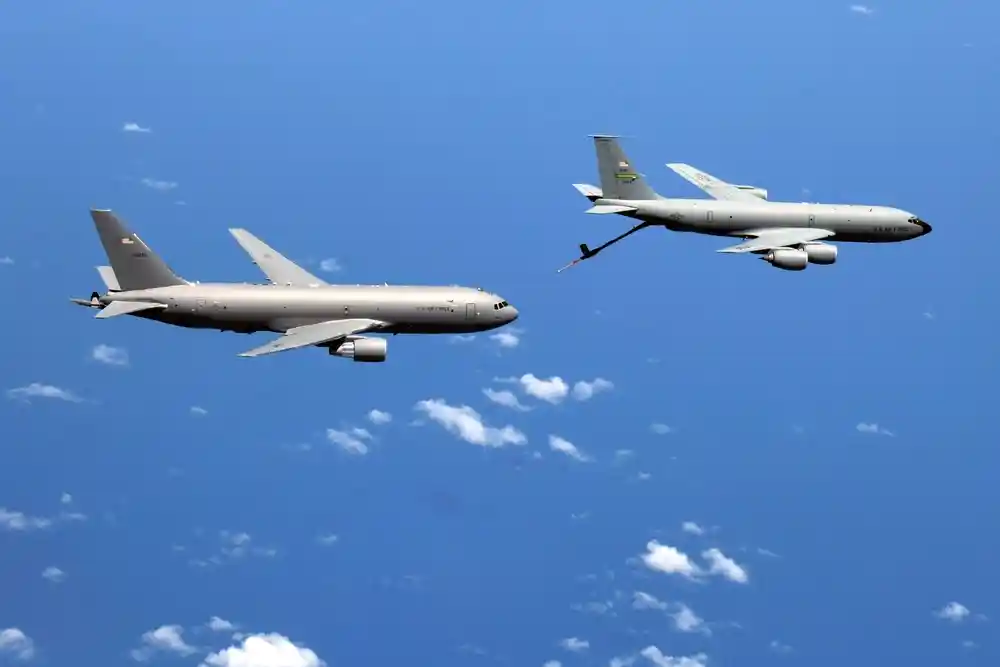
Tankers Would Become High-Value Targets
A large tanker is not designed to survive close exposure to modern air defenses. Its strength comes from operating at distance, relying on fighters, geography, intelligence, electronic warfare, and careful mission planning to reduce the chance of attack.
A sophisticated opponent would understand this.
China could attempt to locate tanker operating patterns, disrupt communications, attack supporting airfields, or force tankers to operate farther from the combat area. Even without destroying a single tanker, such actions could reduce the effectiveness of aerial refueling.
The problem becomes particularly severe because tankers cannot simply hide anywhere. Their predictable need for suitable airfields, fuel, maintenance, and airspace creates a logistical footprint.
For the USAF, protecting the tanker fleet would therefore be almost as important as acquiring additional tanker aircraft. Fighters need tankers, but tankers also need intelligence, surveillance, escorts, defensive countermeasures, secure bases, and a functioning command-and-control network.
Tanker Availability Would Decline During a Long War
The most dangerous assumption would be to treat the initial tanker inventory as a permanent number. In a major war, availability would almost certainly change.
Aircraft would require maintenance. Engines and other components would accumulate hours. Crews would need rotation. Damaged aircraft would need repairs. Some bases could become unavailable, while others might become overcrowded.
The same problem would affect the enemy. China, Japan, Australia, and the United States would all face competing demands for aircraft, crews, weapons, airfields, and maintenance capacity.
This is why tanker availability could become a bottleneck rather than simply a question of fleet size. If enough fighters exist but insufficient tankers are available to reach the battlefield, fighter numbers become less meaningful. If bombers are available but cannot be supported over the required distances, sortie generation falls.
The same principle applies to munitions and airfields. A war is a system of interconnected resources, and aerial refueling is one of the systems connecting many others.
Why a Pacific War Could Consume Almost Every US Tanker
The most plausible conclusion is not that the USAF would literally send every tanker into combat simultaneously. Instead, a full-scale Indo-Pacific conflict could create enough simultaneous demands that almost the entire tanker enterprise would become relevant to the war effort.
Some aircraft would be in maintenance. Others would support training and qualification. Some would operate from rear bases. Others would conduct long-range refueling missions across the Pacific. Still others could be held for contingency requirements or replacement capacity.
The extraordinary distances involved make this particularly important. The United States can possess hundreds of tankers and still find itself short of available refueling capacity if the theater expands, forward bases are attacked, and aircraft must operate from increasingly distant locations.
That is the paradox of the Pacific: America’s tanker fleet is enormous, yet the ocean is larger.
The Outcome Would Depend on More Than Tanker Numbers
No serious analysis can determine exactly how a future Pacific war would unfold. The geographic scope of the conflict, the participation of allies, the survivability of bases, Chinese and American operational decisions, the duration of hostilities, and the effectiveness of long-range missiles and air defenses could radically change the demand for aerial refueling.
A limited conflict centered close to China’s mainland would produce very different tanker requirements from a wider war involving Guam, northern Australia, Japan, the South China Sea, and potentially distant American bases.
The USAF’s tanker fleet nevertheless reveals a central feature of modern air warfare. Range is a weapon, but range must be supported. A fighter’s theoretical combat radius means little if the aircraft cannot reach the battlespace, remain there long enough to accomplish its mission, and return safely.
That is why the KC-135 and KC-46 fleets could become some of the most heavily tasked aircraft in a Pacific conflict. Their missions would rarely receive the attention given to fighters and bombers, but they would determine how far those aircraft could operate and how frequently they could return to the fight.
In a major Indo-Pacific war, the United States would therefore not simply be counting tankers. It would be counting usable tanker sorties, protected operating locations, available crews, maintenance hours, fuel, and safe refueling corridors. If those resources were consumed faster than they could be regenerated, the tanker fleet could become one of the defining constraints on American airpower.
The USAF enters such a scenario with an extraordinary numerical advantage in aerial refueling. But the Pacific is precisely the kind of theater in which even a fleet of nearly 500 aircraft can begin to look surprisingly small.