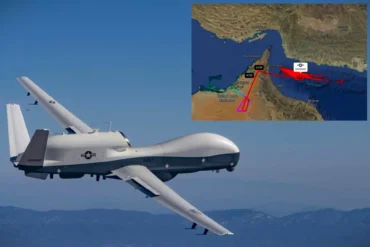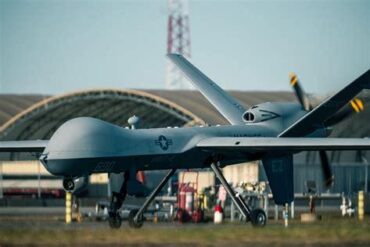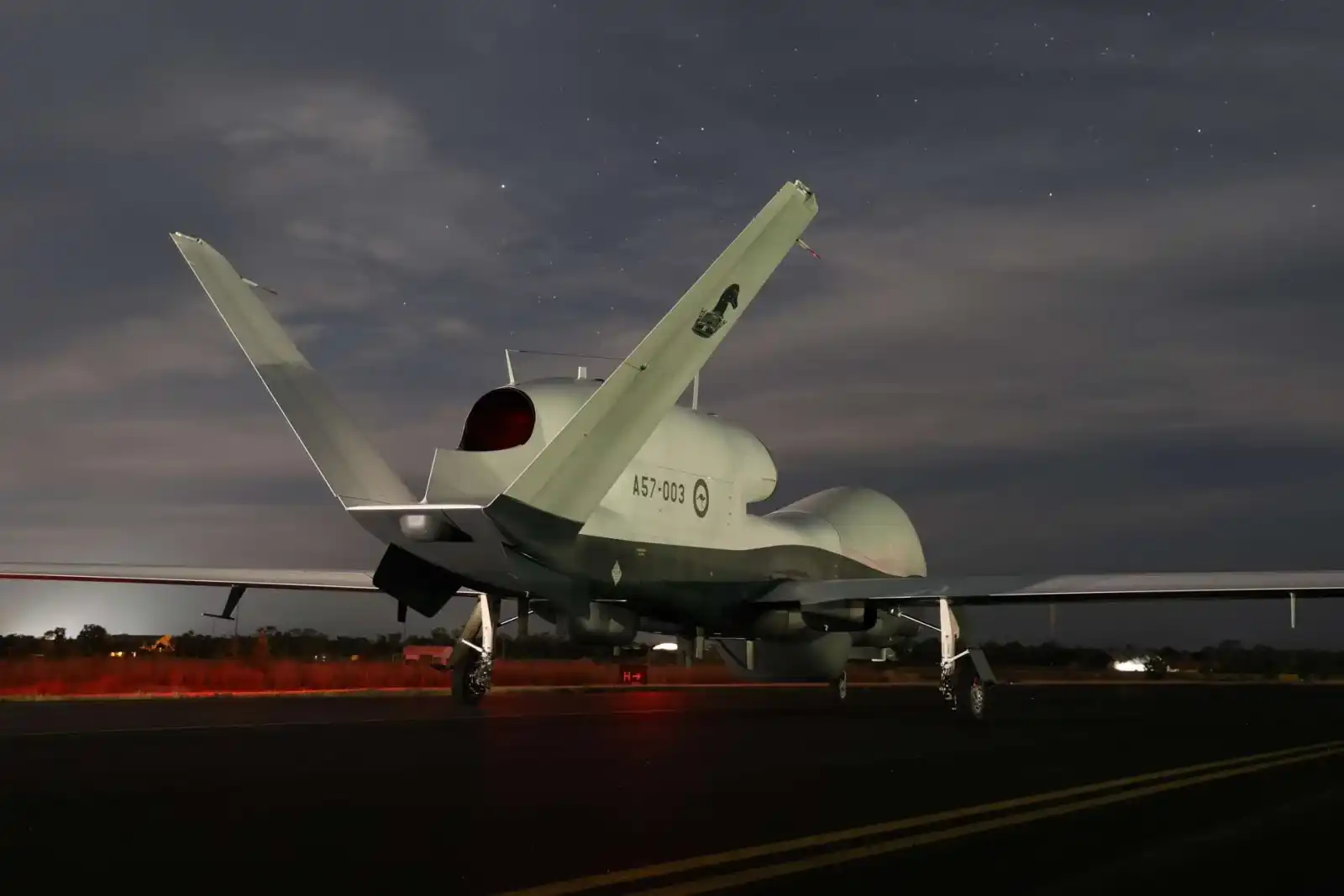
Australia’s decision to place the MQ-4C Triton under the operational control of No. 9 Squadron marks a decisive evolution in how the nation monitors its vast maritime domain. The integration of this high-altitude, long-endurance unmanned system grants Australia persistent oversight of northern and eastern sea approaches at a time when the Indo-Pacific’s strategic tensions demand earlier warning, broader coverage, and tighter coordination with trusted partners.
A New Era of High-Altitude Maritime Intelligence
The MQ-4C Triton’s arrival represents more than the addition of another aircraft to the Royal Australian Air Force; it redefines the pacing rhythm of maritime intelligence. Flying above 50,000 feet for more than 24 hours, the Triton can observe ocean expanses that traditionally would have required rotations of multiple crewed patrol aircraft. Its AN/ZPY-3 Multi-Function Active Sensor radar sweeps millions of square kilometres in a single mission, detecting and tracking vessels across open sea, archipelagic choke points, and coastal zones where strategic friction increasingly occurs.
Its introduction aligns with Canberra’s long-term denial strategy—an approach grounded in maintaining visibility over remote sea lanes and shaping early-warning timelines long before a threat reaches Australia’s immediate region.
The Reborn 9 Squadron and Its Expanding Mission
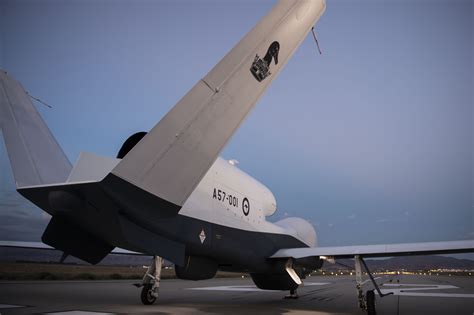
No. 9 Squadron’s reactivation in 2023 at RAAF Base Edinburgh formed the organisational backbone for this unmanned capability. Once known for operating seaplanes in the Second World War and helicopters in Vietnam, the squadron now anchors Australia’s high-altitude maritime ISR enterprise. Its Latin motto, Videmus nec videmur—“we see without being seen”—has taken on renewed meaning.
The squadron’s operational footprint is distributed between RAAF Base Tindal, where aircraft flights are controlled, and RAAF Base Edinburgh, home to mission-systems management. This separation of flight operations from sensor operations exemplifies the Triton’s nature as a networked intelligence node rather than a traditional aircraft with a single cockpit team.
How Triton Reshapes Maritime Surveillance Architecture
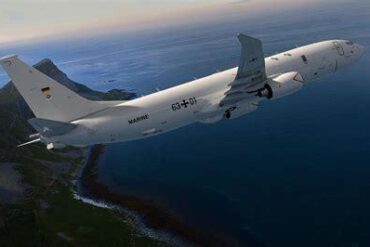
The MQ-4C sits within a “family of systems” that includes the P-8A Poseidon and other No. 92 Wing assets. Triton offers the high-altitude, long-duration vantage point, while Poseidon aircraft provide close-in prosecution, anti-submarine warfare, and kinetic response. This layered model ensures that Australia can track suspicious surface groups, monitor grey-zone activity, and cue other assets only when necessary.
A Triton orbit dramatically shifts surveillance geometry. Crewed aircraft are limited by crew duty cycles and onboard fuel. Triton, unencumbered by such constraints, can maintain continuous watch over critical sea lanes linking the Indian Ocean, Timor Sea, and western Pacific. This reduces wear on valuable crewed fleets while expanding Australia’s day-to-day maritime picture.
Operational Milestones and Industry Collaboration
The path to Triton’s operational readiness required a complex certification and testing process, including securing Australia’s first airworthiness permit for a large uncrewed aircraft. Defence and industry partners created a replicable approval model that will set the baseline for future long-range UAS programs.
Key achievements have included:
- First RAAF-operated MQ-4C flight from RAAF Base Tindal.
- Establishment of full mission-systems control at RAAF Base Edinburgh.
- Triton’s participation in Exercise Talisman Sabre 25, where it provided continuous ISR support to an integrated joint-force environment.
Australia has committed to four Triton aircraft, with three already delivered and the fourth scheduled to arrive by early 2028. Northrop Grumman, together with the U.S. Navy, remains deeply embedded in the platform’s sustainment and operational integration.
Strategic Weight in a Competitive Indo-Pacific
Australia’s maritime area of responsibility covers roughly 11 percent of Earth’s surface—an expanse where uncrewed endurance becomes more than a technical advantage; it becomes strategic necessity. Triton gives Canberra the ability to maintain a constant watch over submarine movements, coercive maritime activity, and other behaviours that increasingly define grey-zone competition.
The capability also strengthens interoperability with the United States. With U.S. Navy Tritons already operating in the Pacific, shared ISR frameworks, coordinated patrol patterns, and common sustainment architectures deepen the kind of day-to-day cooperation that active deterrence requires.
Transforming Future Force Design and Airspace Integration
Triton’s introduction carries broader consequences for Australia’s aviation ecosystem. The certification and airspace integration models now in place will inform decisions on future large uncrewed aircraft—from additional HALE systems to loyal-wingman concepts that rely on similar control-station architecture.
As this ecosystem matures, 9 Squadron’s role grows more foundational. The squadron’s evolution from seaplanes to helicopters and now high-altitude ISR reflects a continuity of purpose: to see first, understand faster, and secure maritime approaches before threats emerge.
A Capstone Capability for National Defence
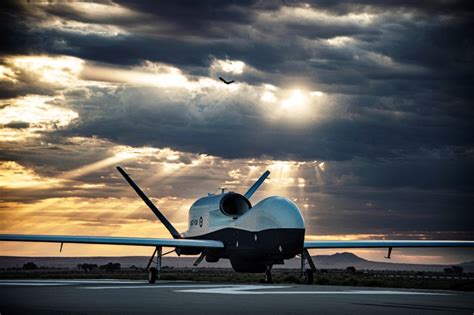
By assuming full operational responsibility for the MQ-4C Triton, Australia converts years of investment into a frontline surveillance asset that meaningfully shifts its strategic posture. With persistent coverage, advanced sensor networks, and tightly woven industrial partnerships, the Triton fleet will underpin Australia’s maritime awareness for decades. In an Indo-Pacific defined by accelerating competition, the ability to see without being seen may prove one of the country’s most decisive advantages.