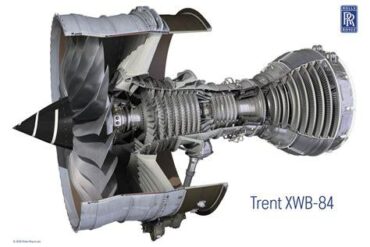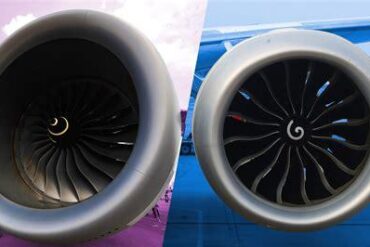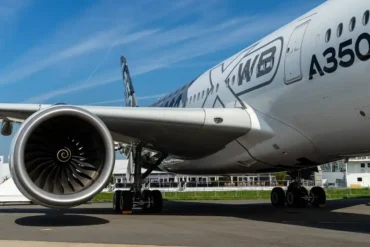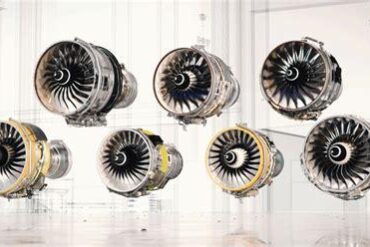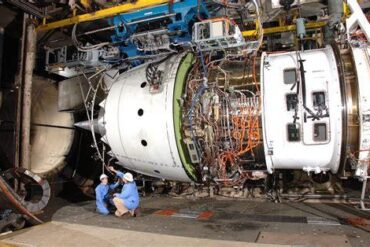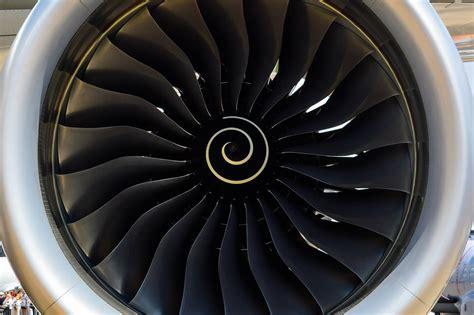
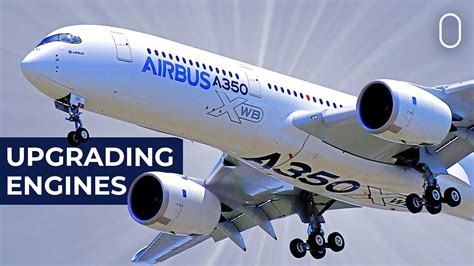
Rolls-Royce developed the Trent XWB engine as a decisive response to Airbus’s vision for a new-generation long-haul aircraft that would redefine efficiency, reliability, and environmental performance. The A350 program required a powerplant capable of delivering a substantial leap in fuel burn improvements and thrust capabilities, while still providing durability for the global network demands of the world’s major carriers. When Airbus selected a single exclusive engine supplier, the strategic importance of the program intensified, effectively reshaping the widebody engine market. The Trent XWB became the technological and commercial pillar on which Rolls-Royce built its modern widebody portfolio, allowing the company to secure long-term relevance amid intensifying competition.
Airbus initiated the A350 XWB program to compete directly with Boeing’s 787 Dreamliner and 777 family—aircraft already equipped with advanced engines developed by General Electric. To compete effectively, Airbus needed an engine designed specifically around the A350’s aerodynamics and mission profile. GE was approached but declined to pursue a fully optimized derivative of its GEnx engine, citing its strategic focus on Boeing programs. This left Rolls-Royce in a unique position.
The company recognized that the opportunity extended beyond supplying one aircraft type. By stepping in early and committing to a tailored engine family optimized exclusively for the A350, Rolls-Royce positioned itself as the primary propulsion partner for Airbus’s future widebody ambitions. This strategic alignment created a mutually reinforcing relationship: Airbus needed an engine capable of matching the A350’s design efficiencies, while Rolls-Royce needed a major program to secure its influence in a market increasingly dominated by GE.
The Trent XWB became that unifying solution—designed from day one to deliver class-leading performance rather than being retrofitted from an older platform. It was a complete strategic repositioning for Rolls-Royce at a time when Pratt & Whitney had no compelling widebody offering and GE was not willing to undermine its powerful Boeing partnerships.
The Early-Mover Advantage
The earliest stages of the A350 program were marked by ambiguity. Airbus initially considered dual sourcing, similar to what Boeing employed with the 787. Rolls-Royce moved quickly and aggressively to present a credible, scalable, and technologically advanced variant of its Trent architecture. This swift action offered Airbus reassurance that Rolls-Royce could produce an engine aligned precisely with every A350 variant from the -900 to the stretched -1000.
Rolls-Royce’s position strengthened considerably when GE hesitated. Developing the high-thrust variant required for the A350-1000 risked cannibalizing GE’s Boeing 777 market, which relied on the exclusive GE90-115B. The company opted not to jeopardize its dominance over Boeing’s flagship twin-engine long-haul jet. Meanwhile, Pratt & Whitney’s offerings lacked both readiness and adaptability; the GP7000, co-developed with GE, could not be feasibly scaled for the new Airbus design timeline.
Rolls-Royce seized the advantage and offered Airbus a refined roadmap for long-term engine evolution—an attractive proposition for an aircraft intended to anchor airline fleets for decades. The Trent XWB thereby transitioned from a competitive contender into Airbus’s exclusive OEM selection.
The Engine Variants Tailored for the A350 Fleet
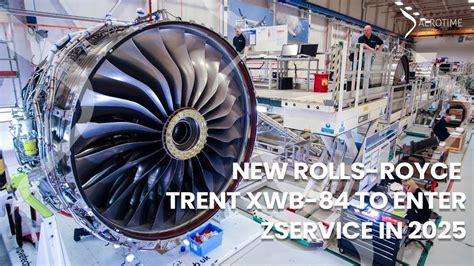
Rolls-Royce developed two primary versions of the Trent XWB tailored to the performance requirements of the A350 lineup. The Trent XWB-84 powers the A350-900, optimized for long-range efficiency, while the Trent XWB-97 serves the more demanding A350-1000, requiring greater thrust for its larger fuselage and payload capabilities.
These engines represented a full generational shift in high-bypass turbofan technology. Rolls-Royce optimized fan diameter, core architecture, and turbine efficiency to achieve what became one of the industry’s most impressive dispatch reliability figures—regularly quoted above 99.9%. As the A350 joined major global fleets, the XWB established itself as a consistent performer with no systemic issues on the scale of the Trent 1000 challenges experienced on the Boeing 787.
Airlines gravitated toward the stability and long-term maintenance predictability the XWB could provide. High reliability reduced operational disruptions, allowed airlines to optimize long-haul schedules, and ensured the A350 remained cost-competitive as fuel prices fluctuated.
How Exclusive Supply Elevated Rolls-Royce’s Commercial Position
The decision to align exclusively with Airbus had cascading benefits for Rolls-Royce. The company secured a long-term production pipeline aligned with the A350’s sales trajectory, creating financial stability and operational continuity. More importantly, the XWB program enabled Rolls-Royce to deepen its integration within Airbus’s engineering ecosystem, reinforcing its role as the de facto propulsion partner for future widebody designs.
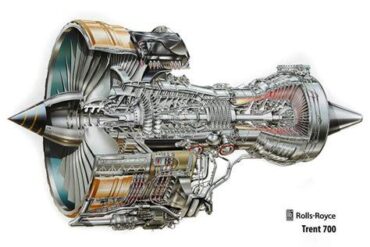
As Pratt & Whitney faded from the widebody scene and GE focused heavily on Boeing projects, Rolls-Royce’s influence within Airbus strengthened further. The success of the Trent XWB platform became a decisive factor in Airbus’s selection of Rolls-Royce to exclusively power the A330neo with the Trent 7000. This engine leveraged technologies derived from both the Trent 1000 and Trent XWB, proving the company’s commitment to cross-program innovation.
Airbus’s 2020 decision to formally extend Rolls-Royce’s exclusivity for the A350 program to at least 2030 cemented this partnership. This rare level of confidence was grounded not only in performance metrics but in a shared vision for next-generation propulsion development.
Strengthening the Widebody Duopoly
The Trent XWB’s development and market success contributed directly to shaping today’s widebody engine duopoly between Rolls-Royce and GE Aerospace. With the withdrawal of Pratt & Whitney from new-build widebody programs, the market simplified into two clear power centers:
- Rolls-Royce aligned primarily with Airbus
- GE Aerospace aligned primarily with Boeing
This structural shift stabilized Rolls-Royce’s future and eliminated the multi-OEM battles that characterized earlier aircraft generations. By powering Airbus’s major widebody families—the A350 and A330neo—Rolls-Royce secured a position opposite GE’s dominance over the Boeing 787 and 777X programs.
This dynamic meant that the Trent XWB not only provided a market advantage—it reshaped the global competitive environment. The engine became both a technological achievement and a backbone of corporate survival.
The Engine That Fueled Rolls-Royce’s Technological Leap
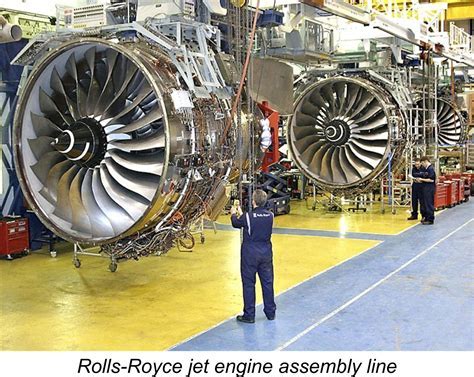
The Trent XWB’s commercial success gave Rolls-Royce the financial and engineering momentum needed to pursue the UltraFan program, a groundbreaking next-generation propulsion initiative intended to elevate efficiency through a geared architecture and composite fan system. While the UltraFan exists today as a technology demonstrator rather than a fully committed production engine, its development is deeply rooted in the capital and expertise made possible by the Trent XWB’s profitability.
The UltraFan initiative reflects Rolls-Royce’s long-term strategy: leverage the stability of the Trent XWB to prepare for the next wave of aircraft designs expected late in the decade and into the 2030s. It is also a proactive response to the increasing pressure placed on engine manufacturers to enhance fuel efficiency and reduce emissions. Technologies validated through the UltraFan program can be scaled down to improve the existing Trent portfolio, creating a continuum of innovation powered by the XWB’s market strength.
Commercial Impact and Global Footprint
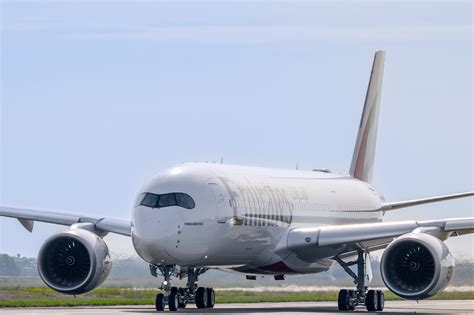
More than 2,600 Trent XWB engines are now in service or on order, powering aircraft across over 60 major airlines worldwide. The A350 has become the second most popular new-generation widebody after the Boeing 787, ensuring a deep and reliable pipeline of engine demand. This broad adoption translated directly into stable aftermarket revenue, maintenance contracts, and long-term service agreements—crucial pillars of Rolls-Royce’s financial health.
Fleet operators value the engine for its fuel efficiency, low noise output, and high dispatch reliability, making it especially suitable for long-distance routes where performance consistency is vital. As global carriers pivot toward sustainable operations and expanded long-range fleets, the Trent XWB’s appeal strengthens.
Rolls-Royce’s service ecosystem has grown alongside the engine’s adoption. Enhanced predictive maintenance tools, digital engine monitoring, and global MRO coverage helped reinforce customer confidence and provided further incentive for airlines to continue relying on the A350 platform.
Long-Term Strategic Influence
The Trent XWB did far more than power an aircraft—it repositioned Rolls-Royce’s entire commercial strategy. The success of the engine allowed the company to rebalance its powerplant portfolio after setbacks associated with the Trent 1000. While the Trent 1000’s reliability issues impacted confidence on the Boeing 787, the XWB restored credibility and trust with global airlines.
Furthermore, the XWB created a blueprint for how Rolls-Royce could approach future clean-sheet engines. The company demonstrated that tailoring an engine specifically to an airframe, rather than adapting existing architectures, results in compelling performance, stronger OEM partnerships, and longer-term competitive advantage.
With Airbus showing no indication of introducing alternative engine suppliers for the A350, and with the 2030 horizon aligning with expected UltraFan developments, Rolls-Royce stands well-positioned for the next generation of long-haul propulsion.
Conclusion
Rolls-Royce developed the Trent XWB engine to meet Airbus’s exacting demands for the A350 while simultaneously securing a powerful long-term position within the global aviation industry. GE and Pratt & Whitney’s reluctance or inability to participate fully transformed the XWB into a critical turning point, allowing Rolls-Royce to become the exclusive supplier for Airbus’s flagship widebody.
From its early technical promise to its robust operational results, the Trent XWB now stands as one of the most efficient and reliable long-haul engines ever produced. More importantly, it enabled Rolls-Royce to strengthen its commercial foundation, accelerate technological innovation, and define its strategic trajectory for the coming decades. The Trent XWB not only powers the A350—it powers Rolls-Royce’s future.