Since the earliest days of aerial warfare, fighter aircraft have carried guns as their primary method of defeating enemy planes. During World War I and World War II, machine guns transformed the skies into close-range battlefields where pilots had to maneuver behind opponents and deliver accurate bursts of fire. Famous aviators such as the Red Baron built their reputations through skillful use of aircraft-mounted weapons.
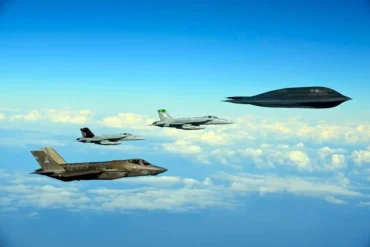
Modern air combat has changed dramatically. Today’s stealth fighter jets rely far more on advanced sensors, electronic warfare systems, and long-range missiles than traditional cannon attacks. Weapons such as the AIM-9 Sidewinder and other air-to-air missiles allow pilots to engage targets from significant distances, reducing the importance of getting close enough to use a gun.
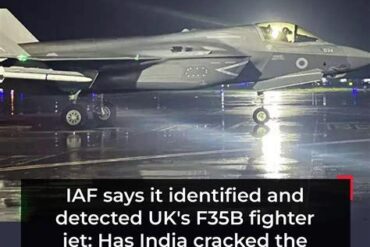
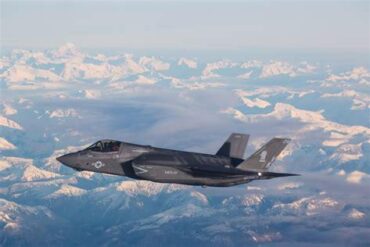
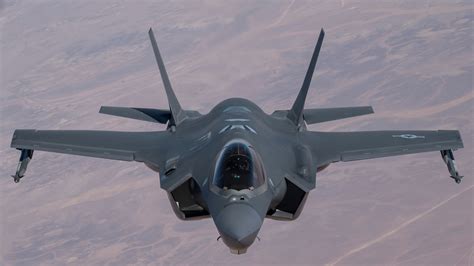
Despite these changes, most modern fighter aircraft still include an internal gun because it provides a final defensive option during situations where missiles are unavailable or ineffective. However, some of America’s most advanced stealth aircraft, specifically the F-35B Lightning II and F-35C Lightning II, do not carry a built-in internal cannon. This unusual design choice is the result of engineering compromises created by their unique operational requirements.
Why the F-35B and F-35C Stealth Fighters Do Not Have Internal Guns
The primary reason these two F-35 variants lack internal guns is their specialized design. The F-35B, operated mainly by the U.S. Marine Corps, is built for Short Take-Off and Vertical Landing (STOVL) operations. It can launch from shorter runways and land vertically, allowing it to operate from amphibious assault ships and smaller airfields.
The F-35C, used by the U.S. Navy, is designed for aircraft carrier operations. Although it does not perform vertical landings like the F-35B, it shares design changes related to carrier compatibility and internal space requirements. Both versions required major modifications compared with the Air Force’s F-35A variant.
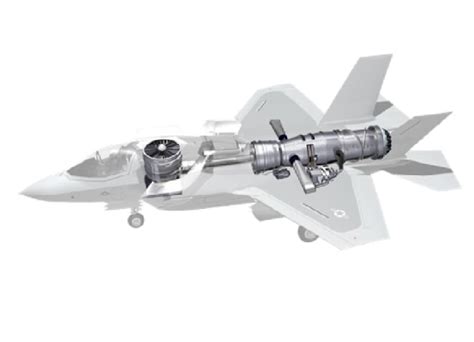
The F-35B’s unique lift system requires a large internal area for its lift fan and associated mechanisms. Engineers had to prioritize space for vertical flight capability, fuel storage, stealth shaping, and advanced sensors. Adding an internal gun would have forced designers to sacrifice important features that directly affect mission performance.
The F-35A Difference: A Stealth Fighter With an Internal Cannon
The F-35A Lightning II, operated by the U.S. Air Force and international partners, includes an internal gun because it does not need the STOVL system found on the F-35B. This allows more room inside the aircraft’s structure for the GAU-22/A 25 mm cannon.
The internal gun maintains the aircraft’s stealth profile because it remains hidden inside the fuselage until needed. Stealth aircraft are designed to minimize radar reflections, and carrying weapons externally can increase their radar signature. An internal weapon system helps preserve the low-observable characteristics that define fifth-generation fighters.
For the F-35B and F-35C, however, adding the same internal cannon would have created unacceptable compromises. The aircraft would have needed changes to internal fuel capacity, weight distribution, or stealth design, potentially reducing the advantages that make these fighters valuable.
How the F-35B and F-35C Use a Gun Without an Internal Cannon
Although the F-35B and F-35C lack built-in guns, they are not completely without cannon capability. Both aircraft can carry the GPU-9/A Gun Pod Unit, an external gun pod mounted beneath the aircraft.
Inside the pod is the GAU-22/A four-barrel 25 mm Gatling gun, a weapon system capable of firing thousands of rounds per minute. The pod carries approximately 220 rounds of ammunition, giving pilots a limited but useful close-range attack capability.
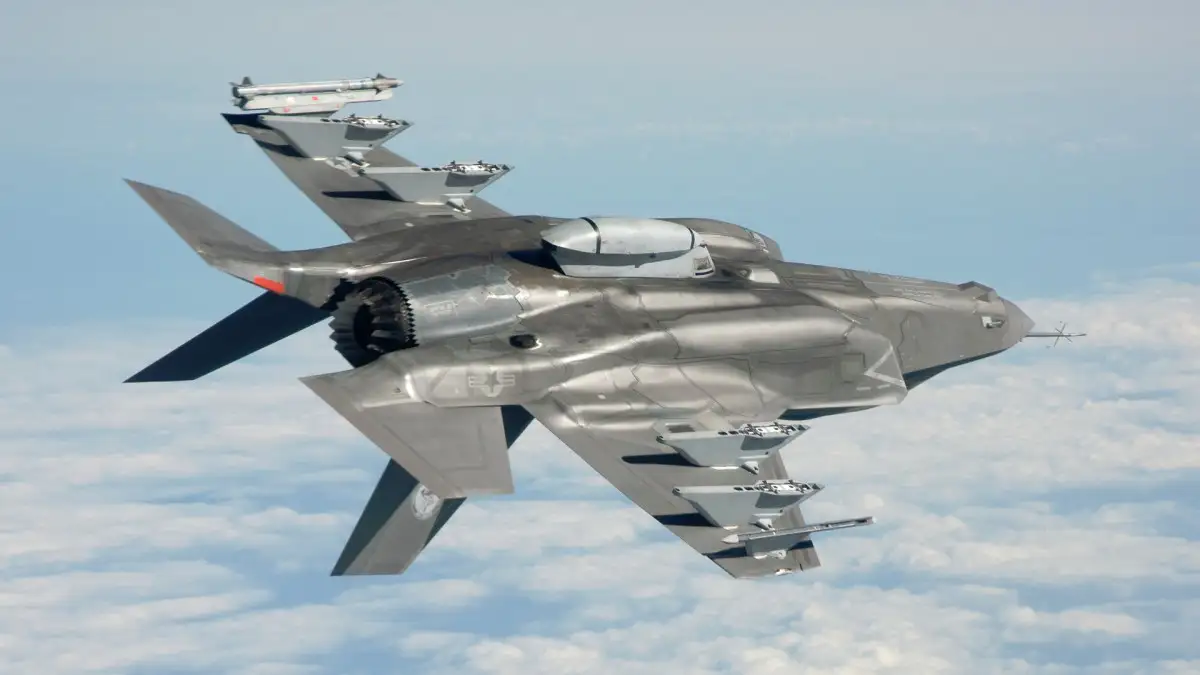
The gun pod was carefully designed to reduce its impact on stealth performance. When a mission does not require cannon fire, the pod can be removed, allowing the aircraft to maintain a cleaner configuration. This flexibility reflects modern military thinking, where mission-specific equipment is often more valuable than carrying every possible weapon on every flight.
Why Fighter Guns Are Less Important Today
Air combat has moved away from the close-range dogfights that defined earlier generations of fighters. Modern aircraft use powerful radar systems, infrared sensors, and networked battlefield information to detect threats before entering visual range.
The last confirmed fighter aircraft gun victory involving a U.S.-built fighter occurred decades ago. In 1992, during an attempted coup in Venezuela, a Venezuelan Air Force F-16A used its internal cannon to shoot down rebel aircraft, demonstrating that guns can still matter in specific circumstances.
However, for today’s stealth fighters, survival depends more on avoiding detection and launching effective missiles than engaging enemies at short distances. The absence of an internal gun on the F-35B and F-35C represents a calculated design decision rather than a weakness.
By prioritizing stealth technology, advanced sensors, and operational flexibility, these aircraft are built for the realities of modern warfare. Their missing internal guns show how fighter design has evolved from traditional dogfighting machines into highly integrated combat systems designed for a new era of aerial conflict.