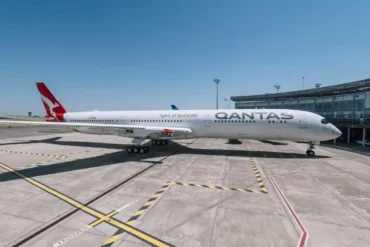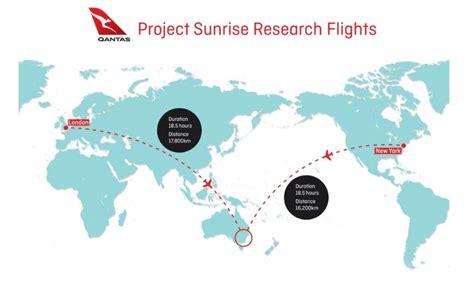
The idea of flying halfway across the world without stopping has always carried a certain mythic quality, a blend of ambition and engineering audacity that defines the cutting edge of commercial aviation. With Qantas Project Sunrise, that ambition is no longer theoretical. It is tangible, engineered into the Airbus A350-1000ULR—a machine designed not merely to fly long distances, but to rewrite the very economics and experience of ultra-long-haul travel.
At the heart of this transformation lies a deceptively simple number: 238 seats. That figure alone reveals a story of compromise, precision, and deliberate sacrifice. In an industry where maximizing passenger capacity is typically the golden rule, Qantas has chosen a radically different path—one that prioritizes range, endurance, and human sustainability over sheer volume.
This is not just about flying farther. It is about redefining what a flight can be when it lasts nearly an entire day.
The Airbus A350-1000ULR: An Aircraft Built Around Fuel
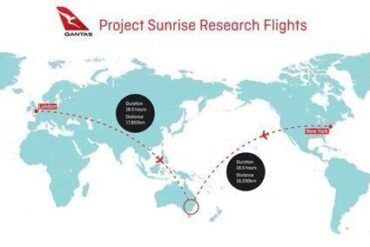
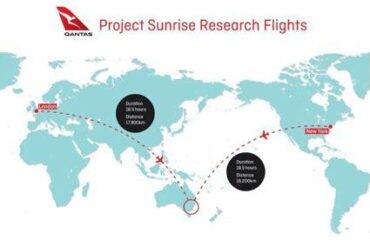
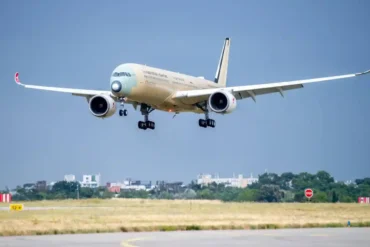
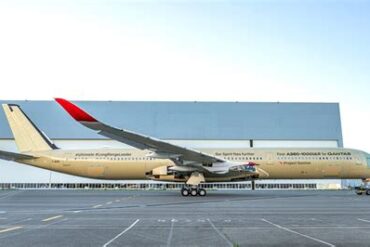
The Airbus A350-1000ULR is not a conventional evolution of an existing aircraft—it is a purpose-built response to an extreme challenge. To achieve routes such as Sydney to London or Sydney to New York nonstop, Airbus re-engineered the aircraft’s internal priorities, beginning with the most critical variable in aviation: fuel.
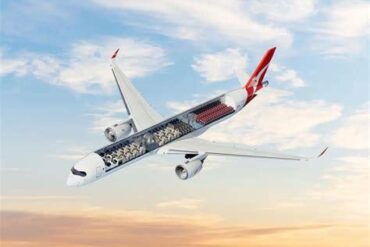
A 20,000-liter rear center fuel tank fundamentally changes the aircraft’s DNA. This modification pushes the A350’s range beyond 9,700 nautical miles, enabling it to remain airborne for up to 22 hours. But this added capability comes at a steep cost—weight.
In aviation, weight is everything. Every additional kilogram must be justified, balanced, and compensated for elsewhere. To support the extra fuel, Airbus increased the aircraft’s maximum takeoff weight to 319 tonnes, reinforced its landing gear, and refined wing aerodynamics. These enhancements allow the aircraft to physically handle the load, but they do not eliminate the cascading consequences of carrying so much fuel.
The result is an aircraft that feels almost inverted in its priorities—a flying fuel reservoir with a passenger cabin carefully wrapped around it.
Why 238 Seats Changes Everything
The most visible and controversial decision in Project Sunrise is the dramatic reduction in passenger capacity. A typical Airbus A350-1000 accommodates around 350 to 370 passengers in a standard three-class configuration. High-density layouts can push that number close to 480.
Qantas, by contrast, has cut that figure down to just 238 seats. This is not an aesthetic choice. It is a mathematical necessity.
Every passenger represents not just body weight, but also baggage, catering supplies, and service equipment. Multiply that across hundreds of people, and the weight becomes significant enough to directly impact how much fuel the aircraft can carry—and therefore how far it can fly.
By reducing seat count, Qantas effectively trades passengers for fuel, extending range while maintaining operational safety margins. The equation is unforgiving: more fuel means fewer people, and fewer people mean fewer tickets to sell.
That trade-off introduces a new economic model. Instead of relying on volume, Qantas is betting on premium pricing and passenger willingness to pay for time savings. For travelers who value eliminating stopovers—especially on routes that traditionally require one or two connections—the appeal is powerful.
In this sense, the 238-seat configuration is not a limitation. It is a strategic repositioning of value.
Reimagining Cabin Space for a 22-Hour Journey
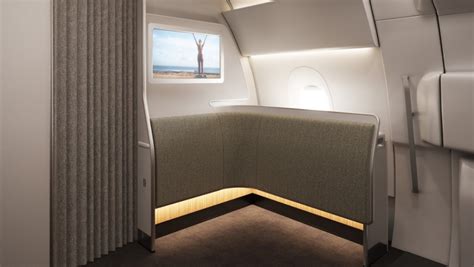
With fewer passengers onboard, Qantas gains something rare in modern aviation: space. Instead of compressing as many seats as possible into the cabin, the airline has chosen to rethink how that space is used.
The result is an interior designed not just for transport, but for endurance and wellbeing.
Premium cabins are significantly expanded, offering greater privacy and comfort for those willing to pay for it. Even in economy, the design philosophy shifts toward ergonomics and livability, recognizing that sitting in a confined space for nearly a full day presents real physical challenges.
One of the most innovative features is the introduction of a Wellbeing Zone—a dedicated area where passengers can stretch, move, and hydrate. This is more than a novelty. It reflects a growing understanding that ultra-long-haul travel requires active management of passenger health, including circulation, hydration, and fatigue.
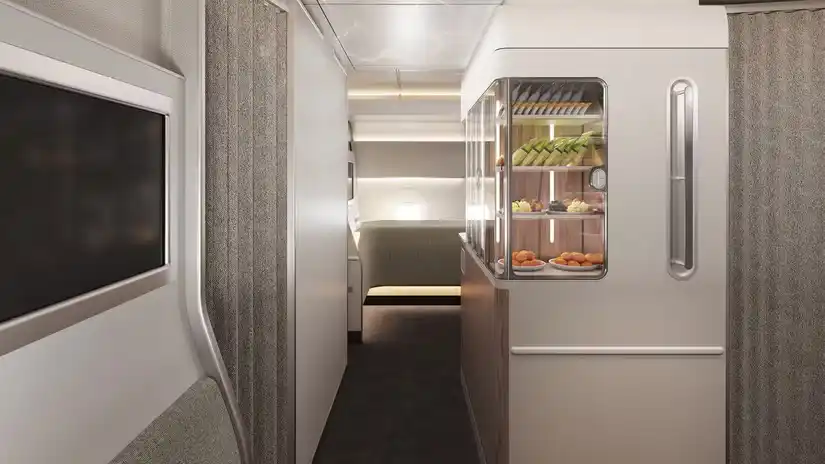
This approach acknowledges a simple truth: a 22-hour flight cannot be treated like a longer version of a 12-hour flight. It demands a fundamentally different experience, one that considers how the human body responds to time, confinement, and altitude.
The Hidden Cost: Cargo Sacrifices and Revenue Shifts
Passenger capacity is not the only casualty of ultra-long-haul ambition. Cargo capacity also takes a significant hit.
On most long-haul flights, cargo is a critical revenue stream, often accounting for a substantial portion of total earnings. But on a flight where fuel already dominates the weight equation, there is limited room left for freight.
Every kilogram allocated to cargo is a kilogram that cannot be used for fuel. And on a 22-hour mission profile, fuel is non-negotiable.
As a result, Qantas must accept reduced cargo capability, shifting its revenue dependence even further toward passengers. This creates a more focused but less diversified income model, where profitability hinges on maintaining high load factors and premium fares.
Interestingly, this is not entirely unprecedented. Airlines like Singapore Airlines have adopted similar strategies with their A350-900ULR fleet, operating ultra-long-haul routes with reduced capacity and a stronger emphasis on passenger yield over cargo volume.
Still, for Qantas, the trade-off underscores a broader theme: range comes at the expense of flexibility.
Crew Logistics: The Human Factor at 40,000 Feet
Flying for nearly an entire day is not just a technical challenge—it is a human one. Pilots and cabin crew must remain alert, effective, and compliant with strict safety regulations throughout the journey.
This necessitates larger crew complements and dedicated rest facilities onboard. The A350-1000ULR includes specially designed crew rest compartments, allowing pilots and flight attendants to sleep during designated periods.
But these accommodations come at a cost. They occupy space that could otherwise be used for passengers or cargo, and they add additional weight to the aircraft.
Each crew member also brings associated equipment, provisions, and logistical considerations. Over a 22-hour flight, even small inefficiencies can compound into significant operational challenges.
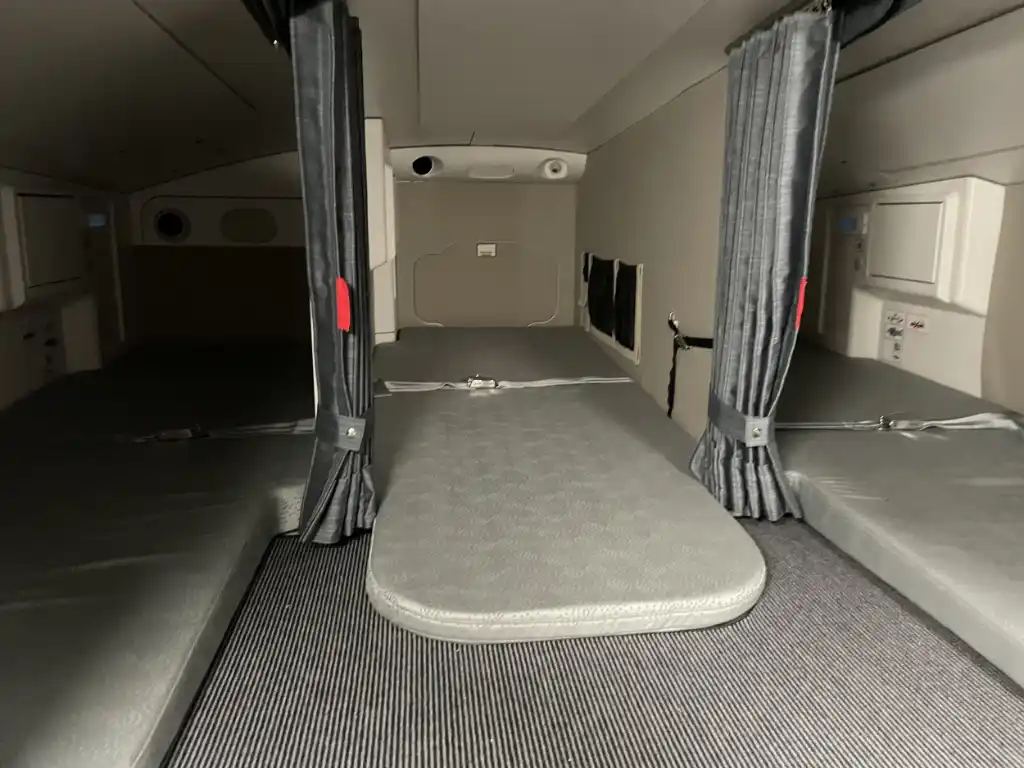
Fatigue management becomes a science in itself, requiring careful scheduling, monitoring, and contingency planning. The success of Project Sunrise depends as much on human performance optimization as it does on engineering excellence.
Operational Complexity on a Global Scale
Ultra-long-haul flights introduce a level of operational complexity that goes far beyond traditional long-haul routes. Planning a 22-hour journey requires accounting for a vast array of variables, from weather systems spanning multiple continents to air traffic constraints and potential diversion scenarios.
Unlike shorter flights, where alternate airports are relatively accessible, ultra-long-haul routes often traverse remote regions with limited diversion options. This makes fuel planning even more critical, as reserves must account for worst-case scenarios.
The extended range of the A350-1000ULR provides flexibility in route selection, allowing pilots to avoid adverse conditions. However, this flexibility must be balanced against the need to maintain optimal fuel efficiency.
Maintenance and scheduling also become more demanding. Aircraft operating these routes require exceptional reliability, as any technical issue could have amplified consequences given the duration of the flight. Turnaround times are longer, and crew rotations must be meticulously planned.
In effect, Project Sunrise transforms each flight into a high-stakes logistical operation, where precision is not optional—it is essential.
A New Category of Air Travel
What emerges from all these trade-offs is something entirely new: a category of air travel defined not by distance alone, but by duration, design philosophy, and passenger experience.
Qantas is not simply extending existing models. It is creating a new standard, one where the journey itself is re-engineered to match the demands of extreme endurance.
The 238-seat configuration, the wellbeing-focused cabin, the reduced cargo capacity, and the expanded crew infrastructure all point to a singular conclusion: this aircraft is optimized for a very specific mission profile.
It is not designed to be everything to everyone. It is designed to do one thing exceptionally well—connect distant cities nonstop in a way that is both viable and tolerable.
The Strategic Gamble Behind Project Sunrise
There is no escaping the fact that Project Sunrise is a bold economic gamble. Fewer seats mean higher costs per passenger, and higher costs demand higher fares.
Qantas is betting that enough travelers will value the time savings and convenience of nonstop travel to justify the premium. For business travelers, the ability to eliminate layovers could translate into significant productivity gains. For leisure travelers, it offers a more seamless and less fragmented journey.
But the success of this model depends on consistent demand. Ultra-long-haul flights are less forgiving of fluctuations in passenger numbers, as there is less buffer provided by cargo revenue or high seat density.
It is a strategy that prioritizes quality over quantity, and precision over scale.
Redefining the Limits of Flight
Project Sunrise represents more than just a technological milestone. It is a philosophical shift in how aviation approaches distance and time.
By accepting limitations—fewer seats, less cargo, greater complexity—Qantas has unlocked a new capability. The ability to fly nonstop for 22 hours is not the result of a single breakthrough, but of hundreds of carefully balanced compromises.
Each decision, from adding a fuel tank to removing seats, reflects a deeper understanding of what ultra-long-haul travel demands.
And in that sense, the most remarkable aspect of the A350-1000ULR is not its range, but its intentional design. It is an aircraft that embodies a clear idea: that sometimes, to go farther, you have to carry less.
That idea may well define the future of long-distance travel.