Long-haul air travel has always been a test of endurance. For decades, airlines competed by refining seats, improving meals, and adding entertainment systems. Yet the basic formula remained the same: sit in one place for 12 to 16 hours and wait for the aircraft to land. Qantas is now rewriting that formula entirely. With the upcoming Project Sunrise, the Australian flag carrier is introducing a new generation of inflight innovations specifically designed for journeys lasting nearly an entire day.
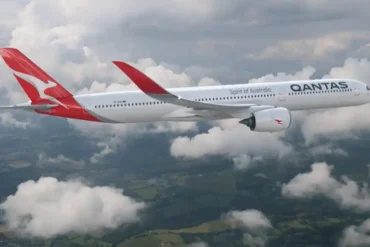
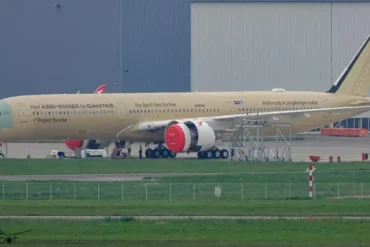
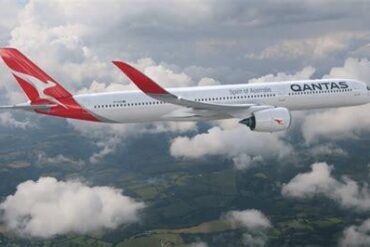
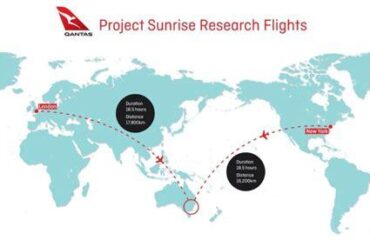
Set to launch by 2027, Project Sunrise will connect Sydney with London and New York through nonstop flights exceeding 20 hours. These ultra-long-haul routes will operate using the specially modified Airbus A350-1000ULR, an aircraft engineered to push the boundaries of distance and passenger comfort. Instead of simply upgrading seats, Qantas has redesigned the entire onboard environment around human physiology, movement, sleep cycles, and digital connectivity.
The result is a cabin concept that passengers and aviation analysts are already praising. From a world-first wellbeing zone to private first class suites that resemble boutique hotel rooms, the airline has turned its new aircraft into a flying laboratory for the future of long-distance travel.
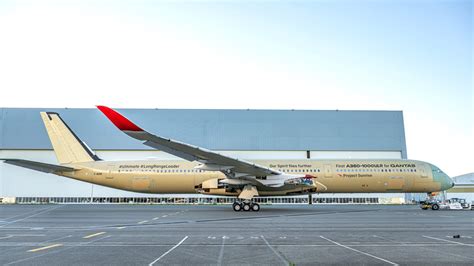
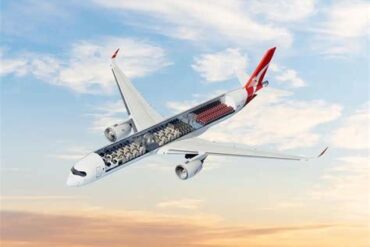
These changes represent more than incremental improvements. They signal a philosophical shift in aviation design. Rather than squeezing in more seats to maximize capacity, Qantas is sacrificing nearly 100 seats compared with typical A350 layouts. The payoff is a cabin experience that prioritizes space, health, privacy, and productivity—all critical factors when passengers spend almost 22 hours in the sky.
The World-First Wellbeing Zone Transforming Long-Haul Travel
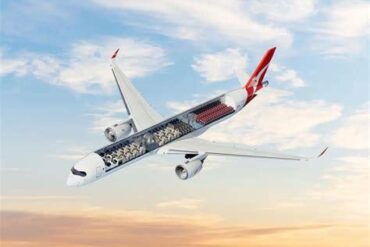
The most talked-about addition aboard the Project Sunrise aircraft is the dedicated wellbeing zone, an entirely new concept in commercial aviation. Positioned between the premium economy and economy cabins, this area is designed to encourage passengers to move, stretch, and rehydrate during the longest flights ever scheduled.
Traditional long-haul flights leave passengers confined to their seats, occasionally wandering into cramped galleys to stretch near the lavatories. Qantas engineers recognized that this arrangement is not sustainable for 20-hour flights spanning 10,000 miles. The wellbeing zone solves this problem by creating a purpose-built space for physical movement and recovery.
Inside this space, passengers will find sculpted handrails for assisted stretching, allowing travelers to stabilize themselves while performing guided movements. Large digital displays run exercise programs led by virtual instructors, offering routines designed to stimulate circulation and reduce muscle stiffness. These routines are not random fitness clips but programs developed through extensive research.
Qantas partnered with the University of Sydney’s Charles Perkins Centre, conducting years of clinical studies to understand how the human body reacts to ultra-long flights. Researchers discovered that periodic movement and strategic lighting adjustments can significantly reduce jet lag symptoms and the risk of deep vein thrombosis (DVT).
The wellbeing zone also includes self-service hydration stations stocked with electrolyte beverages and healthy snacks. Low humidity levels inside aircraft cabins can cause dehydration, which contributes to fatigue and headaches during long journeys. Easy access to fluids ensures passengers can maintain hydration without repeatedly waiting for beverage service.
The design of the area reinforces relaxation. Soft biological lighting simulates natural daylight rhythms, while acoustic materials reduce background noise. In effect, the zone becomes a third space inside the aircraft—not a seat, not a corridor, but a small wellness lounge designed to reset both body and mind.
First Class Suites That Resemble Boutique Hotel Rooms
While the wellbeing zone addresses health across the cabin, the front of the aircraft introduces a completely different level of luxury. Qantas is unveiling one of the most ambitious first class concepts ever installed on a commercial aircraft.
The cabin features just six suites arranged in a 1-1-1 configuration, guaranteeing every passenger direct aisle access and maximum privacy. Instead of a traditional seat that converts into a bed, each suite contains two separate living spaces: a reclining lounge chair for relaxation and an 80-inch fully fixed bed for sleep.
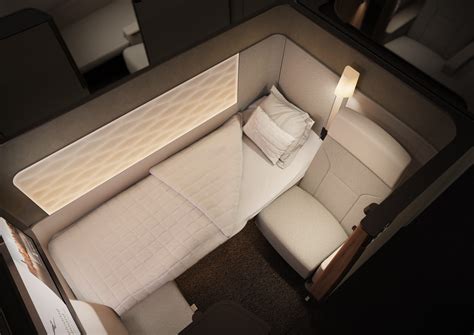
This dual-space layout solves a longstanding inconvenience in premium travel. On most airlines, passengers must wait for crew members to transform their seat into a bed. With Qantas’ design, the sleeping area is always ready. Passengers can move between working, relaxing, and sleeping without rearranging furniture.
The suite is enclosed by 57-inch walls and a sliding privacy door, forming a quiet personal sanctuary within the aircraft cabin. Measuring approximately 3.5 square meters, the suite provides far more floor space than conventional first class products.
Inside the suite, passengers find features rarely seen in aviation:
- A personal wardrobe for jackets and garments
- A vanity drawer with storage for personal items
- Multiple compartments for carry-on luggage
- Wireless charging pads and AC power outlets
- A large dining table designed for two people
These details matter on a flight lasting nearly a full day. The ability to stand, stretch, or change posture easily helps reduce fatigue.
One of the most innovative elements is the circadian lighting system integrated into each suite. Circadian lighting mimics natural daylight patterns, gradually shifting color temperature throughout the flight. The system can automatically align with the destination’s time zone, gently nudging the body’s internal clock toward the schedule of London or New York long before landing.
For travelers paying the expected $20,000-plus ticket price, this combination of space, technology, and wellness features transforms the aircraft cabin into something closer to a private flying hotel room.
Business Class Suites Designed for Privacy and Rest
While first class captures attention, the majority of premium passengers will experience the new Qantas Business Suite, which introduces significant upgrades compared with previous designs.
Each business class seat includes a sliding privacy door, marking the first time Qantas has offered fully enclosed suites in its widebody fleet. Privacy doors have become a popular feature across leading airlines because they create a personal environment where passengers can work or rest without distractions.
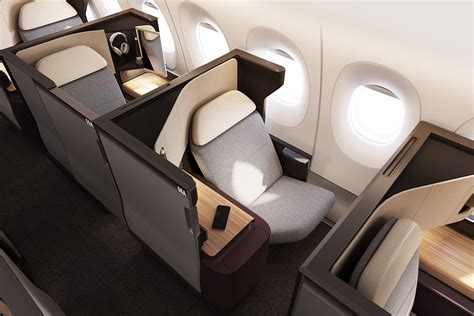
The suite converts into a two-meter fully flat bed, allowing passengers to stretch comfortably during overnight segments. This length exceeds the typical 73- to 75-inch beds found on many long-haul aircraft, a small but meaningful improvement for taller travelers.
Designers also focused on reducing the claustrophobic sensation that sometimes accompanies business class seats. The suite includes open surfaces, strategic lighting, and ergonomic armrests that allow passengers to shift positions during long periods of rest.
Storage compartments hold laptops, tablets, and headphones, while integrated charging ports ensure devices remain powered throughout the journey. For business travelers flying between Australia and Europe or North America, these suites function as both office and bedroom in the sky.
Premium Economy Seats Engineered for Long-Duration Comfort
The premium economy cabin is often overlooked in aviation discussions, yet it plays a critical role on flights lasting 20 hours. Travelers in this section expect greater comfort than economy without paying business class prices.
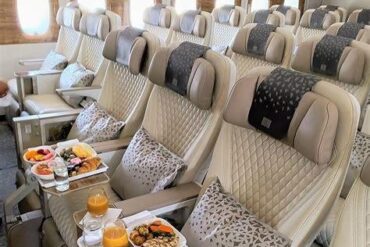
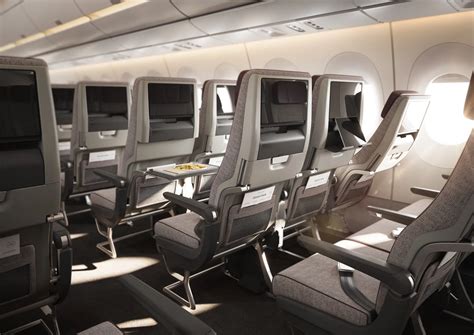
Qantas redesigned the entire seat structure with ergonomics in mind. Each seat offers a 40-inch pitch, providing significantly more legroom than standard long-haul configurations.
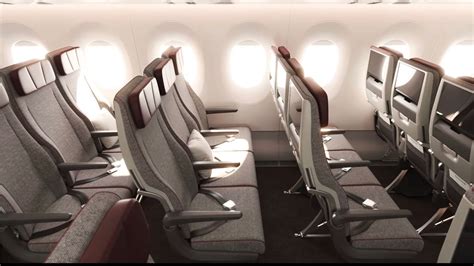
The most innovative feature is the cradle recline mechanism. Traditional reclining seats tilt backward, causing passengers to slide forward slightly. Over long flights, this movement can create strain in the lower back and neck.
The cradle recline system solves this by pivoting the seat base forward as the backrest tilts, maintaining proper spinal alignment. This mechanical adjustment distributes body weight more evenly, reducing pressure points that often lead to stiffness.
Additional improvements include enhanced lumbar support, adjustable headrests, and wider armrests. When combined with the aircraft’s lower passenger density, the premium economy cabin offers an environment designed to remain comfortable through nearly a full day of travel.
Economy Class Improvements That Prioritize Space
Even travelers in economy class will notice meaningful upgrades on Project Sunrise aircraft. Qantas has chosen to increase seat pitch to 33 inches, slightly above the industry average of 31–32 inches.
While a single inch may sound minor, over extended flights it provides noticeably greater knee clearance and easier access to the aisle.
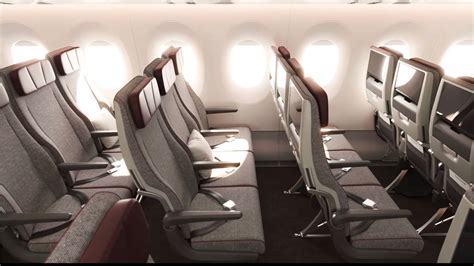
Seat cushions have also been redesigned using multi-layer breathable fabrics, improving airflow and reducing heat buildup during long periods of sitting. Each seat includes:
- A 13-inch 4K entertainment screen
- Personal device storage pockets
- USB-C charging ports
- Adjustable headrests
These features transform the economy experience from a basic transport solution into a more livable environment for ultra-long journeys.
Advanced Entertainment and High-Speed Connectivity
Entertainment becomes essential on flights exceeding 20 hours. To keep passengers engaged, Qantas has installed the Panasonic Astrova inflight entertainment system, one of the most advanced platforms currently available.
Every seat across all cabins features 4K OLED screens, delivering cinema-grade visuals with infinite contrast ratios. Compared with older LCD displays, OLED technology produces deeper blacks and sharper images, significantly improving viewing quality.
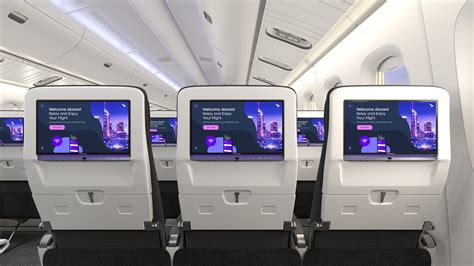
Bluetooth connectivity allows passengers to pair their own wireless headphones directly with the screen. This small feature eliminates the need for airline-provided wired headsets and enhances the overall experience for travelers who prefer premium noise-canceling headphones.
Connectivity goes beyond entertainment. Through a partnership with Viasat, Qantas will provide high-speed satellite Wi-Fi across the entire aircraft. Unlike older systems that struggle over remote oceanic regions, the Viasat network offers broadband-level performance even in the middle of the Pacific.
Passengers can stream video, attend video meetings, or stay active on social media throughout the flight. For business travelers, the aircraft effectively becomes a fully connected office at 40,000 feet.
Engineering the Aircraft for 22-Hour Flights
Flying nonstop between Sydney and London or New York requires more than cabin innovations. The Airbus A350-1000ULR needed structural modifications to make such extreme distances possible.
The aircraft includes an additional center fuel tank, increasing total fuel capacity by roughly 20,000 liters. This extra fuel allows the aircraft to travel more than 10,000 miles without refueling.
However, fuel adds weight. To maintain the range required for Project Sunrise, Qantas had to reduce passenger capacity dramatically. Instead of carrying 350 to 410 passengers, the aircraft will carry just 238.
This low-density configuration has two effects. First, it ensures the aircraft remains light enough to complete its marathon routes. Second, it provides significantly more personal space for each traveler, improving comfort across every cabin class.
The Price of Ultra-Long-Haul Convenience
Nonstop flights between Australia and major global cities promise enormous convenience. Passengers avoid layovers, airport transfers, and the disruption of changing aircraft.
However, that convenience comes at a cost. Tickets on Project Sunrise routes are expected to be around 20 percent more expensive than comparable one-stop journeys.
Airlines like Emirates and Singapore Airlines have built powerful global networks around hub airports, allowing travelers to break long journeys into manageable segments. Some critics argue that a brief stopover can actually improve comfort, giving passengers time to walk, shower, and reset before continuing their trip.
Health experts also point out that the human body is not naturally adapted to spending 22 continuous hours inside a pressurized aircraft cabin. Even with stretching zones and circadian lighting, travelers may still experience fatigue and dehydration.
Yet many passengers appear willing to pay the premium. Saving five hours of travel time and avoiding complex connections holds strong appeal, especially for business travelers.
How Project Sunrise Could Reshape Global Aviation
Project Sunrise represents more than a single airline’s experiment. It may signal the beginning of a new era in point-to-point global travel.
For decades, international aviation relied heavily on the hub-and-spoke model, where passengers connect through large airports like Dubai, Singapore, or Doha. Ultra-long-range aircraft now make it possible to bypass these hubs entirely.
If Qantas proves that nonstop routes of this length are profitable, other airlines may follow. Carriers such as Turkish Airlines have already explored the possibility of launching Istanbul-to-Sydney nonstop flights using similar aircraft.
The long-term result could be a more fragmented global network, where secondary cities gain direct connections that once seemed impossible.
At the same time, environmental regulations and fuel efficiency concerns will shape how widely this model spreads. Ultra-long flights require more fuel per passenger due to their low seat density, which could attract scrutiny from regulators focused on carbon emissions.
Still, the innovations introduced for Project Sunrise—wellbeing zones, circadian lighting, improved ergonomics, and immersive digital experiences—are already influencing aircraft design across the industry.
What begins as an experiment for extreme long-haul travel often becomes the standard for shorter flights within a decade.
For passengers, that means the next generation of aircraft cabins will not simply transport people from one continent to another. They will function as living environments designed around human comfort, productivity, and health.
And if the early excitement surrounding these new inflight additions is any indication, travelers are more than ready for that transformation.