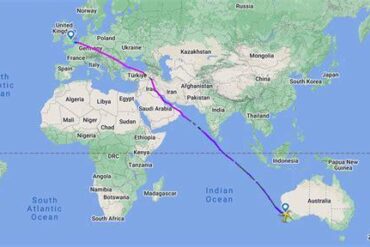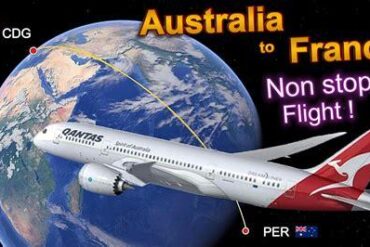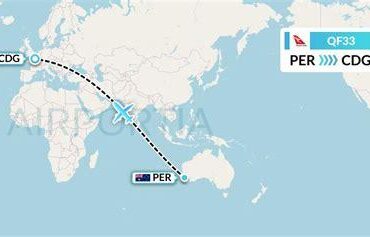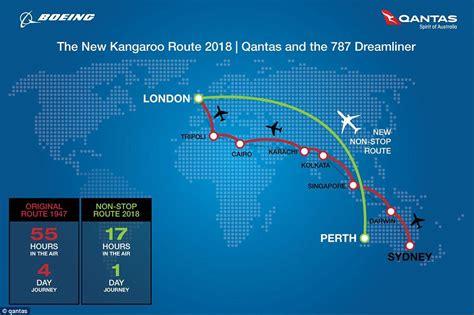
In March 2018, Qantas changed the aviation industry forever. By launching nonstop flights between Perth Airport (PER) and London Heathrow (LHR), the Australian flag carrier became the first airline to directly connect Australia and Europe without a stopover. The route instantly became one of the world’s most celebrated long-haul services, symbolizing a new era where travelers could cross continents without changing aircraft or spending hours in transit lounges.
For nearly eight years, flight numbers QF9 and QF10 represented one of aviation’s most ambitious achievements. The route demonstrated the capabilities of Boeing’s advanced 787 Dreamliner while proving that passengers were willing to pay a premium for time-saving nonstop travel.
Yet in 2026, Qantas quietly suspended the Europe-bound nonstop segment and rerouted flights through Singapore. The move surprised many travelers because the Perth-London service had become one of the airline’s flagship routes.
The reason was not weak demand. It was not poor passenger numbers. It was not a lack of interest in nonstop travel.
Instead, the decision exposed the razor-thin operational margins that define ultra-long-haul aviation and highlighted how even minor disruptions can transform a profitable route into an economic challenge.
The Route That Redefined Travel Between Australia And Europe
When Qantas launched Perth-London nonstop flights, the service covered approximately 9,000 miles (14,500 kilometers) and reduced journey complexity dramatically.
For decades, Australians flying to Europe typically stopped in Singapore, Dubai, Hong Kong, Bangkok, or other major hubs. These stopovers often extended travel times significantly and introduced the possibility of delays, missed connections, and additional fatigue.
The nonstop Perth-London flight eliminated these inconveniences.
Passengers could board in Western Australia and arrive in London approximately 17 hours later without leaving their seat assignment or changing aircraft. For business travelers and premium passengers especially, the route offered tremendous value.
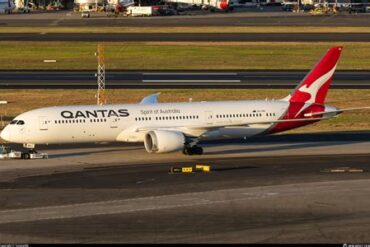
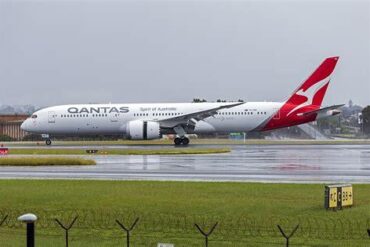
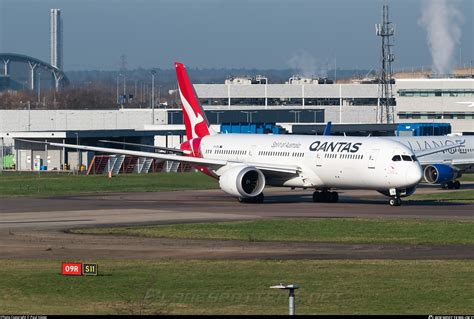
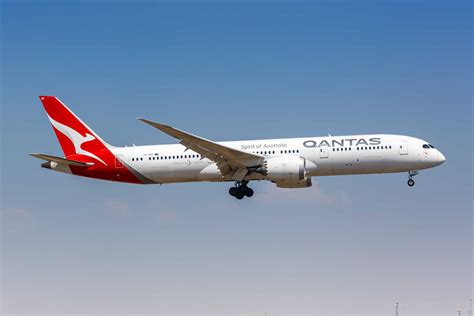
Qantas specifically configured its Boeing 787-9 fleet for these demanding missions.
Instead of maximizing seat capacity, the airline opted for a lower-density layout containing only 236 seats, consisting of:
- 42 Business Class seats
- 28 Premium Economy seats
- 166 Economy seats
This configuration was dramatically less dense than many competing airlines operating the same aircraft type.
While some carriers install more than 300 seats on their Boeing 787-9s, Qantas sacrificed capacity in favor of range and passenger comfort.
That decision reflected a simple reality: the Perth-London route pushed the Dreamliner close to its operational limits.
Why The Boeing 787-9 Was Operating Near Its Maximum Capability
The Boeing 787-9 is officially rated for a range of approximately 8,705 miles (14,010 kilometers) under standard conditions.
The Perth-London route exceeds that figure.
Although modern aircraft performance depends on numerous factors including winds, weather, fuel reserves, routing requirements, and payload, the flight consistently operated near the edge of the aircraft’s practical capabilities.
This meant every kilogram mattered.
Passengers, baggage, cargo, catering supplies, fuel reserves, and operational contingencies all had to be carefully balanced.
Industry data revealed that the westbound flight from Perth to London frequently required seat restrictions. During certain periods between 2024 and 2025, average passenger loads were intentionally capped below the aircraft’s full seating capacity.
In practical terms, Qantas often had to leave revenue-generating seats empty simply to ensure sufficient fuel margins.
The eastbound London-to-Perth sector experienced fewer limitations because prevailing winds generally favored the journey.
However, the westbound leg remained extremely sensitive to operational changes.
This sensitivity would eventually become the route’s greatest weakness.
The 2026 Iran Crisis Changed Everything
The major trigger behind Qantas’ decision emerged from geopolitical developments in the Middle East.
Following the 2026 Iran Crisis, airspace restrictions and closures forced airlines across the world to redesign numerous international routes. Aircraft could no longer follow the most efficient flight paths through affected regions.
For Qantas, this created a serious challenge.
The Perth-London flight suddenly became longer.
Alternative routings added as much as 45 minutes to flight times, increasing fuel consumption and reducing operational flexibility.
For a normal long-haul route, an extra 45 minutes might be inconvenient but manageable.
For one of the world’s longest flights operating near the edge of aircraft performance, those additional minutes represented a major problem.
The margin that had allowed the route to function profitably effectively disappeared.
Aircraft required more fuel.
More fuel increased weight.
Additional weight reduced payload capacity.
Reduced payload capacity meant fewer passengers and less cargo.
The economic equation quickly deteriorated.
Rather than continue operating with severe revenue penalties, Qantas made a pragmatic business decision.
The airline temporarily abandoned the nonstop concept.
Why Singapore Became The Logical Solution
Qantas rerouted the Perth-London service through Singapore Changi Airport (SIN).
Although some travelers viewed the change as a step backward, the operational benefits were substantial.
The revised routing allowed the airline to carry significantly more passengers because the aircraft no longer needed to depart Perth loaded with fuel for an uninterrupted journey to Europe.
According to Qantas, the Singapore stop enabled the aircraft to accommodate more than 60 additional passengers per flight.
That increase transformed the route’s economics.
Instead of sacrificing revenue through empty seats, Qantas could maximize passenger loads while maintaining operational reliability.
The result was a longer journey for travelers but a more sustainable business model for the airline.
Importantly, this was not the first time Qantas had made such a decision.
The carrier briefly introduced Singapore stopovers during periods in 2024 when operational conditions similarly affected the route.
The 2026 adjustment was therefore not unprecedented. It was a proven strategy deployed when nonstop operations became commercially inefficient.
Passenger Demand Was Never The Problem
One misconception surrounding the route change was that Qantas had struggled to fill seats.
The available evidence suggests the opposite.
Demand for direct travel between Australia and Europe remained exceptionally strong.
Nonstop flights offer several advantages that passengers consistently value:
- Reduced travel time
- Elimination of connecting flights
- Lower risk of missed connections
- Simplified baggage handling
- Improved convenience for business travelers
- Reduced travel stress
The Perth-London route became one of the most recognizable examples of these benefits.
The challenge was not attracting customers.
The challenge was carrying enough of them while maintaining safe operating margins under new routing conditions.
This distinction is important because it highlights the difference between market demand and operational feasibility.
A route can be extremely popular yet still face economic difficulties when aircraft performance limitations become a factor.
Why Rome Continued Operating Nonstop
While London lost its nonstop status, Rome did not.
This raised an obvious question.
Why could Qantas continue flying directly between Perth and Rome while London required a stop?
The answer lies primarily in distance.
The Perth-Rome route covers approximately 8,298 miles (13,354 kilometers).
That distance sits comfortably within the Boeing 787-9’s operational envelope compared with London.
As a result, the route possesses greater flexibility and larger performance margins.
Additional routing requirements caused by geopolitical events therefore have a smaller impact.
The service has reportedly performed exceptionally well since its launch in 2022.
Load factors have frequently exceeded 90%, demonstrating strong passenger demand.
More than half of travelers on the route reportedly originate in eastern Australia and connect through Perth, further strengthening the service’s strategic importance.
Recognizing this success, Qantas significantly expanded Rome operations in 2026.
The airline extended the seasonal schedule, increased frequencies, and added nearly 10,000 additional seats.
Rather than retreating from Europe, Qantas was selectively expanding where operational economics remained favorable.
Paris Faced Similar Challenges To London
The London adjustment was not an isolated case.
Earlier in 2026, Qantas announced that its Perth-Paris nonstop service would also undergo changes.
Instead of maintaining direct flights, the carrier rerouted Paris services through Singapore and Sydney.
The similarities between the Paris and London decisions were difficult to ignore.
Both routes experienced increased operational pressure from revised flight paths and airspace restrictions.
Both routes relied heavily on ultra-long-haul performance.
Both routes benefited economically from intermediate stops that reduced fuel-related constraints.
Yet even as nonstop operations disappeared, Qantas increased overall capacity to Paris.
This demonstrated that demand remained healthy.
The airline was optimizing network efficiency rather than withdrawing from the market.
To support these revised European services, Qantas expanded Perth-Singapore frequencies from seven weekly flights to ten weekly flights.
The move reinforced Singapore’s role as a strategic gateway within the carrier’s international network.
Perth’s Importance In Qantas’ European Strategy
Despite the London rerouting, Perth remains central to Qantas’ long-haul ambitions.
Geographically, Western Australia occupies a unique position.
It sits significantly closer to Europe than Sydney or Melbourne, making ultra-long-haul flights more practical.
This advantage has transformed Perth into a strategic hub for Qantas’ European operations.
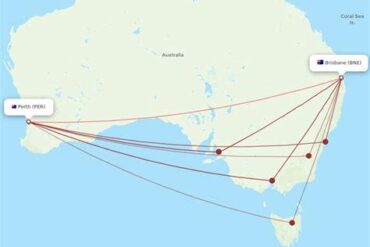
Flight schedules are carefully coordinated to allow seamless connections from eastern Australian cities.
Passengers from Sydney, Melbourne, Brisbane, and Adelaide can connect through Perth and continue onward to Europe with minimal transit times.
The success of these operations has helped validate Qantas’ broader vision for long-distance travel.
Every flight generates valuable operational data regarding passenger behavior, crew management, fuel consumption, aircraft performance, and route economics.
That information directly supports the airline’s most ambitious project.
What The Route Suspension Means For Project Sunrise
The temporary loss of Perth-London nonstop flights does not undermine Project Sunrise.
In many respects, it strengthens the project’s rationale.
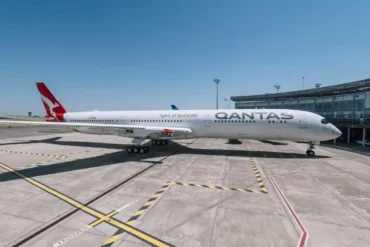
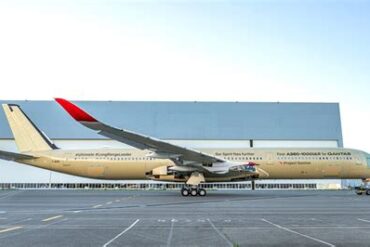
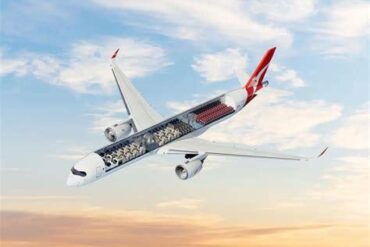
Project Sunrise aims to connect Sydney and Melbourne directly with London and New York using specially modified Airbus A350-1000ULR aircraft.
These aircraft are being engineered specifically for ultra-long-haul operations.
Unlike the Boeing 787-9, the A350-1000ULR will feature substantial modifications including a massive rear-center fuel tank capable of carrying approximately 20,000 liters of additional fuel.
The aircraft will also receive enhancements to fuel management systems and maximum takeoff weight capabilities.
Qantas has ordered twelve of these specialized aircraft.
Their cabin layouts will prioritize comfort over capacity.
Each aircraft will contain only 238 seats despite the standard A350-1000 typically accommodating well over 350 passengers.
Passengers can expect:
- Six First Class suites
- Fifty-two Business Class suites
- Forty Premium Economy seats
- One hundred forty Economy seats
- Dedicated wellness areas for stretching and movement
These features reflect lessons learned from years of operating some of the world’s longest commercial flights.

The Bigger Lesson Behind The Perth-London Change
The suspension of nonstop Perth-London flights in 2026 serves as a powerful reminder that aviation remains a business governed by physics.
Passengers often view modern airliners as machines capable of effortlessly crossing oceans and continents.
In reality, the longest routes operate within remarkably narrow margins.
A slight increase in distance, a shift in prevailing winds, an airspace closure, or changing geopolitical conditions can fundamentally alter route economics.
Qantas did not end nonstop Perth-London flights because the concept failed.
The route actually proved the enduring appeal of direct travel between Australia and Europe.
Instead, the airline encountered circumstances that temporarily pushed the Boeing 787-9 beyond an economically sustainable operating envelope.
By introducing a Singapore stop, Qantas preserved capacity, protected profitability, and maintained connectivity during a period of extraordinary operational disruption.
The decision also highlighted why Project Sunrise remains so important. The next generation of ultra-long-haul aircraft is being designed specifically to overcome the limitations that constrained today’s longest flights.
When Qantas eventually launches nonstop Sydney-London and Sydney-New York services aboard the Airbus A350-1000ULR, the lessons learned from Perth-London will be embedded into every aspect of the operation.
Far from representing the end of an era, the temporary suspension of nonstop Perth-London flights may ultimately be remembered as a crucial stepping stone toward an even more ambitious future for global aviation.