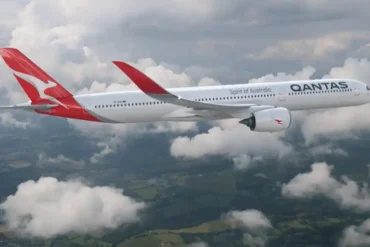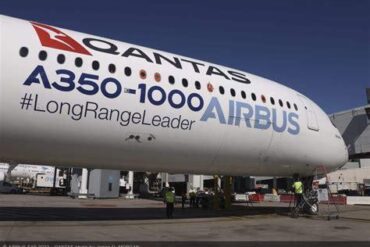
Australia’s position on the far edge of global aviation has always shaped how Qantas thinks about aircraft, networks, and competitiveness. Distance is not an abstract concept for the airline; it is a daily operational reality that defines everything from fleet planning to brand identity. As global travelers increasingly prioritize nonstop connectivity, the strategic value of aircraft capable of flying farther, longer, and more efficiently has grown sharply. In this environment, the Airbus A350-1000ULR has emerged as a uniquely powerful tool for Qantas, not as a novelty aircraft, but as a platform that reshapes what is commercially and operationally possible.
For Qantas, ultra-long-haul flying is not about chasing records for their own sake. It is about overcoming geography in a way that aligns with premium demand, operational resilience, and long-term sustainability. Routes from Australia to Europe or the eastern United States have always existed, but they have traditionally relied on intermediate hubs, additional crews, and extended total journey times. As expectations shift, the ability to link Sydney or Melbourne directly with cities like London or New York has become a competitive differentiator rather than a marketing stunt.
This is the strategic backdrop against which the A350-1000ULR makes sense. Its appeal lies not in a single specification or headline figure, but in how its capabilities map precisely onto Qantas’ long-haul ambitions. From range and fuel efficiency to cabin flexibility and crew integration, the aircraft aligns with the airline’s vision of making extreme-distance flying a repeatable, reliable business, not an occasional endurance exercise.
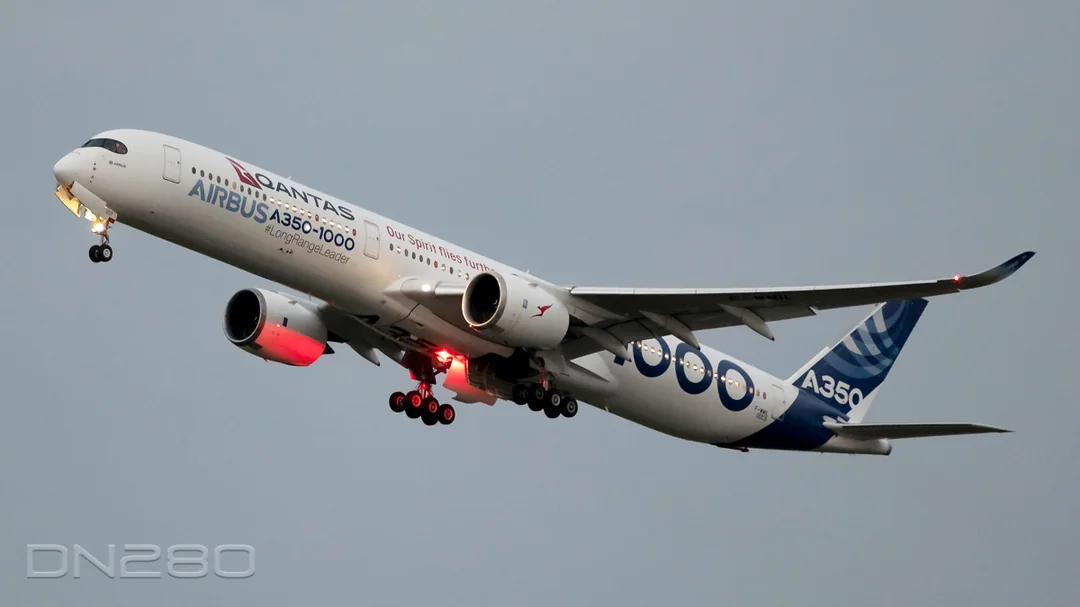
Australia’s Geography Turns Range Into Strategy
For airlines based in Europe, Asia, or the Middle East, long-haul networks are often supported by dense short- and medium-haul feeder traffic. Qantas operates under a very different set of constraints. Australia’s isolation means that every additional mile of aircraft range translates directly into new nonstop opportunities. There are no nearby continental hubs to soften the operational impact of long distances, and missed connections carry disproportionately high costs in terms of time, customer satisfaction, and disruption.
This is why range for Qantas is not a niche requirement but a core strategic lever. Nonstop flights to Europe and North America reduce total travel time by several hours, eliminate transit risk, and appeal strongly to premium and corporate travelers. These passengers value predictability and comfort over sheer ticket price, making ultra-long-haul capability central to maintaining Qantas’ relevance in high-yield international markets.
The A350-1000ULR fits this reality with unusual precision. Its ability to operate reliably beyond 8,000 nautical miles allows Qantas to design routes that were previously impractical or marginal. Rather than building a network around intermediate stops, the airline can now envision a system where Australia feels materially closer to the world’s major economic centers.
Project Sunrise and the Need for a Purpose-Built Aircraft
Project Sunrise represents one of the most ambitious undertakings in commercial aviation: nonstop flights from Australia’s east coast to destinations such as London Heathrow and New York JFK, pushing toward the 20-hour mark. Achieving this is not simply a matter of fuel capacity. These missions demand consistent performance at the extreme limits of endurance, with minimal tolerance for variability caused by winds, weather, or payload constraints.
What distinguishes the A350-1000ULR in this context is that it meets these demands without forcing Qantas into unacceptable compromises. Its composite airframe delivers high structural efficiency, while its elevated maximum takeoff weight provides the margin needed to carry fuel, passengers, and cargo simultaneously. This balance is crucial. Ultra-long-haul flights that require frequent payload restrictions or seasonal schedule adjustments quickly lose their commercial credibility.
Qantas’ decision to configure its Project Sunrise aircraft from the outset for ultra-long-haul service underscores this point. These jets are not standard airframes adapted later; they are purpose-built tools. Range, cabin layout, crew-rest areas, and operational margins are integrated into the design from day one, reinforcing the A350-1000ULR’s role as the foundation of the entire initiative.
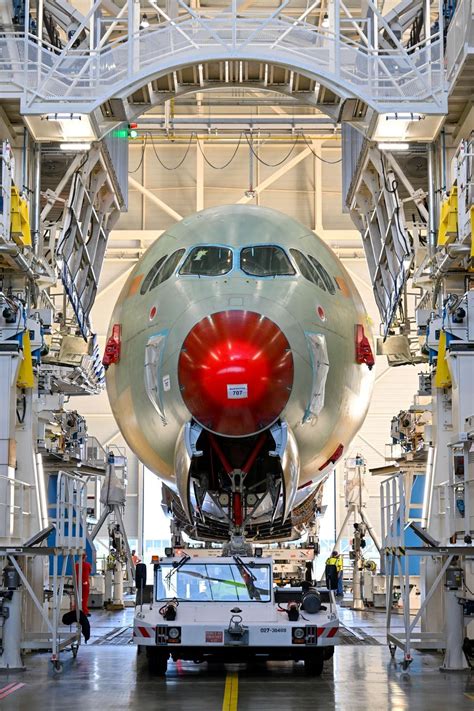
Why the Competitive Field Fell Away
When Qantas evaluated potential aircraft for Project Sunrise, the shortlist was remarkably short. Ultra-long-haul flying sits at the intersection of range, payload resilience, and operational maturity, a combination that few platforms can deliver simultaneously. Smaller widebodies, while efficient on conventional long-haul routes, tend to encounter payload penalties when pushed to their absolute limits. For an airline planning daily operations rather than occasional flights, this variability is operationally unattractive.
Larger aircraft, meanwhile, bring their own risks. Development timelines, certification uncertainty, and delayed entry into service can undermine carefully planned network strategies. For Qantas, whose Project Sunrise timeline is tightly linked to fleet renewal and market positioning, these uncertainties carried significant strategic weight.
Against this backdrop, the A350-1000ULR stood apart. It offered extreme range without developmental risk, mature systems without outdated technology, and large-aircraft economics without excessive structural compromise. Its appeal was not about outperforming competitors in one dimension, but about avoiding weaknesses that would erode reliability or flexibility over time.
Sustained Cruise Performance Matters More Than Headlines
On flights approaching 20 hours, the most critical phase is not takeoff or climb, but sustained cruise. Small inefficiencies that are negligible on a ten-hour sector compound dramatically over nearly a full day in the air. Fuel burn predictability, thermal stability, and system reliability become central operational concerns.
The A350-1000ULR’s Rolls-Royce Trent XWB engines are particularly well suited to this profile. Designed for long-duration efficiency rather than short-cycle intensity, they deliver consistent performance across extended cruise segments. For Qantas, this translates into tighter planning assumptions, reduced fuel variability, and greater confidence in schedule integrity.
This consistency is essential for an operation like Project Sunrise, which is intended to function as a normal part of the timetable. When flights operate daily at the edge of performance envelopes, predictability becomes as valuable as raw capability. The A350-1000ULR’s appeal lies in how it transforms extreme missions into manageable, repeatable operations.
Cabin Design Reimagined for 20-Hour Flights
Ultra-long-haul flying fundamentally changes how cabins are designed. Passenger wellbeing becomes a central design parameter rather than a secondary consideration. On flights approaching 20 hours, factors such as personal space, lighting, noise levels, and movement within the cabin have measurable effects on fatigue and comfort.
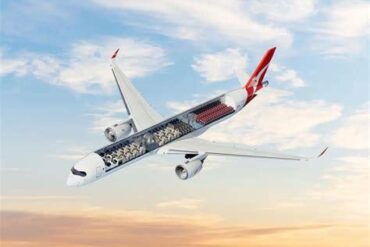
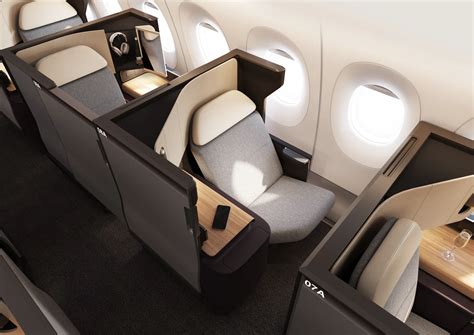
The A350-1000ULR gives Qantas the freedom to adopt a lower-density, premium-focused configuration without sacrificing range. Fewer seats reduce payload pressure, while wider aisles, expanded galleys, and carefully designed rest areas help manage the physical demands of extended time aloft. Rather than maximizing seat count, the aircraft supports a philosophy centered on endurance and quality of experience.
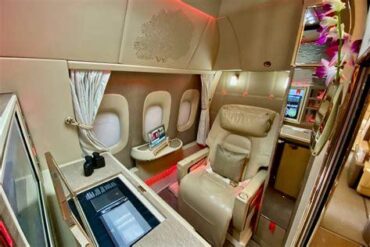
This approach aligns closely with Qantas’ brand positioning. For premium travelers, the value proposition of nonstop ultra-long-haul flights depends as much on comfort as on time savings. The A350-1000ULR’s cabin flexibility allows Qantas to design an interior that supports sleep, movement, and psychological comfort over unprecedented flight durations.
Crew Integration as a Core Design Principle
Crew management is one of the most complex challenges in ultra-long-haul operations. Flights nearing 20 hours require augmented flight decks, structured rest cycles, and carefully controlled duty limits. Attempting to retrofit these requirements into an aircraft not designed for them introduces operational risk and inefficiency.
The A350-1000ULR addresses this by embedding crew-rest solutions directly into its architecture. Dedicated rest compartments, optimized galley placement, and flexible cabin zoning allow Qantas to manage fatigue proactively rather than reactively. This integration is not merely a regulatory necessity; it is a safety and reliability imperative.
For Qantas, this matters because Project Sunrise is designed to scale. Crew planning that works once is not enough; it must work every day, across seasons, and under varying operational conditions. The A350-1000ULR supports this by making crew wellbeing an integral part of the aircraft’s operational logic.
Fleet Strategy Beyond a Single Project
One of the most compelling aspects of the A350-1000ULR’s appeal is how well it fits into Qantas’ broader fleet strategy. While Project Sunrise attracts the headlines, the aircraft’s value extends far beyond a handful of flagship routes. Its commonality with other A350 variants simplifies training, maintenance, and long-term planning, reducing complexity across the fleet.
This matters in an era where airlines are under pressure to control costs while investing in sustainability and resilience. The A350 platform’s fuel efficiency and lower emissions profile support Qantas’ environmental commitments, while its technological maturity reduces the risk associated with introducing a highly specialized aircraft type.
By choosing the A350-1000ULR, Qantas avoids the trap of building its long-haul future around a niche solution. Instead, it gains an aircraft that can anchor its network strategy for decades, adapting to changes in demand, regulation, and technology.
Ultra-Long-Haul as a Sustainable Business Model
Perhaps the most important reason the A350-1000ULR holds such strong appeal for Qantas is that it makes ultra-long-haul flying commercially defensible. Extreme-distance routes are unforgiving. Small miscalculations in fuel, payload, or crew planning can quickly erode margins. The aircraft’s balanced performance profile reduces these risks by providing operational headroom where it matters most.
Rather than treating nonstop flights to Europe or North America as prestige services, Qantas can integrate them into its network as stable, predictable offerings. This shifts ultra-long-haul from the realm of experimentation into that of core network design.
The A350-1000ULR enables this shift by combining range, efficiency, and maturity in a way that no other platform currently matches. Its appeal is not rooted in novelty, but in its ability to make the extraordinary feel routine.
Why the A350-1000ULR Defines Qantas’ Long-Haul Future
The relationship between Qantas and the Airbus A350-1000ULR illustrates how aircraft selection can shape an airline’s identity. For a carrier defined by distance, endurance, and global reach, the ability to fly farther without compromise is more than a technical achievement; it is a strategic statement.
By aligning Project Sunrise, cabin philosophy, crew integration, and fleet planning around a single, purpose-built platform, Qantas positions itself to redefine what nonstop travel from Australia means. The A350-1000ULR is not simply enabling longer flights; it is enabling a different way of thinking about global connectivity.
In that sense, its appeal goes far beyond specifications. It offers Qantas a credible, scalable path toward making the world feel smaller, while preserving the reliability, comfort, and commercial discipline that define a successful long-haul airline.