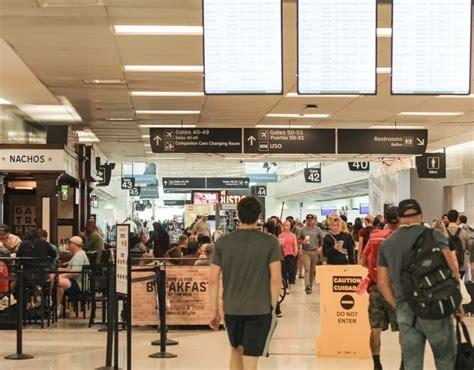
Air travel disruptions across the United States are becoming less predictable, and the latest flight performance analysis from AirAdvisor reveals a frustrating reality for passengers: some of the nation’s worst delay risks are no longer limited to mega-hubs like Chicago O’Hare or Dallas-Fort Worth. Smaller airports, particularly in Florida, are now producing some of the longest average delays in the country.
The study analyzed 2025 flight data from 45 high-volume US airports, combining the frequency of delays with their average duration to identify where travelers face the greatest risk of sitting at the gate for more than two hours. The results paint a picture of a strained aviation network where weather disruptions, tight aircraft rotations, and congestion collide daily.
For passengers with tight connections, business schedules, or family travel plans, these airports can turn a simple itinerary into an exhausting marathon of missed flights, overnight hotel stays, and endless rebooking lines.
The findings also highlight a shift in how delay risk should be understood. Bigger airports process enormous traffic volumes, but smaller airports often lack the operational flexibility to recover quickly once delays begin cascading through the system.
Florida Airports Dominate America’s Worst Delay Rankings
Florida appears repeatedly throughout the rankings, underscoring how vulnerable the state’s aviation network is to weather-related disruption and seasonal congestion.
Palm Beach International Airport took the top spot as the worst airport in the United States for extended delays. Despite handling only around 26,873 flights annually, more than 10% of flights experience delays exceeding one hour, with average disruptions stretching beyond 140 minutes.
The airport’s relatively modest size actually contributes to the problem. Unlike larger hubs that can reshuffle aircraft and crews more efficiently, smaller airports often operate with tighter schedules and fewer recovery options once operations fall behind.
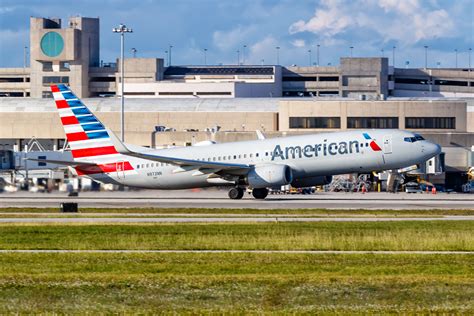
Southwest Florida International Airport ranked second, with average delays approaching 147 minutes. Although its delay rate is slightly lower than Palm Beach, disruptions there tend to last even longer. Travelers heading to destinations like Fort Myers during peak tourist months frequently encounter weather interruptions, overloaded schedules, and ripple effects from delays elsewhere in the national air traffic network.
Jacksonville International Airport and Orlando International Airport also landed in the top ten. Orlando’s inclusion is especially significant because it serves one of America’s busiest tourism corridors. Families traveling to theme parks often face packed terminals, weather delays, and cascading disruptions during storm season.
Florida’s position throughout the rankings is closely tied to the state’s exposure to thunderstorms, tropical systems, and hurricanes. According to FAA statistics, weather accounts for more than 74% of major system-impacting delays nationwide, and few states experience weather volatility as consistently as Florida between June and November.
Major Airline Hubs Continue To Struggle With Severe Delays
While smaller airports performed poorly, America’s largest connecting hubs remain major delay hotspots.
Chicago O’Hare International Airport ranked fourth overall and recorded one of the highest delay rates in the entire study. Nearly 11% of flights there are delayed by more than an hour. Considering O’Hare handled more than 386,000 flights in the analyzed period, even small operational slowdowns can quickly snowball into nationwide disruptions.
The airport’s complexity contributes heavily to delay risk. O’Hare operates as one of the country’s most important connecting centers for both domestic and international traffic. Aircraft arrive and depart in tightly synchronized waves, leaving minimal room for recovery when storms, maintenance issues, or air traffic congestion emerge.
Philadelphia International Airport ranked third overall, combining a high delay frequency with average delays exceeding 142 minutes. Philadelphia’s role as a major East Coast connector means delays there often affect passengers far beyond the airport itself.
Dallas-Fort Worth International Airport also remains one of America’s most disruption-prone airports. With more than 345,000 annual flights included in the study, DFW’s enormous scale amplifies operational challenges. Roughly one in ten flights experiences delays exceeding 60 minutes.
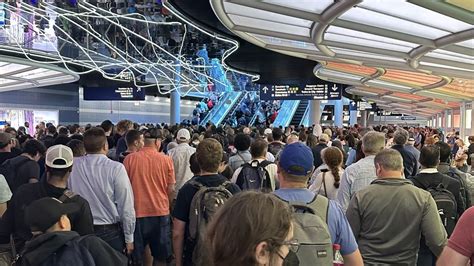
New York’s LaGuardia and JFK airports both appeared in the rankings as well, demonstrating how constrained airspace and chronic congestion continue to plague the Northeast Corridor. Even relatively minor weather systems can trigger lengthy delays across the region due to tightly packed flight schedules and limited runway flexibility.
Ronald Reagan Washington National Airport rounded out the top ten, highlighting another airport constrained by limited physical expansion options and intense traffic demand.
The 10 US Airports With The Longest Flight Delays
AirAdvisor’s rankings combined delay frequency and average delay duration to determine overall risk exposure for travelers.
- Palm Beach International Airport (PBI) — Average delay: 140.34 minutes
- Southwest Florida International Airport (RSW) — Average delay: 147.49 minutes
- Philadelphia International Airport (PHL) — Average delay: 142.05 minutes
- Chicago O’Hare International Airport (ORD) — Average delay: 135.91 minutes
- Dallas-Fort Worth International Airport (DFW) — Average delay: 137.41 minutes
- LaGuardia Airport (LGA) — Average delay: 122.85 minutes
- John F. Kennedy International Airport (JFK) — Average delay: 140.72 minutes
- Ronald Reagan Washington National Airport (DCA) — Average delay: 126.27 minutes
- Jacksonville International Airport (JAX) — Average delay: 154.01 minutes
- Orlando International Airport (MCO) — Average delay: 137.68 minutes
Jacksonville stands out for having the single longest average delay in the top ten at more than 154 minutes. Although its delay frequency is lower than some larger hubs, disruptions there tend to linger significantly longer once operations begin breaking down.
Why Smaller Airports Can Produce Bigger Travel Problems
Many travelers assume larger airports automatically create worse delays because of passenger volume. The data shows the opposite can sometimes be true.
Smaller airports frequently operate with fewer backup aircraft, limited gate availability, and reduced staffing flexibility. Once a flight crew times out, an aircraft requires maintenance, or incoming planes arrive late, recovery options become limited.
Anton Radchenko, CEO of AirAdvisor, emphasized that disruption risk is increasingly tied to operational resilience rather than airport size alone. Airports with tight turnaround schedules and limited infrastructure often struggle to absorb unexpected disruptions.
This becomes especially problematic for connecting itineraries. A 30-minute delay at departure can rapidly evolve into a missed connection if travelers pass through high-risk hubs with little schedule buffer.
The interconnected nature of airline scheduling means delays rarely stay isolated. Aircraft arriving late into one airport often depart late for the next destination, creating cascading disruptions across entire airline networks throughout the day.
What Travelers Should Know About Compensation Rules
One of the most frustrating realities for US passengers is that airlines are generally not required to compensate travelers solely for delays.
Under current US Department of Transportation regulations, compensation primarily applies to involuntary denied boarding situations rather than weather or operational delays. Airlines may provide meal vouchers, hotel accommodations, or rebooking assistance during major disruptions, but policies vary dramatically between carriers.
International passengers sometimes have stronger protections. Travelers flying to or from Europe on eligible airlines may qualify for compensation under EU261 or UK261 regulations if delays exceed three hours or if flights are canceled.
That distinction makes travel planning even more important for domestic passengers, who often bear the financial burden of missed connections, unexpected hotel stays, and lost vacation time.
How Travelers Can Reduce Their Risk Of Major Flight Delays
Avoiding severe delays entirely is nearly impossible in modern air travel, but strategic planning can significantly improve the odds of a smoother trip.
Booking early morning departures remains one of the most effective tactics because delays tend to compound throughout the day. Once thunderstorms, maintenance issues, or air traffic congestion begin affecting schedules, disruptions frequently spread across airline networks by afternoon and evening.
Travelers connecting through airports like O’Hare, Philadelphia, or Dallas-Fort Worth should also leave larger connection windows between flights. Tight layovers may appear efficient on paper, but they become risky at airports with consistently high delay rates.
Florida travelers should pay especially close attention to seasonal weather patterns. Hurricane season regularly disrupts airport operations across the state, particularly from June through November.
Alternative airport options can also provide valuable flexibility. Nearby secondary airports sometimes offer better reliability and reduced congestion compared with larger hubs.
The broader takeaway from the AirAdvisor analysis is clear: prolonged flight delays are no longer isolated events affecting only massive international hubs. Across the United States, both major airports and smaller regional facilities are operating with increasingly narrow margins for disruption recovery.
For passengers, understanding where delays occur most often — and where they last the longest — can make the difference between a manageable travel day and an exhausting two-hour wait that spirals into a missed connection or canceled trip.