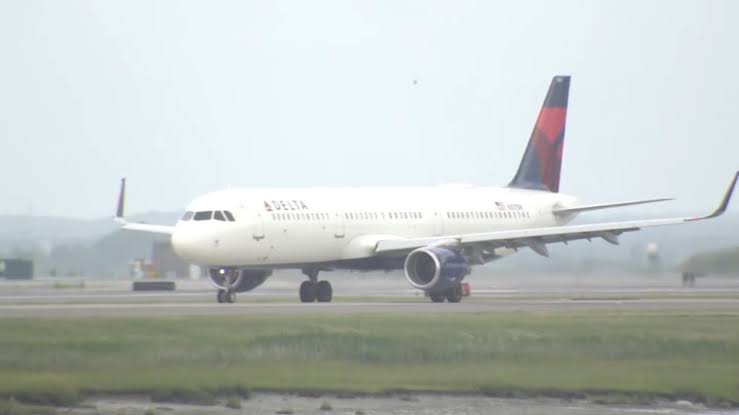
Delta Air Lines Flight 276 bound for the French Riviera was forced to abandon its transatlantic journey just minutes after departure when flight crews reported smoke in the cockpit, prompting an immediate return to Boston Logan International Airport. The precautionary diversion highlighted the aviation industry’s uncompromising approach to airborne smoke events, where even an unexplained indication is treated as a potentially serious emergency until proven otherwise.
Delta Air Lines Flight 276 Makes Precautionary Return Shortly After Takeoff
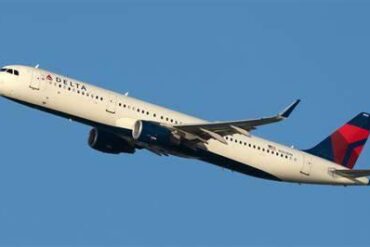
Passengers aboard Delta Air Lines Flight 276 expected a routine overnight journey from Boston Logan International Airport (BOS) to Nice Côte d’Azur Airport (NCE) on the evening of June 25. Instead, the Airbus A330-300 reversed course less than half an hour after departure following reports of smoke in the cockpit, transforming an ordinary long-haul departure into a carefully managed emergency operation.
Flight tracking data showed the aircraft departing Boston at approximately 8:00 PM local time from Runway 4R before heading east over the Atlantic Ocean. As the aircraft continued its initial climb, pilots stopped the ascent at roughly 10,000 feet, declared the operational issue, and requested clearance to return immediately to Boston.
The aircraft, registered N820NW, remained under the close coordination of air traffic controllers throughout the return flight. Emergency services were positioned alongside Runway 15R before landing as a precautionary measure, ensuring a rapid response should additional assistance become necessary.
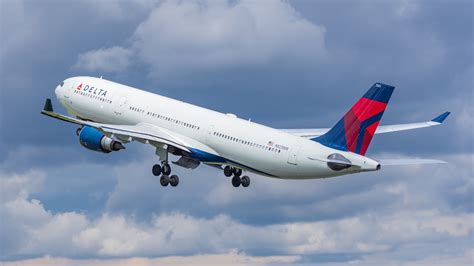
The aircraft landed safely less than thirty minutes after takeoff before taxiing back to Gate E15, the same gate from which the international service had departed earlier that evening. No injuries were reported during the incident, and emergency responders completed their precautionary inspection before the aircraft returned to the terminal.
Although reports indicated smoke was detected in the cockpit, no official explanation for the source of the smoke had been released immediately following the event. Maintenance personnel were expected to conduct a detailed inspection before the aircraft could return to commercial service.
Why Cockpit Smoke Demands Immediate Action
Few situations receive higher priority in commercial aviation than reports involving smoke or unidentified fumes. Unlike many technical malfunctions that can be monitored while an aircraft continues flying, smoke presents an evolving hazard whose origin often cannot be immediately identified from the cockpit.
Modern aircraft contain thousands of electrical components, wiring bundles, ventilation systems, insulation materials, and environmental control equipment. Any one of these systems could potentially produce smoke or unusual odors. Because crews cannot always determine whether the issue is minor or developing into a serious onboard fire, aviation procedures emphasize rapid risk reduction rather than continued flight.
Returning to the nearest suitable airport allows pilots to shorten exposure to any potential hazard while giving maintenance engineers immediate access to inspect the aircraft under controlled conditions. Airport rescue and firefighting units are also positioned to respond instantly if circumstances deteriorate after landing.
This conservative philosophy has become deeply embedded throughout commercial aviation because experience has repeatedly demonstrated how rapidly smoke-related events can escalate if their underlying cause remains unknown.
Lessons Learned From Past Aviation Accidents
The industry’s cautious response to smoke emergencies has been heavily influenced by previous tragedies, particularly the loss of Swissair Flight 111 in 1998.
Investigators concluded that what initially appeared to be an electrical systems problem evolved into a devastating in-flight fire that spread through hidden spaces above the cockpit ceiling. The fire eventually overwhelmed aircraft systems before the crew could complete an emergency landing, resulting in the deaths of all 229 people aboard.
That accident fundamentally reshaped global aviation procedures. Manufacturers, regulators, airlines, and pilot training organizations strengthened guidance surrounding smoke, electrical failures, and hidden fires. Today’s standard operating procedures encourage immediate diversion whenever unexplained smoke is detected, regardless of whether the situation initially appears minor.
Flight crews now receive extensive simulator training covering smoke emergencies, including cockpit resource management, emergency descent planning, checklist execution, communication with air traffic control, and coordination with airport emergency responders.
Delta’s Airbus A330 Fleet Remains Central to International Operations
The aircraft involved in the incident belongs to Delta’s extensive Airbus A330 fleet, one of the airline’s most important assets for long-haul international operations.
Delta became a major A330 operator following its merger with Northwest Airlines in 2008. Since then, the aircraft family has supported numerous routes connecting the United States with Europe, Asia, South America, and other long-distance destinations.
Today, Delta operates multiple A330 variants, including the A330-200, A330-300, and the latest-generation A330-900neo. Collectively, these aircraft provide the airline with exceptional flexibility, balancing passenger capacity, operating economics, and intercontinental range.
The newest A330-900neo accommodates approximately 281 passengers in Delta’s configuration while offering a published range approaching 6,995 miles (11,257 kilometers). These capabilities make the aircraft particularly effective on high-demand transatlantic services such as Boston to Nice.
Passenger Safety Continues to Drive Operational Decisions
While an unexpected return to the departure airport inevitably disrupts travel plans, Flight 276 demonstrated the effectiveness of modern aviation safety procedures. The crew identified a potential hazard early, coordinated closely with air traffic controllers, executed a safe landing, and allowed emergency responders to inspect the aircraft before passengers disembarked.
Incidents involving smoke frequently prove less severe than initially feared once maintenance teams identify the source. Nevertheless, airlines consistently favor immediate precautionary action over attempting to continue a flight across the Atlantic with any uncertainty surrounding onboard safety.
For passengers, the diversion represented an inconvenience. From an operational perspective, however, the event reflected exactly how commercial aviation safety systems are designed to function—placing caution, preparation, and passenger protection ahead of schedule, ensuring that even an unexplained indication receives the highest level of professional attention.