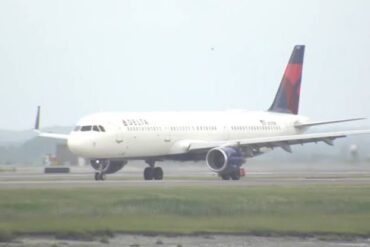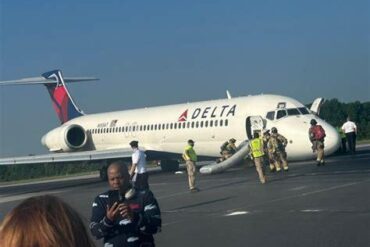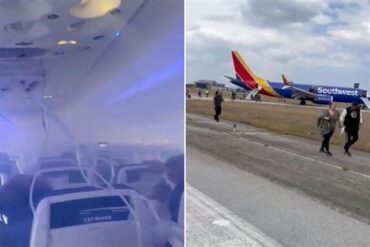
Delta Air Lines flight DL1576 faced a serious mid-air emergency on June 9, 2025, when smoke began filling the cockpit of a Boeing 757-200 en route from Atlanta to Orlando. What should have been a routine one-and-a-half-hour journey quickly turned into a nerve-rattling emergency descent and diversion to Cecil Airport in Jacksonville, Florida, where the aircraft landed safely with all 208 occupants unharmed.
Mid-Flight Emergency: Smoke in the Cockpit at 33,000 Feet
Roughly 35 minutes after takeoff, at a cruising altitude of 33,000 feet, the crew of Delta Flight DL1576 began a rapid descent. According to Flightradar24 data, the emergency descent began at approximately 13:40, prompted by an alarming intrusion of smoke into the flight deck. There were no initial reports of smoke in the passenger cabin, suggesting the problem may have originated within the avionics bay or electrical systems located below the cockpit.
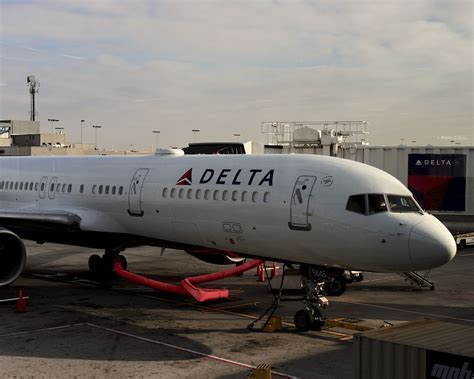
Though not officially confirmed, the absence of flames or smoke reports from the cabin supports the likelihood of an electrical malfunction rather than a full-blown in-flight fire. Pilot communications with air traffic control revealed the crew’s intent to initially divert to Jacksonville International Airport (JAX), but operational circumstances or urgency resulted in a landing at Cecil Airport (VQQ) instead—an airfield primarily used for cargo and military operations but capable of accommodating large commercial aircraft.
The Aircraft: Boeing 757-200, Tail Number N697DL
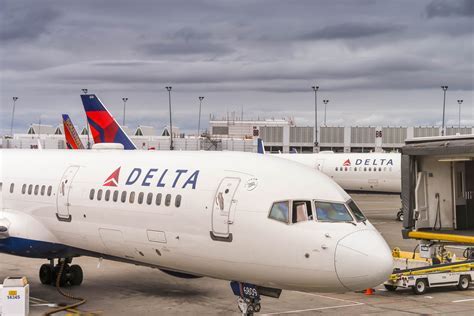
The aircraft involved, registered as N697DL, is a 25-year-old Boeing 757-200 that has served Delta since 1999. It is one of 88 Boeing 757-200s currently operated by the airline and was originally delivered with two Pratt & Whitney PW2000 engines. This particular airframe briefly flew under Delta’s now-defunct low-cost subsidiary Song between 2003 and 2006.
The 757 was configured with 20 first-class and 179 economy seats, and on this flight, all 199 seats were filled, along with six standard crew members and three additional personnel—possibly jumpseating or conducting internal evaluations.
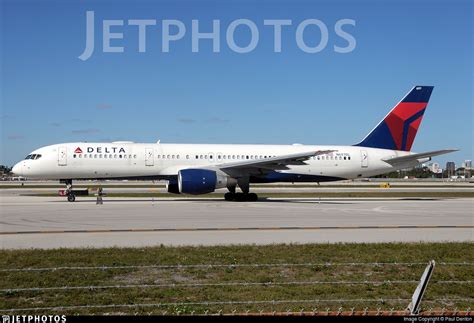
Though N697DL has enjoyed an uneventful operational life, it did suffer substantial damage in a 2006 ground incident at Boston Logan International Airport, when a deicing vehicle struck the aircraft, damaging the left elevator. At the time, it had logged 22,539 flight hours, but was fully repaired and returned to service.
Timeline of the Flight and Rapid Descent
Flight DL1576 follows a daily schedule from Atlanta Hartsfield-Jackson International Airport (ATL) to Orlando International Airport (MCO), with a typical departure time of 13:05 and scheduled arrival at 14:30. On June 9, shortly after reaching cruising altitude, the flight crew initiated an immediate descent and reroute to Jacksonville.
Passengers described the descent as abrupt but controlled, and no panic was reported. The crew maintained professionalism throughout the incident, ensuring passengers were informed and reassured during the deviation from their expected destination.
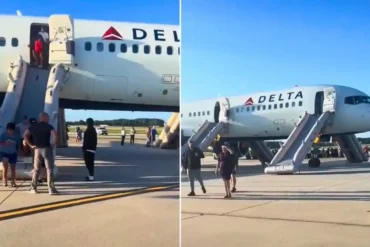
Upon landing, the aircraft was met by emergency response vehicles, and all passengers were safely deplaned. No medical emergencies or injuries were reported.
The Hidden Danger: Smoke in the Cockpit and Its Implications
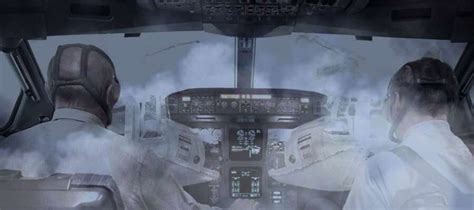
Smoke in a cockpit is among the most feared scenarios for commercial pilots. Unlike other cabin anomalies, cockpit smoke can obscure vision, impair communication, and disrupt instrument readings—all while forcing pilots to make split-second life-or-death decisions. The smoke intrusion on DL1576, though not accompanied by fire, raises serious safety questions about the aircraft’s electrical integrity.
The incident is reminiscent of historical tragedies such as Swissair Flight 111 in 1998, where smoke—traced to faulty inflight entertainment wiring—ultimately led to the loss of 229 lives when an onboard fire compromised the MD-11’s avionics. In that case, the delay in descent proved fatal. Delta’s pilots, in contrast, reacted immediately and effectively, diverting the aircraft and avoiding a similar fate.
Other notable accidents where cockpit or onboard smoke led to catastrophe include:
- UPS Flight 6 (2010): Smoke from a cargo fire overwhelmed the crew of a Boeing 747-400 over Dubai. Both pilots perished.
- ValuJet Flight 592 (1996): An in-flight fire caused by improperly stored oxygen generators led to a total loss of 110 lives.
- Saudia Flight 163 (1980): A fire in the cargo hold was survived in-flight, but a failed evacuation caused 301 fatalities.
These cases underscore the critical importance of immediate action when smoke is detected. Delays in descent or misjudgments in diagnosing the source can result in catastrophic loss of control.
Cecil Airport: An Unusual But Effective Choice
Choosing Cecil Airport over the more common Jacksonville International (JAX) may seem unconventional, but it reflects a smart calculation. Cecil Field, though primarily a civilian-military facility, features runways over 12,000 feet long and is equipped for handling large aircraft. It’s frequently used for diversions and military training operations, with ground support capable of managing emergencies.
Its lower air traffic volume compared to JAX allowed for a faster, more controlled landing with fewer conflicts and immediate runway availability. Emergency personnel were quickly on scene, and post-landing inspections began shortly thereafter. There has been no official statement from Delta or the FAA regarding the exact nature of the fault, but early indicators point toward a non-fire electrical system malfunction.
Fleet Transition and Operational Context
Delta has long relied on the Boeing 757-200 for high-demand regional routes, especially those departing from Atlanta, its largest hub. However, the airline is gradually replacing the aging 757 fleet with Airbus A321neo aircraft, which offer greater fuel efficiency, updated avionics, and modern safety systems.
That said, the 757 remains a workhorse in Delta’s operations due to its range, capacity, and short-field performance. On heavy travel days or routes like Atlanta to Orlando or Miami, the aircraft’s 199-seat configuration makes it a cost-effective choice. This incident, however, may raise questions internally about maintenance cycles, electrical system aging, and retirement timelines for older aircraft like N697DL.
The Aftermath: Investigation and Passenger Response
As of this writing, the FAA and Delta’s internal safety teams have initiated a full investigation. Key components under examination include:
- The avionics bay wiring and electrical panels beneath the cockpit.
- The aircraft’s ECAM system logs and black box data.
- Interviews with both pilots and the additional crew members onboard.
Passengers were reportedly rebooked onto alternate flights, and Delta issued statements expressing gratitude for the crew’s quick thinking and passengers’ calm demeanor. No compensation details have yet been released, but the airline has a standard protocol for significant disruptions.
Conclusion: A Near-Miss That Highlights the Value of Training
This June 9, 2025, emergency aboard DL1576 reminds the aviation world of a chilling truth: smoke in the cockpit remains one of the most serious threats to commercial aviation safety. Fortunately, in this case, the combination of seasoned pilots, procedural rigor, and quick decision-making avoided what could have been a tragedy. The situation highlights the importance of ongoing training, vigilant aircraft maintenance, and upgrading legacy systems on aging aircraft.
The incident should also prompt wider discussions in the industry about fleet modernization timelines and electrical system resilience in long-serving aircraft. As N697DL returns to the maintenance hangar for a deep inspection, it carries with it a powerful lesson: preparedness, more than luck, is what keeps air travel the safest mode of transport in the world.