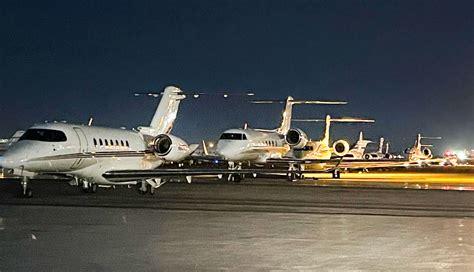
The roar of the crowd had barely faded when a different kind of thunder began rolling across the San Francisco Bay Area—one generated not by linebackers, but by Rolls-Royce and Pratt & Whitney engines spooling up in synchronized urgency. Super Bowl LX did more than crown a champion after the Seattle Seahawks’ commanding win over the New England Patriots; it triggered one of the most concentrated bursts of private aviation traffic ever recorded following a sporting event. Within two hours of the final whistle, 95 private jets had already departed regional airports, forming a high-altitude exodus of wealth, influence, and logistical precision.
This phenomenon—often dubbed the “Super Bowl Effect” in aviation analytics circles—offers a revealing window into elite mobility patterns. Using live transponder data, Flightradar24 tracked the departures in real time, identifying not just the aircraft volume but the speed of dispersal. The scale was staggering: a 1,136% spike in private jet departures compared to the previous Sunday’s baseline. For air traffic controllers, fixed-base operators (FBOs), and charter brokers, the post-game window was less a routine evening and more an orchestrated aerial evacuation.
The aviation surge did not emerge in isolation. In the four days leading up to kickoff, 914 business jets arrived across Bay Area airports, setting the stage for the outbound rush. By game day, ramp space had become premium real estate, with aircraft parked in tight choreography across multiple facilities, awaiting their rapid redeployment once the Lombardi Trophy changed hands.
Mapping the Post-Game Flight Corridor
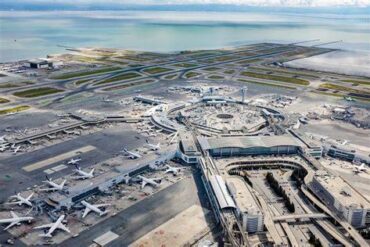
Departures were distributed across five primary aviation hubs: San Francisco International (SFO), San Jose Mineta International (SJC), Oakland International (OAK), Livermore Municipal (LVK), and Hayward Executive (HWD). Each played a specialized role in absorbing overflow traffic and enabling staggered takeoff sequencing.
Los Angeles emerged as the gravitational center of post-game movement. Within the first 120 minutes, 15 jets routed to Van Nuys Airport (VNY)—a private aviation stronghold embedded in the San Fernando Valley. Close behind was Las Vegas’ Harry Reid International Airport (LAS), receiving 14 departures in the same window. These destinations reflect more than geography; they reveal lifestyle corridors linking entertainment, finance, and luxury hospitality.
Beyond the headline routes, the network radiated outward. Of the 95 tracked flights, 92 remained within the United States, while others extended to Canada, Mexico, and long-haul international destinations. Several aircraft crossed the Atlantic overnight, while others tracked south toward South America, underscoring the global footprint of Super Bowl attendees.
Celebrity Tail Numbers and Corporate Flight Decks
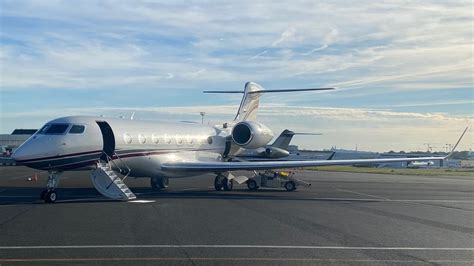
High-profile passengers amplified public fascination with the aviation surge. Among the most tracked departures was a $65 million Gulfstream G650 registered to a Kardashian family LLC. Onboard was Kim Kardashian, who had attended the game alongside British Formula One driver Lewis Hamilton. The aircraft’s destination: Van Nuys, reinforcing Los Angeles’ dominance in the departure matrix.
Another widely monitored flight carried Jay-Z and Beyoncé, departing aboard a Bombardier Global 7500—one of the longest-range business jets in operation. The aircraft is registered to a holding company sharing an address with Roc Nation, illustrating how celebrity aviation often operates through layered corporate structures designed for privacy and asset management.
These movements highlight a defining trait of the Super Bowl Effect: time compression among ultra-high-net-worth travelers. For attendees balancing entertainment, business, and global commitments, remaining overnight is often less practical than immediate redeparture. Aircraft are fueled, catered, and crewed for rapid turnaround long before the halftime show begins.
Data, Demand, and the Physics of Congestion
From an operational standpoint, the departure surge resembles a controlled pressure release. Airports must sequence takeoffs while managing runway occupancy, wake turbulence spacing, and IFR (Instrument Flight Rules) routing constraints. When dozens of heavy business jets request clearance within minutes, the system relies on Collaborative Decision Making (CDM)—a coordination framework linking ATC, airports, and operators.
Fuel logistics become equally critical. FBOs must stock millions of gallons of Jet A fuel in anticipation, while ground crews handle catering uplifts, baggage transfers, and lavatory services at accelerated tempo. The post-game rush compresses what would normally be a full day of private aviation activity into a narrow, high-intensity window.
Commercial Airlines Ride the Super Bowl Wave
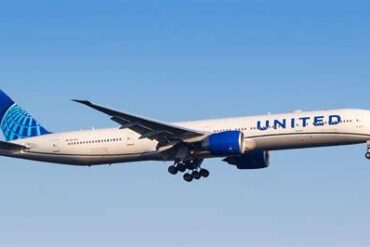
While private aviation captured headlines, scheduled carriers experienced their own demand shock. Major U.S. airlines—including American Airlines, Delta Air Lines, United Airlines, Southwest, and JetBlue—expanded capacity into the Bay Area throughout Super Bowl week. The event reliably produces one of the year’s most predictable passenger surges.
Airlines deploy multiple tactical responses: widebody aircraft substitutions, frequency increases, and entirely new point-to-point routes. JetBlue, for instance, launched a special Providence–San Francisco service timed specifically for the event—an example of network flexibility driven by sports tourism economics.
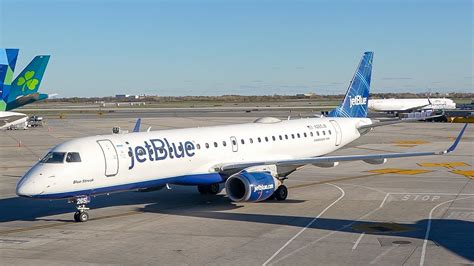
Alaska Airlines added 16 extra round-trip flights from Seattle to both San Jose and San Francisco, while American Airlines injected over 10,000 additional seats into the regional network. These adjustments require months of behind-the-scenes planning—slot negotiations, crew rostering, maintenance positioning, and gate allocation all calibrated to handle the spike.
Airports as Temporary Mega-Hubs
During Super Bowl week, the host region effectively transforms into a pop-up global hub. Aircraft arrive from Europe, the Middle East, and Latin America, many carrying corporate sponsors, athletes, media executives, and VIP guests. Parking strategies extend to secondary airports, with some jets repositioned hours away after drop-off to free ramp space.
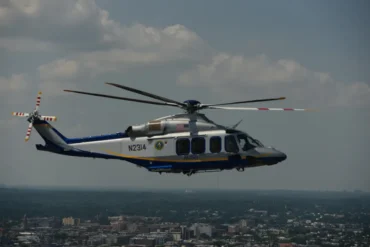
This temporary hub status stresses infrastructure in unusual ways. Customs processing, security screening, limousine coordination, and helicopter transfers all scale upward. Even local hotels and catering suppliers become embedded in the aviation supply chain.
The Economics Behind the Exodus
Operating a long-range business jet can cost $5,000–$15,000 per flight hour, yet demand remains resilient. The Super Bowl represents a convergence of branding, networking, and prestige where time efficiency outweighs cost sensitivity. Charter rates surge, fractional ownership fleets run at full utilization, and aircraft brokers report months-long booking lead times.
For airports and service providers, the revenue upside is substantial. Fuel sales, hangar rentals, handling fees, and premium services generate a concentrated financial windfall tied to a single weekend.
Aerial Aftermath and Industry Signals
Once the departure wave subsides, airports transition into recovery mode—rebalancing parking stands, repositioning ground equipment, and analyzing performance data. Aviation analysts mine the movement patterns to forecast future mega-event demand, from Formula One races to global political summits.
The 95-jet departure burst following Super Bowl LX stands as a case study in synchronized luxury mobility—where sports, wealth, logistics, and airspace engineering intersect. It reveals how a single cultural event can momentarily reshape national flight patterns, turning victory celebrations into one of the most sophisticated aerial dispersals in modern civil aviation.