Every year, the Super Bowl turns a single metropolitan area into the gravitational center of the U.S. travel universe. Tens of thousands of fans, sponsors, media crews, league officials, and corporate guests all move in tight formation toward one city over just a few days. Airfare spikes grab headlines, but the more impressive story is operational: airlines quietly add thousands of extra seats while keeping their regular schedules intact. No mass cancellations. No system-wide chaos. Just a carefully choreographed expansion that looks spontaneous from the outside and deeply engineered from within.
This surge is not improvised heroics. It is the result of airline networks designed to flex, breathe, and briefly bend without snapping. The Super Bowl offers a rare, high-stakes case study in how modern aviation absorbs extreme, short-term demand shocks while still delivering reliability across the rest of the country.
Why the Super Bowl Creates a Unique Aviation Shockwave
Unlike holidays, which distribute demand across many cities, the Super Bowl concentrates demand into one region with surgical precision. Fans converge on a narrow arrival window before the game and depart almost in unison afterward. This creates asymmetric demand: packed flights inbound, followed by an outbound tidal wave that peaks the Monday after kickoff.
From an airline planning perspective, this is gold and danger rolled together. The demand is intense, time-limited, and predictable in aggregate, but uncertain in detail until the conference championships decide which fan bases will travel en masse. Airlines must be ready to serve Kansas City one year, Seattle the next, or Boston the year after, all without knowing the final matchup until weeks before departure.
The solution is not brute force. Airlines do not park spare aircraft “just in case.” Instead, they rely on network elasticity, a concept baked into scheduling long before tickets go on sale.
Event Intelligence: How Airlines Anticipate Demand Before Fans Book
Airlines track major events obsessively. Concert tours, conventions, festivals, political summits, and sporting championships are all logged years in advance in internal planning systems. Demand models are fed historical data, ticket sales patterns, social media engagement, hotel inventory shifts, and even secondary market activity.
United Airlines has publicly acknowledged that events like Taylor Swift’s Eras Tour can increase weekend demand by as much as 25 percent in host cities. That same analytical machinery scales up for the Super Bowl, where demand is sharper, louder, and more lucrative.
What matters is not just knowing demand will spike, but where flexibility exists. Airlines identify routes with seasonal slack, aircraft that can be upgauged, and frequencies that can be temporarily redeployed without stranding passengers elsewhere. By the time fans start refreshing airfare searches, airlines have already sketched multiple contingency playbooks.
How Hub-and-Spoke Networks Enable Sudden Capacity Surges
Most major U.S. airlines operate hub-and-spoke networks. Aircraft rotate through hubs for maintenance, crew swaps, and efficient passenger connections. This structure is often criticized for forcing layovers, but it offers a hidden advantage: control.
Because aircraft repeatedly return to hubs, airlines can reassign them with minimal disruption. For the Super Bowl, this means temporarily shifting aircraft from lower-demand routes, increasing frequencies from key hubs, or swapping smaller jets for larger ones on the same route.
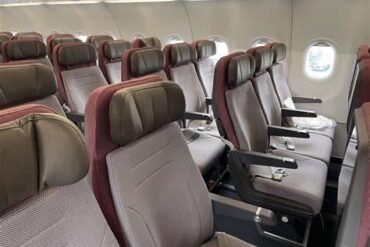
Instead of canceling flights, airlines layer capacity. A route that normally sees three daily flights might get six. A narrowbody aircraft might be replaced with a higher-density configuration. These changes ripple outward but remain contained, preserving schedule integrity elsewhere.
The Rise of Temporary Nonstop Routes for Super Bowl Week
The most visible change each Super Bowl season is the appearance of nonstop routes that normally do not exist. These are not permanent expansions; they are precision tools designed for a narrow window of opportunity.
For recent Super Bowls, airlines have launched one-off services like New York–San Jose, Boston–San Jose, Seattle–San Jose, and Providence–San Francisco, timed specifically around game weekend. These flights often operate just once or twice, using aircraft that would otherwise sit idle overnight or operate lower-yield segments.
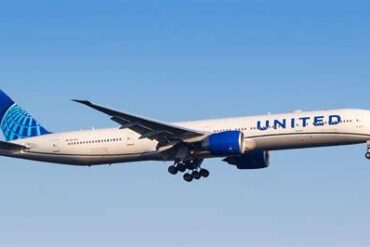
Delta Air Lines, American Airlines, United Airlines, JetBlue, and Alaska Airlines have all embraced this tactic. It allows them to capture premium, time-sensitive demand without committing long-term resources. Once the game ends, the routes vanish as quickly as they appeared, leaving no structural footprint behind.
Why Secondary Airports Become Strategic Pressure Valves
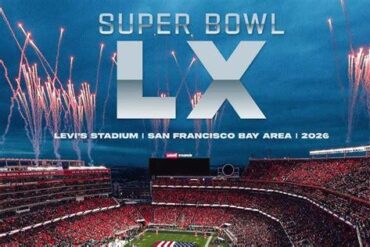
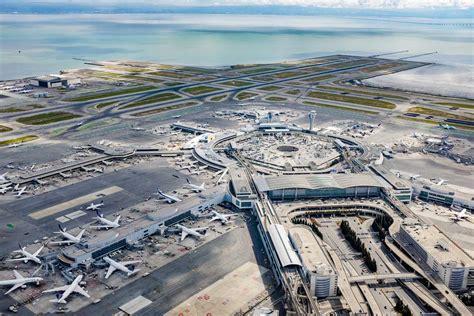
Super Bowl host regions typically include multiple commercial airports, and airlines exploit this geography aggressively. San Jose International Airport, for example, often absorbs a disproportionate share of Super Bowl traffic when events are hosted in Northern California.
The reason is simple: San Jose is not slot-restricted. Unlike airports with hard caps on movements, it offers airlines scheduling freedom, easier gate access, and fewer congestion penalties. For airlines, this translates into faster approvals and smoother operations during peak periods.
San Francisco International and Seattle-Tacoma International, while busier, operate under Level 2 coordination rather than full slot control. This still allows additional flights with sufficient planning, especially for short-term events with predictable traffic flows.
Aircraft Swaps: Adding Seats Without Adding Flights
Not all capacity growth is visible to passengers browsing schedules. One of the quietest tools airlines use is the aircraft upgauge. A flight that normally operates with a smaller aircraft may be reassigned a larger one, instantly adding dozens of seats without changing departure times.
This tactic minimizes disruption. Crews remain scheduled. Gates remain assigned. Only the aircraft type changes. For Super Bowl week, these swaps are deployed selectively on routes feeding the host city from high-demand markets.
The result is a subtle but powerful capacity increase that keeps the network stable while maximizing revenue during peak demand.
Behind the Curtain: Months of Planning for a Few Days of Chaos
Despite the last-minute feel of Super Bowl flight announcements, the planning starts months in advance. Airlines know the host city years ahead of time. They model multiple finalist scenarios and pre-approve aircraft redeployments based on likely fan travel patterns.
What changes after the conference championships is not the plan itself, but which version of the plan is activated. Once teams are confirmed, airlines finalize routes, assign flight numbers, and release inventory. This is why announcements often come just days after the playoff games, creating the illusion of rapid improvisation.
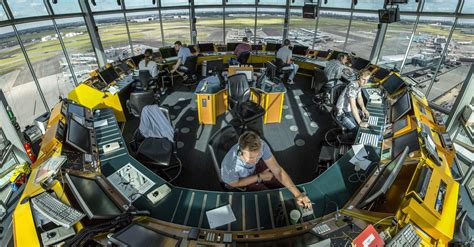
Airports and air traffic control authorities are looped in early. Extended operating hours, temporary staffing increases, and ramp coordination plans are prepared well ahead of time to handle the surge.
Staffing, Security, and the Human Side of Capacity Growth
Adding flights is only half the equation. Airlines must also scale people. Pilots, flight attendants, gate agents, ramp crews, and maintenance teams all need to be in the right place at the right time.
For major events, airlines often rely on voluntary overtime, reserve crews, and flexible bidding systems that allow staff to pick up high-demand trips. The Super Bowl is attractive work: short rotations, predictable schedules, and premium pay incentives.
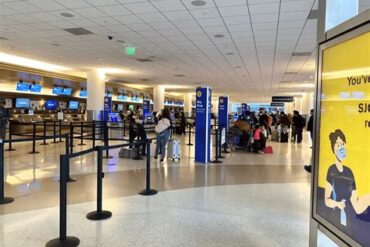
The Transportation Security Administration and airport authorities follow suit. Additional security lanes, extended checkpoint hours, and surge staffing help absorb passenger volumes without degrading throughput. At peak airports, the Monday after the Super Bowl can see tens of thousands of departures, rivaling major holiday travel days.
Marketing the Moment: Turning Logistics Into Brand Theater
Super Bowl flights are not just operational assets; they are marketing opportunities. Airlines lean into fan culture with themed flight numbers and subtle nods to team loyalty that resonate far beyond aviation circles.
United Airlines has famously used flight numbers referencing pop culture and player jersey numbers, blending sports fandom with brand personality. American Airlines has followed suit, assigning numbers tied to legendary championships and iconic players, creating instant social media buzz.
These touches cost almost nothing operationally but generate outsized engagement. Fans share screenshots. Media outlets amplify the story. The airline becomes part of the Super Bowl narrative rather than just a transportation provider.
Lessons From College Football’s Point-to-Point Playbook
The Super Bowl playbook did not emerge in a vacuum. Airlines have spent the past decade refining point-to-point flying for major college football games. These routes connect fan bases directly for a single weekend, bypassing hubs entirely.
United Airlines pioneered this approach in the late 2010s, adding hundreds of thousands of seats through targeted capacity increases and experimental nonstop routes between college towns. The strategy proved profitable, repeatable, and scalable.
Today, airlines across the industry deploy similar tactics for marquee matchups. The Super Bowl simply represents the largest, most visible version of a model that has already been stress-tested in the college football ecosystem.
NFL Team Travel: A Parallel Operation in the Same Airspace
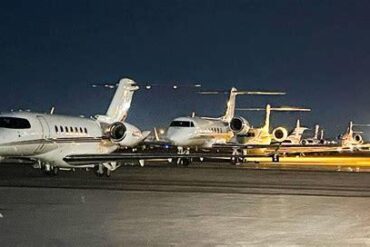
While fans fill commercial cabins, NFL teams operate in a parallel universe of aviation logistics. Teams travel on dedicated charter aircraft, often widebodies like the Boeing 767 or 777, configured to carry more than 170 players, coaches, and staff.
Equipment adds another layer. Roughly 17,000 pounds of gear must move with the team, either loaded onto the aircraft or shipped ahead. Police escorts, coordinated bus movements, and tightly controlled schedules ensure teams move efficiently through busy airports.
For the Super Bowl, this operation expands further. Multiple aircraft may be used to transport extended staffs, families, league officials, and support personnel, adding yet another layer of complexity to an already crowded airspace.
Why Airline Schedules Don’t Collapse Under Super Bowl Pressure
The key insight is this: airlines are not stretching their networks to the breaking point. They are exploiting built-in slack. Seasonal demand troughs, overnight aircraft downtime, and flexible routing options provide room to maneuver.
Because the Super Bowl surge is short-lived, airlines can absorb it without long-term consequences. Aircraft return to their normal rotations. Crews resume standard schedules. Temporary routes disappear from booking engines as if they never existed.
This is modern airline network design at its most elegant. What looks like chaos from the outside is, internally, a controlled burn.
The Super Bowl as a Stress Test for the Aviation System
Each Super Bowl functions as a live-fire exercise for U.S. aviation. Airlines, airports, regulators, and security agencies all operate at elevated tempo under intense public scrutiny. Success is measured not by headlines, but by what does not happen: no mass cancellations, no systemic delays, no cascading failures.
When it works, the achievement is almost invisible. Fans arrive, cheer, leave, and rarely consider the machinery that made their journey possible. Yet the ability to add thousands of seats in days without derailing the national schedule is a testament to how far airline planning, data analytics, and operational discipline have evolved.
The Super Bowl lasts a few hours. The aviation choreography behind it unfolds over months. And when the final whistle blows, the system quietly resets, ready for the next surge, the next city, and the next impossible-looking demand spike.