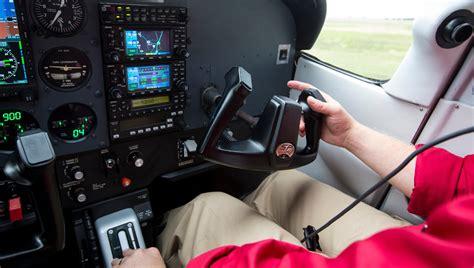
The concept of logging Pilot in Command (PIC) time is foundational for every aviator, yet it often becomes a complex subject due to the interplay of FAA regulations, certification levels, and operational roles. The Federal Aviation Administration (FAA) defines PIC in 14 CFR Part 1 and reinforces its authority in FAR 91.3, but how a pilot logs this time—especially in nuanced situations—depends heavily on context. Whether you’re a student pilot logging early solo hours or a seasoned instructor managing dual-flight training sessions, accurate logging of PIC time is vital for both regulatory compliance and career progression.
Understanding the Legal Definition of Pilot in Command
According to FAR Part 1, a Pilot in Command is the individual who:
- Has final authority and responsibility for the operation and safety of the flight;
- Has been designated as PIC before or during the flight;
- Holds the appropriate category, class, and type rating (if required) for the flight.
FAR 91.3 echoes these responsibilities by asserting that the PIC is directly accountable for the safety and operation of the aircraft. However, this definition—while legally clear—does not always correlate directly with how and when PIC time can be logged.
Logging PIC Time as a Student Pilot
Student pilots face a narrow window of opportunity to log PIC time. Under FAR 61.51, a student may only log PIC time when conducting solo flights—instances where the student is the sole occupant of the aircraft. While flight training under supervision is critical for skill development, these hours do not count toward logged PIC time, even though the student may be the sole manipulator of controls during parts of the session.
Solo cross-country flights, local solo operations, or any FAA-endorsed solo flight all qualify, but only when the student is alone in the cockpit. This distinction is important, as logbook accuracy in these early stages impacts future certifications.
Certified Pilots: Logging PIC Time with Confidence
Once a pilot earns a sport, recreational, private, or commercial certificate, the scope of loggable PIC time broadens. A certified pilot may log PIC time whenever they are the sole manipulator of the flight controls in an aircraft for which they are rated. This applies whether the aircraft is being flown solo or with passengers, assuming the pilot is legally current and qualified.
This principle allows certificated pilots to build substantial PIC hours even in dual-control scenarios—so long as they are handling the controls in an aircraft they are qualified to fly. For career-bound aviators, this opens the door to strategic logging practices that maximize every hour in the cockpit.
Proficiency Flights and Refresher Lessons with Instructors
Training doesn’t end after certification. Many pilots continue proficiency flights with a Certified Flight Instructor (CFI) to maintain and improve skills. In these cases, it’s critical to distinguish between acting as PIC and logging PIC time.
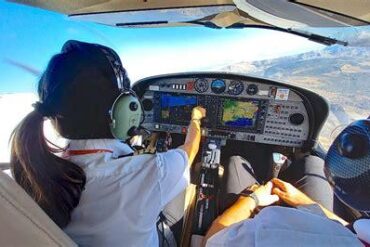
Only one individual may be the acting PIC during a flight, and this role must be designated prior to departure. However, if the certified pilot is the sole manipulator of controls during a dual flight and is rated in that aircraft, they may log PIC time regardless of who is officially designated as acting PIC. This regulatory nuance under FAR 61.51(e)(1)(i) enables both accurate tracking and responsible instruction.
Medical Certificates and Logging Limitations
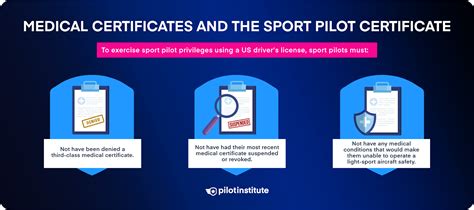
Medical currency is another factor that directly impacts a pilot’s ability to act as PIC. A lapsed medical certificate disqualifies a pilot from legally serving as PIC. Nonetheless, such a pilot can still log PIC time when flying with an instructor, provided they are the sole manipulator of controls and rated for the aircraft.
This creates a unique scenario where a pilot cannot act as PIC due to lack of medical currency but can still log PIC time for flight experience—an important clarification for pilots undergoing medical renewal or flying under BasicMed limitations.
The Safety Pilot Scenario: Dual Logging Possibilities
One of the more advanced and commonly misunderstood logging scenarios arises during instrument currency flights. Under FAR 91.109(c), a pilot flying under the hood must be accompanied by a qualified safety pilot. This creates a rare and legal opportunity for both pilots to log PIC time, assuming specific conditions are met:
- The pilot under the hood is rated and is the sole manipulator of controls—allowing them to log PIC.
- The safety pilot, who must at least hold a private pilot certificate and be current, is acting as PIC because they are responsible for visual traffic separation. As such, they can also log PIC time.
However, it’s important to note that sport and recreational pilots are not eligible to act as safety pilots under current FAA rules (FAR 61.101), as they lack the qualifications required for such a supervisory role.
Logging Time as a Certified Flight Instructor (CFI)
The FAA offers a relatively straightforward provision for Certified Flight Instructors: CFIs may log PIC time for the entire duration of any instructional flight, provided they are rated to act as PIC in that aircraft. This clarity allows instructors to accumulate considerable PIC hours even when they are not physically manipulating the controls.
This is covered in FAR 61.51(e)(3), which emphasizes that logging PIC time as an instructor depends on the authorized instructional status, not control manipulation. For instructors building time toward airline transport or other advanced roles, this regulation is especially beneficial.
FAA Logbook Standards and Best Practices
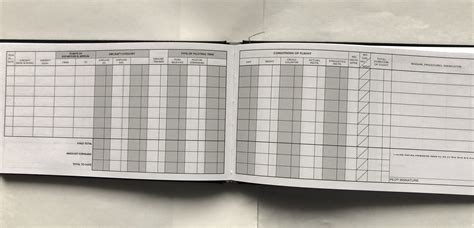
All logging must align with FAR 61.51, which governs flight records. Pilots must record:
- Date and total duration of the flight;
- Location of departure and arrival;
- Aircraft identification (make, model, and N-number);
- Flight conditions (day/night, instrument, simulated, etc.);
- Flight roles (PIC, SIC, dual received, solo, etc.);
Maintaining a meticulous, up-to-date logbook is not merely an exercise in good practice—it’s a legal requirement and often a decisive factor in career milestones, such as airline interviews, checkrides, and insurance validations.
Final Thoughts: Mastering the Art of Logging PIC Time
While the regulatory framework surrounding Pilot in Command logging is extensive, mastering it is essential for every pilot. Mislogging PIC time can not only delay professional advancement but also lead to potential violations during audits or FAA reviews. Every entry should reflect legal eligibility, operational reality, and alignment with FAA definitions.
By understanding the nuances—from student solo thresholds to dual-instruction roles and complex scenarios involving safety pilots—aviators can leverage every hour in the sky to their fullest benefit. The foundation of aviation professionalism lies not just in flight proficiency, but in regulatory literacy and disciplined recordkeeping.
For further reference and precise definitions, we encourage regular consultation of FAR 61.51 and associated FAA guidance materials. Precision in logging is not just compliance—it’s a strategic asset in a pilot’s journey toward higher ratings and broader horizons.