A Permanent Shift in Washington’s Airspace Rules
The Federal Aviation Administration has moved from temporary restrictions to a permanent helicopter ban near Ronald Reagan Washington National Airport (DCA), marking one of the most consequential airspace policy changes in the U.S. capital in decades. Effective January 23, 2026, the rule sharply limits helicopter and powered-lift aircraft operations in the immediate vicinity of DCA, an airport already operating within one of the most tightly controlled airspaces in the world. This decision follows months of investigation, analysis, and mounting public pressure after a tragedy that fundamentally reshaped how risk is assessed around the nation’s capital.
The FAA’s message is blunt and unambiguous: mixed traffic in constrained airspace is no longer acceptable without extreme justification. Helicopters, long woven into Washington’s daily rhythm for military, government, and law enforcement missions, now face hard limits designed to eliminate collision risk rather than merely manage it.
The Collision That Changed Everything
In January 2025, American Airlines Flight AA5342, operated by PSA Airlines using a Bombardier CRJ700, was on final approach to Runway 33 at DCA. At roughly 300 feet above ground level, less than half a mile from touchdown, the aircraft collided midair with a U.S. Army Sikorsky UH-60 Black Hawk conducting a night training evaluation using night vision goggles. The impact sent both aircraft into the icy Potomac River, killing all 67 people onboard.
This was not just another aviation accident. It was the first fatal crash involving the CRJ700, the first fatal accident for American Airlines since 2001, and the most serious U.S. commercial aviation disaster in nearly 16 years. The symbolism of a civilian airliner colliding with a military helicopter just short of the capital’s runway made the incident impossible to dismiss as an anomaly.
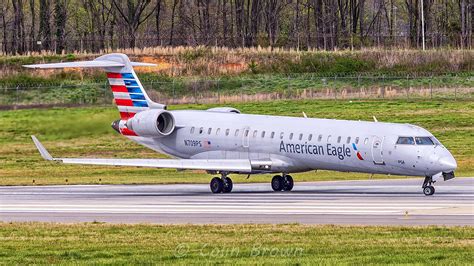
Investigators later confirmed that the Black Hawk crew had twice reported visual contact with the CRJ700 and had been instructed to maintain separation. That separation failed. The FAA and the U.S. government ultimately acknowledged human error on both the flight deck and the air traffic control side, a rare but telling admission that systemic safeguards had not worked as intended.
What the Permanent Helicopter Ban Covers
Under the new rule, all helicopters and powered-lift aircraft are prohibited from operating near DCA unless they are conducting emergency or essential missions. Even then, operations are subject to strict spatial separation requirements from commercial traffic, removing the flexibility that previously allowed helicopters to thread through arrival and departure corridors.
One of the most significant changes is the permanent closure of Helicopter Route 4, which runs between Hains Point and the Wilson Bridge. This route had long been used to funnel rotary-wing traffic along the Potomac, but investigators concluded it created an unacceptable convergence point with fixed-wing aircraft on final approach.
The FAA has also mandated that Runways 15/33 and 4/22 may no longer be used simultaneously when helicopters are operating urgent missions nearby. This rule eliminates intersecting traffic patterns during already high-workload phases of flight, prioritizing predictability over capacity.
Why the FAA Chose a Permanent Ban
Temporary restrictions often follow major accidents, but permanence signals something deeper. The FAA’s internal risk analysis determined that procedural fixes were insufficient given the density, complexity, and political sensitivity of Washington’s airspace. Unlike other metropolitan areas, DCA combines short runways, river approaches, prohibited areas, and frequent government helicopter activity in a narrow corridor.
According to U.S. Transportation Secretary Sean Duffy, the administration committed itself to ensuring that “such a tragedy would never happen again.” In regulatory terms, that promise translated into removing discretionary helicopter access rather than relying on pilot judgment or controller workload management during critical moments.
This philosophy marks a shift away from the long-held belief that experienced crews and layered procedures can safely coexist in constrained airspace. The FAA is now openly prioritizing structural separation over operational confidence.
Ripple Effects Across U.S. Aviation
The DCA decision is not isolated. Following the Potomac collision, the FAA conducted a sweeping review of high-volume, mixed-traffic airports across the country. Cities such as Boston, New York, Baltimore, Detroit, Chicago, Dallas, Houston, and Los Angeles were included in the assessment, particularly where commercial airliners share airspace with medical, police, offshore, or military helicopters.
In several locations, the FAA has already issued corrective action plans, especially for offshore helicopter operations serving energy and industrial sectors. While not all airports will face outright bans, the agency has made it clear that Washington is the new baseline, not an exception.
What This Means for Military and Government Flights
Perhaps the most controversial aspect of the ban is its impact on military and federal helicopter operations. Washington’s skies have historically accommodated routine training flights, evaluation missions, and personnel transport. Under the new regime, such activities must be relocated or redesigned unless they meet the FAA’s narrow definition of essential.
This creates operational friction, but the FAA’s stance is firm: training convenience cannot outweigh civilian safety. Emergency response, presidential movements, and national security missions remain exempt, but even these flights must now adhere to tighter routing and separation standards.
The result is a quieter, more predictable approach path into DCA—and a clear signal that the era of routine helicopter traffic mingling with commercial jets over the Potomac is over.
A Defining Moment for Aviation Safety Policy
The permanent helicopter ban near Reagan National Airport represents more than a local rule change. It is a philosophical recalibration of how the FAA views acceptable risk in complex airspace. Rather than trusting layered mitigations to catch every error, the agency has chosen elimination where elimination is possible.
For passengers, the change will be invisible but profound. For operators, it is a reminder that aviation safety evolves through hard lessons, often written in irreversible ink. Washington’s skies are now governed by those lessons, permanently reshaped by a single night over the Potomac.