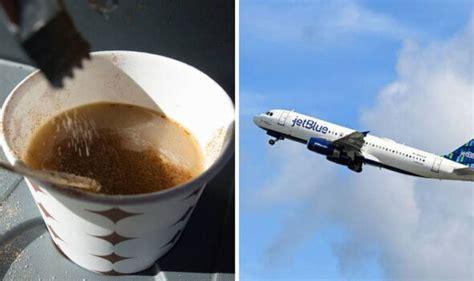
In a harrowing incident aboard JetBlue Flight 1825, a routine international trip from New York’s JFK Airport to Lima, Peru turned into a medical and legal nightmare for Arturas Lanchinskas, a 30-year-old Team USA judo coach. A pot of scalding hot coffee accidentally spilled by a flight attendant severely burned Lanchinskas’ face and caused permanent vision damage in his right eye, according to a lawsuit filed in New York. The injury not only altered the trajectory of his martial arts career, but it has also ignited a complex legal battle rooted in the Montreal Convention, an international aviation treaty.
A Routine Flight Turns Into Trauma at 30,000 Feet
The incident occurred in July 2023 aboard JetBlue Flight 1825, en route to the Pan American Judo Championships in Lima. Lanchinskas, a third-degree black belt and head instructor at Darfight Martial Arts in Brooklyn, was seated peacefully when a JetBlue crew member accidentally tipped a full pot of boiling coffee. The scalding liquid splashed directly onto the right side of his face, soaking into his eye socket.
Describing the agony, Lanchinskas told The New York Post, “It felt like a surge of fire hit the surface of my eyeball.” His face seared in pain, Lanchinskas relied on a nearby passenger—a doctor—who urgently advised him to flush his eye with water.
In the moments that followed, Lanchinskas made repeated trips to the aircraft lavatory to rinse his eye. Yet according to his attorney, Erin R. Applebaum, flight attendants displayed frustration and impatience, reportedly making comments that other passengers also needed the restroom. The alleged lack of compassion and inadequate in-flight medical response became a critical pillar in the pending lawsuit.
Medical Consequences: Permanent Vision Damage and Long-Term Effects
Upon landing at Jorge Chávez International Airport (LIM), Lanchinskas was taken directly to a local hospital where burn specialists treated his facial injuries. Despite this initial care, the damage had already inflicted lasting effects.
When Lanchinskas returned to New York, ophthalmologists at a specialized eye center diagnosed him with thermal and chemical injuries to the right eye. The prognosis was devastating: permanent light sensitivity, reduced vision, and potentially irreversible optical trauma that directly affects his ability to coach, spar, and perform in martial arts.
This injury is more than physical. It is deeply professional and psychological. As someone who makes a living demonstrating techniques, observing athletes, and training fighters, vision is not optional—it’s central. Now, he faces a life and career irrevocably altered by what his attorney alleges was avoidable negligence.
Legal Battle Under the Montreal Convention
The lawsuit hinges on the Montreal Convention, a globally recognized aviation treaty that holds airlines liable for passenger injuries that occur during international air travel. According to Applebaum, JetBlue is liable for “accident-induced injuries” that occurred onboard.
The suit demands “full and fair compensation” for both economic and non-economic damages. These include:
- Loss of income due to inability to teach
- Medical expenses (past and future)
- Pain and suffering
- Emotional trauma and disfigurement
Applebaum asserts that the airline failed in its duty of care, both by spilling the beverage and by not providing adequate follow-up support. “This is not simply an accident—it’s a consequence of poor safety protocols and dismissive post-incident behavior,” Applebaum said.
In-Flight Beverage Safety: An Underestimated Hazard
This tragic episode is not an isolated incident. In-flight beverage service, particularly involving hot liquids, has long posed significant yet underappreciated risks.
Just a month before the JetBlue incident, American Airlines Flight 1286 encountered severe turbulence en route from Miami to Raleigh-Durham. Laptops, mobile phones, and food trays became projectiles. A flight attendant was burned by boiling water, and another crew member suffered a broken arm during the chaos.
In another similar case, Gina Mason, a 68-year-old passenger on AA Flight 4547 from Baltimore to Detroit, suffered first and second-degree burns after turbulence tipped a beverage cart, spilling hot coffee into her lap. The incident caused not only severe physical injuries, including burns to her thighs and genital area, but also emotional scars. She later filed a federal lawsuit against American Airlines, alleging negligence for failing to secure the cart during a turbulence warning.
Her legal team cited a breach of standard safety protocols, emphasizing the inherent dangers of serving hot liquids during periods of aerodynamic instability. Mason’s lawsuit seeks compensation for pain, scarring, and long-term psychological effects.
Airline Liability and Hot Beverage Policies
Although coffee and tea are staples of air travel hospitality, their potential to inflict serious injuries is rarely acknowledged. Most carriers, including JetBlue and American Airlines, have internal safety guidelines regarding beverage service. However, those protocols are not always transparent or consistently enforced.
Incidents like these raise key questions:
- Are flight attendants adequately trained to handle hot liquids in unpredictable environments?
- Should hot beverages be served at all during turbulent or sensitive flight phases?
- Are airlines doing enough to reassess the risk profile of common inflight services?
Applebaum and other aviation attorneys argue that these events are not isolated—rather, they reveal systemic issues in how in-flight hospitality is managed.
Implications for Aviation Safety and Passenger Rights
The Lanchinskas case has ignited broader conversations among aviation regulators, legal experts, and safety advocates. If the Montreal Convention provides grounds for successful litigation, it could set precedent for stricter beverage handling protocols aboard international flights.
Airlines may be required to revise crew training programs, implement temperature-controlled beverage dispensers, or altogether suspend hot liquid service during critical flight periods. More importantly, courts may view these injuries as predictable and preventable, rather than inevitable accidents.
For passengers, this case underscores the importance of understanding your rights under international treaties. Most travelers are unaware that the Montreal Convention offers legal protection in the event of in-flight injuries, even those caused by service mishaps.
A Coach’s Career in Jeopardy, and a Legal Fight Ahead
Arturas Lanchinskas spent decades mastering the discipline, philosophy, and physical rigor of judo. His role as a national coach not only represents personal achievement, but also service to the USA Judo Team and aspiring athletes across the country. Now, with permanent eye damage and a painful memory of neglect at 30,000 feet, he must navigate a new journey—through courts, hospitals, and possibly, a different career path.
This lawsuit isn’t just about one man’s injury. It’s about airline accountability, passenger safety, and the evolving standards of in-flight service in an industry where small errors can yield life-changing consequences.
JetBlue Airways has not yet issued a formal public statement on the lawsuit, and court proceedings are expected to continue over the coming months. What remains clear is that the ripple effects of one spilled cup of coffee now stretch far beyond one flight or one airline—they reach into the very foundation of passenger rights and aviation responsibility.