Definition
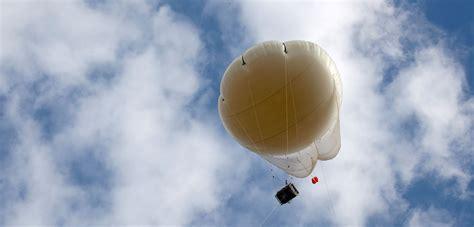
An unmanned free balloon is a type of aircraft that doesn’t have a power source and is lighter than air. It flies freely in the atmosphere.
Description
Unmanned free balloons are mainly used for scientific research and typically operate at extremely high altitudes, often above 60,000 feet (18,000 meters). At these heights, they don’t pose much risk to other aircraft, but special care is needed during their ascent and descent phases. These balloons utilize light gases like hydrogen or helium, as using hot air is not practical for such high elevations.
Balloons can be categorized into two types based on the gas volume: zero-pressure and superpressure. Zero-pressure balloons change shape as they rise because the ambient pressure decreases. This causes the gas inside to expand until it matches the external pressure. In contrast, superpressure balloons maintain a relatively constant volume, meaning the internal pressure is higher than the surrounding air. If the difference in pressure is too great, it can cause the balloon to burst. This issue led to the development of zero-pressure balloons.
Unmanned free balloons are classified as ‘heavy’, ‘medium’, or ‘light’ according to specific criteria outlined in Annex 2, Appendix 5. The weight of the payload is the key factor:
-
Light unmanned free balloons have a combined payload weight of less than 4 kg.
-
Medium unmanned free balloons carry payloads ranging from 4 kg to less than 6 kg.
-
Heavy unmanned free balloons have payloads of 6 kg or more.
Additional criteria may apply, allowing some balloons to be deemed ‘heavy’ even if their payload is under 6 kg if they could pose a greater risk upon impact. For instance, if the payload weighs 3 kg or more, or if it includes a package weighing 2 kg or more with an area density of 13 g/cm² or higher. Area density is calculated by dividing the mass of the package by its smallest area. This means that even a lightweight package can cause significant damage if its contact area is small. The same applies if the suspension device requires a force of 230 N or more to break.
ICAO has established guidelines for operating unmanned free balloons in Annex 2 and other documents. Some countries have added their own requirements. Generally, these balloons must be flown safely to protect both air traffic and people on the ground. Since control options for this type of aircraft are limited, the focus is on proper identification, tracking, and reducing collision risks.
Operating Requirements
Before launching, unmanned free balloons must follow several requirements:
-
Authorization: A balloon must receive the necessary authorization from the launching state. If the balloon operates over another country, additional authorization is needed, except for light meteorological balloons. Coordination with the appropriate ATS authority is required for operations over the high seas.
-
Surveillance: Heavy balloons must be detectable by primary radar or equipped with tracking devices. If SSR or ADS-B ground equipment is used, the balloon needs either a Mode C transponder or an ADS-B transmitter.
-
Conspicuity: If flying at night below 60,000 feet, the balloon and payload must have lights. If the balloon has a trailing antenna requiring significant force to break (over 230 N), it should have colored pennants or streamers.
-
Termination Equipment: Heavy balloons need at least two independent flight-termination devices and two ways to terminate the balloon envelope flight. This applies only to zero-pressure balloons since using termination devices on superpressure balloons can lead to rapid ascent and bursting.
Flight and ATS Procedures
The ATS unit must be informed of a medium or heavy unmanned free balloon flight at least seven days ahead. The notification should include details like balloon classification, SSR code, launch site, estimated launch time, cruising level, and the expected altitude at 60,000 feet. Any changes must be reported to the ATS unit at least six hours before the launch.
Once launched, operators of heavy unmanned free balloons below 60,000 feet must monitor their flight path and send position reports every two hours. For flights above 60,000 feet, reports are required every 24 hours. The planned descent must be communicated to the ATS unit at least one hour prior, including an estimate for crossing 60,000 feet if relevant. Operators must also inform the ATS unit when their balloon operation is completed.
ATS units relay information about unmanned free balloons to other concerned aircraft. For example, they might say: “TRAFFIC IS (classification) UNMANNED FREE BALLOON(S) WAS [or ESTIMATED] OVER (place) AT (time) REPORTED (level(s)) [or LEVEL UNKNOWN] MOVING (direction) (other pertinent information, if any).” After receiving information about a medium or heavy balloon’s planned flight, ATS units will pass this along to other units involved. After launch, they will continue to share updated information.
Example phraseology includes: “ESTIMATE UNMANNED FREE BALLOON(S) (identification and classification) ESTIMATED OVER (place) AT (time) REPORTED FLIGHT LEVEL(S) (figure or figures) [or FLIGHT LEVEL UNKNOWN] MOVING (direction) ESTIMATED GROUND SPEED (figure) (other pertinent information, if any).”
ATS units must monitor the movement of medium or heavy unmanned free balloons with surveillance equipment and provide separation from other aircraft when needed, especially in controlled airspace.