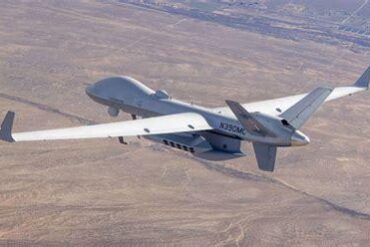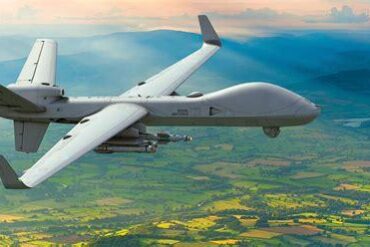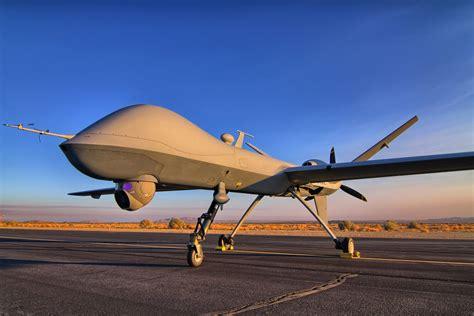
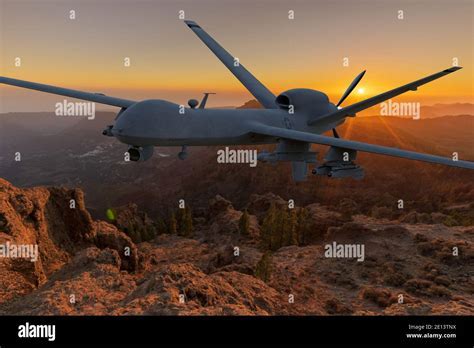
The General Atomics MQ-9 Reaper, also known as Predator B, stands as a defining force in modern aerial warfare and intelligence operations. As a long-endurance, high-altitude, unmanned combat aerial vehicle (UCAV), it has reshaped the tactical capabilities of the United States Air Force and allied forces worldwide. Since its introduction in 2007, the MQ-9 has served not only in lethal strike missions but also in strategic surveillance, homeland security, and scientific observation. With over 300 airframes produced by 2021, it continues to prove indispensable across a broad range of missions.
Designed and built by General Atomics Aeronautical Systems, the MQ-9 Reaper emerged as a turboprop-powered successor to the MQ-1 Predator. It can carry 15 times more ordnance and operate at three times the speed, delivering unmatched endurance and flexibility in combat.
Development Origins and Evolution
The development of the MQ-9 Reaper traces back to the early 2000s with the prototype Predator B-001, which took flight on February 2, 2001. This initial platform, powered by a 950 shaft horsepower (shp) turboprop engine, demonstrated the viability of an advanced UCAV capable of sustained operations. Subsequent variants included the B-002, a turbofan prototype that prioritized altitude over endurance, and Altair (B-003), optimized for high-altitude, long-duration surveillance, with a ceiling of 52,000 feet and flight time up to 36 hours.
In 2002, two YMQ-9 airframes were delivered to the USAF for rigorous evaluation. These were eventually refined into the operational MQ-9, which the Air Force officially designated “Reaper”, marking a strategic shift from pure ISR (intelligence, surveillance, reconnaissance) roles to hunter-killer capabilities. General T. Michael Moseley, then Chief of Staff of the USAF, emphasized this shift, underscoring the Reaper’s role in targeting and eliminating threats in real-time.
Technical Specifications and Weaponry
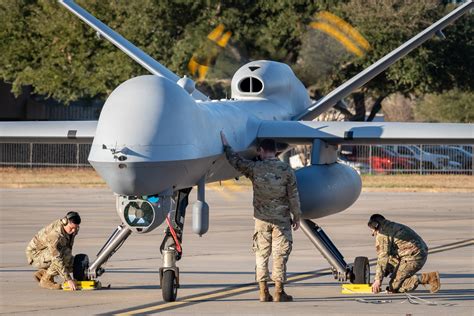
The MQ-9 Reaper incorporates an extensive suite of technologies that support both strike and surveillance operations.
- Engine: 950 hp Honeywell TPE331-10 turboprop
- Maximum Speed: 260 knots
- Cruise Speed: 150–170 knots
- Wingspan: 66 feet
- Payload Capacity: Up to 3,800 pounds
- Ceiling: 25,000 feet (operational), capable of peaking higher for ISR
- Endurance: 30 hours in ISR configuration, 23 hours when armed, up to 42 hours with extended fuel tanks
The Reaper is equipped with six external pylons, each designed to support various weapons:
- Inner pylons: Up to 1,500 lbs
- Mid pylons: Up to 600 lbs
- Outer pylons: Up to 200 lbs
Common munitions include:
- AGM-114 Hellfire missiles
- GBU-12 Paveway II laser-guided bombs
- GBU-38 Joint Direct Attack Munition (JDAM)
- AIM-9 Sidewinder (experimental)
- AIM-92 Stinger (in testing phase)
Advanced Sensors and Surveillance Systems
The Reaper is equipped with an array of advanced sensors, giving it robust ISR capabilities:
- AN/AAS-52 Multispectral Targeting System (EO/IR)
- Lynx synthetic aperture radar (SAR) with GMTI, DMTI, and MWAS modes
- Gorgon Stare: Wide-area motion imagery system enabling full-field video coverage
These sensors allow operators to maintain persistent surveillance, identify targets with precision, and support dynamic targeting in real time. The sensor operator and pilot work in coordination from a Ground Control Station (GCS), which is also manned by an intelligence coordinator.
Due to the satellite relay nature of its command system, the Reaper has a 1.2-second signal latency, which is mitigated by pre-programmed flight paths and semi-autonomous capabilities.
Upgrade Path and Emerging Technologies
The MQ-9 Reaper has been consistently modernized to meet evolving mission requirements. Block 5 Reapers, introduced in 2017, included the ALR-69A radar warning receiver (RWR) to improve survivability in contested airspace. In 2020, software upgrades enabled a doubling of the missile payload from four to eight Hellfires, significantly enhancing firepower.
Experimental platforms such as Sparrowhawk, a loitering munition drone launched from the MQ-9, are under development. Additionally, concepts involving directed-energy weapons and electronic warfare (EW) pods such as Pandora have been tested. The Reaper has also served as a testbed for miniature air-launched decoys (MALD) and integrated missile tracking systems using the MTS-B/C sensors.
Global Operational History and Combat Record
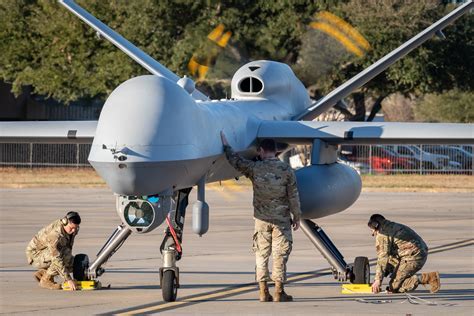
The MQ-9’s combat journey began with the activation of the 432nd Wing in May 2007, followed by its first confirmed kill on October 28, 2007. Its participation has spanned Iraq, Afghanistan, Somalia, and the Horn of Africa, with notable missions such as the targeted strike on Mohammed Emwazi (“Jihadi John”) in November 2015.
The Reaper has experienced increasing risk in contested environments. It has been shot down by Houthi forces, involved in airspace encounters with Russian jets over Syria, and narrowly avoided collisions. One MQ-9 was intentionally downed by a U.S. F-15E Strike Eagle in 2009 to prevent enemy acquisition.
By 2013, Reaper crews had logged over 2 million flight hours, establishing the platform’s reliability. As of 2023, Reapers also supported ISR missions in Gaza, showcasing their continuous relevance in modern asymmetric warfare.
Applications Beyond the Battlefield
NASA and Civilian Use Cases
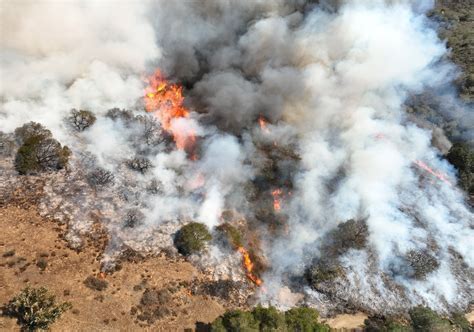
NASA’s adaptations of the MQ-9 platform include the Altair and Ikhana variants. These have been instrumental in Earth science missions, such as wildfire mapping during California’s 2007 fire season and re-entry monitoring for Orion EFT-1 in December 2014.
U.S. Homeland Security
The U.S. Customs and Border Protection (CBP) operated a fleet of MQ-9s as early as 2012, primarily along the U.S.-Mexico and U.S.-Canada borders. These drones were equipped with Lynx SAR and MTS-B systems. The aircraft CBP-101 alone flew 959 hours, contributing to over 2,300 arrests. While operations expanded rapidly, the fleet was briefly grounded after a 2014 incident. However, CBP Reapers resumed missions, including aerial monitoring during domestic civil unrest in 2020.
Expanding International Adoption
Several U.S. allies have adopted or shown interest in the MQ-9 Reaper and its variants:
- United Kingdom: Royal Air Force operates armed MQ-9s
- Italy: Uses MQ-9s for surveillance and strike
- France: Acquired 16 MQ-9s, unarmed, for Sahel missions
- Canada: Contracted 11 MQ-9B SkyGuardians in 2023 for CA$2.49 billion, deliveries starting 2028
- Belgium: Selected the MQ-9B in 2018
- Greece: Approved acquisition of three SeaGuardian variants in 2022
- Dominican Republic: Operational use since 2012
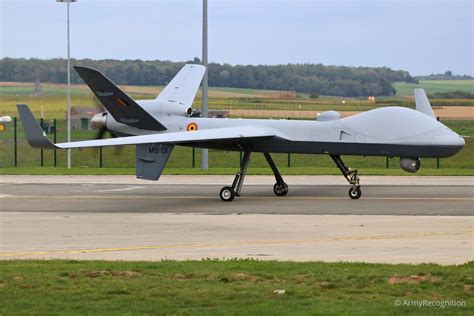
Germany, though interested, deferred procurement due to domestic policy debates. Meanwhile, the U.S. Marine Corps has increasingly embraced the MQ-9. Since 2018, VMU-1 operated contractor-leased Reapers, and the first Marine-owned airframes arrived in 2021. The VMU-3 achieved Initial Operational Capability (IOC) in 2023, solidifying the MQ-9’s role in expeditionary naval operations.
Looking Ahead: Strategic Relevance Through 2035
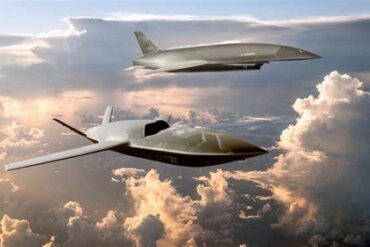
With a projected operational life extending to 2035, the MQ-9 Reaper remains a cornerstone of U.S. and allied defense doctrine. While successor platforms such as loyal wingman drones and AI-integrated UCAVs are under development, the Reaper’s enduring relevance stems from its versatility, cost-efficiency (estimated at $33 million per unit as of 2023), and adaptability.
The MQ-9’s continuous evolution through hardware upgrades, software enhancements, and new mission profiles ensures that it will retain its edge across both conventional and irregular battlefields. From high-value target eliminations to humanitarian reconnaissance, the MQ-9 Reaper stands as a technological and strategic triumph in the ongoing evolution of aerial warfare.