The F-35 Lightning II, a fifth-generation multirole stealth fighter, is no longer just a manned combat platform. It has evolved into a central node in a new era of manned-unmanned teaming, redefining how aerial superiority is achieved. With programs like the “Loyal Wingman” and Collaborative Combat Aircraft (CCA), the F-35 now serves as both spearhead and strategic coordinator in combat environments, commanding drone swarms, autonomous strike platforms, and electronic warfare systems with unmatched precision. This integration is not a futuristic projection—it is actively reshaping how modern militaries operate today.
Loyal Wingman Concept: The Rise of the XQ-58A Valkyrie
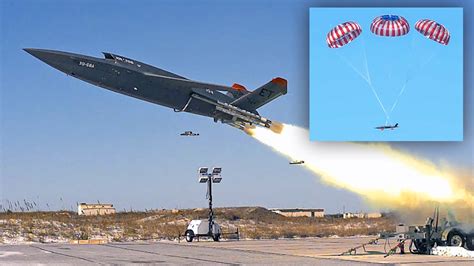
Among the most transformative developments is the XQ-58A Valkyrie, a stealthy, subsonic unmanned combat aerial vehicle (UCAV) designed by Kratos Defense. Developed under the Loyal Wingman initiative, the Valkyrie is engineered to operate as a force multiplier, flying in coordination with piloted aircraft like the F-35.
Unlike traditional drones, the Valkyrie is deployed without reliance on runways, launched via rocket-assisted takeoff and recovered by parachute. Its combat radius of 3,425 kilometers allows it to penetrate hostile airspace, carrying up to 550 lbs of precision-guided munitions for strike missions. The Valkyrie’s roles are diverse: Suppression of Enemy Air Defenses (SEAD), electronic warfare, and decoy operations that draw fire away from manned assets.
F-35 pilots control Valkyries via encrypted, low-observable communication systems, ensuring secure coordination during high-threat operations. This configuration allows the F-35 to remain cloaked while the Valkyries execute high-risk objectives, enhancing survivability and mission lethality.
Artificial Intelligence in Air Combat: Swarm Control and Tactical Autonomy
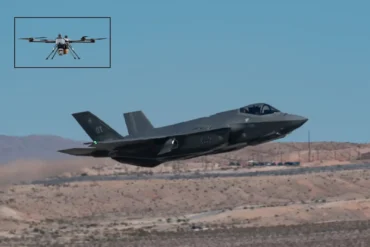
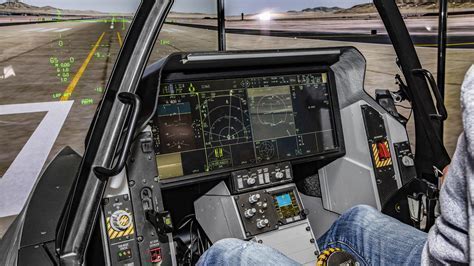
At the heart of the F-35’s drone command capability lies AI-driven coordination technology. The cockpit of the F-35 has become a command center, where pilots interface with multiple drones through advanced touchscreen displays. These interfaces enable real-time drone management for critical mission components such as missile interception, target designation, and radar jamming.
AI algorithms embedded within the F-35’s onboard systems process combat data faster than human operators, executing decisions such as:
- Prioritizing threats across multiple axes of engagement
- Assigning drones to high-risk sectors or targets
- Executing autonomous attack patterns
In a notable 2025 simulation, an F-35 directed a drone swarm to successfully locate and neutralize mobile radar installations, while concurrently deploying electronic warfare payloads. The operation utilized the Multifunction Advanced Data Link (MADL) for stealth-encrypted communication, preventing enemy detection of coordinated drone movements.
The Collaborative Combat Aircraft (CCA) Revolution
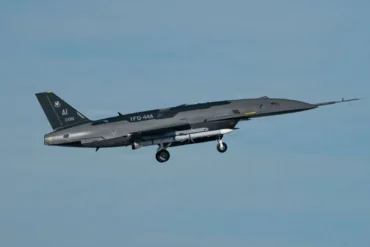
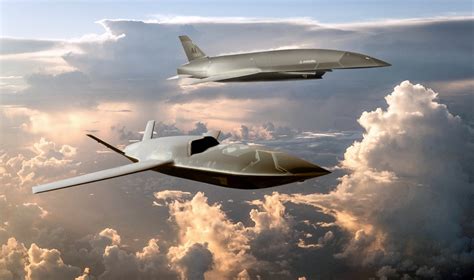
Beyond existing drones like the Valkyrie, the U.S. Air Force is preparing to deploy over 1,000 AI-enabled unmanned aircraft under the CCA initiative by 2030. These next-generation systems, designated YFQ-42A and YFQ-44A, are intended to offer fighter-level performance with dramatically lower costs—estimated at just one-tenth the price of an F-35.
These drones will operate in roles extending beyond traditional combat:
- Aerial Refueling: Extending the range of fighter jets and bombers
- Reconnaissance Missions: Providing real-time battlefield intelligence
- Autonomous Kamikaze Strikes: Engaging in self-sacrifice missions against enemy fortifications
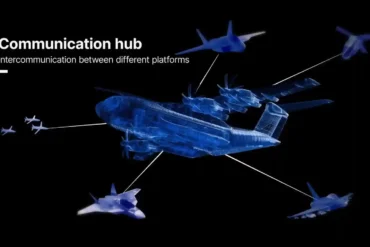
The F-35 will serve as the “quarterback” of the digital battlespace, commanding these drones through high-bandwidth, secure links while leveraging its stealth and sensor fusion capabilities to feed data into a networked combat cloud. This architecture will allow distributed strike teams to overwhelm enemy defenses using swarm logic, even in GPS-denied or jamming-heavy environments.
Block 4 and TR-3 Upgrades: Enabling Drone Supremacy
To meet the computational demands of swarm coordination, the Block 4 modernization program introduces significant upgrades to the F-35’s onboard architecture. Central to this effort is the Technology Refresh 3 (TR-3) package, featuring next-generation processors and expanded memory systems that deliver up to 25 times the data throughput of previous versions.
These enhancements allow the F-35 to ingest and process massive volumes of data from its enhanced AN/APG-85 AESA radar, Next-Gen Distributed Aperture System (DAS), and external drone feeds in real-time. The result is a comprehensive 360° battlespace awareness, allowing pilots to make time-sensitive decisions while drone AI executes delegated objectives.
Furthermore, weapons integration improvements have enabled both the F-35 and its drone assets to carry advanced munitions, including:
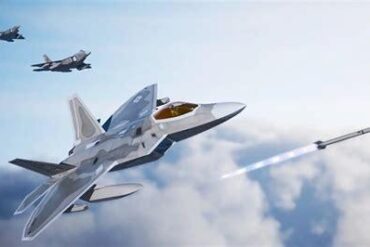
- AIM-260 Joint Advanced Tactical Missiles (JATM) for long-range air superiority
- AGM-88G Advanced Anti-Radiation Guided Missiles-Extended Range (AARGM-ER) for radar suppression
These systems allow drones to strike well beyond the pilot’s line of sight, opening the door to autonomous, coordinated kill chains in contested environments.
Strategic Implications: Tactical Dominance in an Evolving Threat Landscape
The integration of drone systems into the F-35 architecture is not merely a technical upgrade—it is a strategic recalibration of air warfare doctrines. By shifting high-risk roles to unmanned systems, the U.S. reduces human vulnerability while dramatically expanding operational flexibility.
A single F-35 can now command upwards of six drone platforms simultaneously, coordinating attacks across air and ground targets. This scalability makes the F-35 fleet exponentially more potent while maintaining manageable costs and reduced attrition rates.
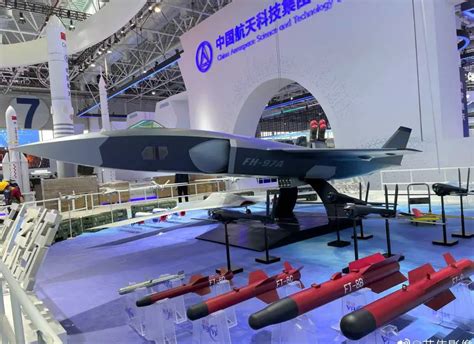
Moreover, the international arms race around manned-unmanned teaming is intensifying. China’s FH-97A drone, designed to mimic the Loyal Wingman concept, has demonstrated similar combat applications. As both Russia and China field AI-linked drone assets, air supremacy will increasingly hinge on swarm coordination, algorithmic lethality, and cyber-immune communications—areas where the F-35 is rapidly solidifying its lead.
Remaining Hurdles and Future Trajectory
While the F-35-drone integration sets a new benchmark, critical challenges persist. AI reliability in combat environments remains under scrutiny, particularly in the context of dynamic threat evolution and electronic warfare disruptions. There is also the cybersecurity threat: protecting communication links like MADL against intrusion or spoofing will be vital.
In parallel, rules of engagement and legal frameworks for autonomous weapon systems continue to evolve. Questions regarding drone-initiated kinetic actions—especially in unpredictable civilian environments—are likely to shape policy, ethics, and doctrine in the coming decade.
Despite these concerns, the direction is unequivocal. The F-35 Lightning II, empowered by loyal wingmen and swarming CCAs, is spearheading the shift to a distributed, AI-augmented battlespace, where human command is amplified—not replaced—by machine precision and speed.
FAQs: F-35 Drone Integration
What is the Loyal Wingman program, and how does it work with the F-35?
The Loyal Wingman program refers to the deployment of semi-autonomous drones like the XQ-58A Valkyrie, which fly alongside manned aircraft such as the F-35. These drones carry out dangerous missions like radar jamming, decoy operations, and direct strikes, allowing the F-35 to remain hidden while directing the mission. Control is maintained via secure datalinks, with increasing autonomy powered by onboard AI systems.
Can a single F-35 control multiple drones at once?
Yes. With the latest software and hardware upgrades, a single F-35 can manage six or more drones simultaneously. These drones operate as extensions of the fighter’s mission systems, executing designated tasks such as target acquisition, electronic attack, or defensive screening, all while receiving real-time instructions from the pilot or onboard AI.
What advantages do drones bring to F-35 operations?
Drones extend the reach, survivability, and lethality of the F-35. They can perform high-risk roles without endangering pilots, help saturate enemy defenses, conduct autonomous reconnaissance, and engage in electronic warfare or direct combat. This significantly multiplies the effectiveness of each F-35 mission while enabling coordinated multi-domain operations.