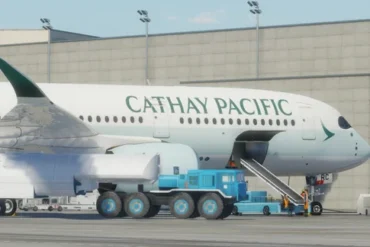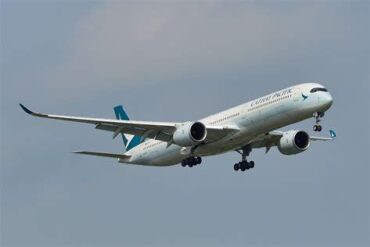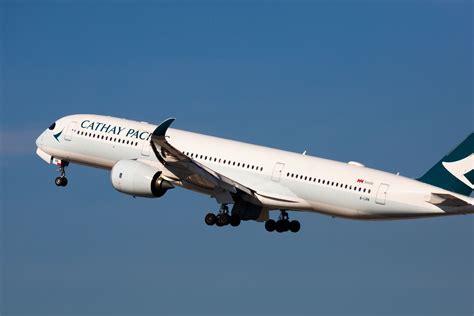
Cathay Pacific has become one of the world’s leading operators of ultra-long-haul Airbus A350 services, connecting Hong Kong with some of the most distant commercial aviation markets on Earth. With a fleet of 48 Airbus A350 aircraft, including both the A350-900 and A350-1000 variants, the Hong Kong-based carrier continues to expand its long-distance network while taking advantage of the aircraft’s efficiency, range, and passenger comfort.
The airline’s A350 fleet consists of 30 A350-900s with 280 seats and 18 A350-1000s with 334 seats. With an average fleet age of around 7.8 years, these aircraft represent the backbone of Cathay Pacific’s modern long-haul strategy. Unlike some competing carriers, Cathay’s A350 aircraft do not feature first class, instead focusing on premium economy, business class, and economy cabin offerings designed for long-distance international travel.
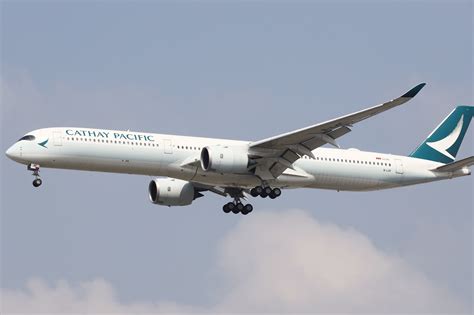
The first Airbus A350 delivered to Cathay Pacific was registered as B-LRA, arriving at Hong Kong International Airport in May 2016. The aircraft was the 29th A350 produced by Airbus and entered commercial service on June 1, 2016, operating short regional flights to Manila and Taipei before the type gradually expanded into Cathay’s global long-haul network.
Today, the A350 has transformed Cathay Pacific’s ability to operate routes that stretch beyond 15 hours, particularly between Hong Kong and North America. These flights require advanced aircraft performance, careful scheduling, and strong passenger demand. Among Cathay’s longest Airbus A350 routes, one service stands out above all others: the massive journey between Hong Kong and Dallas/Fort Worth, which can reach more than 17 hours of scheduled block time.
Cathay Pacific’s Longest Airbus A350 Route: Hong Kong to Dallas/Fort Worth
Cathay Pacific’s Hong Kong–Dallas/Fort Worth route became the airline’s longest passenger service after launching in April 2025. Operated daily with the Airbus A350-1000, the route reaches a maximum scheduled block time of approximately 17 hours and 15 minutes on flights returning from Dallas to Hong Kong.
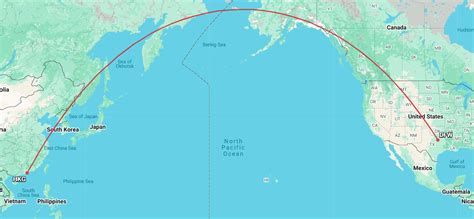
The flight represents a major example of modern aviation’s ability to connect distant economic regions without relying on intermediate stops. Although it is not the longest Airbus A350 operation worldwide, as some airlines use specially configured A350-900ULR aircraft for even longer missions, Cathay’s DFW service demonstrates the capability of the standard A350-1000 platform.
The route also highlights the importance of airline partnerships. Dallas/Fort Worth has long been a strategic hub for American Airlines, Cathay Pacific’s oneworld alliance partner. Before Cathay launched its service, American Airlines operated the route from 2014 until 2020. The partnership allows passengers to connect beyond both Hong Kong and Dallas, strengthening the commercial case for such an extremely long flight.
During the first year of operation, Cathay Pacific transported approximately 176,920 round-trip passengers on the route, achieving an impressive 91% seat load factor. However, the success of an ultra-long route depends on more than just full aircraft. Passenger revenue, ticket pricing, and the balance between local travelers and connecting passengers are equally important factors.
The Economics Behind 17-Hour Flights
Ultra-long-haul flights are among the most challenging services in commercial aviation. Aircraft must carry enough fuel for journeys lasting nearly an entire day, while airlines must maintain profitability despite higher operating costs.
Cathay Pacific’s Hong Kong–Dallas route benefits significantly from transfer traffic. A large portion of passengers connect through either Hong Kong or Dallas rather than beginning or ending their journeys locally. This sixth-freedom traffic model has become essential for many international airlines, allowing them to combine demand from multiple markets.
Around 90% of passengers on the Hong Kong–Dallas route were estimated to involve connecting journeys, with many travelers continuing onward through Cathay Pacific’s Asian network or American Airlines’ extensive US network. Destinations such as mainland China, Vietnam, India, Thailand, and the Philippines represent important connecting markets.
However, connecting passengers often generate lower yields compared with direct local travelers. Airlines must carefully balance passenger volume with ticket revenue to ensure that these long-distance routes remain financially sustainable.
Cathay Pacific’s 11 Longest Airbus A350 Routes
Cathay Pacific’s longest A350 operations in the third quarter of 2026 demonstrate the airline’s focus on North America, Europe, and other distant international markets. The longest scheduled block times include:
- Dallas/Fort Worth to Hong Kong: Up to 17 hours 15 minutes, operated by the A350-1000.
- Hong Kong to New York JFK: Up to 16 hours 5 minutes, using both A350-900 and A350-1000 aircraft.
- Chicago O’Hare to Hong Kong: Up to 16 hours, operated by the A350-1000.
- Hong Kong to Boston: Up to 15 hours 55 minutes, operated by the A350-1000.
- Toronto to Hong Kong: Up to 15 hours 25 minutes, using A350-900 and A350-1000 aircraft.
- Hong Kong to Madrid: Up to 14 hours 30 minutes, operated with A350 aircraft.
- Hong Kong to Manchester: Up to 14 hours 20 minutes, with seasonal A350 service.
- Hong Kong to London Heathrow: Up to 14 hours 10 minutes, using A350-900 and A350-1000 aircraft.
- Seattle to Hong Kong: Up to 14 hours, operated by the A350-900.
- Hong Kong to Barcelona: Up to 13 hours 55 minutes, operated by the A350-900.
- Hong Kong to Paris Charles de Gaulle: Up to 13 hours 50 minutes, operated by the A350-1000.
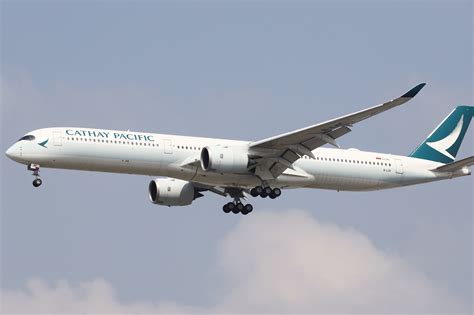
These routes show how the Airbus A350 family has changed long-distance aviation. Before aircraft like the A350, airlines often relied on larger four-engine aircraft or required more fuel-intensive operations for similar distances. The A350’s composite structure, efficient engines, and advanced aerodynamics allow airlines to open thinner routes between cities that previously lacked nonstop connections.
Why the Airbus A350 Is Perfect for Ultra-Long-Haul Operations
The Airbus A350 has become a favorite aircraft for airlines operating extended international routes because of its combination of range and efficiency. The aircraft uses extensive composite materials, reducing weight while improving fuel efficiency. Its advanced Rolls-Royce Trent XWB engines provide the power required for long flights while maintaining lower fuel consumption compared with previous-generation aircraft.
For passengers, the aircraft offers improved cabin conditions designed for long journeys. Higher humidity levels, quieter engines, and advanced air filtration systems help reduce fatigue during flights lasting more than half a day.
Cathay Pacific’s A350 fleet allows the airline to compete in one of aviation’s most demanding markets. Routes connecting Asia with North America require careful planning because airlines must manage fuel costs, crew scheduling, aircraft utilization, and unpredictable weather conditions.
Cathay Pacific’s Ultra-Long-Haul Strategy Continues
The introduction of longer Airbus A350 routes reflects a broader shift in global aviation. Airlines increasingly prefer nonstop services that save passengers time, even when those flights require highly specialized aircraft and operational planning.
Cathay Pacific’s 17-hour Dallas/Fort Worth service and its other long-distance A350 routes demonstrate the continuing importance of Hong Kong as an international aviation hub. As demand for direct connections between Asia, North America, and Europe grows, aircraft like the Airbus A350-1000 will remain central to the future of global long-haul travel.
With its modern fleet, strategic partnerships, and expanding ultra-long-haul network, Cathay Pacific is proving that flights approaching 18 hours are no longer a technological dream but a practical reality of today’s commercial aviation industry.