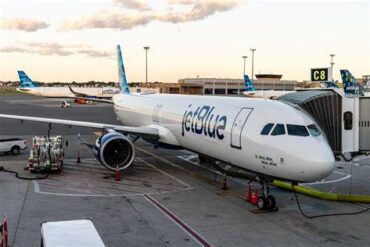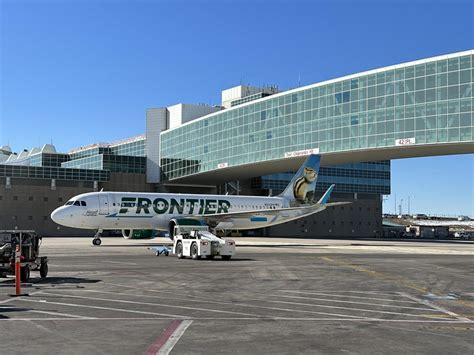
Spirit Airlines’ collapse created an unusual opening for other low-cost carriers across the United States, but Frontier Airlines is taking a selective approach to the capacity left behind. Rather than attempting to recreate Spirit’s enormous operation at Fort Lauderdale-Hollywood International Airport (FLL), Frontier is directing a growing share of its expansion toward smaller leisure markets and individual city pairs.
That distinction is important because Spirit’s disappearance did not simply create empty gates and vacant flight numbers. It changed the competitive balance in several markets at once. Frontier could have responded by concentrating aircraft at the airports where Spirit had historically built its strongest positions, particularly Fort Lauderdale. Instead, its network decisions through late 2026 and early 2027 indicate a preference for finding specific markets where its ultra-low-cost model can operate without immediately entering a massive capacity battle.
The strategy can be seen in routes such as Las Vegas Harry Reid International Airport (LAS) to Boise Airport (BOI), alongside new and returning services involving Denver International Airport (DEN), Los Angeles International Airport (LAX), Dallas/Fort Worth International Airport (DFW), Nashville International Airport (BNA), Orlando International Airport (MCO), and other leisure-oriented destinations. These routes do not recreate Spirit’s former network. They represent something more flexible: a collection of opportunities that Frontier can evaluate individually.
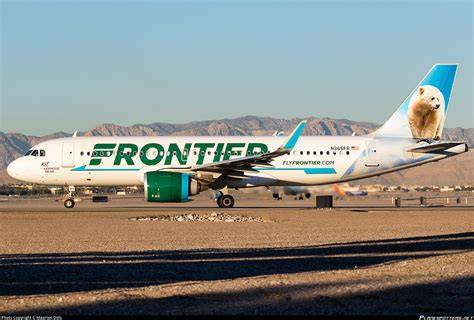
Spirit Airlines’ Collapse Changed the Low-Cost Airline Landscape
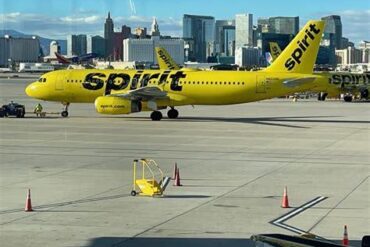
Spirit Airlines ceased operations on May 2, 2026, removing a substantial amount of low-fare capacity from the US aviation market almost immediately. The impact was especially visible in Las Vegas, where the airline had been responsible for roughly 70 daily departures and 16 routes. Other major airports affected by the withdrawal included Fort Lauderdale, Orlando, Detroit Metropolitan Wayne County Airport (DTW), and Dallas/Fort Worth.
The scale of Spirit’s departure naturally raised questions about which airline would absorb its customers and aircraft opportunities. Frontier was an obvious candidate because both airlines competed aggressively for price-sensitive travelers and operated extensive Airbus narrowbody fleets. Yet absorbing Spirit’s passengers does not require Frontier to reproduce Spirit’s entire network architecture.
Frontier has demonstrated that it is willing to take over selected routes. In July, the airline introduced services including Boston to Orlando, Dallas/Fort Worth to New Orleans, Detroit to Fort Lauderdale, Las Vegas to Detroit, and Detroit to Philadelphia. Those additions showed that Frontier was prepared to capture some of the capacity made available by Spirit’s shutdown.
However, the pattern is different from a wholesale hub takeover. Frontier is selecting individual city pairs rather than attempting to reconstruct a former Spirit base route by route. That approach reduces the financial and operational commitment required to establish a major hub while still allowing Frontier to benefit from the reduction in low-fare competition.
Las Vegas and Boise Highlight Frontier’s Secondary-Market Strategy
The new Las Vegas-Boise service provides one of the clearest examples of Frontier’s emerging network philosophy. The route began on September 10, 2026, with four weekly flights and introductory fares from $49.
On the surface, Boise might appear to be a relatively small opportunity compared with the enormous markets surrounding airports such as Fort Lauderdale, Dallas/Fort Worth, or Los Angeles. But that is precisely what makes the route interesting. Frontier does not need Boise to become a connecting hub. It only needs enough passengers to make a limited number of nonstop flights economically attractive.
Las Vegas supplies the other side of the equation. It is a major leisure destination and an important part of Frontier’s network, providing a natural place from which the airline can deploy aircraft into additional markets. Frontier can therefore connect an established leisure market with a smaller metropolitan area without having to create an entirely new operating base.
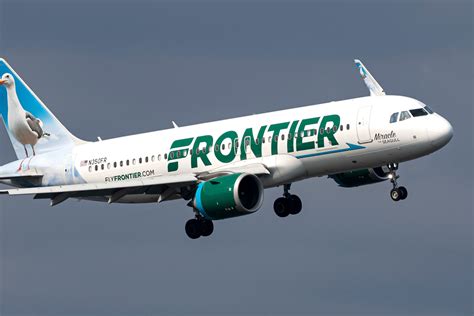
Frontier is also restoring Las Vegas-Oakland service, with 11 weekly flights beginning August 20. Taken together, the two routes show how the airline can use an established market as a platform for incremental network growth.
A secondary market can offer an airline several advantages. Competition may be less intense, frequency can be adjusted more easily, and the carrier does not necessarily need to maintain a large schedule simply to make the market viable. Frontier can test demand with a handful of weekly flights and increase or reduce capacity according to performance.
That flexibility becomes especially valuable for an airline operating a low-cost model. Instead of committing significant resources to a single large hub, Frontier can distribute aircraft utilization across multiple markets and pursue demand where it sees favorable opportunities.
Frontier’s Expansion Goes Beyond Former Spirit Routes
Frontier’s late-2026 schedule makes clear that its strategy is not simply about replacing Spirit flight for flight. The airline has announced several routes that fit into its wider leisure network, including Denver-Fort Lauderdale, Detroit-Los Angeles, Kansas City-Orlando, and Houston-San Juan.
Most of these services are scheduled to begin around November 20, while Houston-San Juan begins December 17. The collection of routes is notable because several connect medium-sized origin markets with major leisure destinations rather than concentrating traffic around a single Frontier hub.
Kansas City-Orlando is particularly representative of this approach. Orlando has enormous tourism demand, while Kansas City provides a substantial metropolitan population without functioning as a traditional Frontier connecting hub. Four weekly flights can give travelers a new low-fare option without requiring Frontier to build a dense schedule comparable to the one Spirit once operated from Fort Lauderdale.
The same principle applies to international leisure flying. Routes such as Houston-San Juan, Los Angeles-Guatemala City, and Dallas/Fort Worth-San José allow Frontier to connect existing metropolitan markets with destinations that generate substantial leisure and visiting-friends-and-relatives demand.
Rather than concentrating its growth in one airport, Frontier can therefore spread its exposure across several regions. This gives the airline more options when seasonal demand changes and makes it easier to adjust capacity when individual routes fail to meet expectations.
Frontier Is Also Cutting Routes Where Economics Are Less Attractive
The significance of Frontier’s new leisure markets becomes clearer when its expansion is viewed alongside its willingness to remove capacity elsewhere. Chicago O’Hare International Airport (ORD) provides an important example.
Frontier cut eight routes from its September schedule at O’Hare, including services to Phoenix, Nashville, Charlotte, San Diego, Raleigh-Durham, Austin, Tampa, and Cancún. Some of these routes had produced respectable load factors. San Diego, for example, recorded a 79.4% load factor in September 2025, while several other routes exceeded 80%.
That demonstrates why load factor alone does not determine whether an airline should continue operating a route. An aircraft can be relatively full and still fail to generate an attractive financial return. Revenue depends on fares, ancillary income, competition, operating costs, aircraft utilization, airport expenses, and the opportunity cost of deploying that aircraft somewhere else.
Frontier’s decisions suggest that management is increasingly focused on that broader calculation. A route that carries many passengers may still be less attractive than another route where Frontier can stimulate demand, charge an appropriate fare, and face fewer competitors.
That helps explain why the airline can simultaneously add capacity in leisure markets and reduce capacity at a major airport. The apparent contradiction disappears when the network is viewed as a portfolio of individual investments rather than a simple race for passenger volume.
Frontier’s September 2026 scheduled capacity was approximately 23% higher than a year earlier, yet the airline was also removing routes. Growth and capacity discipline can happen at the same time when an airline reallocates aircraft toward markets it believes offer stronger economics.
Why Secondary Leisure Markets Can Be More Attractive
The financial logic behind Frontier’s strategy is closely connected to what happens when a low-cost competitor exits a market. Frontier executives have forecast a 3% to 5% improvement in revenue per available seat mile, or RASM, based on historical experiences when Spirit reduced capacity or left markets where Frontier was already operating.
The underlying mechanism is relatively straightforward. When a major ultra-low-cost carrier disappears, remaining airlines do not necessarily need to replace every seat immediately. The reduction in supply can improve pricing conditions, allowing existing carriers to generate more revenue from the capacity they retain.
Frontier has indicated that the industry replaced roughly half of Spirit’s earlier May capacity reductions, with Frontier accounting for about 40% of that restored capacity. The figures illustrate an important point: the objective is not necessarily to replace every Spirit flight, but to replace capacity where the economics justify doing so.
That is where secondary leisure markets become especially useful. Las Vegas-Boise does not need to produce the passenger volume of a major Fort Lauderdale route to be worthwhile. A smaller market can work if Frontier can maintain reasonable load factors, stimulate new demand with low fares, and avoid a prolonged capacity war.
Large markets often attract immediate responses from legacy carriers and other low-cost airlines. When several airlines compete aggressively on the same city pair, fares can fall quickly. A secondary market with fewer nonstop alternatives may provide Frontier with more room to build demand before competitors react.
Fort Lauderdale Remains Important, But It Is No Longer the Entire Opportunity
Frontier is not abandoning Fort Lauderdale. The airline continues to serve Fort Lauderdale-Hollywood International Airport and plans to add a daily Denver-Fort Lauderdale service beginning November 20.
What has changed is the role Fort Lauderdale appears to play in the network. Rather than treating Spirit’s former base as an empty structure waiting to be rebuilt, Frontier can treat the airport as one opportunity among many.
Spirit’s former Fort Lauderdale operation was built on scale. Its economics depended on maintaining a dense schedule across numerous destinations and supporting both local and connecting traffic. Recreating that structure would require Frontier to commit a large number of aircraft, crews, airport resources, and competitive capacity to a market where other airlines are also responding.
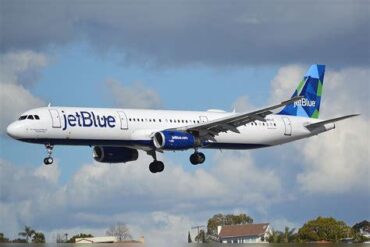
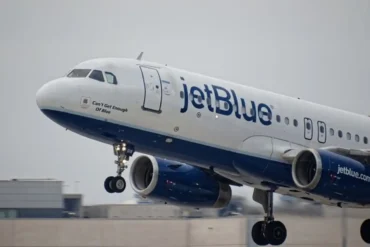
JetBlue, in particular, has been expanding at Fort Lauderdale following Spirit’s departure. That makes the airport a fundamentally different opportunity from a smaller market where competitors may have less incentive to respond immediately.
For Frontier, the question is therefore not whether Fort Lauderdale is valuable. It clearly remains valuable. The more important question is whether putting additional aircraft into Fort Lauderdale produces a better return than deploying those aircraft across several less crowded leisure markets.
Frontier Airlines Is Building a Different Kind of Low-Cost Network
The emerging Frontier network after Spirit’s collapse suggests that the airline is pursuing a more decentralized form of growth. Las Vegas, Boise, Kansas City, Orlando, Houston, San Juan, Los Angeles, Dallas/Fort Worth, and Denver each represent pieces of a broader strategy rather than components of a single replacement hub.
This model can provide Frontier with greater flexibility. Aircraft can be moved between seasonal opportunities, frequencies can be adjusted without disrupting a huge connecting operation, and routes can be evaluated according to their individual financial performance.
The approach also changes the meaning of Spirit’s collapse for Frontier. The biggest opportunity may not be the vacant hub itself, but the gaps created throughout the network when a major low-fare competitor disappears.
That is why the airline’s secondary leisure markets deserve as much attention as its Fort Lauderdale additions. Frontier does not need to become Spirit Airlines 2.0 to benefit from Spirit’s exit. It can instead identify where demand remains strong, where competition is manageable, and where its low-cost structure gives it room to stimulate additional traffic.
The result is a network strategy based less on rebuilding what disappeared and more on choosing what is worth replacing. Fort Lauderdale remains part of that picture, but routes such as Las Vegas-Boise and Kansas City-Orlando reveal where Frontier sees another opportunity: smaller, focused leisure markets where a limited number of flights can create a meaningful low-fare presence without the enormous commitment required to rebuild a megahub.