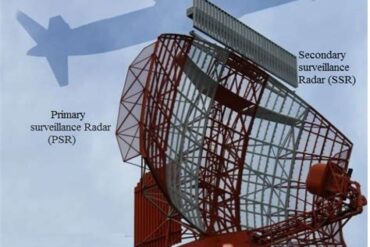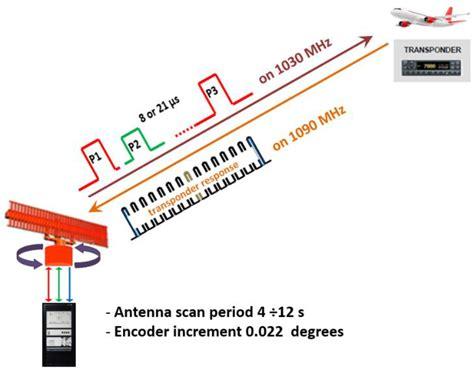
Monopulse Secondary Surveillance Radar (MSSR) is a smart solution designed to tackle two key challenges faced by traditional surveillance radar systems. When multiple aircraft are nearby or aligned in the same direction, their transponder replies can overlap. This overlap happens because of the limited width of the antenna beam, usually between 2 and 3 degrees. When this occurs, the ground decoder gets confused, leading to lost information. This issue is commonly referred to as ‘Garbling.’
Additionally, when many aircraft are in the area, signals from some may be mistakenly interpreted as coming from the targeted SSR. This confusion is known as ‘Fruit.’ MSSR addresses these problems by using advanced computer analysis of the received signals and reducing the transmission rate from the radar to about one-tenth of what it was before.
As a result, the occurrences of Garbling and Fruit decrease by around 90%. Furthermore, the directional accuracy of the radar is tripled compared to conventional SSR. This enhanced precision allows for reduced radar separation minima—down to 3 nautical miles (nm) if the aircraft is within 40 nm of the antenna, and 5 nm if it’s further away. Overall, MSSR represents a significant advancement in radar technology.