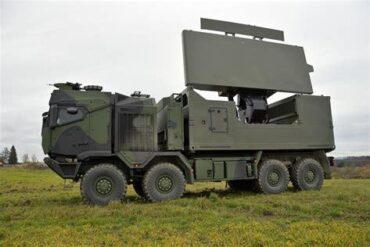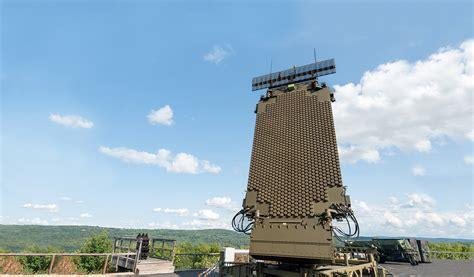
Sweden has taken a pivotal step in enhancing its national and regional security by selecting the Lockheed Martin TPY-4 radar system, a state-of-the-art phased-array radar platform renowned for its advanced air surveillance capabilities. This move reflects Sweden’s growing focus on airspace sovereignty and interoperability within the NATO framework, especially in an era marked by heightened geopolitical tension in the Nordic-Baltic region. The Swedish Defence Materiel Administration (FMV) confirmed the procurement, with the first TPY-4 systems scheduled for delivery in 2027, marking a critical upgrade in the Swedish Air Force’s long-range surveillance and deterrence infrastructure.
A Strategic Leap Toward Integrated Deterrence
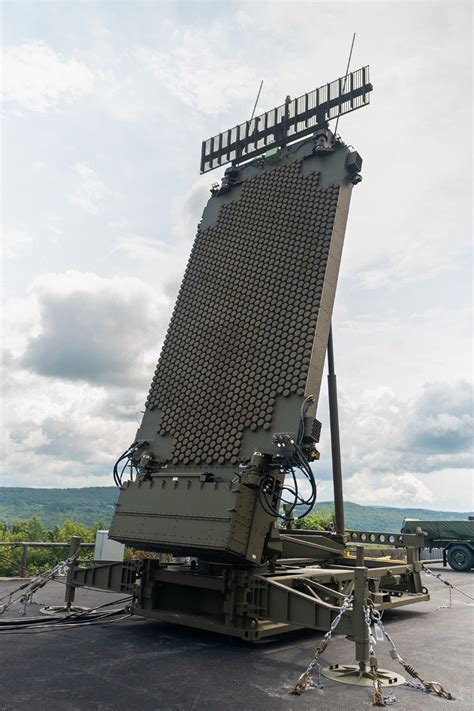
The TPY-4 radar represents the fifth generation of ground-based surveillance radar systems developed by Lockheed Martin, tailored to meet the needs of modern air defense doctrines. Its adoption by Sweden underscores a clear strategic intent: to integrate more deeply with NATO’s surveillance network and bolster the country’s defensive posture against evolving threats. The radar’s high-resolution tracking of airborne targets in real-time provides decision-makers and field commanders with superior situational awareness, enhancing the precision and responsiveness of Sweden’s air defense network.
Rick Cordaro, Vice President of Radar and Sensor Systems at Lockheed Martin, emphasized the radar’s role in “integrated deterrence,” citing its capacity to operate seamlessly across NATO systems. “We are honored to support the defense and security of our allied nations,” said Cordaro. “The TPY-4 radar represents a significant leap forward in integrated deterrence, enhancing interoperability with NATO allies.”
Technical Superiority and Real-Time Threat Management
At the core of the TPY-4 radar’s success is its phased-array architecture, which allows for dynamic scanning and targeting of multiple airborne threats simultaneously. Unlike older systems that rely on mechanical rotation or limited beam steering, the TPY-4 provides full-spectrum coverage, enabling detection, classification, and engagement support within seconds of threat appearance. These capabilities are increasingly vital in countering next-generation cruise missiles, unmanned aerial systems (UAS), and high-speed aircraft.
Moreover, the radar’s open systems architecture ensures it can be easily integrated with Sweden’s existing command and control (C2) infrastructure. This modularity not only reduces long-term costs but also extends the system’s lifecycle by allowing software and hardware upgrades to adapt to emerging threat environments.
Enhancing NATO Interoperability and Regional Defense
Sweden’s selection of the TPY-4 radar is as much a diplomatic gesture as it is a defense procurement. By adopting a radar system already in service with NATO members such as the United States and Norway, Sweden sends a strong signal of its commitment to interoperability. This choice is especially important as Sweden continues to deepen its military integration with NATO forces following its formal application for alliance membership.
The TPY-4 radar’s compatibility with NATO-standard data sharing protocols means it can contribute directly to joint operations, air policing missions, and real-time threat coordination. This allows Sweden not only to defend its airspace more effectively but also to serve as a key node in the collective security fabric stretching from the Arctic to the Baltic.
Historical Momentum and Strategic Timing
The acquisition of the TPY-4 radar arrives at a critical time in Swedish defense planning. Over the past decade, Sweden has significantly ramped up its defense expenditures and strategic planning, particularly following increased Russian military activity in the Baltic Sea and Northern Europe. The 2022 invasion of Ukraine further accelerated these efforts, resulting in multi-year defense modernization initiatives that prioritize surveillance, cyber resilience, and joint operational capabilities.
This radar system aligns seamlessly with Sweden’s broader defense roadmap, which includes upgrades to its Gripen fighter fleet, bolstering of its ground-based air defense systems, and expanding joint exercises with partners like Finland, Norway, and the United States. The TPY-4, therefore, is not a standalone system but a keystone asset in a larger defense transformation agenda.
Lockheed Martin’s Proven Radar Legacy
Lockheed Martin’s radar technologies have been deployed in over 45 countries across six continents, making the company one of the most experienced and trusted suppliers of advanced radar systems globally. With decades of development and continuous innovation, Lockheed’s radar platforms are known for their mobility, reliability, and performance across hostile environments.
The TPY-4 radar builds on this legacy by incorporating decades of operational feedback and mission experience. It offers multi-domain awareness, a wide-area surveillance envelope, and high operational availability—attributes that are indispensable for nations like Sweden that must monitor vast airspace volumes in harsh and often unpredictable climatic conditions.
Capabilities That Go Beyond the Horizon
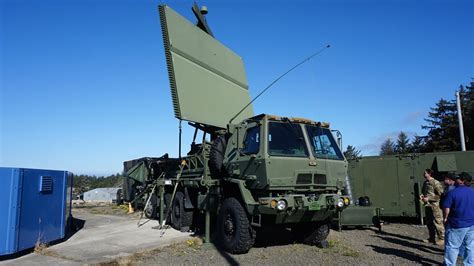
One of the standout features of the TPY-4 radar is its ability to perform long-range detection beyond the radar horizon. Using state-of-the-art signal processing algorithms and powerful transmit/receive modules, it can track stealth aircraft, hypersonic vehicles, and even low-RCS (Radar Cross Section) drones that typically evade traditional radars.
These abilities significantly increase the survivability of national air defense assets and reduce the decision-making window for hostile aircraft, adding critical seconds that could define the success or failure of an intercept mission. It also integrates seamlessly with missile defense systems, enabling shoot-assess-shoot strategies to improve kinetic effectiveness.
Sweden’s Future-Ready Air Defense Ecosystem
Looking ahead, the TPY-4 radar system will likely become the backbone of Sweden’s long-range air surveillance architecture. Combined with satellite-based early warning systems, electronic warfare assets, and fighter patrols, the radar will play a central role in constructing a layered air defense ecosystem designed to detect, deter, and neutralize aerial threats before they reach Swedish airspace.
This also presents opportunities for industrial collaboration between Sweden’s advanced defense industry—led by players like Saab—and Lockheed Martin. Localization of maintenance, upgrades, and potential co-development pathways could further increase system efficiency and reduce lifecycle costs.
Final Thoughts: A Deterrence Statement with Strategic Depth
Sweden’s decision to adopt the Lockheed Martin TPY-4 radar is more than a procurement milestone; it is a strategic message to allies and adversaries alike. It conveys readiness, unity with NATO, and a commitment to maintaining airspace sovereignty with tools that are at the technological forefront of defense systems worldwide.
In an increasingly volatile security environment, such forward-looking defense investments provide both immediate operational benefits and long-term strategic assurance. As the world watches the shifting dynamics in Europe, Sweden stands prepared—not just with stronger radar coverage, but with a stronger voice in collective deterrence.