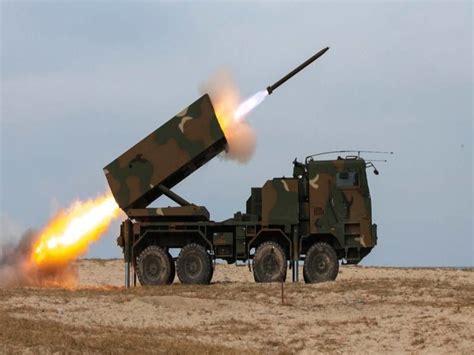
Norway has taken a decisive step in reshaping its land-based strike capability by selecting South Korea’s K239 Chunmoo Multiple Rocket Launcher System as its next-generation long-range fires solution. The agreement, confirmed in early February 2026, reflects Oslo’s determination to reinforce NATO’s northern flank with highly mobile, precision-guided firepower capable of operating in some of Europe’s most demanding environments. Beyond the hardware itself, the decision signals a deeper strategic alignment between Norway and South Korea at a time when long-range deterrence, interoperability, and rapid responsiveness have become central to allied defense planning.
The contract was signed between Hanwha Aerospace and the Norwegian Defence Material Agency (NDMA), marking Hanwha’s first flagship defense export success of 2026. For Norway, the deal represents far more than a procurement milestone. It is a statement of intent to integrate modern, survivable deep-strike systems into NATO’s evolving operational concepts, particularly those focused on distributed fires, resilience under threat, and rapid integration with joint and allied forces across land, sea, and air domains.
At an estimated value of approximately $922 million, the Chunmoo acquisition forms a core element of Norway’s broader long-range fires modernization program, which carries a projected budget approaching $2 billion. Under the agreement, Norway will receive 16 Chunmoo launch vehicles, along with a tailored package of precision-guided rockets and tactical missiles, supported by an extensive Integrated Logistics Support framework. This includes training, spare parts, technical documentation, and long-term sustainment designed to ensure high readiness rates from initial operational deployment onward.
The signing ceremony in Oslo underscored the strategic weight of the program. Senior officials from both governments attended, including top representatives from South Korea’s defense acquisition leadership and Norway’s political and military establishment. The presence of such high-level delegations highlighted that this deal is as much about enduring defense partnership as it is about equipment delivery.
A Strategic Boost to NATO’s Northern Flank
Norway’s geographic position gives it outsized importance in NATO’s collective defense architecture. Stretching deep into the Arctic and bordering strategically sensitive maritime routes, the country plays a critical role in monitoring, deterrence, and rapid reinforcement in Northern Europe. The introduction of the Chunmoo MLRS significantly expands Norway’s ability to hold high-value targets at risk over long distances, strengthening deterrence while enhancing allied operational flexibility.
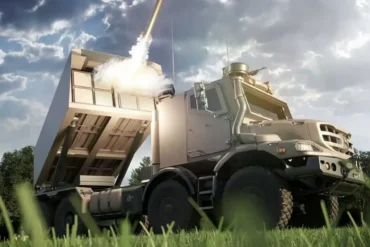
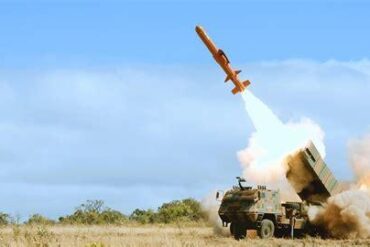
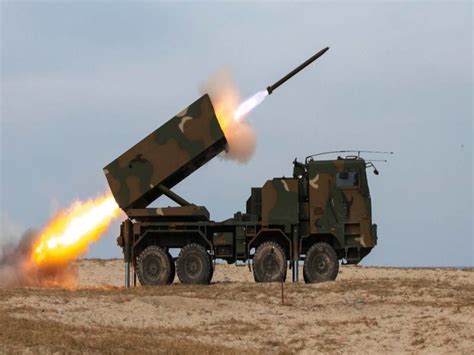
Unlike traditional tube artillery, Chunmoo offers long-range precision strike combined with high mobility. Mounted on a robust 8×8 truck chassis, the system is designed for rapid deployment, quick firing, and immediate relocation, reducing vulnerability to counter-battery fire. This “shoot-and-scoot” capability aligns closely with NATO’s emphasis on survivable fires in contested environments, where static systems face increasing risk from drones, sensors, and precision munitions.
For NATO planners, Norway’s decision adds another advanced long-range fires node to the alliance’s northern tier, complementing airpower and naval strike assets. The system’s ability to integrate into NATO command-and-control networks ensures that Norwegian launchers can operate as part of a wider sensor-to-shooter ecosystem, sharing targeting data and executing coordinated strikes across national boundaries.
Chunmoo’s Capabilities and Modular Design
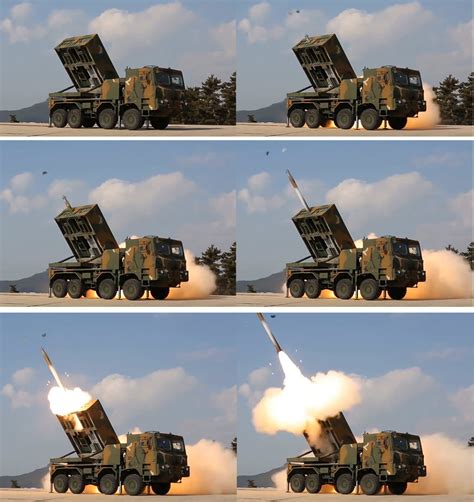
The K239 Chunmoo stands out for its modular launcher architecture, which allows operators to employ different rocket and missile types from interchangeable pods without modifying the vehicle. This flexibility enables commanders to tailor firepower to specific mission requirements, whether delivering area suppression, precision strikes, or deep interdiction against time-sensitive targets.
In its standard configuration, Chunmoo can fire 239 mm rockets with ranges exceeding 80 kilometers, suitable for both guided and unguided missions. These munitions are optimized for high accuracy against enemy formations, artillery positions, and infrastructure targets. More significantly, the system can launch 400 mm-class tactical missiles, such as the CTM-290, which extend precision strike reach to approximately 290 kilometers. Equipped with GPS and inertial navigation guidance, these missiles provide the accuracy needed to engage command posts, logistics hubs, air defense systems, and other high-value objectives deep behind the front line.
Chunmoo’s design also emphasizes automation and reduced crew workload. Automated loading systems and digital fire control shorten engagement cycles, while advanced onboard diagnostics support rapid maintenance and fault detection. For modern armies facing personnel constraints and high operational tempos, these features translate directly into greater combat effectiveness and sustainability.
Proven Performance in Harsh Environments
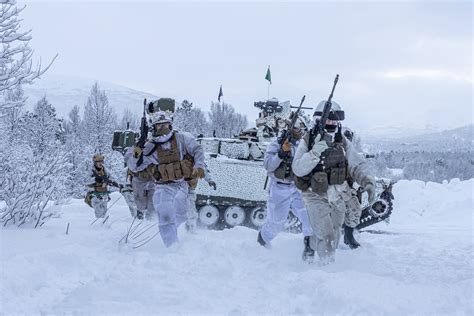
One of the decisive factors behind Norway’s selection was Hanwha Aerospace’s established track record in Arctic and sub-Arctic conditions. Norway has operated South Korean-built systems before, most notably the K9 VIDAR 155 mm self-propelled howitzer, acquired in 2017 alongside K10 ammunition resupply vehicles. During cold-weather exercises, Norwegian Army units consistently reported high reliability, accuracy, and availability, even in extreme low temperatures and challenging terrain.
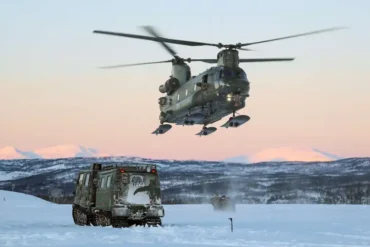
This operational experience built confidence not only in the hardware, but also in Hanwha’s logistics, training, and sustainment model. For Chunmoo, cold-weather adaptations include reinforced thermal management systems, hardened electronics, and mobility enhancements designed for deep snow and icy surfaces. These modifications ensure that the system remains fully operational across Norway’s vast and climatically demanding territory.
Interoperability and Joint Fires Integration
Interoperability sits at the heart of Norway’s defense strategy, and Chunmoo has been selected with this requirement firmly in mind. The system is designed to integrate seamlessly with Norway’s existing command, control, and fire control infrastructure, as well as with NATO-standard communication and targeting networks. This enables real-time data sharing between sensors, shooters, and decision-makers across allied forces.
In practical terms, Chunmoo allows Norway to synchronize long-range fires with allied airstrikes, naval missile launches, and cyber or electronic warfare effects. Defense analysts note that this multi-domain integration is increasingly critical in modern conflict scenarios, where success depends on speed, coordination, and the ability to overwhelm adversary defenses through combined effects rather than isolated actions.
By pairing Chunmoo with existing assets such as the K9 VIDAR, Norway gains a layered fires capability spanning short-, medium-, and long-range engagements. This depth enhances both deterrence and operational flexibility, allowing commanders to select the most appropriate tool for each mission while preserving high-end capabilities for decisive moments.
Expanding Chunmoo’s European Footprint
Norway’s decision adds momentum to Chunmoo’s growing presence in Europe. Poland was the first European country to adopt the system, integrating it into a large-scale military modernization effort aimed at strengthening deterrence on NATO’s eastern flank. Estonia has followed suit, selecting Chunmoo to enhance its own long-range fires capability and interoperability with allied forces.
With Norway joining this group, a European user community is taking shape, opening the door to shared training, coordinated exercises, and potential cooperation on ammunition development and sustainment. Such synergies can improve readiness while reducing lifecycle costs, a critical consideration as European defense budgets expand but remain under pressure from multiple modernization priorities.
Industrial Cooperation and Long-Term Partnership
Beyond operational benefits, the Chunmoo program offers opportunities for deeper industrial collaboration. Hanwha Aerospace has confirmed that it is actively exploring local industrial participation in Norway, including potential joint development initiatives, system integration work, and local testing activities. This approach aligns with Oslo’s defense-industrial policy, which emphasizes domestic involvement, technology transfer, and long-term sustainment capabilities for major acquisitions.
Such cooperation not only supports Norwegian industry but also strengthens supply chain resilience, an increasingly important factor in an era of geopolitical uncertainty and heightened demand for defense production capacity. For Hanwha, the partnership reinforces its position as a credible long-term defense partner in Europe, building on the success of previous programs.
Strategic Implications Beyond Norway
The Chunmoo contract carries implications that extend well beyond Norway’s borders. It highlights the growing role of South Korean defense industry in global markets, particularly in Europe, where demand for advanced, readily available systems has surged. Hanwha Aerospace’s ability to deliver proven platforms with comprehensive support packages has positioned it as a serious competitor to traditional Western suppliers.
For NATO, the deal underscores a broader shift toward diversified sourcing and rapid capability enhancement. By integrating systems like Chunmoo into allied force structures, the alliance gains additional resilience, flexibility, and depth in its long-range fires portfolio. This diversity complicates adversary planning while reinforcing collective deterrence across multiple theaters.
As Norway moves toward operational deployment of Chunmoo, the system is set to become a cornerstone of the country’s land-based strike capability. More importantly, it will serve as a tangible expression of Norway’s commitment to NATO’s collective defense, providing precision, reach, and reliability where they matter most: on the alliance’s northern frontier.