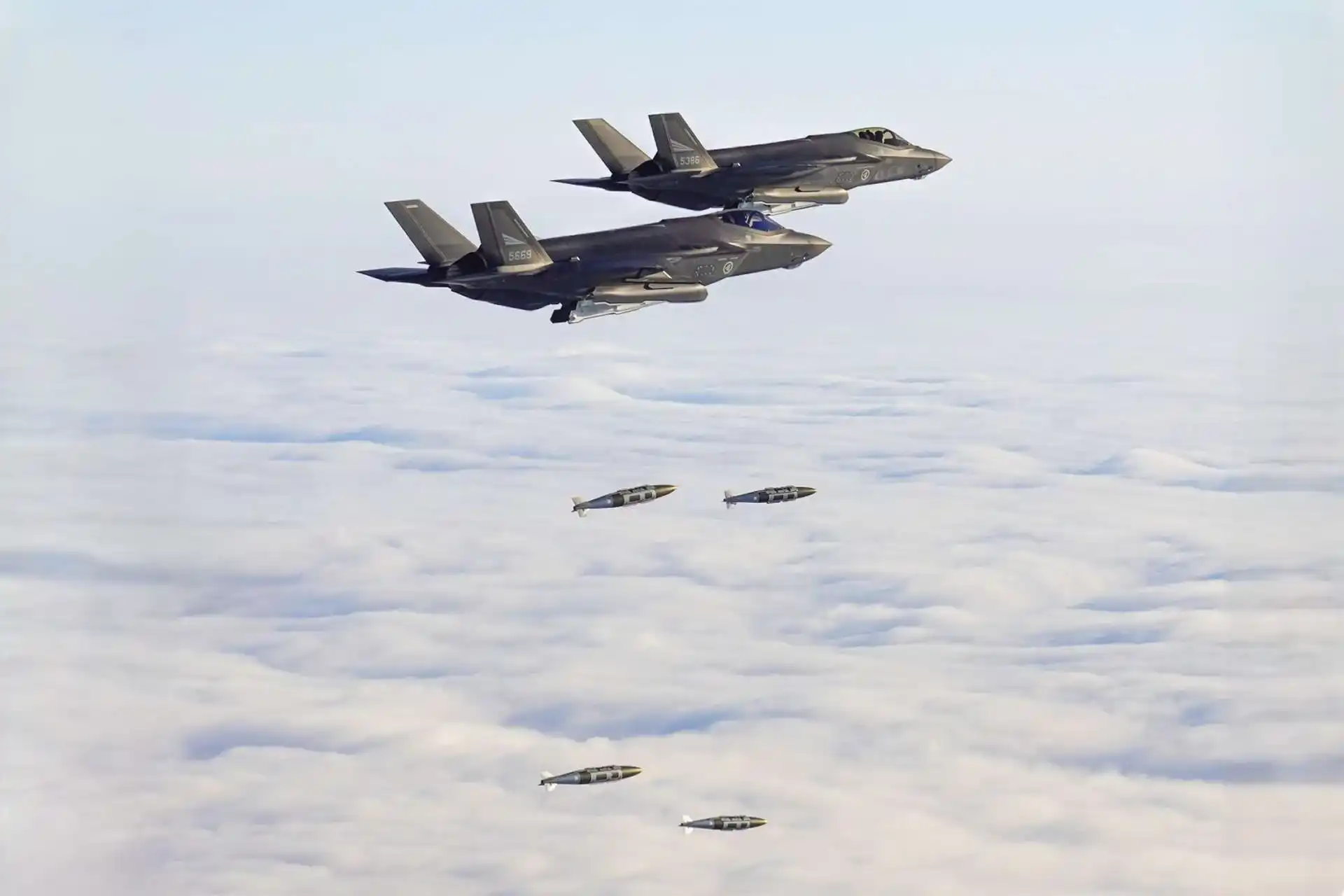
The evolving security landscape of Northern Europe has placed the Arctic and High North at the center of NATO’s strategic thinking. In this environment, military readiness is measured not only by the number of aircraft or weapons in service, but by the ability to deploy them precisely, reliably, and under difficult operational conditions. A recent live-fire exercise involving Royal Norwegian Air Force F-35A fighters and GBU-31 Joint Direct Attack Munition (JDAM) bombs highlights how NATO partners are strengthening precision-strike capabilities across this sensitive region.
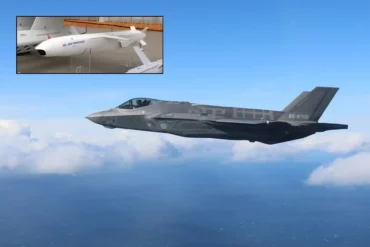
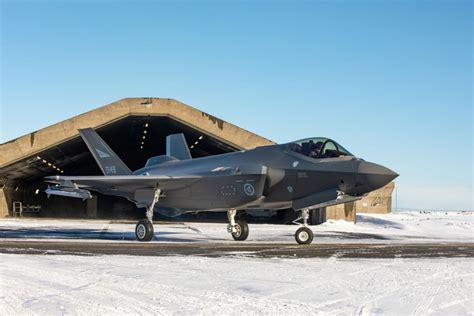
During the training event, two Norwegian F-35A Lightning II aircraft released four GBU-31 bombs, demonstrating the integration of advanced stealth aircraft with heavy precision-guided munitions. The exercise, coordinated with NATO Allied Air Command, emphasized both tactical proficiency and strategic deterrence. Norway’s air force recently completed the delivery of its entire fleet of 52 F-35A fighters, becoming the first partner nation to fully finish its planned procurement of the fifth-generation aircraft.
The demonstration served as more than a routine bombing range event. It represented a visible step in integrating stealth aircraft, precision weapons, and network-enabled targeting systems into NATO’s northern defense posture. As geopolitical competition intensifies near the Arctic approaches and the northern flank of Europe, these capabilities are increasingly viewed as essential to maintaining credible deterrence.
F-35A Lightning II: Norway’s Cornerstone of Modern Air Power
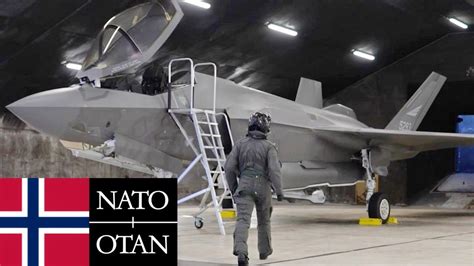
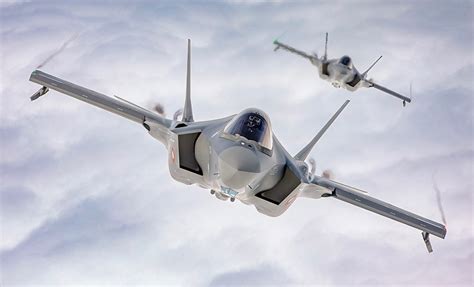
The F-35A Lightning II, developed by Lockheed Martin, is designed as a multirole stealth combat aircraft capable of performing air-to-air combat, deep strike missions, reconnaissance, and battlefield coordination. Its defining characteristic lies in the fusion of multiple technologies: low observable stealth shaping, sensor integration, and networked data sharing.
With a top speed of approximately Mach 1.6, the aircraft combines agility with a sophisticated sensor suite. Radar systems, electro-optical targeting sensors, and distributed aperture cameras continuously collect information about the surrounding battlespace. That information is processed internally and presented to the pilot as a unified tactical picture.
This sensor fusion capability transforms the aircraft from a simple strike platform into a battlefield intelligence hub. Instead of operating as an isolated fighter carrying bombs, the F-35 becomes a node in a wider network, capable of sharing targeting data with allied aircraft, naval units, and ground forces. In modern warfare, where speed of information often determines success, such capabilities dramatically increase operational effectiveness.
For Norway, the aircraft’s ability to operate in harsh northern climates and contested airspace is particularly valuable. Long winters, frequent cloud cover, and unpredictable weather can complicate traditional air operations. The F-35’s advanced sensors and navigation systems allow it to maintain situational awareness even in environments where visibility is severely limited.
Understanding the GBU-31 JDAM Precision Weapon
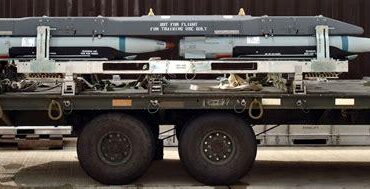
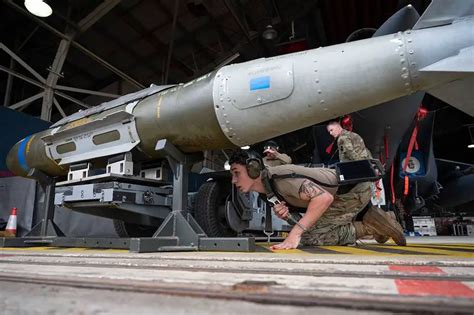
At the heart of the exercise was the GBU-31 Joint Direct Attack Munition, one of the most widely used precision-guided bombs in Western arsenals. Unlike missiles, JDAMs are not entirely new weapons. Instead, they represent a clever engineering solution: a guidance kit added to conventional unguided bombs, transforming them into precision munitions.
The system works by attaching a GPS-guided tail kit and an inertial navigation system to a standard bomb body. Once released, the weapon uses satellite navigation combined with onboard guidance to steer toward pre-programmed coordinates. The result is a weapon capable of striking targets with remarkable accuracy, even in poor weather conditions.
The GBU-31 variant is the 2,000-pound class member of the JDAM family, making it one of the most powerful precision bombs routinely carried by tactical aircraft. Its heavy payload allows it to destroy reinforced infrastructure, hardened bunkers, logistics centers, and command facilities.
The bomb can be built around different internal warheads depending on mission requirements. A Mk 84 general-purpose bomb body provides a massive blast effect against structures and surface targets, while the BLU-109 penetrator warhead is designed to pierce reinforced concrete before detonation. This adaptability makes the GBU-31 an extremely versatile tool for military planners.
Why All-Weather Precision Matters in the High North
The High North presents a uniquely challenging operational environment. Weather conditions can shift rapidly, cloud cover is common, and daylight hours fluctuate dramatically depending on the season. These factors can severely limit traditional targeting methods that rely on visual identification or laser designation.
GPS-guided weapons like the JDAM overcome many of these limitations. Because the bomb navigates toward coordinates rather than visual markers, it can strike targets accurately through clouds, snow, and low visibility. This reliability makes the weapon especially valuable for air forces operating in Arctic or sub-Arctic regions.
Norwegian pilots train extensively to operate under these conditions. Exercises like the recent live-fire event simulate realistic combat environments in which aircraft must locate targets, coordinate with allied forces, and execute precision strikes despite environmental obstacles.
The integration of JDAM weapons with stealth aircraft amplifies the overall effectiveness of the system. A stealth fighter can approach contested areas with reduced detection risk, while precision-guided bombs ensure that strikes are delivered with minimal collateral damage and maximum effectiveness.
Training for the Full Strike Chain
A live-fire bombing exercise may appear simple from the outside—an aircraft releases a bomb, the weapon strikes a target, and the mission ends. In reality, each such exercise rehearses an entire strike chain, a sequence of operations that includes planning, targeting, coordination, and post-strike analysis.
Before takeoff, mission planners define target coordinates, select weapon configurations, and calculate release parameters. Pilots must program these details into the aircraft’s weapons system, ensuring the JDAM receives accurate guidance data. Range controllers then coordinate the timing of the drop to guarantee safety and ensure accurate data collection.
During the flight itself, pilots must manage navigation, communications, and weapons employment while maintaining situational awareness of other aircraft and training participants. After the bomb is released, analysts review the impact location and evaluate the accuracy of the strike.
This process transforms a simple weapons release into a comprehensive operational rehearsal, strengthening the skills required for real-world combat missions.
NATO’s Strategic Focus on the Arctic and Northern Europe
The broader significance of the exercise lies in the geography where it occurred. The High North region, encompassing northern Norway, the Barents Sea, and the Arctic approaches to Europe, has become increasingly important in global security discussions.
Several factors contribute to this growing strategic value. The region sits close to Russia’s northern military infrastructure, including naval bases and strategic submarine fleets. At the same time, the Arctic offers emerging maritime routes and access to natural resources, making it a zone of rising geopolitical interest.
For NATO, maintaining credible military capability in the region requires forces capable of operating in remote environments while responding quickly to potential threats. Air power plays a critical role in this equation. Fighter aircraft can cover vast distances quickly, monitor airspace, and deliver precision strikes if required.
Norway’s F-35 fleet is central to this strategy. By completing its full procurement of 52 stealth fighters, Norway has created one of the most advanced air forces in northern Europe. These aircraft regularly participate in NATO exercises and integrate with allied forces from countries including the United States, the United Kingdom, and other European partners.
Deterrence Through Capability and Visibility
Military exercises serve multiple purposes. On the tactical level, they train pilots and crews to perform complex missions. On the strategic level, they also function as signals of capability and readiness.
The public release of footage showing Norwegian F-35s dropping GBU-31 bombs carries a clear message. NATO forces are not only equipped with advanced technology but are actively training to use it effectively in the environments where it may be needed.
Deterrence operates partly through perception. Potential adversaries assess whether opposing forces possess the capability and the will to respond to aggression. When a nation demonstrates operational readiness through live-fire exercises, it reinforces the credibility of its defense posture.
In the case of Norway’s recent exercise, the demonstration showcased a combination of fifth-generation stealth aircraft, heavy precision-guided weapons, and integrated NATO command structures. Together, these elements form a powerful deterrent against potential threats to northern Europe.
A Mature F-35 Force in the Arctic Theater
The live-fire release of four GBU-31 bombs represents a small snapshot of a much larger transformation within Norway’s military aviation. Over the past decade, the country has steadily transitioned from older fourth-generation fighters to a modern fleet built around the F-35A Lightning II.
This transformation is not simply about replacing aircraft. It reflects a shift toward network-centric warfare, where aircraft act as both sensors and shooters within a shared information ecosystem. Norway’s pilots now train not only to deliver weapons but also to gather intelligence, coordinate with allies, and contribute to the overall situational awareness of NATO forces.
As Arctic security grows in importance, exercises like this one demonstrate how technological integration and operational training combine to create a credible precision-strike capability. In a region defined by harsh weather, vast distances, and rising geopolitical competition, such readiness ensures that NATO maintains a strong and responsive presence in the High North.
Frequently Asked Questions
What is the GBU-31 JDAM?
The GBU-31 JDAM is a 2,000-pound precision-guided bomb created by attaching a GPS-guided tail kit and navigation system to a conventional bomb body, enabling accurate strikes in all weather conditions.
Why is the High North strategically important?
The High North connects the Arctic, North Atlantic, and northern Europe, placing it near major military infrastructure and emerging maritime routes. Its strategic importance has grown as geopolitical competition in the region increases.
How many F-35 aircraft does Norway operate?
Norway has completed delivery of 52 F-35A Lightning II fighters, becoming the first partner nation in the F-35 program to receive its entire planned fleet.