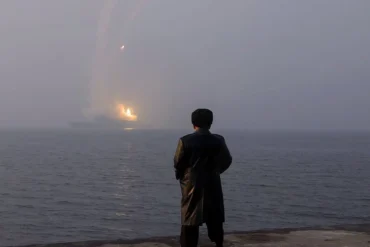
Washington has authorized a $111.8 million Foreign Military Sale to the Republic of Korea, granting approval for the acquisition of 624 additional GBU-39B Small Diameter Bombs (SDB)—a deal that substantially enlarges Seoul’s deep-strike inventory. This newly cleared package builds upon a previous tranche that fell below U.S. congressional reporting thresholds, bringing South Korea’s combined future war-stock to over one thousand SDBs once deliveries are complete. The move arrives during a period of elevated threat perception in Northeast Asia, marked by accelerating weapons development in North Korea and the increasing need to synchronize allied strike capabilities across Japan, South Korea, and U.S. Pacific forces.
South Korean defense officials frame the purchase as a quietly decisive enhancement—one that fortifies the Korea-U.S. alliance, aligns munition architecture with American standards, and strengthens Seoul’s ability to conduct precision engagements across the region without fleet-wide modernization. For planners in Seoul and at Indo-Pacific Command, increased access to accurate, long-range, reduced-collateral munitions represents not just an increment in firepower, but a strategic deterrent mechanism capable of reshaping adversarial calculations.
GBU-39B: A Precision Weapon for Deep-Strike Scenarios
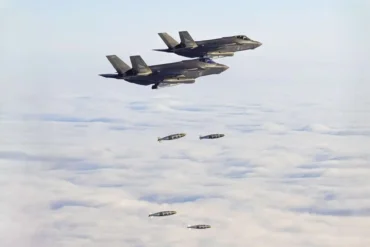
The GBU-39B Small Diameter Bomb sits at the center of modern allied strike doctrine for a reason. Developed from a miniaturization requirement first outlined by Air Combat Command in 1997, the 250-pound-class glide weapon weighs just 113 kg, yet delivers a hardened-target penetrating warhead, all-weather GPS/INS guidance, and autonomy from release to terminal impact. Boeing won the production contract in 2003, and the munition entered operational service in 2006, eventually spreading across the U.S. Air Force’s best-known fighter and bomber platforms.
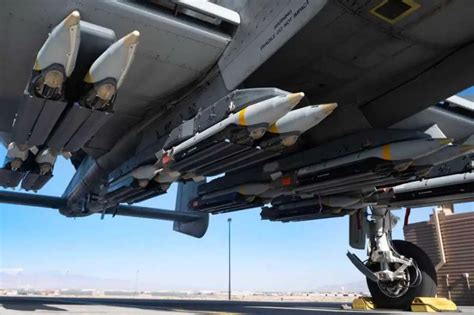
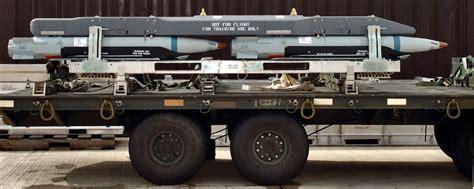
The architecture of the system is what makes it transformative. A single 1760-standard pylon can mount four SDBs via a dedicated Bomb Rack Unit, effectively quadrupling payload capacity without degrading aircraft aerodynamics or endurance. Unit cost–roughly $40,000 per round–remains low enough to enable bulk procurement across allied militaries, ensuring high availability for surge operations and sustained deterrence.
Range, Stealth, Survivability: Why SDBs Matter in the Indo-Pacific
With an operational range exceeding 40 nautical miles (74+ km), the SDB lets aircrews release outside most conventional air-defense engagement envelopes, glide in from distance, and strike with reliable sub-meter accuracy. Its AFX-757 penetrating warhead enables the defeat of buried or fortified structures—command posts, hardened storage bunkers, radar arrays, or key missile infrastructure.
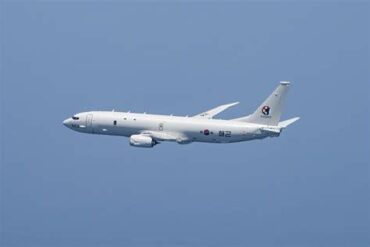
The tactical logic is simple but powerful: one aircraft, many targets, minimal exposure. Korean F-15Ks or upgraded F-16s could launch staggered glide profiles against dispersed infrastructure, collapsing enemy air-defense networks or disabling coastal batteries in minutes. In a theater dominated by saturation radar coverage and layered missile systems, standoff engagement is not an advantage—it is a survival requirement.
Seamless Integration With ROKAF Strike Platforms
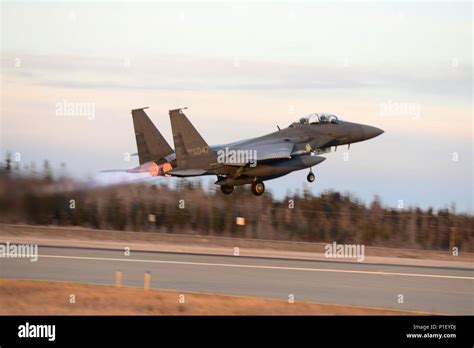
South Korea is exceptionally well-positioned for rapid integration. The country already fields F-15K Slam Eagle squadrons and a fleet of modernized F-16s, both of which support the SDB’s 1760 data interface without extensive rewiring or mission-system refit. Software integration requires minimal downtime, training cycles align with existing U.S. doctrine, and the physical logistics footprint is light enough to fold into current weapons-storage rotations.
The SDB’s small form factor means faster sortie generation. More weapons fit into hardened bunkers. More racks load onto aircraft with fewer personnel. More targets fall in less time.
Stockpile Readiness and U.S.-ROK Interoperability
Storage procedures practiced across U.S. bases—from Al Udeid to Anderson—demonstrate how the SDB is designed for scalable readiness. Munition crates store four bombs each. Weapons crews load racks rapidly. Surge deployment requires resilience, and the SDB ecosystem is built for it. South Korea will now plug directly into this architecture, benefiting from shared logistics, shared software, shared tactical doctrine, and shared deterrence structure.
Geopolitical Weight: A Quiet but Unmistakable Signal
This sale is not simply inventory replenishment. It is a political message wrapped in a precision glide body. The Indo-Pacific is entering an era where long-range, low-visibility, multi-target strike capacity defines deterrence credibility. By increasing Seoul’s stockpile beyond 1000 SDBs, Washington reinforces a security framework grounded in rapid response rather than retaliatory threat alone.
For the region’s evolving strategic balance, the signal is sharp: South Korea will not be out-ranged, out-paced, or out-technologized. Precision is now the currency of deterrence, and Seoul just bought a great deal more of it.