The F-35 Lightning II, a fifth-generation multirole stealth fighter, represents the pinnacle of modern aerial warfare. Its design prioritizes stealth, sensor fusion, and multi-role flexibility, integrating advanced weapons systems that reflect a balance between traditional kinetic armament and next-generation combat technology. Among these systems, the F-35’s gun configuration—a seemingly conventional feature—plays a nuanced and often underappreciated role within its broader tactical doctrine.
Unlike legacy fighters where internal guns were central to both air superiority and close air support, the F-35’s gun system reflects a strategic compromise between stealth and firepower. The gun’s design, placement, and operational philosophy differ across the three F-35 variants: the F-35A, F-35B, and F-35C, each tailored to specific service branches and mission profiles.
F-35A: The Only Variant with an Internal Gun
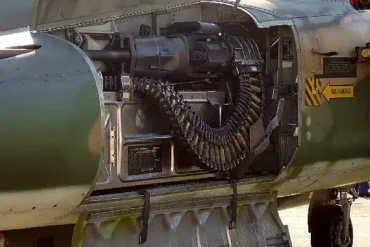
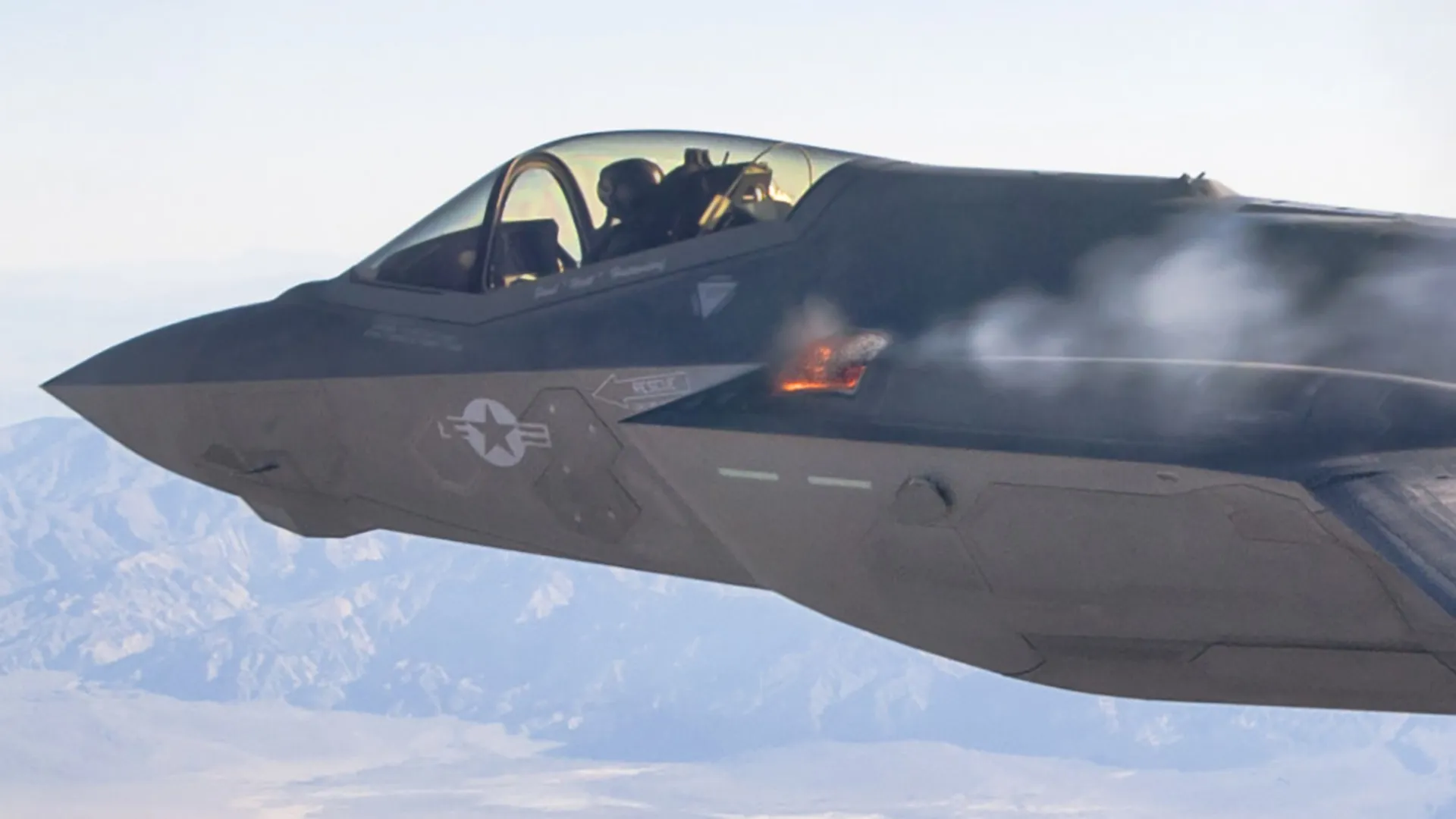
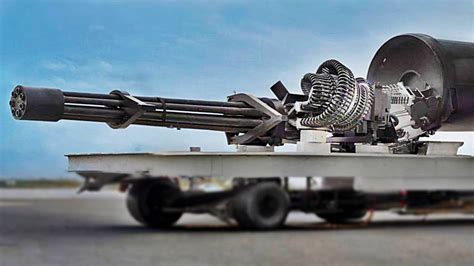
The F-35A, developed for the United States Air Force, is the only variant equipped with an internally mounted gun system. This aircraft houses the 25mm GAU-22/A four-barrel rotary cannon just above the left air intake, beneath a stealth-conforming panel that slides open during engagement.
This weapon is a lightweight derivative of the proven GAU-12/U Equalizer used in platforms like the AV-8B Harrier and AC-130 gunship. The GAU-22/A boasts:
- Rate of fire: Approximately 3,300 rounds per minute
- Ammunition: 182 rounds of PGU-47/U high-explosive incendiary (HEI) or PGU-48/U armor-piercing incendiary (API) shells
- Barrel configuration: Four-barrel, linear linkless feed system
- Effective range: About 1,800 meters
The integration of the GAU-22/A within the fuselage preserves the aircraft’s low-observable signature, a crucial asset in contested airspace. However, the limited ammunition supply imposes tactical constraints. Pilots must prioritize precision and target selection, as the F-35A is not designed to loiter over the battlefield expending thousands of rounds like an A-10 Thunderbolt II.
F-35B and F-35C: Pod-Mounted Gun Solution
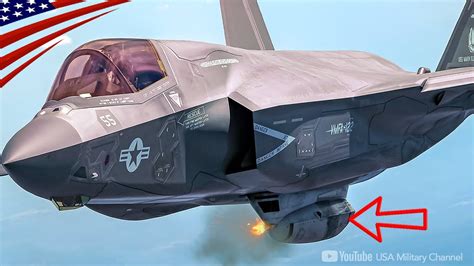
In contrast, the F-35B (short takeoff/vertical landing) and F-35C (carrier variant) for the U.S. Marine Corps and Navy respectively do not feature internal guns. Instead, they rely on the GPU-9/A external gun pod, which can be mounted under the fuselage’s centerline or wing hardpoints.
The GPU-9/A carries the same GAU-22/A cannon, albeit within a stealth-designed enclosure. This configuration comes with several caveats:
- The pod holds a slightly larger ammunition reserve of 220 rounds
- Its addition compromises the aircraft’s radar cross-section, reducing stealth effectiveness
- The external mounting configuration demands careful mission planning, especially in high-threat environments
The gun pod allows B and C variants to conduct close air support (CAS) or air interdiction missions when stealth is less critical. In maritime operations or during expeditionary landings, this modularity offers mission-specific flexibility, albeit at the cost of increased detectability.
Stealth vs Firepower: Tactical Tradeoffs
The decision to limit internal gun carriage to the F-35A is not merely a design quirk; it’s a reflection of strategic intent. The F-35 is engineered to dominate in a network-centric, beyond-visual-range (BVR) battlespace. Thus, emphasis is placed on missiles like the AIM-120 AMRAAM and AIM-9X, combined with data fusion from sensors and satellites.
However, in close engagements, where missiles are impractical due to short distances or electromagnetic interference, the cannon remains relevant. Particularly in dogfighting scenarios or against ground targets of opportunity, the gun provides a cost-effective, rapid-response strike option.
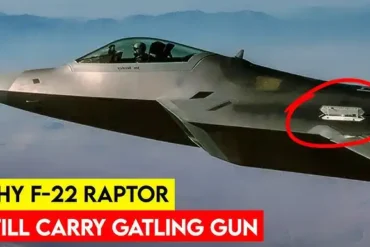
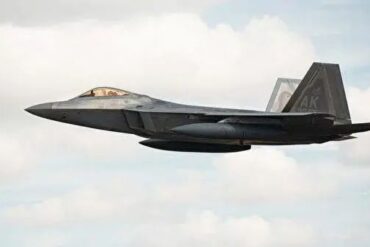
Compared to the F-22 Raptor, which utilizes a 20mm M61A2 Vulcan cannon with over 500 rounds, the F-35A’s 25mm gun trades volume of fire for increased impact per shot. The 25mm shells deliver greater kinetic energy, ideal for lightly armored vehicles and hardened targets, but again with less room for error due to limited ammo.
Human Factors and Interface Limitations
Operational feedback from test pilots and early adopters has exposed interface and targeting concerns with the F-35’s gun employment system. One particular issue involves the cockpit touchscreen, which controls most weapon selections and configurations.
In high-G maneuvers, some pilots have reported difficulty in precisely interacting with the interface, sometimes leading to mis-selections or activation delays. Although mitigated by the Helmet Mounted Display System (HMDS), which allows gun aiming via pilot gaze, the system’s latency and electromagnetic susceptibility have raised concerns, especially in jamming-prone environments.
In real-world combat simulations conducted during Red Flag and Northern Edge exercises, the gun’s practical usage rate remained low—further confirming the F-35’s pivot toward standoff engagement tactics.
Combat Exercises and Evolving Relevance
Recent U.S. military exercises and joint-force simulations have demonstrated a marked shift toward beyond-visual-range (BVR) engagements. In these scenarios, pilots reported using guns in less than 5% of total engagements, with air-to-air missiles delivering the majority of effective strikes.
Despite its limited use, the gun remains a critical fallback, particularly in the event of missile depletion, malfunction, or dogfight conditions. Moreover, in low-intensity conflicts or counterinsurgency operations, the cannon can be employed for precision ground support, such as disabling vehicles or suppressing enemy infantry.
Still, the evolution of combat drones and loyal wingman platforms (like the Boeing MQ-28 Ghost Bat) indicates a potential future where manned fighters may no longer require close-in guns. These autonomous platforms may take over ground attack and dogfighting roles, further relegating the gun to secondary importance.
Strategic Assessment: Gun as a Tactical Layer
From a doctrinal standpoint, the F-35’s gun system is best understood not as a primary weapon, but as a tactical layer within a broader multi-spectral strike capability. Its presence—whether internal or pod-mounted—ensures the pilot has at least one non-guided weapon available when conditions demand flexibility.
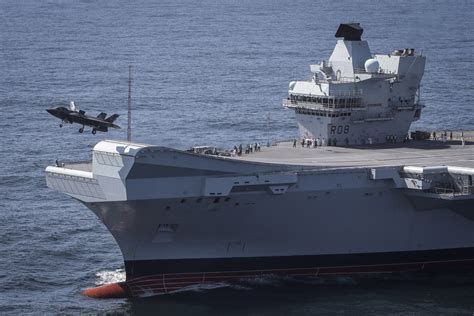
The F-35A embodies this balance best: preserving stealth while retaining an internal, effective cannon for last-resort engagements. Meanwhile, the F-35B and C variants, optimized for flexibility and deployment variety, sacrifice internal gun integration to maintain VTOL and carrier suitability.
This modularity exemplifies the F-35 program’s overall philosophy—adaptable lethality across diverse mission profiles, without over-specializing to the detriment of stealth and survivability.
Conclusion
The F-35 gun system represents a sophisticated and deliberate compromise between traditional kinetic capability and next-generation stealth warfare. Its varied implementation across the A, B, and C models reflects specific mission priorities, where gunfire is no longer central to aerial dominance, but still retained for operational redundancy and tactical precision.
As combat doctrine continues to evolve, particularly with AI-driven unmanned systems and advanced missile suites, the F-35’s gun may play an increasingly supportive role, yet its presence ensures that pilots maintain an immediate, versatile tool—critical in dynamic and unpredictable combat environments.
FAQ
Why does only the F-35A have an internal gun while the B and C variants do not?
The F-35A was designed for the U.S. Air Force with an emphasis on air superiority and deep strike missions over contested territory. To preserve stealth while ensuring close-in capabilities, it integrates an internal GAU-22/A gun. In contrast, the F-35B (for the Marine Corps) and F-35C (for the Navy) prioritize vertical landing and carrier operations, leaving no internal space for the cannon—hence the use of a removable gun pod.
How effective is the GAU-22/A cannon in modern air combat?
While the GAU-22/A is lethal and accurate, its role in modern air combat is diminishing due to the increasing reliance on beyond-visual-range missiles. However, it remains valuable in dogfights, ground support, and as a fallback system in case of missile unavailability or failure.
Does the gun pod reduce the F-35’s stealth capabilities?
Yes, the GPU-9/A gun pod, while shaped to reduce its radar cross-section, does degrade the aircraft’s stealth profile. As such, it is typically only deployed in low-threat environments or support missions, where stealth is not the highest priority.