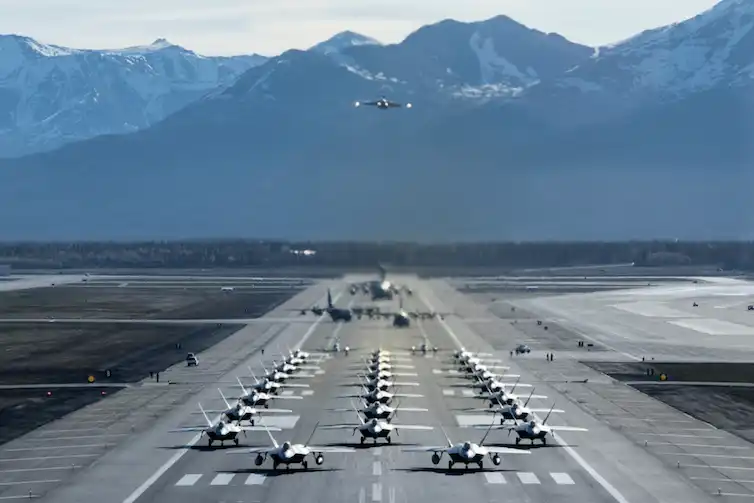
The Arctic is no longer a silent white expanse at the top of the world. It is now a contested strategic arena, where geography, climate change, and great-power competition intersect at uncomfortable speed. Melting sea ice is opening new shipping lanes, shortening missile flight paths, and exposing resources that were once locked beneath permanent ice. For NATO, this has transformed the Arctic from a peripheral concern into a frontline theater of deterrence, surveillance, and rapid response.
Air power sits at the center of this transformation. Vast distances, sparse infrastructure, and extreme weather mean that whoever controls the skies controls the Arctic. NATO’s Arctic air bases are not just runways carved into frozen ground; they are nodes in an integrated system of early warning, space surveillance, maritime patrol, and fifth-generation combat aviation. Each base plays a distinct role, shaped by its geography, host nation, and proximity to Russia’s expanding Arctic military network.
What follows is a detailed examination of the seven most strategically significant NATO military air bases in the Arctic, ranked by operational impact and alliance relevance. Together, they form the backbone of NATO’s northern air defense architecture—an architecture designed not for symbolism, but for speed, persistence, and credibility.
The Arctic as NATO’s Strategic Stress Test
The Arctic compresses time and space in ways few other regions do. Intercontinental ballistic missiles transit polar routes. Strategic bombers probe air defenses along the High North. Submarines slip beneath the ice, while satellites arc overhead in polar orbits. In this environment, early warning measured in minutes can decide outcomes measured in decades.
NATO’s Arctic air bases function as tripwires and launchpads. They host Quick Reaction Alert (QRA) fighters, long-range surveillance aircraft, missile warning radars, and space control units. They also support the alliance’s shift toward Agile Combat Employment, dispersing aircraft across austere locations to survive first strikes and sustain combat operations.
This is not Cold War nostalgia. Russia maintains between 30 and 40 Arctic bases, many modernized, some brand-new. China, styling itself a “near-Arctic state,” is watching closely. Against this backdrop, NATO’s Arctic air bases are less about presence and more about persistent readiness.
7. Pituffik Space Base, Greenland — NATO’s Northern Eye
Pituffik Space Base, formerly Thule Air Base, occupies a place so far north that maps often struggle to render it comfortably. As the northernmost installation of the U.S. Armed Forces, it is less an air base in the traditional sense and more a strategic sensor node embedded in ice and rock.
At the height of the Cold War, Pituffik hosted thousands of personnel and supported nuclear bomber operations. Today, its mission is quieter but arguably more consequential. The base anchors NATO’s missile warning and space surveillance posture over the polar region. Operated by the 821st Space Base Group, it hosts the Upgraded Early Warning Radar (UEWR), a massive phased-array system capable of detecting and tracking ballistic missile launches across continents.
This radar feeds directly into NORAD’s early warning network, extending decision-making time for North American and allied leaders. In a world of hypersonic glide vehicles and fractional orbital systems, those extra minutes matter. Pituffik also supports satellite command and control, making it indispensable to modern multi-domain operations.
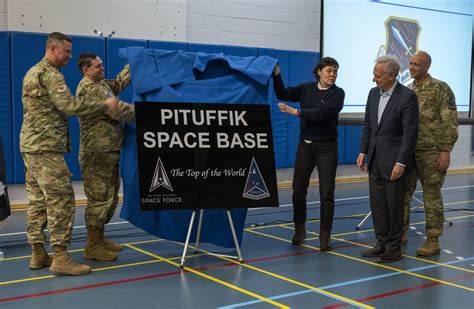
Geopolitically, Pituffik has re-entered public debate as Greenland’s strategic value has drawn renewed attention. Recent deployments of small allied contingents from Denmark, France, and Germany underscore that this frozen outpost is no longer just an American concern. It is a collective NATO asset, watching the polar approaches day and night.
6. Evenes Air Station, Norway — The Arctic QRA Spearhead
Evenes Air Station sits astride Norway’s northern coastline, perfectly positioned between the North Atlantic and the Barents Sea. It has rapidly become NATO’s most important forward operating base for fifth-generation air power in Europe.
The base hosts Norway’s Quick Reaction Alert, with F-35A Lightning II fighters on constant standby to intercept unidentified or hostile aircraft approaching NATO airspace. These interceptions are no longer rare events; Russian bomber and reconnaissance flights along NATO’s northern flank have become routine, making Evenes a daily operational hub, not a contingency location.
Evenes is also home to Norway’s fleet of P-8A Poseidon maritime patrol aircraft, which track submarines and surface vessels across the Arctic and North Atlantic. Together, the F-35s and P-8s create a powerful air-maritime sensor-shooter pairing, capable of detecting, classifying, and if necessary engaging threats across multiple domains.
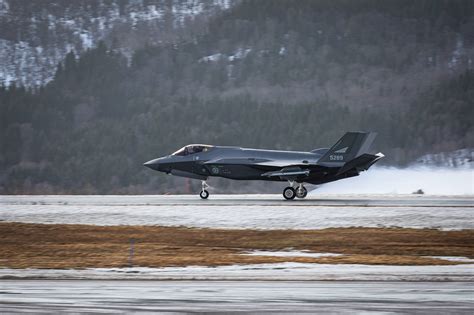
Under the U.S.–Norway Bilateral Defense Cooperation Agreement, Evenes is designated a joint area, allowing for pre-positioned American equipment and rapid reinforcement. Its hardened infrastructure, NASAMS III air defenses, and capacity to host allied aircraft make it a linchpin for NATO’s northern deterrence posture.
5. Rovaniemi Air Base, Finland — The Arctic Gateway on the NATO Frontier
Rovaniemi Air Base lies exactly on the Arctic Circle, a geographic coincidence that mirrors its strategic role. As the headquarters of Finland’s Lapland Air Command, it anchors NATO’s newest and longest northeastern land border with Russia.
Historically operating F/A-18C/D Hornets, Rovaniemi is undergoing a significant transformation as Finland prepares to field the F-35A Lightning II. Infrastructure upgrades are reshaping the base to support stealth operations, secure data fusion, and dispersed basing concepts essential for survival in high-intensity conflict.
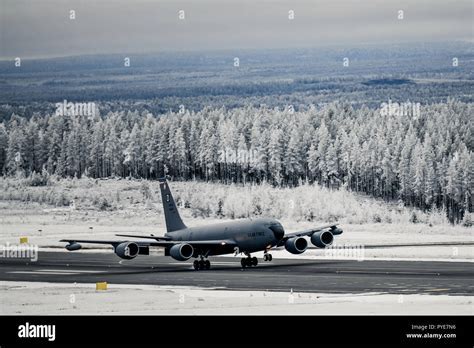
Rovaniemi’s importance extends beyond its aircraft. The base is designed to rapidly expand, accommodating conscripts, reservists, and allied forces during exercises or crises. In NATO planning, it functions as a forward gateway, enabling air operations deep into the High North while reinforcing deterrence along the alliance’s newest frontier.
Once Finnish F-35s become fully operational, Rovaniemi will integrate seamlessly with Norwegian, Swedish, and American fifth-generation fleets, forming a continuous arc of stealth air power across northern Europe.
4. Luleå-Kallax Air Base, Sweden — Agile Power in the High North
Luleå-Kallax is Sweden’s northernmost air base and one of the most flexible air power hubs in the Arctic. Located along the Gulf of Bothnia, it serves as a logistics, staging, and dispersal center for NATO operations since Sweden’s accession to the alliance.
The base regularly hosts U.S. strategic bombers, including the B-1B Lancer, alongside allied F-35 deployments. It is permanently home to Swedish fighter squadrons transitioning to the JAS 39E Gripen, an aircraft optimized for short takeoffs, dispersed basing, and operations from austere locations.
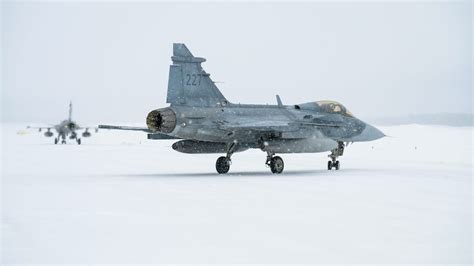
Luleå-Kallax is also the focal point for Sweden’s Agile Combat Employment doctrine. Aircraft routinely operate from auxiliary runways and even civilian roadways, complicating adversary targeting and enhancing survivability. Integrated with Finnish forces and supported by GlobalEye AEW&C aircraft, the base plays a central role in monitoring Russian activity on the Kola Peninsula and throughout the Barents Sea.
3. Bodø Main Air Station, Norway — Command and Control in the Arctic
Bodø Main Air Station is less about fighters on the ramp and more about brains behind the operation. Established during World War II and continuously adapted since, Bodø is now at the heart of NATO’s evolving command architecture in the High North.
Norway’s decision to establish a new NATO Combined Air Operations Center (CAOC) at Bodø reflects a strategic reality: Arctic air operations require localized command, deep regional expertise, and hardened infrastructure. From Bodø, allied commanders will plan, coordinate, and direct air operations across the Nordic and Arctic regions.
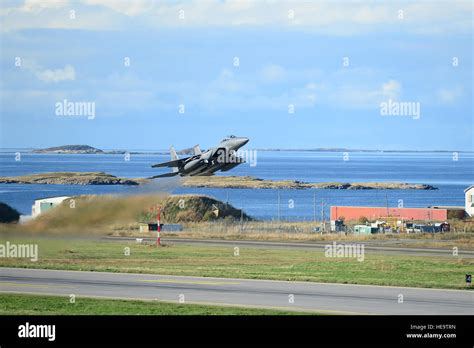
The base retains reinforced shelters capable of housing allied aircraft in crisis scenarios and hosts critical cyber defense and joint headquarters functions nearby. While its original fighter squadrons have moved on, Bodø’s strategic value has only increased. In modern warfare, command and control is combat power, and Bodø delivers it in abundance.
2. Eielson Air Force Base, Alaska — The Arctic Training Crucible
Eielson Air Force Base, located near Fairbanks, is where Arctic air combat theory meets brutal reality. Hosting over 50 F-35A stealth fighters, Eielson is a cornerstone of U.S. and NATO air power in the High North.
The base is synonymous with large-scale exercises such as Red Flag Alaska, Northern Edge, and the emerging Arctic Gold series. These exercises test not just tactics, but logistics, maintenance, and human endurance in temperatures that routinely plunge far below zero.
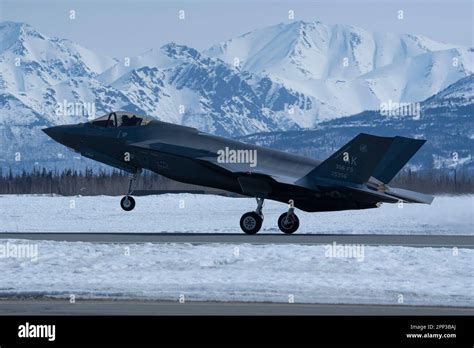
Eielson’s role as a training hub has expanded to include allied partners. Finnish F-35 pilots now train here, embedding interoperability from the earliest stages of their operational careers. In strategic terms, Eielson ensures that NATO’s Arctic air forces are not merely present, but proficient, integrated, and combat-ready.
1. Joint Base Elmendorf-Richardson, Alaska — NATO’s Arctic Powerhouse
Joint Base Elmendorf-Richardson, or JBER, stands unmatched in scale and capability. Formed by merging Elmendorf Air Force Base and Fort Richardson, it is the largest and most versatile military installation in the Arctic.
JBER hosts F-22 Raptor stealth fighters, E-3 Sentry AWACS, and a dense network of command headquarters, including Alaskan Command and the U.S. Army’s 11th Airborne Division. Its forces train year-round for Arctic warfare, from air superiority to ground maneuver in extreme conditions.
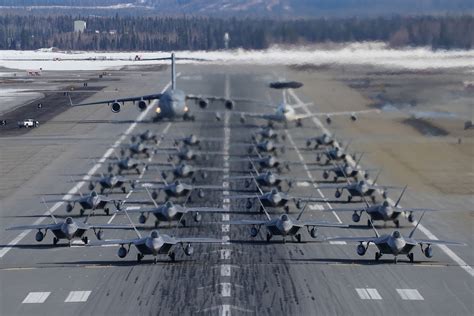
The base’s strategic depth is amplified by the adjacent Joint Pacific Alaska Range Complex, a vast training area enabling realistic, large-scale joint operations. Ongoing runway expansions will soon allow JBER to support any aircraft in the U.S. Department of Defense inventory, reinforcing its role as NATO’s ultimate Arctic power projection hub.
Why These Bases Matter More Than Ever
Taken together, these seven bases form a layered, resilient, and interoperable Arctic air defense network. They detect threats early, respond rapidly, train relentlessly, and command effectively. In a region where distances are vast and margins are thin, they provide NATO with what matters most: time, awareness, and credible force.
The Arctic will only grow more central to global security in the coming decades. These air bases ensure that, whatever the weather or the geopolitics, NATO remains ready, watching, and capable at the top of the world.