In March 2025, over 100 representatives from more than two dozen U.S. federal agencies convened for a high-stakes tabletop exercise designed to explore and improve defenses against a rapidly escalating threat: drone incursions at domestic military bases. This event, the sixth in a critical series, comes at a time when small unmanned aircraft systems (sUAS) have become not only ubiquitous but increasingly sophisticated in their threat potential to U.S. installations.
The exercise, jointly organized by the Joint Counter-Small Unmanned Aircraft Systems Office (JCO) and the RAND Corporation, examined how best to support U.S. Northern Command (USNORTHCOM) in synchronizing counter-drone operations across federal, state, and local authorities.
Rising Drone Threats Since 2016
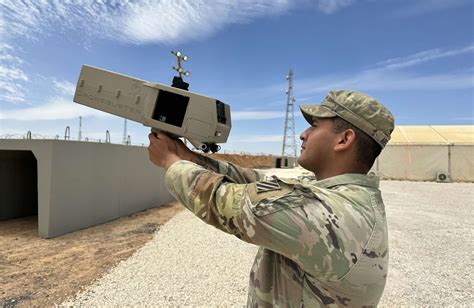
The emergence of drone threats became unmistakable in 2016, during operations against ISIS, where coalition forces began encountering persistent aerial intrusions by enemy-operated drones. Fast forward nearly a decade, and these technologies have spread rapidly, both in capability and availability. The threat now extends within the U.S. homeland, as military installations face increasing surveillance and potential attacks from consumer-grade drones.
Recent drone incursions at key military sites such as Fort Bliss in Texas and Joint Base Pearl Harbor-Hickam in Hawaii served as the foundational reference points for the latest simulation. These incidents underscored the complex interplay of variables—including drone altitude, flight bearing, speed, and origin—that compound the difficulty in mitigating these threats effectively.
Tabletop Exercise Design: A Realistic Simulation
To simulate the complexity of real-world conditions, RAND and JCO created scenarios incorporating various drone platforms operating with different vectors, altitudes, and speeds, simulating multi-axis attacks. The participants worked through these events using a phased structure of “action, reaction, and counteraction,” testing their ability to adapt and escalate responses in real time.
Participants were drawn from a cross-section of the Joint Force and Interagency community, though the sample was not entirely representative. To mitigate the selection bias from voluntary participation, the facilitators allowed for free-play discussions while steering debates with guided questions around three central challenges:
- What conditions trigger USNORTHCOM’s involvement?
- How can the Joint Force and agencies maximize data sharing for situational awareness?
- Under what circumstances are advanced countermeasures such as counterpositioning, navigation disruption, and timing jamming justifiable?
First Finding: Clarifying Triggers and Escalation
The tabletop revealed the three primary triggers for USNORTHCOM engagement:
- Overwhelmed local defense capabilities, where base-level responses are insufficient.
- Simultaneous incursions at multiple critical installations.
- Erosion of public trust due to perceived vulnerability or lack of response.
These triggers provided actionable thresholds, allowing USNORTHCOM to refine its escalation matrix and develop tactical countermeasures that align with legal and civil liberties frameworks. Importantly, the exercise acknowledged the legal rights of civilians to fly drones in certain airspace, creating tension with national security imperatives.
Fly-Away Kits and Layered Defense
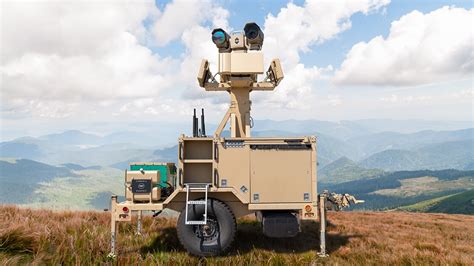
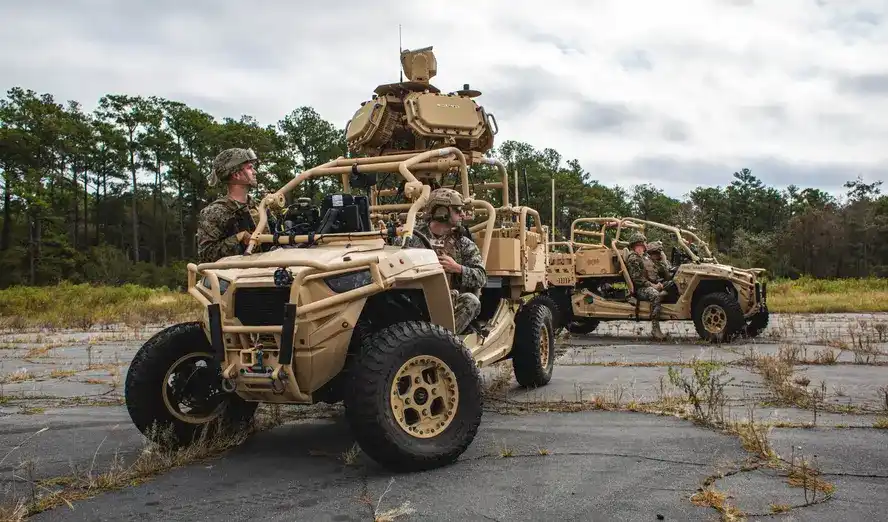
A pivotal solution tested during the simulation was the concept of fly-away kits—rapid deployment packages containing counter-drone tech and trained personnel. These can be dispatched quickly by commercial air to any installation in need.
However, these kits are not cure-alls. They are intended to augment a layered defense approach, which includes:
- Layer One: Long-range, nonlethal interventions like electronic warfare and radio frequency disruption.
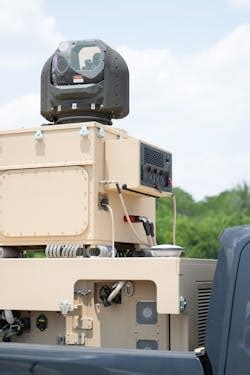
- Layer Two: Medium-range solutions such as microwave weapons and high-energy lasers capable of soft-kill tactics.
- Layer Three: Close-range, lethal options, including machine guns and interceptor missiles, reserved for last-resort hard-kill interventions.
This framework allows U.S. forces to scale response severity according to the threat’s proximity and intent, aligning military necessity with civil risk tolerance and collateral damage considerations.
Second Finding: Interagency Coordination with Local Authorities
Another vital takeaway from the tabletop exercise was the necessity of integrating state, local, tribal, and territorial (SLTT) authorities into the counter-drone mission. These entities are often the first to detect, respond, and investigate drone activity near military installations.
Through cooperation with the National Guard, which has operational presence in every state and territory, USNORTHCOM can vastly improve its situational awareness and interoperability with SLTTs. A key asset here is the Civil Support Teams (CSTs), each comprising 21 specialized personnel with a 90-minute deployment window.
Unlike Homeland Response Teams, CSTs are state-aligned and remain on standby year-round, making them a strategic choice for rapid response operations involving drone threats. Outfitting CSTs with standardized counter-drone equipment and training them in coordination protocols would empower USNORTHCOM with a scalable, decentralized force multiplier across the homeland.

Third Finding: FAA and Public Support for High-End Tech
While the Federal Aviation Administration (FAA) has historically been cautious about endorsing high-end jamming tools in U.S. airspace, the tabletop clarified the conditions under which these measures could be politically and legally justifiable.
Research discussed during the exercise shows that American public support for kinetic and electronic countermeasures is higher when:
- The drone poses a national security risk.
- The threat originates from a foreign adversary.
- The response is authorized by senior government leaders.
However, this support is conditional. The use of high-energy jammers or kinetic kills near civilian areas must weigh heavily on collateral risk assessments. The tabletop recommended that Northern Command develop an escalatory ladder that begins with nonintrusive options and progresses toward more aggressive technologies only as threat conditions escalate.
Implications for Homeland Defense Strategy
The insights gained from this exercise contribute to a more proactive, responsive, and legally sound framework for defending U.S. military installations against drone incursions. They reinforce the necessity of:
- Early identification and escalation triggers.
- Distributed, rapidly deployable response units like fly-away kits.
- SLTT authority integration via National Guard and CSTs.
- Flexible, risk-based deployment of advanced technologies.
As drone technologies evolve—becoming faster, more autonomous, and harder to detect—the U.S. defense posture must remain agile, coordinated, and layered. With the right blend of interagency coordination, technological innovation, and public engagement, defending America’s bases at home can remain a feasible and sustainable mission.