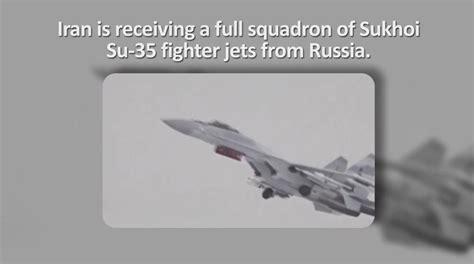
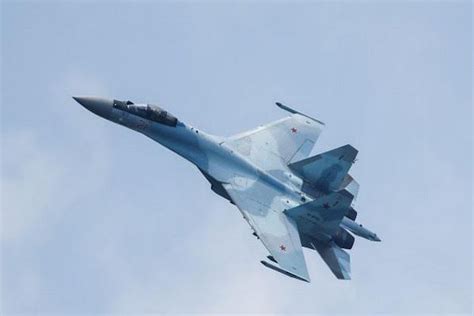
The Iranian Air Force, long regarded as outdated and technologically stagnant, was expected to receive a significant upgrade following its 2023 agreement with Russia to acquire Su-35 “Flanker-E” fighter jets. These fourth-generation multi-role aircraft, renowned for their maneuverability, radar systems, and combat range, were hyped as a transformative acquisition for Tehran’s defense capabilities. Yet, despite escalating tensions and Israel’s ongoing, aggressive aerial operations under “Operation Rising Lion,” the Su-35 remains conspicuously absent from Iranian skies.
Iran’s Vulnerability Exposed by Israel’s Air Campaign
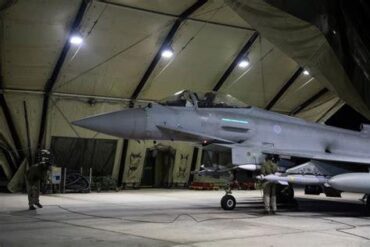
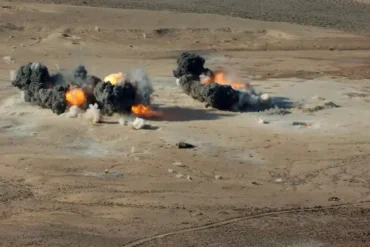
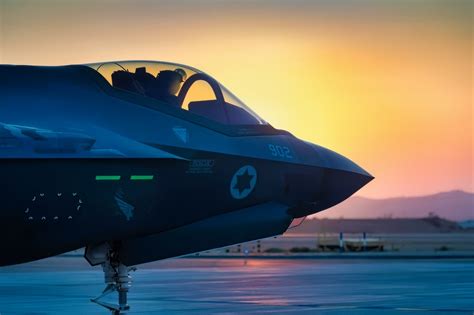
Israel’s campaign, launched with precision and force, has torn through Iranian defense layers with minimal resistance, exposing Tehran’s glaring vulnerabilities. The Israeli Air Force (IAF), equipped with advanced platforms such as the F-35I Adir, F-15I Ra’am, and F-16I Sufa, has demonstrated unchallenged air superiority. Iranian airspace—most notably over its capital, Tehran—has seen no significant aerial resistance, highlighting the strategic impotence of Iran’s current fighter inventory.
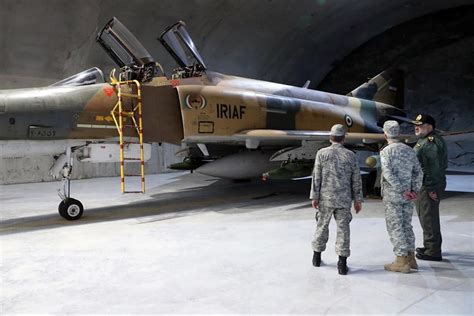
Iran’s reliance on a hodgepodge of Cold War-era aircraft, like the F-4 Phantom II and F-14 Tomcat, underscores a defense doctrine stuck in the past. These American-made jets, inherited before the 1979 Islamic Revolution, are relics. The F-4s, although once formidable, are no match for modern stealth and electronic warfare technologies. The F-14, once Iran’s crown jewel, suffers from a severe spare parts shortage and aging systems. Despite Iran’s attempt to domestically revive aviation capabilities through initiatives like the Kowsar fighter, a clone of the 1960s-era F-5, the aircraft lacks the combat viability necessary to deter or contest Israeli air operations.
What Happened to the Su-35 Deal?
In 2023, Iranian Deputy Defense Minister Mehdi Farahi announced the finalization of an arms deal that included the Su-35 fighters, Mi-28 attack helicopters, and Yak-130 trainers. Reuters reported that these assets would join Iran’s frontline forces. Yet, as of mid-2025, there is no confirmed deployment of the Su-35 within Iranian borders.
This raises a pressing question: Were the jets ever delivered?
Reports suggest that no payment was finalized for the jets, complicating the transfer. At the same time, open-source intelligence and satellite imagery have hinted at Su-35 units originally earmarked for Iran being redirected to other buyers, notably Algeria. Only one aircraft, in Algerian livery, has been visually confirmed, while the formerly visible Egyptian paint-schemed Su-35s at Russia’s Komsomolsk-on-Amur facility have diminished in number.
The Strategic Disappearance: Diversion or Delay?
The geopolitical context reveals another layer of complexity. Since the expiration of the UN arms embargo on Iran in October 2020, Tehran has deepened its military ties with Moscow. Iran’s provision of Shahed-series drones to support Russia’s invasion of Ukraine gave rise to expectations of reciprocal military support. The Su-35 acquisition was interpreted as Russia’s quid pro quo. However, Russia’s own air combat needs in Ukraine, combined with competing export demands and strategic discretion, likely contributed to the delay—or possible cancellation—of deliveries to Iran.
Furthermore, as noted by the International Institute for Strategic Studies (IISS), Iran originally showed interest in the Su-30SM, a slightly older multirole variant in the Flanker family, to replace its F-14s. It’s plausible that the Su-35 deal never solidified due to shifting military priorities within the Kremlin or Iran’s inability to fully fund the purchase.
Iran’s Disjointed Air Strategy
Iran’s air doctrine remains plagued by contradictions. On one hand, its defense leadership touts self-sufficiency and a doctrine of strategic deterrence, powered by missile technology and asymmetric warfare. On the other, Tehran’s vocal ambition to modernize its conventional forces—particularly its air force—remains largely aspirational.
The reality is that without advanced airframes like the Su-35 in operational service, Iran is effectively grounded. The IRIAF’s current fleet includes:
- MiG-29 Fulcrum (limited number)
- Su-24 and Su-22 ground-attack aircraft
- Chengdu J-7 (Chinese copy of the MiG-21)
- Mirage F1s (from the ex-Iraqi inventory)
None of these platforms are remotely capable of confronting Israel’s fifth-generation fighters or advanced command-and-control architecture. Israel’s precision strikes continue to target Iran’s missile depots, radar installations, and nuclear infrastructure, with Iran seemingly powerless to respond from the air.
Why Isn’t Iran Using Su-35s — If It Has Them?
Even if Iran has taken delivery of a handful of Su-35s, their absence from the battlefield may be deliberate. Several strategic factors could explain this:
- Operational Readiness: Even delivered, the aircraft require training, maintenance infrastructure, and pilot retraining, none of which Iran has completed for a new jet platform.
- Fear of Immediate Destruction: Deploying Su-35s prematurely would make them prime targets for Israel’s preemptive strikes, especially since the IAF’s intelligence apparatus is among the most capable in the world.
- Geopolitical Risk Calculus: Tehran might be holding back to avoid triggering direct escalation or inciting U.S. or Israeli pretexts for broader military action.
Israel’s Air Superiority Is Uncontested
Israel’s campaign against Iran demonstrates a consistent doctrine: air dominance before deep strikes. With no real challenge in Iranian skies, the Israeli Air Force continues to strike military targets, suspected nuclear facilities, and missile storage sites with minimal resistance.
Even Iran’s much-touted long-range missile arsenal has offered little deterrence. Israel’s Iron Dome, David’s Sling, and Arrow missile defense systems have intercepted multiple barrages with high success rates. Meanwhile, Iran’s retaliatory options remain confined to proxy warfare via Hezbollah or symbolic long-range missile launches, all of which are routinely neutralized.
What’s Next for Iran’s Air Force?
The fate of the Su-35 in Iran remains shrouded in ambiguity. While November 2024 reports from Flug Revue suggested that two Su-35 units had arrived, their non-deployment suggests more than just logistics trouble — it implies strategic hesitation.
Looking ahead, Iran’s air combat capability remains a critical vulnerability. Without modernization, the IRIAF cannot credibly challenge regional adversaries, let alone protect critical assets from a coordinated air campaign like Israel’s. If future Su-35 deliveries occur, they may come too late or in insufficient numbers to alter the regional balance.
Ultimately, Iran’s ability to compete in the skies will depend not just on acquiring aircraft, but on overhauling an air force built on obsolescence, facing off against one of the most advanced militaries in the Middle East.
Until then, Tehran’s warplanes—new or old—will likely remain grounded in fear, not for lack of intent, but because they represent targets, not solutions.