The F-35: A Technological Marvel with Stealth at Its Core
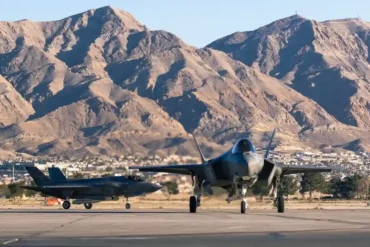
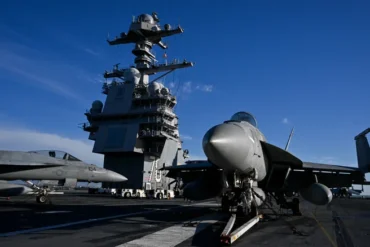
The F-35 Lightning II is one of the most advanced fifth-generation stealth fighter jets in service today. With its unparalleled stealth capabilities, cutting-edge avionics, and superior combat performance, it has become a crucial asset for multiple air forces worldwide. Japan, a key operator of the F-35, continues to expand its fleet, with plans to deploy F-35B variants on its newly modified aircraft carrier, JS Kaga, by 2025.
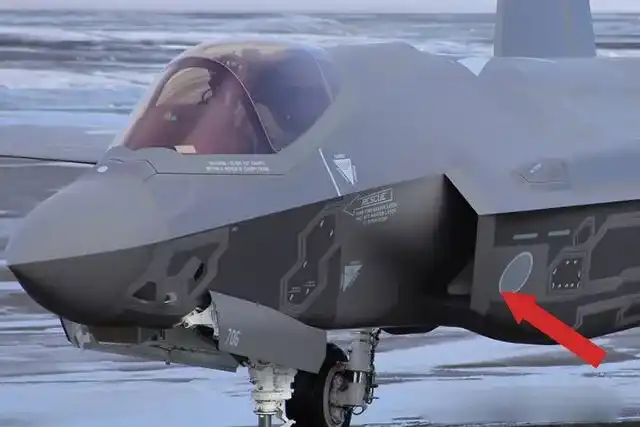
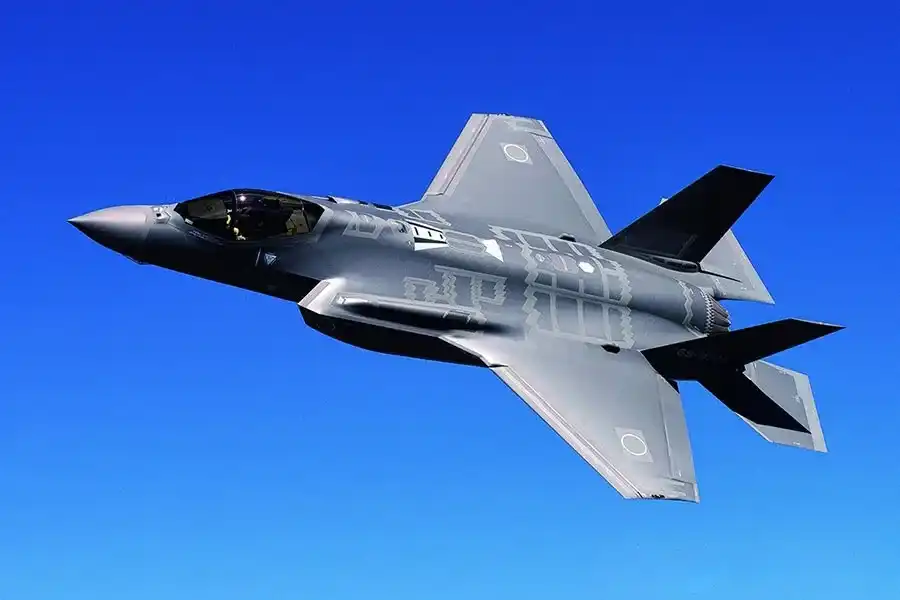
A curious detail about these aircraft, however, is their lack of a traditional red Japanese roundel. Unlike the F-2 and F-15J fighters, which prominently display Japan’s red Hinomaru insignia, the F-35’s nationality markings appear in subdued grayish-white tones. The reason for this is deeply tied to the jet’s core stealth design and the specialized coatings used on its exterior.
How Stealth Paint Works: A Crucial Factor
The F-35’s stealth technology is not just a result of its angular design but also relies heavily on the application of radar-absorbing coatings. These coatings consist of advanced materials that serve multiple purposes:
- Reducing Radar Cross-Section (RCS) – By absorbing radar waves and converting them into heat energy, these coatings help minimize the aircraft’s detectability.
- Infrared Signature Management – A multi-layered system absorbs infrared emissions, reducing heat signatures.
- Environmental Protection – The coating also protects against weathering, corrosion, and moisture, ensuring the jet remains operational for extended periods.
The stealth coating consists of three primary layers:
- The outermost layer reduces external reflection and provides a barrier against moisture and environmental wear.
- The middle layer is the most critical, absorbing and diffusing radar signals.
- The innermost layer works to regulate infrared emissions and further dampen radar detection.
Due to the complexity of these coatings, even minor modifications can compromise stealth performance. This is why any external markings, including national insignia, unit badges, or maintenance stencils, must be carefully integrated into the aircraft’s low observable (LO) coating.
Why Red Paint is a Problem for Stealth
Traditionally, the Japanese Air Self-Defense Force (JASDF) has painted its national insignia in bright red. However, applying high-contrast colors like red onto a stealth aircraft introduces two major issues:
- Radar Reflectivity: Traditional paint does not share the same radar-absorbing properties as stealth coatings. The application of high-contrast red paint would create radar-reflective “hot spots”, potentially increasing the aircraft’s detectability.
- Optical Visibility: Brightly colored insignia make it easier for the enemy to visually spot the aircraft, undermining tactical advantages during combat or reconnaissance missions.
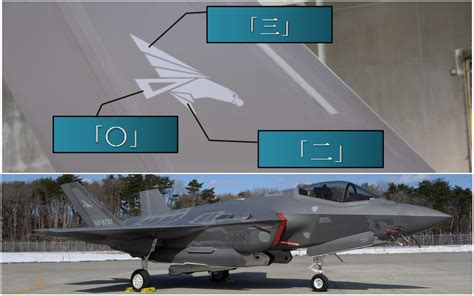
To mitigate these risks, Japan—along with other F-35 operators—uses subdued insignia, which blend seamlessly with the aircraft’s overall gray-tone low-visibility camouflage.
A Global Trend: The Gray Insignia Standard
Japan is not alone in adopting a gray-scale insignia for its F-35 fleet. Most countries operating the F-35, including the United States, Australia, the United Kingdom, and Italy, have followed the same approach.
For example, the U.S. Air Force’s F-22 Raptor and F-35 Lightning II both feature low-visibility gray markings, ensuring optimal stealth performance. Similarly, Australia’s F-35 fleet is maintained under strict guidelines, with dedicated stealth-coating facilities ensuring all paint applications adhere to stringent radar-absorption standards.
However, there are exceptions. In 2024, Denmark introduced an F-35A variant with red-and-white national insignia on its wings and tail. While this breaks the norm, it is speculated that Denmark’s geographical security environment may allow for such modifications without significantly affecting operational risks.
Can Stealth Aircraft Ever Have Colorful Designs?
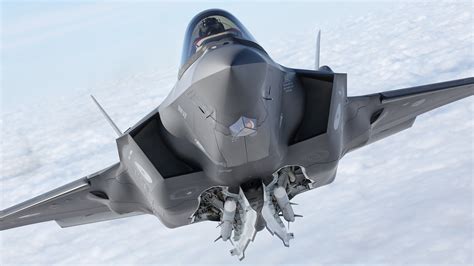
While stealth jets like the F-35 are predominantly gray, history has shown that alternative paint schemes are possible. The U.S. Air Force’s Aggressor Squadron, which plays the role of enemy forces in training exercises, sometimes applies high-contrast camouflage to mimic adversary aircraft. This includes dark gray, blue, and even black schemes.
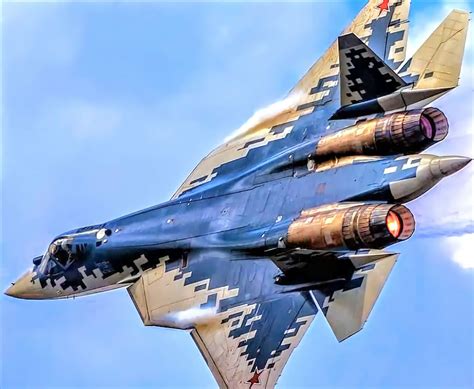
Additionally, Russia’s Su-57 Felon, a rival to the F-35, has been seen sporting blue-based digital camouflage, demonstrating that stealth aircraft can incorporate multi-tonal designs without completely compromising radar evasion.
As stealth technology continues to evolve, we may witness new breakthroughs in stealth coatings, allowing for more varied paint schemes in the future.
FAQs
1. Why do Japan’s F-15 and F-2 jets still use red insignia?
Unlike the F-35, the F-15J and F-2 are non-stealth aircraft, meaning they do not rely on radar-absorbing coatings to the same degree. Since stealth is not their primary defense mechanism, high-contrast markings do not impact their operational effectiveness.
2. Can Japan modify its F-35 insignia in the future?
While technically possible, such a modification would require significant reengineering of stealth coatings. Unless new radar-absorbing red pigments are developed, it is unlikely that Japan will alter its gray insignia on the F-35.
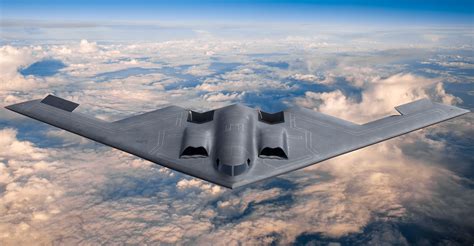
3. Why do stealth bombers like the B-2 and B-21 also avoid bright markings?
Stealth bombers like the B-2 Spirit and B-21 Raider rely on the same radar-absorption principles as the F-35. Their dark gray color schemes are optimized for both radar evasion and night-time operations, making bright markings counterproductive.