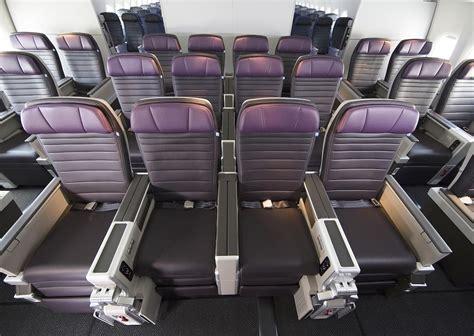
Airline cabins are strange little ecosystems. A few meters of aluminum tube flying at 35,000 feet must simultaneously function as a transportation system, a hotel, a restaurant, and a revenue engine. Every seat, every inch of legroom, every cabin divider is the result of a careful calculation about what passengers want—and more importantly—what they are willing to pay for.
Over the past decade, premium economy cabins have exploded in popularity around the world. Today, roughly 45% of widebody aircraft globally include premium economy, a number that has more than doubled compared to the early 2010s. In North America alone, the figure is even higher, with nearly 90% of widebody aircraft now offering premium economy seats.
Despite that growth, a curious pattern appears when flying within the United States. Passengers on long-haul international routes might enjoy spacious premium economy seating, but on most domestic flights the option simply doesn’t exist. Many travelers wonder why airlines that clearly recognize the value of premium economy don’t install it across their entire fleets.
The answer lies in a fascinating mix of aircraft design constraints, route economics, passenger behavior, and the unique structure of the U.S. airline market. Understanding these factors reveals why premium economy thrives on long-haul flights yet remains rare on domestic aircraft.
The Role Of Premium Economy In Modern Airline Cabins
Premium economy emerged as a middle-ground product between business class and standard economy. Its purpose is simple but powerful: offer significantly more comfort than economy without approaching the high cost of business class.
On long international flights, the difference matters enormously. Sitting in a narrow seat for 10 hours is an endurance challenge for the human body. Even small improvements in seat width, recline angle, and legroom can dramatically change the travel experience.
Typical premium economy features include:
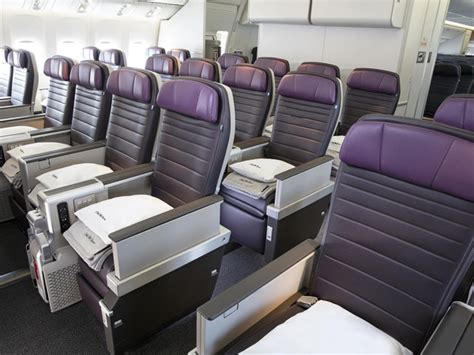
- Seat pitch around 38 inches, compared with 30–32 inches in economy
- Wider seats, often around 18–19 inches
- Enhanced meals and beverages
- Dedicated cabin service
- Footrests, larger entertainment screens, and upgraded amenities
Airlines discovered that many travelers are willing to pay a moderate upgrade fee for these comforts, especially on flights lasting eight hours or longer. The result is a cabin that generates strong revenue while occupying less space than business class.
In other words, premium economy sits in a strategic sweet spot. It captures passengers who want comfort but cannot justify the expense of business class. For airlines operating long-haul routes across oceans, this cabin class has become an extremely profitable addition.
Yet when the aircraft shrinks and the flight time shortens, the equation changes dramatically.
Why Premium Economy Makes Less Sense On Domestic Flights
The most important variable in aviation economics is distance. A seat’s value changes drastically depending on how long a passenger occupies it.
On long-haul flights lasting 8 to 12 hours, the human body begins demanding relief. Passengers become far more willing to pay extra for space, recline, and better food. A small comfort improvement suddenly feels priceless.
On a two-hour domestic flight, the psychology flips. Travelers may tolerate a cramped seat because the inconvenience is temporary. The willingness to pay a large premium disappears.
That behavioral reality heavily influences how U.S. airlines design their cabins.
Domestic passengers generally fall into two broad categories: price-sensitive leisure travelers and corporate travelers flying short business trips. The first group prioritizes low fares, while the second often receives corporate bookings already placed in domestic first class.
Premium economy struggles to find its niche between those two segments.
If an airline installed premium economy on short routes, many travelers would likely choose either the cheaper economy seat or upgrade directly to domestic first class, which already offers wider seats and improved service. The middle product risks becoming redundant.
Airlines are allergic to redundancy. Every unused seat type means lost revenue potential.
The Hidden Rival: Extra-Legroom Economy Sections
Instead of building a true premium economy cabin, U.S. airlines created a different solution—extra-legroom economy sections.
These sections use the same seat structure as standard economy, but with several additional inches of legroom. Because the seats are nearly identical to those already installed, the upgrade costs airlines very little.
Examples include:
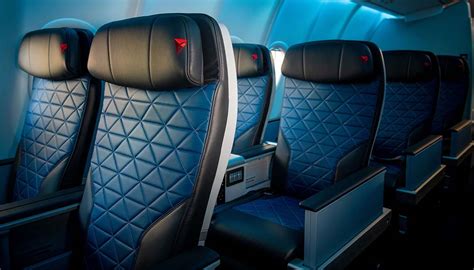
- Delta Comfort+
- United Economy Plus
- American Airlines Main Cabin Extra
Passengers receive modest benefits such as earlier boarding, additional legroom, and sometimes complimentary drinks. Importantly, these upgrades often cost hundreds of dollars less than premium economy would.
From a business perspective, this model is brilliant. Airlines generate additional revenue without installing new seats, redesigning the cabin, or sacrificing capacity.
The result is a product that captures many of the same passengers premium economy would attract, but with far lower costs.
Narrowbody Aircraft Limit Cabin Design
The aircraft itself also plays a major role in the absence of premium economy on domestic flights.
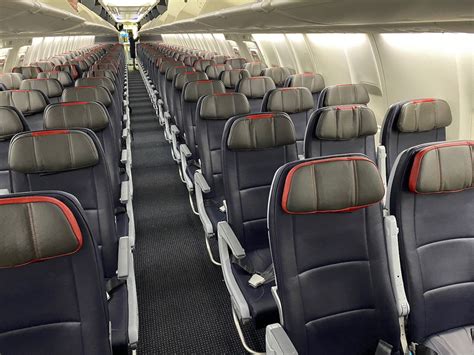
Most U.S. domestic routes are flown by narrowbody aircraft, including the Boeing 737 family and the Airbus A320 series. These aircraft are optimized for short- to medium-distance routes and have relatively narrow cabins.
Installing premium economy in such aircraft creates serious spatial challenges.
A true premium economy seat requires:
- Wider seat frames
- More pitch between rows
- Greater recline space
Adding these features inevitably reduces the total number of seats available on the aircraft.
On widebody aircraft used for intercontinental travel, airlines can afford this trade-off because premium economy tickets command higher prices. On narrowbody aircraft flying short routes, the revenue gain rarely offsets the loss of several economy seats.
Every removed seat represents lost ticket revenue. In a high-frequency domestic market like the United States, that math matters.
Aircraft cabins therefore become an exercise in geometry and economics. Remove four seats to install premium economy, and the airline must ensure those seats generate more revenue than the ones removed. On short routes, that equation often fails.
Retrofitting Aircraft Is Surprisingly Expensive
Airline cabins may look simple, but redesigning them is a massive engineering project.
Installing premium economy seats requires:
- New seat structures
- Reconfigured cabin layouts
- Certification from aviation regulators
- Updated emergency evacuation plans
- Modified galleys and service logistics
Each retrofit can cost millions of dollars per aircraft.
Airlines must weigh that cost against the expected return. If the aircraft mainly operates short domestic routes, the financial payoff might take many years—or never arrive at all.
Instead, airlines prioritize retrofitting long-haul widebody fleets, where premium economy generates significantly higher yields.
This explains why many U.S. carriers offer premium economy only on aircraft used for international routes.
How Premium Economy Became Popular Worldwide
The rise of premium economy is partly a consequence of another transformation: the evolution of business class.
Two decades ago, business class seats were similar to today’s premium economy—larger seats with moderate recline. Over time, airlines transformed business cabins into luxurious spaces featuring:
- Lie-flat beds
- Sliding privacy doors
- Restaurant-style dining
- Direct aisle access
These upgrades dramatically increased ticket prices.
As business class became more luxurious and expensive, a gap appeared between economy and business cabins. Premium economy stepped neatly into that gap.
At the same time, many airlines densified economy cabins to fit more seats on aircraft. Passengers noticed the shrinking personal space and began seeking alternatives.
Premium economy became the compromise—a noticeable comfort upgrade without the premium cost of business class.
After the pandemic, another trend accelerated demand. Business travel returned strongly, pushing business class fares higher. Some travelers who previously flew business began selecting premium economy instead, further boosting its popularity.
Which U.S. Airline Offers The Best Premium Economy?
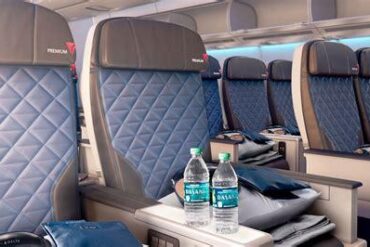
Among American airlines, Delta Air Lines’ Premium Select cabin is widely considered the most refined premium economy product.
Although it ranks outside the global top ten according to Skytrax rankings, the product remains highly competitive in North America.
Delta’s Premium Select seats offer:
- Seat pitch up to 38 inches
- Seat width around 19 inches
- Large 13.3-inch entertainment screens
- Adjustable foot and leg rests
Passengers also receive Sky Priority services, including faster check-in lanes, priority boarding, and expedited baggage handling.
During the flight, travelers enjoy upgraded meals, amenity kits, noise-canceling headphones, and enhanced bedding designed to improve sleep during long journeys.
The cabin layout varies depending on aircraft type. On the Airbus A350, Premium Select typically features eight seats per row, while the Boeing 767 uses a six-seat configuration.
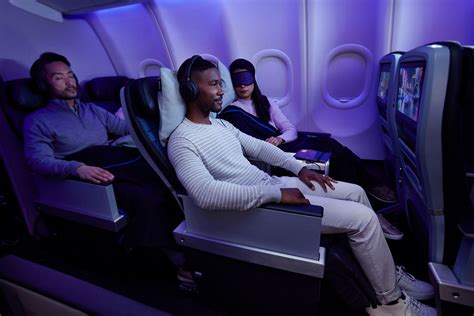
These features illustrate how premium economy attempts to balance comfort and affordability. The seats are significantly better than economy but still occupy far less space than lie-flat business class suites.
When U.S. Airlines Introduced Premium Economy
Premium economy arrived relatively late to the U.S. airline industry compared with many international carriers.
American Airlines became the first major U.S. airline to introduce the cabin in 2016 with the delivery of its Boeing 787-9 aircraft. The airline later retrofitted its Boeing 777 and 787 fleets with the new cabin.
Delta Air Lines followed closely, launching Premium Select in 2017 on the Airbus A350. The airline gradually expanded the product to Airbus A330 and Boeing 767 aircraft.
United Airlines introduced Premium Plus in 2019 aboard the Boeing 787-10, later installing the cabin across its widebody fleet.
Interestingly, even among these three carriers, strategies differ. Delta tends to install more premium economy seats, reflecting a stronger emphasis on the product. American and United have taken a slightly more conservative approach, allocating fewer seats to the cabin.
These decisions reflect complex revenue modeling. Airlines analyze booking patterns, passenger demographics, and route profitability before deciding exactly how many premium seats to install.
Why Premium Economy Will Remain Limited On Domestic Flights
Despite the global popularity of premium economy, its presence on domestic U.S. flights is unlikely to expand dramatically.
Three powerful forces continue shaping airline decisions:
Passenger demand remains limited for a middle-tier cabin on short flights.
Narrowbody aircraft space constraints make installation economically risky.
Extra-legroom economy products already capture much of the potential market.
Together, these factors create a stable equilibrium. Airlines provide domestic first class for travelers seeking comfort and extra-legroom economy for those wanting a modest upgrade.
Premium economy simply doesn’t add enough new value in this environment.
That said, aviation history has a habit of surprising observers. Aircraft such as the Airbus A321XLR, capable of long transatlantic flights with narrowbody efficiency, may blur the lines between domestic and long-haul travel. On these longer narrowbody routes, premium economy could become more viable.
For now, the cabin remains primarily a long-haul comfort upgrade, thriving on international journeys where passengers spend half a day in the sky and every extra inch of space suddenly feels like a gift from physics itself.
Airline cabins will keep evolving as technology, economics, and passenger expectations shift. But the basic lesson of aviation economics endures: in the sky, every square inch of space must earn its keep.