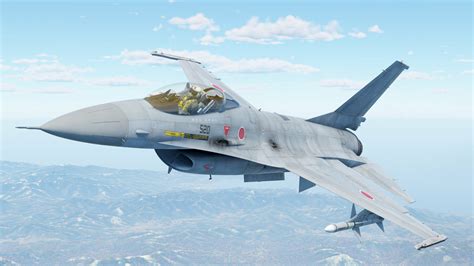
The Japanese F-16AJ is a fictional aircraft featured in War Thunder, inspired by a real-world proposal for Japan’s Japan Air Self-Defense Force (JASDF) to procure the F-16 Fighting Falcon. While the plan was ultimately abandoned in favor of the Mitsubishi F-2, the concept of an F-16 variant tailored for Japan remains an intriguing “what-if” scenario. This article explores the historical background, in-game performance, design choices, and community reception of the F-16AJ in War Thunder.
Historical Background and Game Setting
Origins of the F-16AJ Proposal
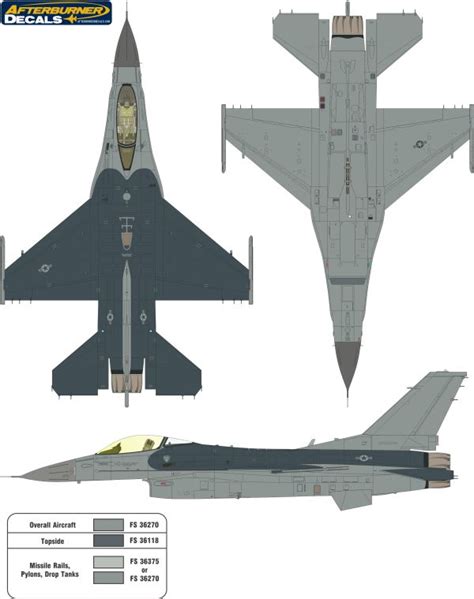
During the late 1970s and early 1980s, Japan sought to modernize its air force with a next-generation fighter. The General Dynamics F-16 Fighting Falcon was one of the contenders, and an export-oriented variant, the F-16AJ, was proposed. This version was based on the early YF-16 prototype, modified to meet Japan’s specific defense needs.
Key modifications included:
- Cockpit adjustments for JASDF operational requirements.
- Integration of AIM-7F Sparrow missiles for beyond-visual-range (BVR) combat.
- Standardized avionics suite similar to early F-16A models.
Ultimately, the F-16AJ project was shelved, and Japan chose to collaborate with General Dynamics (now Lockheed Martin) and Mitsubishi Heavy Industries to develop the Mitsubishi F-2 instead. The F-2, heavily based on the F-16, features a larger wing area, advanced avionics, and reinforced airframe for superior maritime strike capabilities.
The F-16AJ in War Thunder
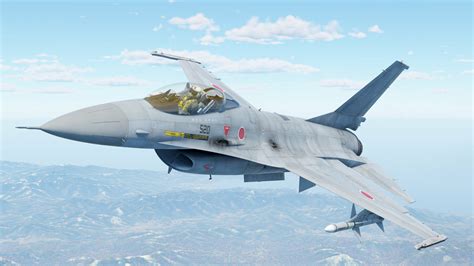
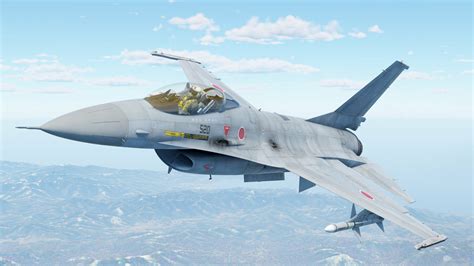
To address Japan’s limited selection of modern multirole fighters in War Thunder, developers introduced the F-16AJ as the first fourth-generation fighter in the Japanese tech tree. While fictional, its in-game characteristics are derived from early F-16 models, making it a plausible addition.
Performance and Capabilities in War Thunder
Flight Performance
The F-16AJ in War Thunder boasts impressive flight characteristics that reflect its lightweight design and powerful engine:
- Engine: Pratt & Whitney F100-PW-220 turbofan.
- Top Speed: 2,156 km/h at 15,240 meters altitude.
- Turn Rate: 19 seconds, superior to many contemporaries.
- Operational Ceiling: 15,240 meters.
Its agility makes it highly effective in dogfights, particularly against MiG-29s and Su-27s, although it lacks modern infrared countermeasures (IRCCM) and helmet-mounted displays (HMDs).
Armament and Versatility
The F-16AJ is one of the few Japanese fighters capable of both air-to-air and air-to-ground combat. Its diverse weapon loadout includes:
- Air-to-Air Missiles:
- AIM-9P/L “Sidewinder” (short-range IR missile).
- AIM-7F “Sparrow” (medium-range radar-guided missile, x2 underwing mounts).
- Air-to-Ground Ordnance:
- AGM-65B “Maverick” (precision-guided missile for armored targets).
- Mk 82/84 bombs (dumb bombs for ground attack).
- Rocket pods for additional strike capabilities.
Despite its multirole potential, the F-16AJ is not equipped with active radar-guided missiles like the AIM-120 AMRAAM, placing it at a disadvantage against aircraft such as the F-15J and Su-27.
Avionics and Radar Capabilities
The radar and avionics suite on the F-16AJ is modeled after export-oriented early F-16A/B versions, featuring:
- Pulse-Doppler radar for long-range target tracking.
- Radar Warning Receiver (RWR) for detecting enemy lock-ons.
- Basic targeting HUD, lacking modern HMD integration.
These avionics ensure the F-16AJ is competitive in historical and simulator battles, though its electronic warfare capabilities are limited compared to newer jets.
Game Balance and Community Response
Design Choices and Gameplay Balance
The developers of War Thunder made several balancing decisions to ensure the F-16AJ remains viable but not overpowered. Some key limitations imposed on the aircraft include:
- Reduced AIM-7F missile count (limited to two underwing mounts).
- No AIM-120 AMRAAM support, keeping it in line with 1980s-era aircraft.
- Standardized airframe, without the composite materials used in the later F-2.
These changes prevent it from overshadowing other aircraft while maintaining historical accuracy to a plausible early F-16 variant.
Player Reception and Feedback
The F-16AJ has received mixed reactions from the community:
Positive Aspects:
- Unique addition to the Japanese tech tree, filling the gap before the F-2.
- Strong multirole performance, able to handle both air superiority and ground attack roles.
- Excellent dogfighting capability, with a high thrust-to-weight ratio and superior maneuverability.
Criticism and Drawbacks:
- Battle Rating (BR) concerns: Some players argue its BR 13.0 rating is too high, given its lack of HMD and IRCCM.
- Limited survivability: Vulnerable against aircraft with active radar missiles (e.g., AMRAAM-equipped F-15s).
- No AAM-3 missiles, which would improve its BVR engagement potential.
Suggestions for future balancing updates include BR adjustments or missile upgrades to keep it competitive against next-generation aircraft.
Conclusion
The F-16AJ in War Thunder is both a historical curiosity and a gameplay experiment. It provides Japanese aviation enthusiasts with a competitive fourth-generation fighter, filling a crucial gap in the JASDF lineup. While not as advanced as the F-2 or F-15J, its multirole flexibility and dogfighting prowess make it a valuable asset in combat. However, its lack of modern countermeasures and limited missile loadout continue to spark debate within the War Thunder community.
Frequently Asked Questions (FAQ)
1. Was the F-16AJ ever a real aircraft?
No, the F-16AJ was a proposed export variant for Japan, but it was never produced. Instead, Japan developed the Mitsubishi F-2 in collaboration with General Dynamics.
2. How does the F-16AJ compare to the F-2 and F-15J?
The F-16AJ is an early fourth-generation fighter with strong maneuverability but limited avionics and missile options. The F-2 has better radar, composite materials, and more advanced weaponry, while the F-15J boasts superior speed, payload, and avionics.
3. Will the F-16AJ receive buffs or updates in War Thunder?
Potential updates could include BR adjustments or the addition of AAM-3 missiles to improve its BVR capabilities. However, no official changes have been announced yet.