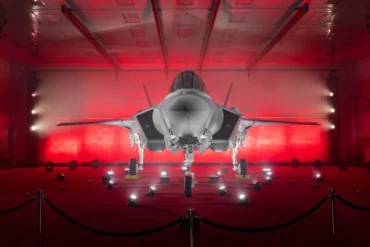
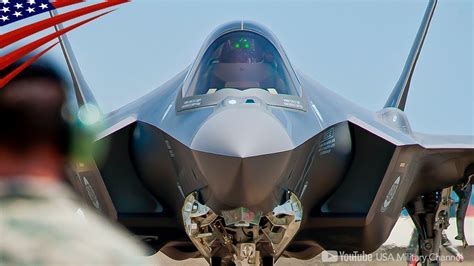
The Baltic region has once again become the stage for high-stakes encounters between NATO forces and Russian military aircraft. In September, three Russian MiG-31 fighter jets entered Estonian airspace for a full twelve minutes, prompting an immediate response from Italian F-35 stealth fighters stationed in the country. According to Tallinn, this was the fourth violation of its airspace by Russian jets this year, raising alarm within both the Estonian government and the broader NATO alliance.
These repeated incursions follow a worrying trend. In recent weeks, Poland reported over 20 drone crossings, while Danish military bases have seen multiple drone sightings believed to be linked to Russia, though Moscow has consistently denied involvement. Such incidents test NATO’s ability to maintain calm and unity while balancing deterrence against escalation.
Why NATO Is Cautioned Against Direct Military Response
Former Supreme Allied Commander Transformation, General Jean-Paul Paloméros, has warned that NATO should not shoot down Russian jets, even when violations occur. Speaking with Newsweek, Paloméros emphasized that Moscow would “love for NATO nations to shoot down one of their aircraft.” Such an action, he argued, could hand Russian President Vladimir Putin the justification he seeks to escalate military confrontation or rally domestic support under the guise of foreign aggression.
Instead, the retired general insists that NATO must show measured resolve. This includes scrambling fighter aircraft, monitoring Russian movements, and making clear that the alliance is fully alert. However, he stresses that firing on manned Russian aircraft risks triggering a direct NATO-Russia conflict — a scenario the alliance has sought to avoid since the beginning of Russia’s war in Ukraine.
NATO’s Balancing Act: Strength Without Escalation
Paloméros underscored a principle that has long guided NATO’s deterrence posture: “ready to act, but not to overreact.” The retired French air force leader noted that NATO’s credibility depends not only on its military capability but also on its ability to avoid being provoked into reckless escalation.
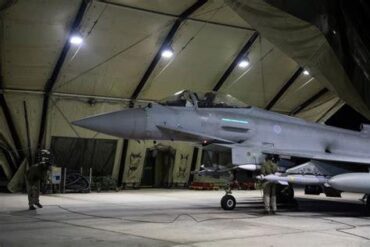
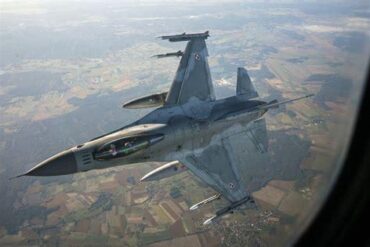
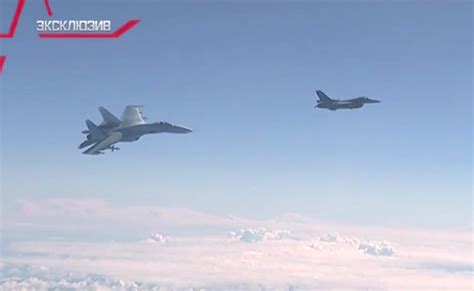
To this end, NATO employs a graduated response strategy. Fighter jets are scrambled immediately to escort or shadow intruding Russian planes, often until they exit NATO-controlled skies. Such a display signals strength and readiness, but the absence of engagement ensures that the incident remains within the realm of military signaling rather than armed confrontation.
Russian Incursions: Testing NATO’s Resolve
According to Estonia’s defense forces, the MiG-31 jets that entered its airspace did so without flight plans and with their transponders switched off, making them difficult to track and heightening the risk of miscalculation. Tallinn reported that the aircraft flew dangerously close to Vaindloo Island, north of the Estonian mainland.
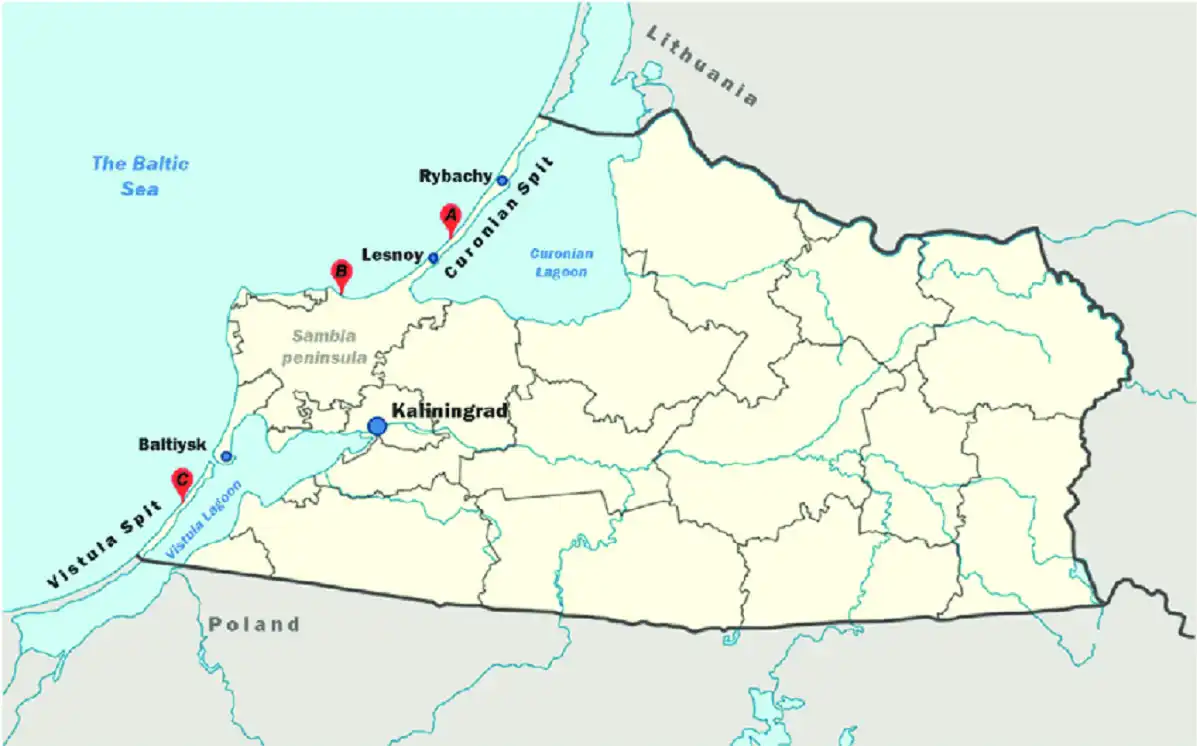
Moscow countered these claims by insisting the jets followed a “scheduled flight” from Karelia to Kaliningrad, a Russian exclave sandwiched between Lithuania and Poland. Russia further asserted that the aircraft remained over neutral waters and did not violate sovereign borders. Yet NATO officials remain skeptical, pointing out that Russian pilots often exploit the narrow Baltic air corridor to push the limits of international airspace law.
These provocations, experts argue, serve multiple purposes: testing NATO’s air defense readiness, probing alliance decision-making, and sending political signals to both regional neighbors and the broader international community.
Strategic Significance of Kaliningrad
The flight path of the Russian MiG-31s also highlights the importance of Kaliningrad, one of Russia’s most strategically significant territories. Wedged between NATO members and heavily militarized, Kaliningrad hosts advanced missile systems, air defense batteries, and naval facilities. Its proximity to Poland, Lithuania, and the Baltic Sea makes it a forward base for Russian operations in Europe.
For NATO, Kaliningrad presents a permanent flashpoint. The territory acts as both a buffer and a threat, giving Russia the means to project power deep into Europe while at the same time creating vulnerabilities should the alliance decide to counter Russian aggression. This geographic reality adds layers of complexity to every aerial encounter in the region.
The Nuclear Dimension: MiG-31 and the Kinzhal Missile
The MiG-31 is not merely a fast interceptor. It is also capable of carrying Russia’s Kinzhal hypersonic missile, a weapon that can deliver both nuclear and conventional payloads. The Kinzhal has already been used against Ukraine, underlining its operational role in Moscow’s arsenal.
The presence of such aircraft in NATO’s immediate neighborhood raises the stakes considerably. Any misstep — whether a collision, miscommunication, or intentional engagement — could lead to a nuclear-capable confrontation. For this reason, NATO’s restraint is not merely diplomatic; it is rooted in strategic survival.
Estonia and Poland Push for NATO Consultations
Following the September airspace violation, Estonia called for Article 4 consultations, a NATO mechanism that allows member states to convene whenever their security, political independence, or territorial integrity is threatened. Poland invoked the same article earlier in the month after drones entered its airspace.
Article 4 does not guarantee military action, but it opens a pathway for collective discussion and policy coordination. Since NATO’s founding in 1949, Article 4 has been triggered only nine times, reflecting its gravity and the seriousness with which member states approach it.
Article 5: The Shadow of Collective Defense
Behind every debate on NATO’s response lies the ultimate safeguard: Article 5 of the NATO Charter. This provision, often described as the cornerstone of the alliance, holds that an armed attack on one member is an attack on all. It has only been invoked once — after the September 11 attacks on the United States in 2001.
While Estonia’s airspace violation does not meet the threshold of an Article 5 response, the principle hangs in the background. Were NATO to shoot down a Russian jet, Moscow could interpret the act as aggression, potentially testing whether the alliance is willing to escalate to full collective defense. Conversely, inaction could be seen as weakness, undermining the credibility of NATO’s deterrence.
The Political Dimension: Diverging Voices Within NATO
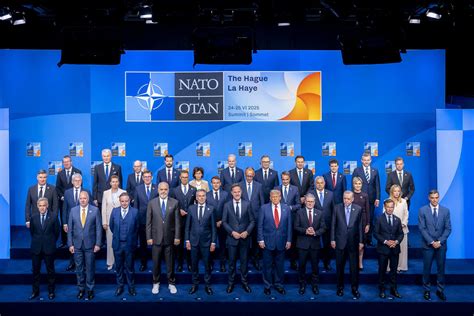
The debate over how to respond to Russian provocations is not purely military; it is also deeply political. U.S. President Donald Trump has stated that he would support NATO countries shooting down Russian jets violating their airspace, declaring the option “on the table.” Likewise, Ursula von der Leyen, President of the European Commission, suggested that such a response is legitimate.
By contrast, Paloméros and other military leaders argue for caution. The divergence illustrates a persistent tension within NATO: political leaders sometimes lean toward symbolic displays of strength, while military strategists, mindful of escalation risks, prefer calibrated responses. This dynamic underscores how difficult it is for NATO to present a unified stance under rapidly evolving security threats.
Russia’s Calculated Provocations
For Russia, probing NATO airspace is a low-cost, high-reward tactic. Each violation forces NATO to scramble resources, divert attention, and publicly reaffirm its commitments. At the same time, Moscow can portray the encounters domestically as evidence of Western hostility.
Such actions also serve as psychological pressure. By keeping NATO in a constant state of alert, Russia tests the endurance of alliance members and the reliability of their commitments. Over time, the Kremlin hopes to expose fault lines among NATO’s 32 members, exploiting differences in political willpower, military readiness, and risk tolerance.
Conclusion: The Tightrope Ahead
NATO’s dilemma is stark. On one hand, it must defend the sovereignty of its members and ensure that Russian incursions are not normalized. On the other, it must avoid giving Moscow the excuse it craves to escalate conflict into a broader war.
General Paloméros’s warning is therefore not one of weakness, but of strategic prudence. By keeping its nerve, NATO signals strength without falling into provocation traps. Yet, as Russian jets continue to test the skies and drones push across borders, the alliance faces an ongoing challenge: how to deter without overreacting, and how to remain united under pressure.
Ultimately, the future of NATO-Russia aerial encounters may hinge not on the hardware of jets or missiles, but on the decisions of leaders — both political and military — who must walk the narrow path between deterrence and escalation. As Europe’s skies grow more contested, each incident underscores that restraint, discipline, and unity are as vital to NATO’s survival as its military arsenal.