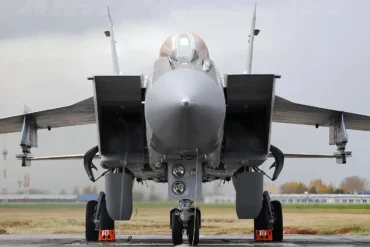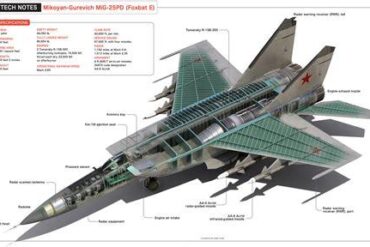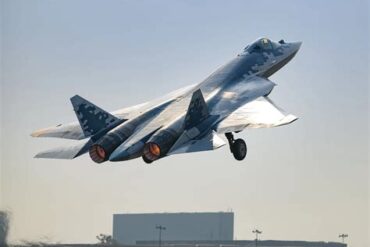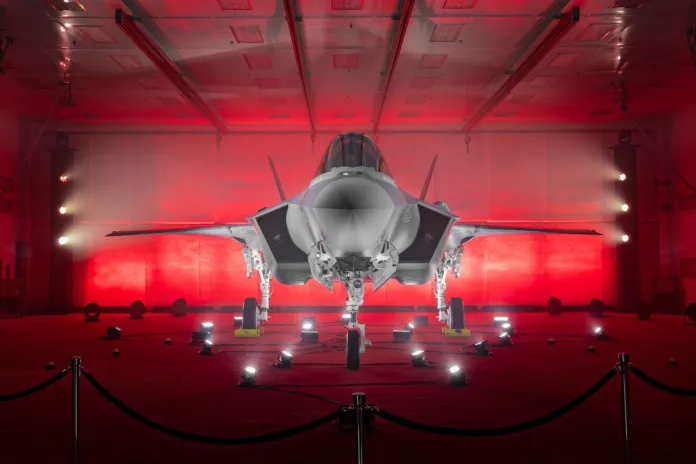
For decades, the sound of Soviet-designed fighter jets defined Polish military aviation. MiG-21s once patrolled Warsaw Pact skies, Su-22 strike aircraft symbolized Cold War doctrine, and MiG-29 Fulcrums remained a lingering reminder of Poland’s communist-era military inheritance long after the Soviet Union disappeared. That era is now ending dramatically. With the arrival of its first Lockheed Martin F-35A Lightning II stealth fighters, Poland has become the first former Soviet Bloc nation to operate fifth-generation stealth combat aircraft.
The delivery marks far more than a simple aircraft acquisition. It represents one of the most significant military transformations in modern European history, symbolizing Poland’s complete strategic shift from Moscow’s orbit to the technological core of NATO airpower.
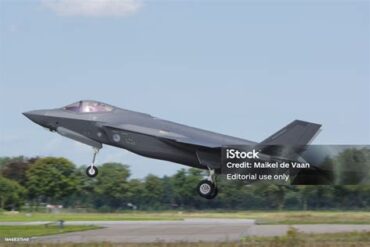
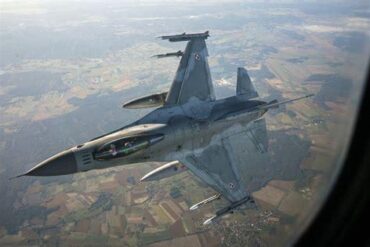
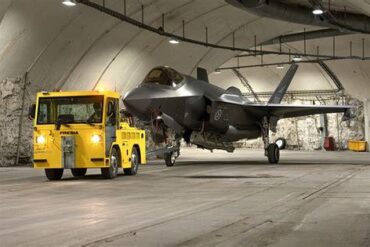
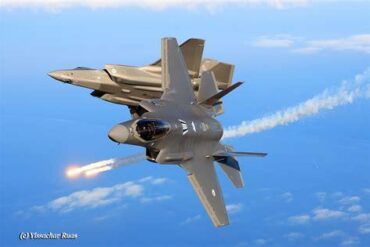
The first three F-35A fighters, serial numbers 3509, 3510, and 3511, landed at the 32nd Tactical Air Base at Łask Airfield on May 22, 2026. Their journey from Lockheed Martin’s Fort Worth production facility in Texas to central Poland included a stop in the Azores and aerial support from a US Air Force KC-46A Pegasus tanker. The aircraft arrived escorted by Polish F-16s, visually capturing the transition between fourth-generation NATO capability and the stealth-driven future of European air warfare.
The Polish Ministry of National Defense quickly emphasized the historic nature of the event. The aircraft, designated locally as the “Husarz,” immediately became a symbol of national prestige, military modernization, and deterrence against rising regional threats.
Witajcie w Polsce! 🇵🇱
Trzy F-35 wspólnie na niebie z naszymi F-16… pic.twitter.com/5U4l9IaZmI— Władysław Kosiniak-Kamysz (@KosiniakKamysz) May 22, 2026
Poland’s Historic Leap From Soviet Aviation To Stealth Warfare
The transformation of the Polish Air Force has been extraordinary when viewed through historical perspective. During the Cold War, Poland’s air arm was deeply integrated into Soviet military doctrine. Aircraft procurement, pilot training, logistics, and operational planning revolved almost entirely around Soviet systems.
The MiG-21 became the backbone of Polish fighter aviation for decades. Introduced during the height of East-West tensions, the aircraft represented speed and simplicity but eventually became obsolete against modern Western fighters. Poland later operated the MiG-23, Su-7, and Su-22, all designed for Soviet operational requirements rather than NATO-style network-centric warfare.
Even after joining NATO in 1999, Poland retained many Soviet-origin aircraft because replacing an entire combat fleet required enormous financial investment. The acquisition of American F-16C/D fighters in the 2000s was the first major sign that Warsaw intended to align fully with Western military standards. Yet MiG-29 fighters continued flying alongside the F-16s for years, creating an unusual hybrid force that mixed Soviet engineering with NATO systems.
That hybrid structure increasingly became a strategic liability.
The MiG-29 fleet faced mounting operational problems, including aging airframes, expensive maintenance requirements, and severe supply chain complications after sanctions disrupted access to Russian-origin spare parts. Poland reportedly resorted to cannibalizing retired aircraft to sustain operational readiness. Some engines and critical components became exceptionally difficult to source, driving operating costs to unsustainable levels.
Warsaw understood that maintaining Soviet-era jets during a period of escalating confrontation with Russia was strategically dangerous. The war in Ukraine only reinforced that conclusion.
Why The F-35 Changed Poland’s Strategic Position
The F-35A Lightning II is not merely a replacement aircraft. It fundamentally alters Poland’s role within NATO.
Unlike legacy Soviet fighters designed primarily for air interception, the F-35 functions as a stealth-enabled intelligence and battlefield management platform capable of operating deep inside heavily defended airspace. Its advanced sensor fusion technology allows pilots to gather, process, and distribute massive amounts of battlefield data in real time.
For Poland, positioned directly on NATO’s eastern frontier, these capabilities are exceptionally important.
Russia has heavily invested in anti-access and area-denial systems, including advanced S-400 air defense networks deployed in Kaliningrad and Belarus. Traditional fourth-generation fighters face increasing survivability challenges in such environments. The F-35’s low observable design dramatically improves its ability to penetrate contested airspace while reducing detection risks.
Polish defense officials openly described stealth capability as essential for surviving future conflicts involving sophisticated adversaries. That statement reflects a broader NATO concern regarding the balance of power along Europe’s eastern flank.
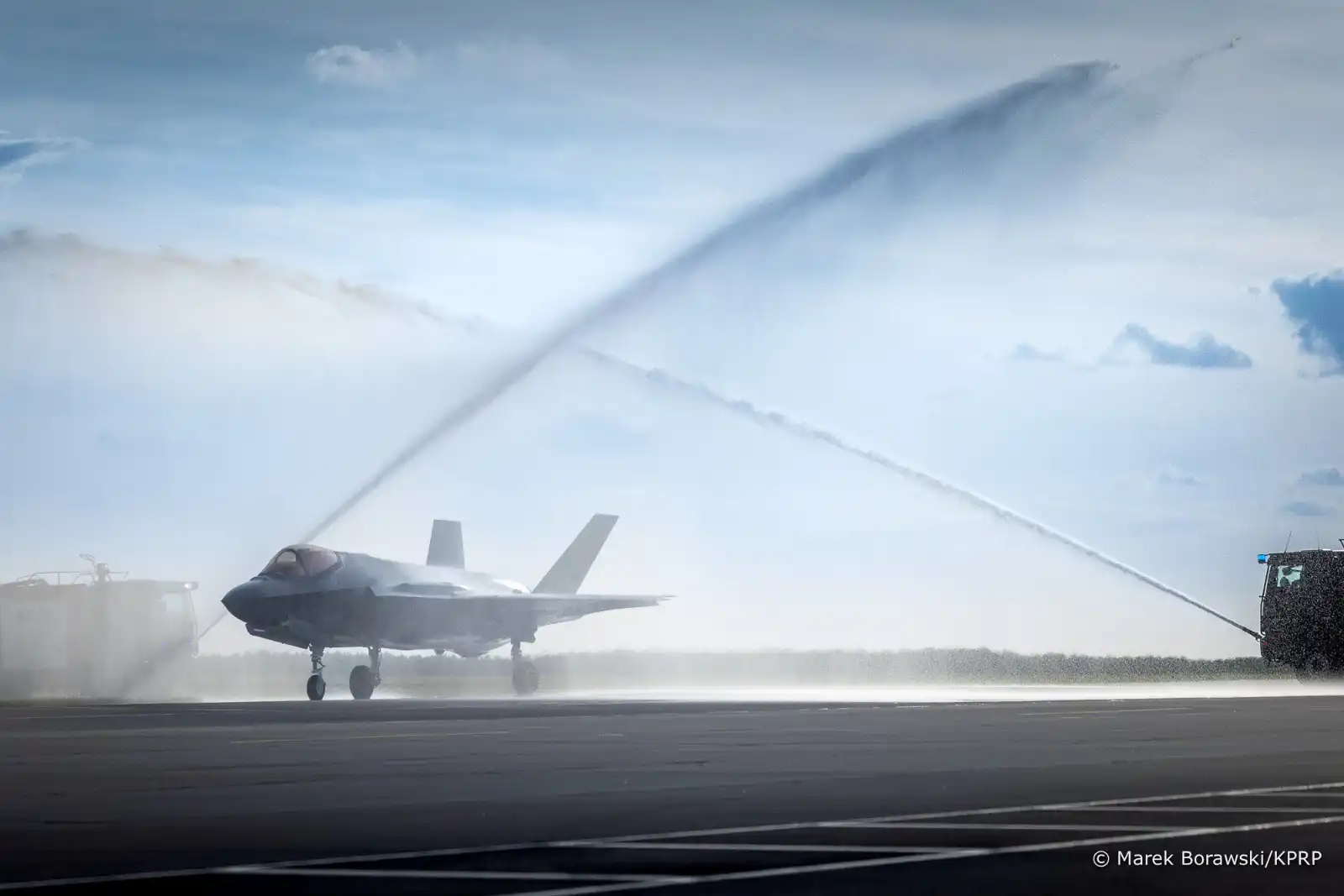
The aircraft’s arrival also places Poland inside an elite operational community shared by the United States, United Kingdom, Italy, Norway, the Netherlands, Israel, Japan, and several other advanced military powers. Interoperability with NATO allies will improve significantly because the F-35 ecosystem emphasizes shared targeting information, integrated command structures, and joint operations.
In practical terms, Polish F-35s could coordinate seamlessly with American, British, or Norwegian stealth aircraft during a regional crisis.
The Symbolism Behind The “Husarz” Name
Poland’s decision to name the aircraft “Husarz” carries powerful historical symbolism.
The term references the legendary Polish Winged Hussars, an elite cavalry formation famous for battlefield victories during the 16th and 17th centuries. The Hussars became icons of courage, mobility, and shock warfare, particularly after their decisive role in the Battle of Vienna in 1683.
By applying that name to the F-35 fleet, Warsaw intentionally connected Poland’s military past with its high-technology future.
The symbolism matters domestically because defense modernization has become deeply tied to national identity. Poland views itself not merely as a NATO member but as one of the alliance’s primary frontline states facing Russian military pressure.
The arrival of stealth fighters therefore resonates politically as much as militarily.
Defense Minister Władysław Kosiniak-Kamysz described the event as the beginning of “a new era” for Polish airpower. His statement reflected years of investment in infrastructure, pilot training, maintenance systems, and operational readiness necessary to support fifth-generation combat aviation.
Training preparations already began long before delivery. Polish pilots trained at Ebbing Air National Guard Base in Arkansas, where the first Polish F-35A was formally unveiled in 2025. Transitioning from Soviet-era aircraft to stealth fighters requires not only new flying skills but also entirely different operational philosophies centered around digital warfare and sensor integration.
Poland’s Broader Military Modernization Strategy
The F-35 program is part of a much larger Polish rearmament effort accelerated by the war in Ukraine.
Warsaw has rapidly emerged as one of NATO’s highest defense spenders relative to GDP. The country is investing heavily in tanks, missile defense systems, artillery, drones, and combat aircraft to strengthen deterrence capabilities.
The retirement of the Su-22 strike aircraft in 2025 highlighted how quickly Poland is abandoning Soviet legacy systems. Those aging aircraft served for nearly four decades before becoming increasingly impractical to maintain. Their replacement by South Korean FA-50 light combat aircraft demonstrated Warsaw’s willingness to diversify procurement sources while maintaining NATO compatibility.
Meanwhile, Poland has steadily reduced dependence on the MiG-29 fleet. Several aircraft were transferred to Ukraine beginning in 2023, supporting Kyiv’s war effort while simultaneously accelerating Poland’s own transition toward modern Western equipment.
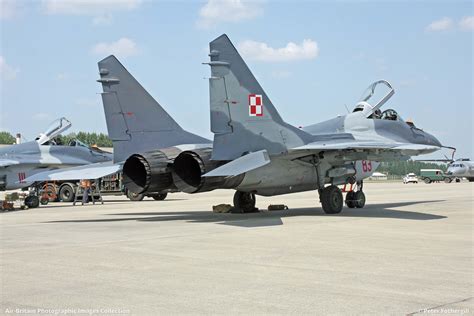
This transition also reflects changing realities in air combat economics. Although the F-35 remains expensive to operate, its advanced logistics network and long-term sustainment planning may ultimately provide more reliable operational readiness than maintaining obsolete Soviet aircraft with fragmented supply chains.
Poland signed its $4.6 billion agreement for 32 F-35As in 2020, a decision that appeared increasingly prescient after Russia launched its full-scale invasion of Ukraine in February 2022.
The conflict fundamentally reshaped European security calculations. Nations once hesitant about military spending suddenly accelerated procurement programs, expanded defense budgets, and prioritized deterrence against potential Russian aggression.
Poland moved faster than most.
NATO’s Eastern Flank Enters A New Era
Poland’s emergence as the first former Soviet Bloc operator of the F-35 carries major implications for NATO’s eastern defenses.
Until now, stealth fighter operations in Europe were concentrated primarily among Western European and North American allies. Poland changes that geographic balance by bringing fifth-generation capability directly to NATO’s frontline region bordering Belarus, Kaliningrad, and Ukraine.
Romania has also committed to purchasing F-35s, though deliveries are not expected before 2031. Other Eastern European states continue evaluating similar modernization programs, suggesting that Poland may become the model for post-Soviet military transformation inside NATO.
Warsaw aims to achieve full operational capability for its F-35 fleet by 2030. When complete, Poland will possess one of the most advanced air forces in Europe, combining F-35 stealth fighters, upgraded F-16s, FA-50 light combat aircraft, and integrated NATO command systems.
The journey from MiG-21s to stealth fighters illustrates more than technological progress. It reflects a profound geopolitical realignment spanning generations. Poland has effectively completed its transition from a Soviet satellite state into a central pillar of NATO’s eastern defense architecture.
The arrival of the F-35 Husarz is not simply the delivery of new aircraft. It is the final confirmation that Poland’s Cold War aviation era has ended — and that a new chapter of European airpower has begun.