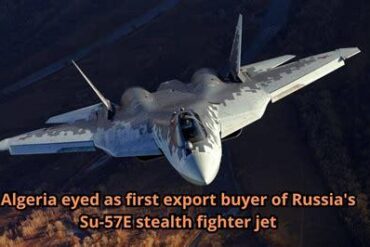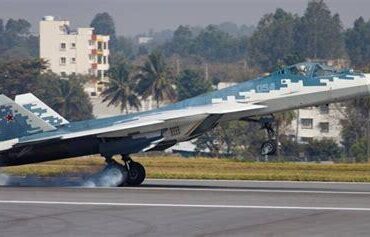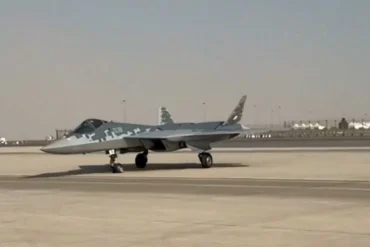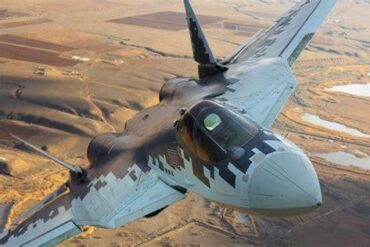
Algeria has crossed a historic technological and strategic threshold by becoming the first African nation to operate a fifth-generation stealth fighter, following confirmed domestic testing of the Russian-built Su-57E. The development signals a dramatic transformation in North Africa’s air power balance and places Algeria among a small group of nations fielding next-generation combat aviation technology. Recent flight footage recorded in early February 2026 verified that Algeria has begun operational evaluations after receiving its first aircraft deliveries, marking a milestone not only for the country but also for the broader regional military landscape.
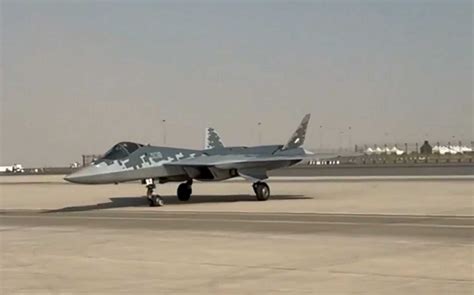
The confirmation emerged after video footage surfaced on social media showing the stealth aircraft conducting flight operations over Algerian territory. These tests followed the delivery of the first two aircraft in late 2025, establishing Algeria as the first export customer of Russia’s Su-57 platform. The introduction of such advanced air capabilities demonstrates Algeria’s commitment to maintaining technological parity in a region characterized by evolving military modernization programs and intensifying strategic competition.
The acquisition represents a decisive evolution in Algeria’s long-standing reliance on Russian aerospace technologies. For decades, Algeria has built its air power structure around Russian aircraft, including the Su-30MKA multirole fighters and earlier generations of interceptors. The transition toward fifth-generation capabilities reflects a shift toward advanced stealth, sensor fusion, and network-centric warfare systems designed to redefine modern aerial combat doctrines.
Algeria’s Stealth Fighter Breakthrough and Strategic Transformation
The domestic testing flights reportedly took place near the Ain Beida operational region, an area frequently associated with Algerian Air Force exercises and advanced aircraft deployments. Additional reports suggest that the Su-57E sorties occurred alongside Algerian-marked Su-35 air superiority fighters and Su-34ME strike aircraft, highlighting Algeria’s efforts to integrate its expanding fleet into coordinated combat operations. This layered approach reflects a broader modernization doctrine aimed at developing a multi-platform strike and defense architecture capable of operating across diverse mission profiles.
The procurement traces back to defense agreements finalized in 2024, under which Algeria committed to acquiring 14 Su-57E stealth fighters, supplemented by additional purchases of Su-35 and Su-34ME aircraft. The acquisition aligns with Algeria’s long-term plan to replace aging MiG-25 interceptor variants, aircraft that served as the backbone of Algerian high-speed interception capabilities for decades. Transitioning from Cold War-era interceptors to fifth-generation stealth fighters marks one of the most significant technological leaps in Algeria’s military aviation history.
The modernization effort also reflects Algeria’s broader defense philosophy, emphasizing air dominance, strategic deterrence, and operational independence. By incorporating stealth technology, advanced radar systems, and precision strike capabilities, Algeria strengthens its ability to monitor and defend vast national airspace while expanding its regional influence in North Africa and the Mediterranean security environment.
The Evolution of the Sukhoi Su-57 and Its Export Variant
The Su-57 originates from Russia’s ambitious PAK FA (Prospective Airborne Complex of Frontline Aviation) program launched in 1999. Designed to replace aging Soviet-era fighters such as the MiG-29 and Su-27, the aircraft represents Russia’s answer to Western fifth-generation platforms. Sukhoi’s T-50 prototype first flew in January 2010, marking the beginning of a decade-long development process focused on stealth optimization, advanced avionics integration, and high-performance maneuverability.
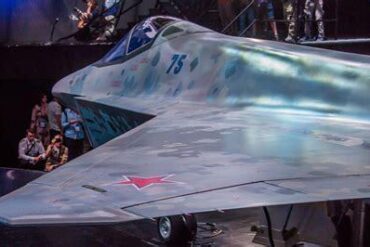
Serial production commenced in 2019 at the Komsomolsk-on-Amur Aircraft Plant, with deliveries to Russian forces beginning in 2020. By late 2023, Russia had produced more than twenty aircraft, with plans to expand its domestic fleet significantly by 2028. The export variant, designated Su-57E, was officially introduced during the 2019 MAKS air show, where it immediately attracted attention from international buyers seeking advanced fighter capabilities without Western procurement restrictions.
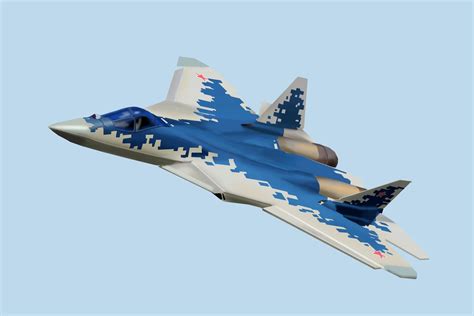
The export model retains most of the core technologies of Russia’s domestic version while incorporating configuration adjustments suitable for international clients. Algeria’s early adoption signals confidence in the aircraft’s performance potential and underscores the country’s willingness to invest heavily in advanced aerospace technologies.
Advanced Engineering and Performance Capabilities of the Su-57E
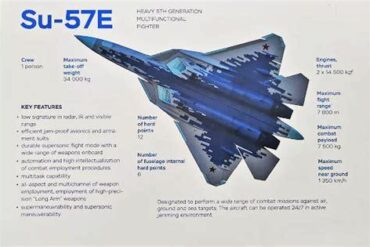
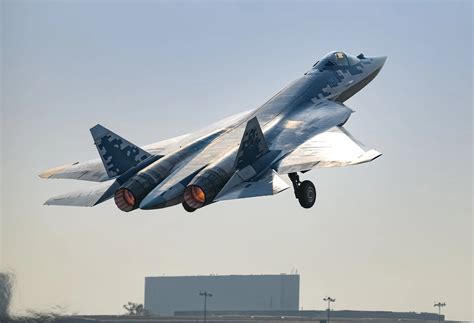
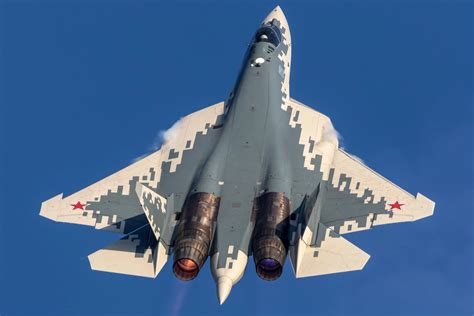
The Su-57E is engineered as a twin-engine multirole stealth fighter combining speed, agility, and survivability. Powered by two Saturn AL-41F1 turbofan engines, the aircraft generates approximately 142 kilonewtons of thrust per engine using afterburners. These engines incorporate three-dimensional thrust vectoring nozzles, enabling the fighter to execute extreme aerial maneuvers, including sustained high-angle-of-attack flight and load factors reaching 11g, a capability designed to outmaneuver adversaries in close-range dogfights.
The aircraft’s aerodynamic architecture features relaxed static stability, which improves agility but requires sophisticated digital fly-by-wire control systems to maintain stability. This combination allows the Su-57E to achieve speeds exceeding 2,500 kilometers per hour and operate at altitudes approaching 20,000 meters, providing both high-speed interception capabilities and superior high-altitude combat flexibility.
The fighter also incorporates extended operational range features. With an internal fuel capacity exceeding 11,000 kilograms, the aircraft achieves an unrefueled range of roughly 2,800 kilometers, which can be expanded significantly through aerial refueling operations. This endurance allows Algeria to conduct long-distance patrols across its expansive territory and surrounding maritime zones.
Sensor Fusion, Radar Dominance, and Network-Centric Warfare
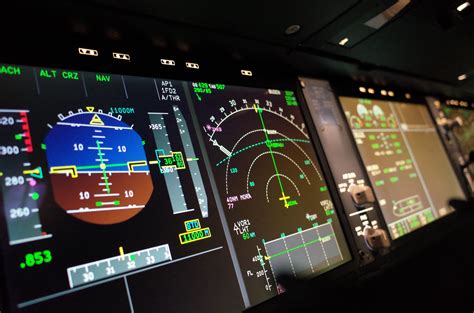
Central to the Su-57E’s battlefield effectiveness is the N036 Belka radar system, an advanced multi-band active electronically scanned array radar suite. The system includes an X-band radar located in the nose, complemented by additional side-looking radar arrays and L-band sensors embedded within the aircraft’s structure. This configuration enables the aircraft to detect and track multiple aerial and ground targets simultaneously while maintaining stealth effectiveness.
The radar architecture contains more than 1,500 transmit-receive modules, providing exceptional detection accuracy and electronic warfare resilience. Combined with infrared search and track systems, the aircraft can engage adversaries even when operating under heavy electronic countermeasures. These capabilities position the Su-57E as a sensor fusion platform, integrating radar, optical, and electronic intelligence into a unified operational picture for pilots.
The aircraft is also designed for network-centric warfare, enabling coordinated operations with unmanned systems such as the Russian S-70 Okhotnik combat drone. This manned-unmanned teaming concept allows the Su-57 to act as a command node directing drone-based reconnaissance or strike missions, expanding battlefield reach while minimizing pilot risk.
Weapons Integration and Multirole Combat Flexibility
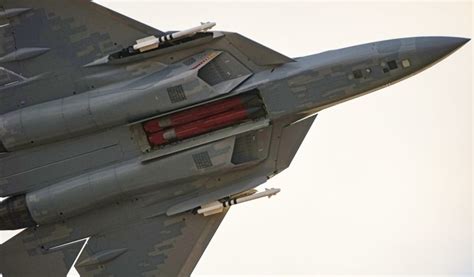
The Su-57E can carry a total weapons payload of up to 7,500 kilograms, distributed across internal weapons bays and external hardpoints. Internal carriage preserves stealth characteristics, allowing the fighter to conduct high-risk penetration missions while remaining difficult to detect. The aircraft supports advanced air-to-air missiles such as the R-77M beyond-visual-range missile and R-74M2 short-range missile, providing comprehensive aerial combat coverage.
For ground and maritime strike operations, the fighter integrates precision-guided weapons including the Kh-69 cruise missile, Kh-38 tactical missile, and Kh-58USHKE anti-radiation missile, designed to neutralize enemy radar systems. Guided bomb options such as the KAB-500 and UPAB-1500B-E expand its strike capabilities against hardened or fortified targets. The aircraft also retains a 30-millimeter internal cannon, offering close-range engagement flexibility during dogfights or ground attack operations.
The combination of stealth, precision strike weapons, and multi-domain operational flexibility allows the Su-57E to function as an air superiority platform, deep strike aircraft, and electronic warfare asset simultaneously, reflecting the doctrinal shift toward multi-mission fighter concepts.
Algeria’s Strategic Calculus and Regional Military Balance
Algeria’s decision to procure the Su-57E is closely tied to regional security dynamics, particularly its longstanding strategic competition with neighboring Morocco. Both countries have pursued extensive military modernization programs, and the introduction of a fifth-generation stealth platform provides Algeria with a technological advantage that may reshape the regional deterrence equation.
The aircraft’s arrival also reinforces Algeria’s ambition to maintain a leadership role within African defense modernization. By integrating stealth fighters into its air force, Algeria positions itself as a technological pioneer within the continent, potentially influencing future procurement trends among African and Middle Eastern nations seeking advanced air power capabilities.
The replacement of legacy MiG-25 interceptors further highlights Algeria’s transition from traditional high-speed interception doctrine toward information-dominant air combat, where sensor networks, stealth, and data integration define operational superiority rather than raw speed alone.
International Repercussions and CAATSA Sanction Risks
Algeria’s acquisition has drawn scrutiny from the United States, primarily due to the Countering America’s Adversaries Through Sanctions Act (CAATSA) enacted in 2017. The legislation mandates sanctions on countries engaging in significant transactions with Russia’s defense sector. Since the Su-57 program is developed and manufactured by companies such as Rostec and United Aircraft Corporation, both under existing U.S. sanctions, Algeria’s purchase potentially meets the threshold for punitive measures.
Potential consequences could include restrictions on financial transactions involving U.S. institutions, limitations on dollar-denominated trade, export licensing restrictions, and targeted sanctions against individuals or government entities involved in the procurement. The precedent established by sanctions against Türkiye following its S-400 missile purchase demonstrates how such measures can influence broader defense cooperation relationships.
However, Algeria’s relatively limited reliance on U.S. military equipment may reduce the immediate operational impact of potential sanctions. The country’s existing American-supplied assets primarily consist of C-130H transport aircraft and Bell 412 helicopters, representing a small portion of its overall defense inventory. Nevertheless, financial and diplomatic repercussions could still influence Algeria’s international defense partnerships and economic interactions.
Future Outlook for Algeria’s Fifth-Generation Air Power
The introduction of the Su-57E marks only the beginning of Algeria’s transition into next-generation air warfare capabilities. Continued pilot training, infrastructure development, and integration with existing aircraft fleets will determine the effectiveness of Algeria’s stealth fighter operations. The anticipated future integration of Russia’s Izdeliye 30 next-generation engine, currently undergoing testing, could further enhance performance, fuel efficiency, and stealth optimization.
Algeria’s investment demonstrates the growing global diffusion of fifth-generation fighter technology, once limited to a small group of major military powers. The move highlights how emerging defense partnerships and shifting geopolitical alignments are reshaping access to advanced aerospace technologies.
As Algeria continues to refine operational doctrine around its new stealth fighters, the country is likely to expand its role as a regional air power leader, influencing both military planning and strategic stability across North Africa and the Mediterranean basin. The Su-57E’s deployment signals the arrival of a new era in African military aviation, where stealth, digital warfare integration, and advanced aerospace engineering redefine the standards of aerial dominance.