Sweden has taken a decisive step to reinforce its national security posture by approving a $1.6 billion territorial air defense program aimed at protecting cities, critical infrastructure, and key mobilization nodes from modern aerial threats. The initiative marks a strategic shift in Swedish defense planning, expanding air defense coverage beyond deployed military units to include the civilian backbone that sustains national resilience during crisis and conflict.
The decision, announced on January 11, 2026, directs the Swedish Armed Forces to rapidly generate, train, and equip a new territorial short-range air defense capability. Valued at approximately SEK 15 billion, the program reflects a growing recognition that future conflicts will not be confined to traditional battlefields. Instead, they will increasingly target energy networks, transport hubs, communications infrastructure, and urban centers as a means of undermining societal cohesion.
This move underscores Sweden’s assessment that the evolving threat environment demands speed, adaptability, and geographic breadth in air defense. With an initial consolidated procurement order planned for the first quarter of 2026, followed by phased acquisitions, Stockholm is signaling urgency in closing gaps that have emerged as aerial threats become cheaper, more numerous, and more precise.
The program’s announcement places Sweden among a growing number of European nations rethinking homeland defense in light of recent conflicts. By prioritizing territorial protection, Sweden is reshaping its air defense architecture to ensure that civilian life, economic continuity, and military mobilization can endure under sustained aerial pressure.
A Strategic Pivot Toward Homeland Protection
At the heart of Sweden’s decision is a clear strategic pivot: air defense is no longer solely a military concern but a national one. The territorial air defense concept is designed to extend protective coverage to cities, bridges, power plants, rail hubs, and other infrastructure essential to wartime endurance and post-crisis recovery.
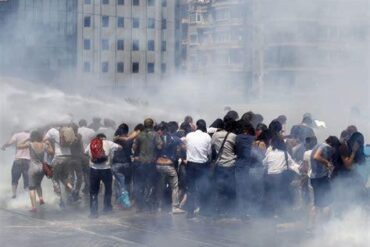
Defense Minister Pål Jonson, speaking at the Folk och Försvar security conference, emphasized that the program draws directly from lessons observed in Ukraine. The widespread use of drones, cruise missiles, and loitering munitions against civilian targets has demonstrated how air power can be leveraged to erode morale, disrupt daily life, and strain national resources without necessarily engaging frontline forces.
Sweden’s response reflects an understanding that societal resilience is now a core component of deterrence. By hardening civilian infrastructure against aerial attack, Stockholm aims to deny potential adversaries the strategic leverage gained through infrastructure sabotage and psychological pressure on the population.
Lessons from Ukraine Shape Swedish Defense Thinking
The war in Ukraine has become a defining reference point for European defense planning, and Sweden’s territorial air defense initiative is explicitly framed as a response to those lessons. Ukrainian cities have endured sustained campaigns involving drones, ballistic missiles, and cruise missiles, often aimed at power grids, heating systems, and transport networks rather than purely military targets.
Swedish policymakers have taken note of how even limited air defense coverage can dramatically reduce damage, preserve essential services, and complicate an attacker’s operational planning. Conversely, gaps in coverage have allowed relatively low-cost systems to inflict disproportionate economic and social harm.
By focusing on short-range air defense, Sweden is addressing the layer of the threat spectrum most frequently exploited against civilian targets. Drones and low-flying cruise missiles, in particular, require dense, responsive defenses capable of operating continuously and across wide geographic areas. The territorial air defense program is designed to meet this requirement through dispersion, modularity, and rapid deployment.
Structure of the Territorial Air Defense Units
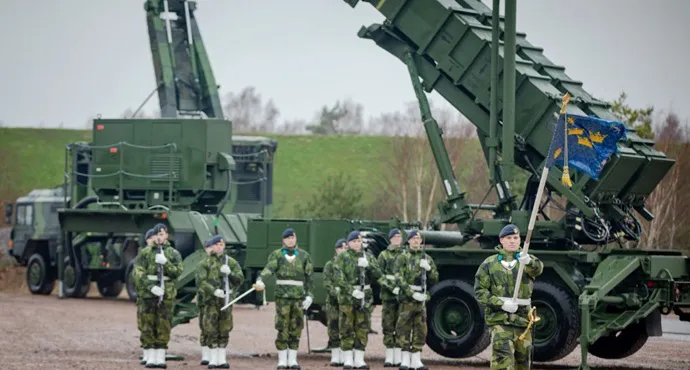
According to Swedish government descriptions, the new capability will be organized into multiple independent company-sized units. These units are intended to operate either as mobile formations or as geographically assigned elements responsible for protecting specific sites or regions.
The emphasis on comparatively simple and modular systems is deliberate. By avoiding overly complex architectures, Sweden aims to accelerate training, simplify logistics, and enable flexible combinations of sensors, weapons, and command systems. This modular approach allows the same unit framework to be adapted for urban defense, infrastructure protection, or support to mobilizing forces.
Gun-based air defense systems and a variety of radar options are explicitly mentioned as potential components. This suggests a layered approach within the short-range domain, combining kinetic firepower with precise sensing to counter everything from small drones to low-flying missiles. The ability to operate independently also ensures that the loss or degradation of one unit does not compromise the entire network.
Integration with Sweden’s Existing Air Defense Investments
The SEK 15 billion territorial program does not stand alone. It is integrated into a broader sequence of air defense investments totaling nearly SEK 40 billion over recent years. These include new medium- and short-range systems for maneuver brigades, man-portable air defense capabilities, expanded Patriot missile stocks, and counter-drone solutions incorporating electronic warfare.
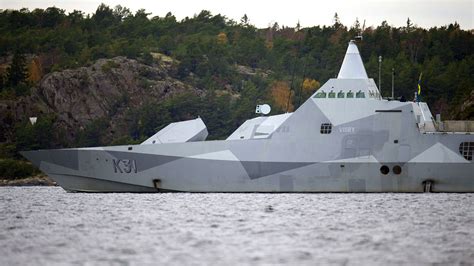
Sweden’s naval forces are also being drawn into this integrated air defense vision. The Visby-class corvettes and future Luleå-class surface combatants are slated to receive organic air defense systems, ensuring that maritime approaches and coastal infrastructure are protected as part of the same strategic framework.
This layered investment strategy reflects an understanding that air defense effectiveness depends on depth and redundancy. Territorial units provide localized protection, brigade-level systems offer maneuver support, and medium-range systems extend coverage over broader areas. Together, they form a resilient architecture capable of absorbing and responding to sustained aerial pressure.
Sensors and Radars as the Backbone of Coverage
Effective territorial air defense begins with persistent, high-quality sensing, and Sweden’s existing radar portfolio offers insight into how the new units may be equipped. Saab’s Giraffe 1X radar exemplifies the type of system well-suited to this role. Compact, lightweight, and capable of full-volume scanning every second, it delivers engagement-quality data against fast and slow targets alike.
With a total weight of less than 150 kilograms, the Giraffe 1X can be deployed on pickup-sized vehicles, trailers, helicopters, or fixed installations. This flexibility aligns closely with Sweden’s emphasis on modularity and rapid deployment. Its ability to detect drones and support counter-rocket, artillery, and mortar warning functions further enhances its utility in a territorial defense context.
By investing in such adaptable sensors, Sweden ensures that its air defense units can maintain situational awareness even in complex environments where civilian air traffic, terrain, and weather complicate detection.
Short-Range Interceptors for Point Defense
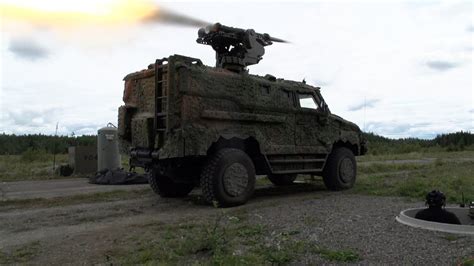
On the engagement side, systems like the RBS 70 NG illustrate the capabilities Sweden can draw upon. Using unjammable laser beam riding guidance and an automatic target tracker, the system is designed to remain effective in contested electronic environments where radio-frequency guidance might be disrupted.
With an effective range exceeding 9 kilometers and altitude coverage up to 5,000 meters, the RBS 70 NG is well-suited for point defense of sensitive sites. Its integrated thermal imager enables day-and-night operations, ensuring continuous protection regardless of lighting or weather conditions.
Such characteristics are particularly relevant for territorial defense, where systems must often operate autonomously for extended periods and counter threats that may appear with little warning.
Command and Control for Distributed Defense
Dispersed air defense units require robust command-and-control systems to function as a coherent whole. Sweden has already taken steps in this direction through recent contracts awarded to Saab by the Defence Materiel Administration (FMV). A SEK 2.1 billion order covers sensors and command systems for brigade-level ground-based air defense, including the LSS Lv command-and-control solution and additional Giraffe 1X radars.
These systems are designed to enable rapid data sharing, coordinated engagements, and integration with higher-level air defense layers. Deliveries scheduled for 2027 to 2028 will further strengthen Sweden’s ability to manage a distributed network of short-range defenses across its territory.
In the context of the territorial air defense program, such command infrastructure ensures that local units can operate independently when required while still contributing to a national air picture.
Complementing Medium-Range and Naval Air Defense
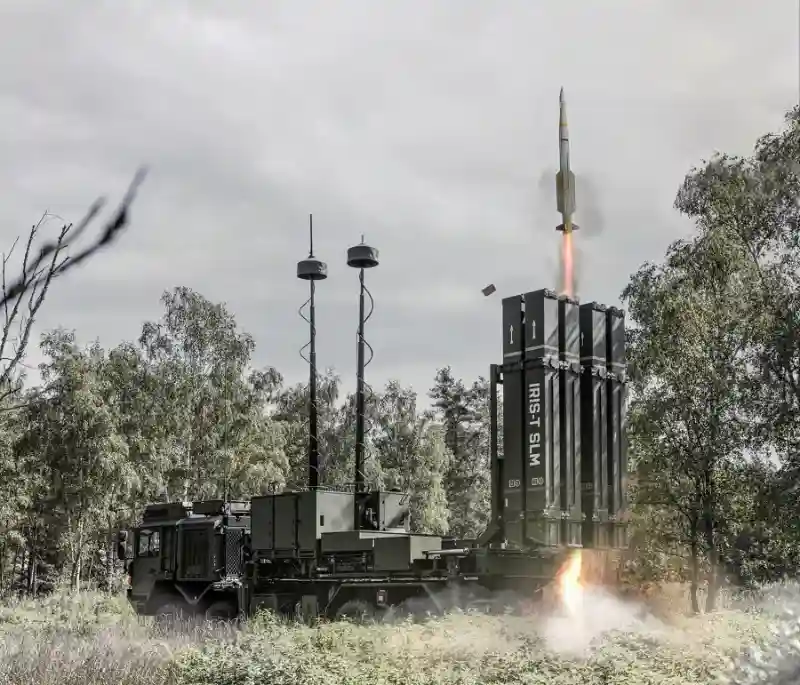
Sweden’s commitment to a multi-tiered air defense architecture is further reinforced by its procurement of the IRIS-T SLM system under the European Sky Shield Initiative. With engagement ranges of up to 40 kilometers and altitude coverage reaching 20 kilometers, IRIS-T SLM provides a critical intermediate layer between short-range point defenses and long-range systems like Patriot.
Naval modernization follows the same logic. The integration of MBDA’s Sea Ceptor system on Visby-class corvettes extends air defense coverage into the maritime domain, protecting sea lines of communication and coastal infrastructure from aerial threats.
Together, these investments ensure that Sweden’s territorial air defense units do not operate in isolation but as part of a seamless defensive continuum spanning land, sea, and air.
Civil-Military Coordination and Future Assessments
Recognizing that air defense alone cannot guarantee resilience, the Swedish government has tasked the Swedish Civil Defense Agency (MCF) and the Swedish Armed Forces with a joint assessment of current protection levels and future needs. This review will examine both active measures, such as interception capabilities, and passive measures, including shelters, redundancy, concealment, and repair preparedness.
Scheduled for delivery on February 16, 2026, the assessment is expected to guide further investment decisions and refine the balance between military and civil defense priorities. It reflects an understanding that protecting cities and infrastructure requires a holistic approach encompassing technology, planning, and societal preparedness.
A Signal of Strategic Resolve
Sweden’s approval of the $1.6 billion territorial air defense program sends a clear message about its strategic priorities in an increasingly contested security environment. By extending air defense coverage to the civilian heart of the nation, Stockholm is reinforcing deterrence, strengthening resilience, and acknowledging the realities of modern warfare.
The initiative represents more than a procurement decision. It is a statement that national defense begins at home, with the protection of people, infrastructure, and the systems that sustain daily life. As Europe continues to adapt to a transformed threat landscape, Sweden’s approach offers a compelling model for integrating military capability with societal security.