The Ground Proximity Warning System (GPWS) stands as one of the most transformative technological advances in the history of aviation safety. Developed to prevent Controlled Flight Into Terrain (CFIT) — one of the most fatal but preventable categories of aviation accidents — GPWS is now a legally mandated component in modern aircraft. Over time, this technology has evolved to include the Enhanced Ground Proximity Warning System (EGPWS), incorporating global terrain data and GPS, making it indispensable for both commercial and military aviation operations.
This article explores the origins, technological development, operational mechanics, and effectiveness of GPWS and EGPWS systems. We examine how they work, their limitations, and their impact on aviation safety standards globally.
The Origin of GPWS: A Response to Tragedy
In the late 1960s, aviation safety authorities grew alarmed by a disturbing trend: perfectly operational aircraft, flown by qualified crews, were crashing into terrain without distress signals or mechanical failure. These accidents, termed Controlled Flight Into Terrain (CFIT), often occurred in low visibility or at night.
The U.S. National Transportation Safety Board (NTSB) began investigations that revealed the lack of situational terrain awareness in cockpits. In 1974, based on these findings, the Federal Aviation Administration (FAA) required that all large turbine and turbojet aircraft be equipped with GPWS systems approved under Technical Standard Orders (TSO).
This move significantly lowered CFIT incidents in the United States. Canadian engineer C. Donald Bateman is credited with the invention of GPWS, and his contribution reshaped aviation safety protocols worldwide.
Understanding How GPWS Works
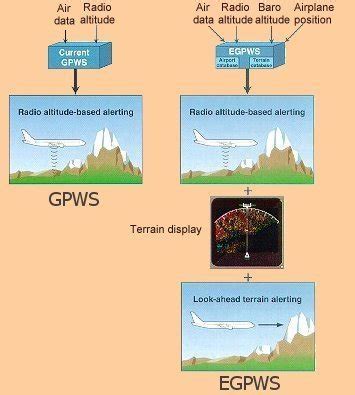
The original GPWS relied heavily on data from a radar altimeter to determine the aircraft’s height above the ground. Using this data, a flight computer analyzed descent rates and aircraft configuration to trigger audible and visual warnings for pilots.
The standard GPWS operates through several alert modes:
- Excessive descent rate (“SINK RATE” / “PULL UP”)
- Excessive terrain closure rate (“TERRAIN” / “PULL UP”)
- Unsafe terrain clearance (“TOO LOW – TERRAIN”, “TOO LOW – FLAPS”, “TOO LOW – GEAR”)
- Excessive deviation below glideslope (“GLIDESLOPE”)
- Altitude loss after takeoff (“DON’T SINK”)
- Bank angle warnings (“BANK ANGLE”)
- Windshear detection (“WINDSHEAR”)
These warnings occur in real-time and are designed to cut through the noise of the cockpit, especially during critical phases of flight such as approach and departure.
However, early GPWS had a critical blind spot: it could only assess terrain directly below the aircraft. This limitation meant it could not warn pilots in time when flying toward steep terrain or man-made obstacles ahead.
The Transition to EGPWS: From Reactive to Predictive Safety
To address these limitations, Enhanced GPWS (EGPWS) was developed in the mid-1990s. Unlike the original system, EGPWS integrates:
- Global Positioning System (GPS) data
- Worldwide terrain and obstacle databases
- Aircraft performance data
- Flight path prediction algorithms
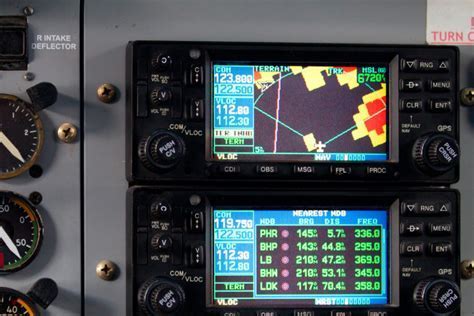
This enables look-ahead terrain avoidance, a major leap from the downward-only sensing capability of early GPWS. The Terrain Display gives pilots a real-time, color-coded map of surrounding terrain based on altitude threats. High terrain is marked red, marginally safe areas in yellow, and safe zones in green.
The Terrain Clearance Floor (TCF) function further improves performance during approach and landing, reducing CFIT incidents that occur during final descent when GPWS may incorrectly assume a safe landing configuration.
Real-World Incidents and Lessons from Failure
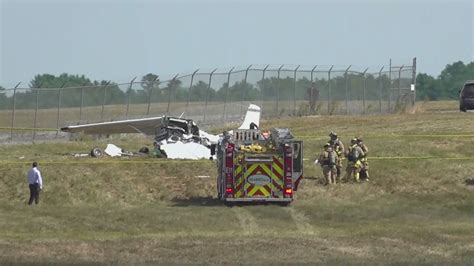
Despite its proven effectiveness, GPWS and EGPWS are not foolproof. Several high-profile accidents occurred even with warning systems on board, highlighting human error and system limitations.
For instance, Garuda Indonesia Flight 152 (1997) crashed into hilly terrain despite approaching the airport at the correct altitude. The GPWS failed to activate — a case attributed to a short circuit and possible equipment malfunction. Similarly, Air Force Tupolev Tu-154M (2010) crashed near Smolensk, Russia, due to landing at an airport not included in the TAWS database. Though the TAWS was active, it was ineffective without proper data.
In Poland’s CASA C-295M crash (2008), EGPWS alerts were manually disabled, and the crew lacked training to respond to the system warnings. These examples reveal the critical need for pilot training, system configuration integrity, and database updates.
Statistical Impact on Aviation Safety
The success of GPWS can be measured statistically. Before mandatory GPWS installations, large aircraft averaged 3.5 fatal CFIT incidents per year. After its implementation, that number dropped drastically. By 2006, the FAA reported zero passenger fatalities in CFIT crashes involving large U.S. jets for over three decades.
This technological intervention is a testament to how automation can compensate for human error, especially under high workload and stress in the cockpit.
Use in General Aviation and Smaller Aircraft
For piston-engine aircraft and small jets, GPWS or TAWS Type C systems are optional. However, manufacturers like AlliedSignal (now part of Honeywell) have developed compact EGPWS versions tailored for general aviation. While not mandated, their adoption is growing due to affordability and the increasing need for situational awareness in private flying.
However, without regulatory mandates, smaller aircraft remain vulnerable, especially in mountainous regions or under instrument flight rules (IFR).
Adaptation for Military Aviation
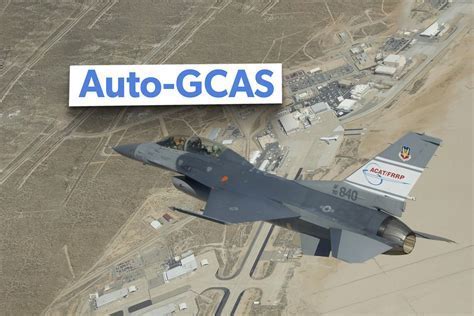
In military aviation, especially for aircraft operating at low altitude and high speed, traditional GPWS systems are insufficient. Instead, they rely on more complex versions, such as the Automatic Ground Collision Avoidance System (Auto-GCAS), which combines:
- Inertial Navigation Systems (INS)
- Digital terrain maps
- Flight Control System inputs
- Pilot blackout detection
In 2016, Auto-GCAS saved the life of an unconscious F-16 pilot during a steep dive. Detecting imminent terrain impact, the system automatically executed a recovery maneuver — a capability now standard in fighter aircraft like the Eurofighter Typhoon.
Localized Language Integration
Some nations, including Russia and Ukraine, have customized GPWS alerts to reflect native languages. For example, “Pull Up” becomes “Тяни вверх”, and “Terrain” becomes “Земля”. This localization enhances pilot response time in native-language environments and demonstrates how cultural factors influence avionics design.
Challenges and Future Development
Despite its success, GPWS faces ongoing challenges, including:
- Database limitations: New airports or temporary terrain features may not be included.
- System override: Pilots may disable warnings in error or due to misjudged false alarms.
- Urban development: High-rise buildings pose risks in areas previously safe.
Emerging solutions involve real-time data streaming, integration with Artificial Intelligence (AI) for predictive analytics, and cross-system communication with TCAS (Traffic Collision Avoidance System) for complete situational awareness.
Conclusion
The Ground Proximity Warning System and its enhanced successor EGPWS have drastically reduced aviation fatalities by preventing CFIT incidents — once among the deadliest categories of air travel accidents. Through continual evolution, these systems have proven indispensable across both civilian and military aviation sectors.
As technology advances and flight environments grow more complex, GPWS remains a cornerstone of airborne safety, demonstrating how innovation, when matched with regulation and training, can save countless lives.
FAQs
What is the primary difference between GPWS and EGPWS?
The main distinction lies in their terrain awareness capabilities. GPWS only uses radar altimeter data to detect threats directly beneath the aircraft, while EGPWS incorporates GPS, digital terrain databases, and flight path prediction to anticipate terrain collisions well ahead of the aircraft.
Why do some CFIT accidents still occur despite GPWS?
Failures occur due to disabled systems, outdated databases, or pilot error. In some cases, airports are missing from TAWS databases. In others, the system may be ignored, misunderstood, or not configured properly. Pilot training and regular system maintenance are critical to effectiveness.
Is GPWS required in all aircraft?
No. FAA regulations require GPWS or TAWS only in turbine-powered aircraft with six or more passenger seats. Piston-engine aircraft are exempt, although optional TAWS Type C equipment is available and increasingly recommended for general aviation safety.