The Federal Aviation Administration (FAA) has announced $1.776 billion in airport improvement grants, marking one of the largest recent investments in U.S. aviation infrastructure as the nation celebrates America250. Revealed by Transportation Secretary Sean Duffy on July 2, the funding package will support airports across 46 states, accelerating runway rehabilitation, terminal improvements, taxiway construction, safety enhancements, and projects designed to improve the passenger experience. The initiative reflects a broader federal effort to modernize America’s aviation network while preparing airports for decades of future growth.
The funding arrives during nationwide commemorations linked to the 250th anniversary of the Declaration of Independence, giving the announcement symbolic importance beyond infrastructure spending. Federal officials emphasized that the investment represents a commitment not only to rebuilding aging facilities but also to creating airports capable of supporting rising passenger demand, stronger operational resilience, and more efficient air transportation. Rather than focusing solely on large international hubs, the grants are spread across airports serving communities of varying sizes, reinforcing the importance of a connected national aviation system.
Transportation Secretary Sean Duffy described airport modernization as a cornerstone of what the Department of Transportation calls the Golden Age of Transportation, highlighting that airports remain essential economic engines for regional development, tourism, cargo transportation, and business connectivity. By moving grant approvals more quickly, federal authorities hope projects can begin sooner, minimizing delays while delivering long-term improvements to infrastructure that millions of travelers rely upon every year.
FAA Prioritizes Faster Airport Modernization Across America
FAA Administrator Bryan Bedford stressed that the latest grants extend well beyond resurfacing runways or replacing pavement. According to the agency, the investment is intended to modernize the overall travel experience by improving safety, operational efficiency, and passenger convenience. Better taxiways reduce aircraft congestion on the ground, upgraded lighting enhances visibility during adverse weather, and terminal improvements provide a more comfortable environment for families and travelers. Collectively, these projects strengthen airport capacity while preparing facilities for increasing airline operations over the coming decades.
The funding is distributed through the Airport Improvement Program (AIP), which traditionally allocates resources based on passenger activity, aircraft operations, and infrastructure priorities. This approach allows airports with the greatest operational demands to receive funding while ensuring that smaller communities also benefit from critical safety and maintenance projects.
Denver, Boise And Other Major Airports Receive Significant Investments
Among the largest individual awards, Denver International Airport (DEN) will receive more than $88.8 million for extensive pavement rehabilitation projects. As one of the world’s busiest airports, Denver continuously invests in maintaining its expansive runway system, and the latest funding will help preserve operational reliability while supporting future traffic growth.
Boise Air Terminal and Gowen Field are together receiving approximately $74 million to redevelop airport infrastructure, including runway rehabilitation, apron expansion, and upgraded visual guidance lighting systems. These improvements will strengthen both commercial and military aviation activities while increasing safety for flight operations.
Baltimore/Washington International Thurgood Marshall Airport (BWI) has been awarded $62.4 million for runway rehabilitation and lighting upgrades, while Houston Hobby Airport (HOU) will receive $62.2 million dedicated to runway construction projects. Meanwhile, New York John F. Kennedy International Airport (JFK) is set to receive $47.6 million supporting taxiway construction and reconstruction of aircraft rescue and firefighting facilities, enhancing emergency preparedness alongside operational efficiency.
Further south, Orlando International Airport (MCO) will benefit from $36 million for terminal rehabilitation, taxiway improvements, and upgraded lighting systems. On the West Coast, Oakland International Airport (OAK) has secured $28.1 million for taxiway rehabilitation designed to improve aircraft movements while reducing maintenance requirements over the long term.
Airport Investments Build Upon Broader FAA Infrastructure Strategy
The latest airport grants complement several major aviation investments already announced this year. Earlier, the Department of Transportation committed up to $800 million toward replacing aging air traffic control towers and terminal radar approach control facilities. At the same time, the federal government continues overseeing a broader $12.5 billion modernization program focused on replacing radios, radar systems, voice switches, and other essential air traffic control technologies throughout the United States.
Congress has also continued expanding support for aviation infrastructure. The House Appropriations Committee recently approved fiscal year 2027 funding that includes up to $4 billion for Airport Improvement Program grants, alongside additional allocations supporting supplemental airport projects and contract tower operations. Together, these initiatives illustrate a long-term federal commitment to strengthening every layer of America’s aviation network, from airport terminals and runways to the technology guiding aircraft safely through increasingly crowded skies.
America250 Provides Momentum For The Next Generation Of U.S. Aviation
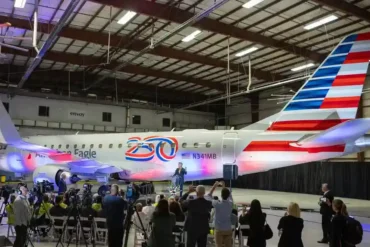
The airport funding announcement coincides with a series of America250 celebrations across the country, where airlines and airports have introduced commemorative aircraft liveries, special passenger experiences, and aviation-themed tributes recognizing the nation’s milestone anniversary. While these celebrations capture public attention today, the newly announced FAA grants will leave a far more enduring legacy. Over the coming years, upgraded runways, expanded taxiways, modernized terminals, and enhanced safety infrastructure will improve operational reliability, reduce delays, and create a stronger aviation system capable of supporting America’s continued economic growth well beyond its 250th year.