Ukraine’s accelerating dialogue with key European defense partners has reached a strategically sensitive point, as talks with Sweden now explicitly touch on the possible transfer of Meteor beyond-visual-range air-to-air missiles, one of Europe’s most capable aerial weapons. Discussions in Kyiv between Ukrainian Defense Minister Mykhailo Fedorov and Swedish Defense Minister Pål Jonson were framed publicly as part of a broad security assistance package, but the subtext is unmistakable: Sweden is weighing options that could reshape the air domain of the war by directly challenging Russian tactical aviation.
These talks arrive at a moment when airpower, rather than ground maneuver, increasingly defines the tempo of operations. Russian forces have adapted by leaning heavily on stand-off glide bombs and protected strike corridors, while Ukraine seeks tools that can raise the cost of these tactics. The potential introduction of Meteor missiles, especially in combination with Saab Gripen fighters, points toward a deliberate attempt to close that gap.
The Swedish-Ukrainian discussions are notable not just for what systems were mentioned, but for how they were framed. Ukrainian officials emphasized a blend of near-term battlefield enablers and longer-term industrial cooperation, signaling that Stockholm’s support may extend beyond deliveries toward structural reinforcement of Ukraine’s defense ecosystem.
Strategic Context: Why Sweden’s Role Matters Now
Sweden’s defense posture has undergone a profound transformation since Russia’s full-scale invasion of Ukraine. Once defined by non-alignment, Stockholm now operates as an assertive European security actor, increasingly comfortable with providing advanced capabilities rather than symbolic aid. The Kyiv talks reflect this shift clearly.
According to Ukraine’s Ministry of Defense, the agenda included Saab-produced air defense systems, modern radars, electronic warfare tools, and multiple classes of drones. These elements address immediate operational pressures, particularly Russia’s use of cruise missiles, Shahed-type drones, and electronic attack. Yet the aviation component stands apart. Discussions around Gripen fighters and Meteor missiles elevate the conversation from defense reinforcement to airspace contestation.
This matters because Sweden controls a rare combination of assets: a modern combat aircraft designed for dispersed operations and a missile optimized to dominate long-range aerial engagements. Few European states can offer both, and fewer still are politically willing to consider their transfer into an active high-intensity conflict.
Meteor Missile: The Weapon Behind the Signal
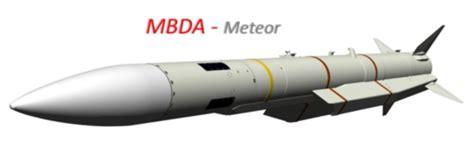
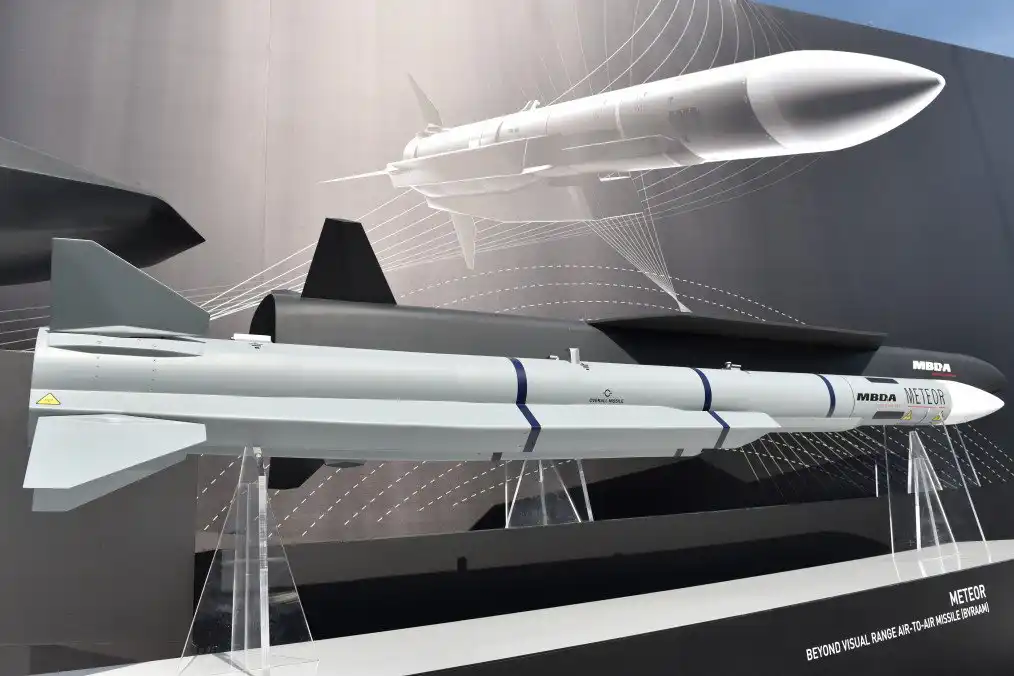
The Meteor is not simply another air-to-air missile; it is a system designed to solve a specific problem in modern air combat. Developed by MBDA through a multinational European program involving the United Kingdom, Germany, Italy, France, Sweden, and Spain, Meteor was engineered to outperform legacy missiles in the most demanding engagement scenarios.
Unlike conventional solid-fuel rockets that burn out early in flight, Meteor uses a solid-fuel variable-flow ducted rocket, often described as a ramjet-like propulsion system. This design allows the missile to sustain thrust throughout much of its flight, preserving speed and maneuverability deep into the engagement envelope. In practical terms, this dramatically expands the missile’s No Escape Zone, the region in which a target aircraft cannot reliably evade interception.
Open-source assessments commonly cite speeds exceeding Mach 4 and engagement ranges that can surpass 200 kilometers, depending on altitude and launch conditions. More importantly, Meteor retains lethal energy at the far end of its range, where traditional missiles often arrive depleted and easier to evade.
Guidance, Networking, and Modern Air Combat
Meteor’s lethality is amplified by its guidance architecture. The missile employs inertial navigation during the mid-course phase, supported by a two-way datalink that allows in-flight updates from the launching aircraft. In the terminal phase, an active radar seeker takes over, enabling autonomous homing even against maneuvering targets.
This combination enables flexible tactics that are particularly relevant to Ukraine’s situation. Fighters can launch from outside immediate threat zones, update the missile while maneuvering defensively, and disengage earlier if needed. In more advanced concepts, third-party sensors such as ground-based radars or airborne early warning platforms can contribute targeting data, turning Meteor into a node within a broader networked kill chain.
Physically, the missile remains compact enough for multi-platform integration. At roughly 3.7 meters in length, with a diameter of 178 millimeters and a launch weight around 190 kilograms, Meteor fits comfortably on modern European fighters. It is already operational on the Eurofighter Typhoon, Dassault Rafale, and JAS 39 Gripen, with integration underway for the F-35 and South Korea’s KF-21.
Ukraine’s Air War Problem: Stand-Off Bombing and Limited Reach
The relevance of Meteor becomes clearer when viewed against the current air war over Ukraine. Russian tactical aircraft such as the Su-34 and Su-35 increasingly rely on guided glide bombs, launched from distances designed to stay beyond the reach of Ukrainian surface-to-air missile systems. This approach reduces aircraft losses while maintaining pressure on Ukrainian defenses and logistics nodes.
Ukraine’s existing air-to-air capabilities, though improved since 2022, still struggle to impose consistent risk on these strike platforms at extended ranges. As a result, Russian aircraft can operate within relatively predictable corridors, protected by escorts, jammers, and distance.
A Meteor-equipped Ukrainian fighter force would not automatically reverse this balance, but it would complicate Russian planning. Long-range interception threats would force Russian pilots to fly lower, alter routes, commit more escorts, or accept higher exposure to air defenses. Each adjustment carries cost, friction, and risk.
Gripen and Meteor: A Synergistic Combination
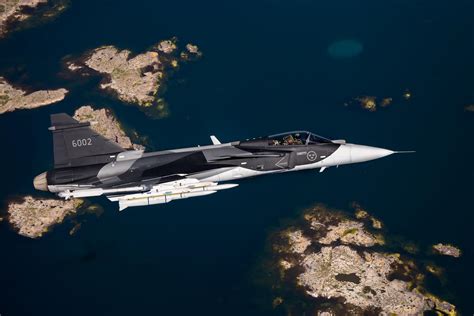
While the Meteor missile often captures headlines, its potential impact is closely tied to the platform that carries it. The Saab JAS 39 Gripen was designed from the outset for operations under austere conditions, with rapid turnaround times and dispersed basing. These characteristics align closely with Ukraine’s operational realities.
Gripen’s advanced radar, electronic warfare suite, and data fusion capabilities are well-suited to exploiting Meteor’s strengths. The aircraft’s ability to operate from shorter runways and improvised bases enhances survivability, a critical factor given Russia’s persistent strikes on Ukrainian airfields.
The combination of Gripen and Meteor would allow Ukraine to field a highly selective air denial capability, rather than attempting broad air superiority. This distinction matters. Air denial focuses on making enemy operations costly and uncertain, rather than controlling the entire airspace, and is often more achievable under resource constraints.
Beyond Hardware: Industrial and Political Dimensions
Sweden’s discussions with Ukraine extend beyond immediate transfers. Ukrainian officials highlighted talks on financial contributions to Ukraine’s defense-industrial base and potential joint production initiatives involving Ukrainian technologies on Swedish territory. This approach reflects a broader European shift toward resilience and sustainability, rather than one-off deliveries.
Producing or assembling components outside Ukraine reduces vulnerability to Russian strikes while integrating Ukrainian innovation into European supply chains. For Sweden, this offers strategic depth and long-term industrial relevance. For Ukraine, it provides continuity, scale, and political anchoring within Europe’s defense architecture.
Politically, a Meteor transfer would carry weight far beyond its numbers. It would signal that European states are increasingly willing to provide capability-shaping systems, not just defensive stopgaps. For Moscow, such a move would further erode assumptions about Western self-restraint. For NATO’s eastern flank, it would reinforce deterrence by demonstrating that advanced air combat capabilities are part of the collective response to prolonged instability.
Implications for the Air War Ahead
The potential transfer of Meteor missiles does not promise immediate dominance, nor does it eliminate Ukraine’s structural challenges in training, maintenance, and force generation. Yet its significance lies in changing expectations. Air warfare is as much about perception and planning as it is about attrition, and Meteor’s presence would inject uncertainty into Russian air operations.
By threatening launch platforms rather than just intercepting incoming weapons, Ukraine could shift from reactive defense toward proactive disruption. Even limited quantities of such missiles, employed selectively, could force Russia to adapt in ways that ripple across the battlefield.
In that sense, the Sweden–Ukraine talks represent more than another aid package. They hint at a maturing strategy in which advanced European capabilities are leveraged to impose systemic costs, not just tactical fixes. If Meteor becomes part of Ukraine’s arsenal, it will mark a quiet but profound escalation in the contest for control of the air.