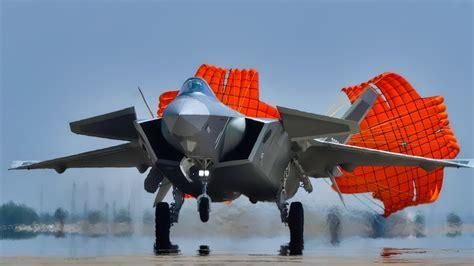
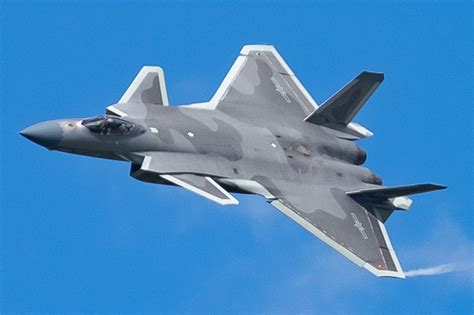
Egypt is quietly sustaining dialogue with China over the Chengdu J-20 stealth fighter, not as a rushed procurement, but as a calibrated geopolitical instrument. The discussions, now described by informed defense circles as being in a “containment phase,” are designed to remain alive without triggering contractual commitments or irreversible diplomatic consequences. This posture reflects Cairo’s long-standing preference for strategic ambiguity, a doctrine refined over decades of balancing great-power relationships while preserving operational autonomy inside its armed forces.
At its core, the J-20 dialogue is less about immediate acquisition and more about option preservation. Egypt’s air force leadership understands that future air combat will be defined by low observability, sensor fusion, and survivability against layered air defenses. By keeping the J-20 conversation technically open, Egypt signals that it is unwilling to accept structural limitations on its modernization path, even under sustained external pressure.
The talks themselves are not new. Contacts between Egyptian and Chinese defense officials regarding fifth-generation capabilities have circulated since at least 2019. What has changed is the strategic environment. Regional air forces are moving rapidly toward advanced platforms, while supply chains and weapons access have become increasingly politicized. In this context, Egypt’s choice to pause rather than abandon the J-20 track reflects disciplined statecraft rather than indecision.
The current arrangement allows Cairo to manage visibility and timing. No delivery schedules, basing plans, or training pipelines have been activated. Instead, the dialogue functions as a strategic placeholder, maintaining leverage with all partners while deferring exposure to sanctions or diplomatic retaliation.
Strategic Containment, Not Cancellation
Defense reporting indicates that Egypt and China have deliberately structured the talks to avoid escalation. This containment model preserves technical engagement while slowing political momentum. It mirrors earlier cycles observed in 2024 and 2025, when discussions advanced, stalled, and were recalibrated without formal closure. Such patterns are consistent with Cairo’s broader procurement philosophy, which favors reversible steps over binary decisions.
Financial considerations also shape this approach. With per-unit estimates for the J-20 frequently cited between $100 million and $110 million, acquisition would represent a significant capital commitment, compounded by infrastructure, training, and sustainment costs. Even without signing a contract, the platform serves Egypt as a benchmark against which other offers can be evaluated, particularly when negotiating upgrade access or weapons integration with Western suppliers.
Parallel discussions over the Chengdu J-10C reinforce this logic. The J-10C, a mature 4.5-generation fighter with AESA radar and modern electronic warfare systems, represents a politically less sensitive entry point into Chinese aerospace ecosystems. Its consideration underscores that Egypt’s interest lies not in symbolic gestures, but in building diversified capability ladders that reduce dependence on any single supplier.
U.S. Pressure and the Sanctions Shadow
Washington’s opposition to a Chinese fifth-generation fighter entering Egypt’s inventory has been consistent and explicit. U.S. officials have framed their concerns around interoperability risks, regional balance implications, and exposure under the Countering America’s Adversaries Through Sanctions Act (CAATSA). These warnings intensified through 2025 and crystallized into concrete deterrence messaging by early 2026.
For Egypt, the consequences of triggering CAATSA are not abstract. They could affect financing channels, sustainment support for existing fleets, approval of advanced munitions, and future modernization permissions. The Egyptian Air Force remains heavily invested in U.S.-origin platforms, particularly the F-16, making abrupt rupture strategically irrational.
Yet pressure has not produced capitulation. Instead, it has pushed Cairo toward a more sophisticated bargaining posture. By delaying rather than cancelling the J-20 track, Egypt keeps the cost of U.S. inflexibility visible without crossing red lines.
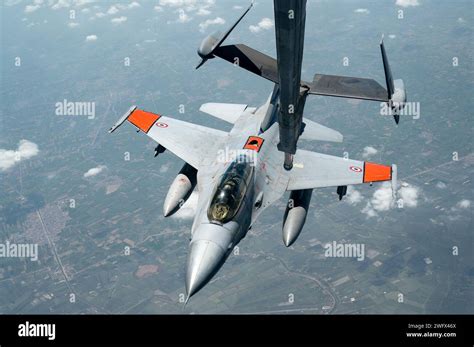
Sequencing Through the J-10C Pathway
One plausible pathway under discussion involves sequencing Chinese integration through the J-10C before any stealth platform consideration. Estimates suggest a potential batch of up to 40 J-10Cs, possibly replacing older F-16 Block 30 aircraft. Such a move would introduce Chinese logistics, training standards, munitions handling, and ground support processes into the Egyptian system without the political shock associated with a fifth-generation transfer.
This approach offers multiple advantages. It allows Egypt to evaluate Chinese sustainment reliability, simulator quality, and electronic warfare interoperability under operational conditions. It also lays the groundwork for compatible command-and-control architectures and data handling practices, which are prerequisites for any future stealth deployment.
From Beijing’s perspective, patience serves long-term interests. Preserving dialogue, even at low intensity, keeps the door open to eventual high-end exports while avoiding confrontation with Washington over a single transaction.
The Western Counter-Offer Takes Shape
The U.S. response has not been purely coercive. It has also been transactional. Reports point to a substantial incentive package designed to anchor Egypt firmly within Western defense pipelines. Central to this offer is a $4.67 billion NASAMS 3 air defense package, enhancing Egypt’s layered air and missile defense capabilities.
Equally significant is the proposed modernization of more than 200 Egyptian F-16s toward a Block 70/72-style configuration, including APG-83 AESA radars. Cost estimates for this effort range around $2.5 billion, representing a major capability uplift without introducing new airframe types. Access to the AIM-120D long-range air-to-air missile, long sought by Cairo, adds further weight to the offer.
At the high end, the F-15EX is positioned as a deterrent to Chinese stealth acquisition. A potential order of 24 to 36 aircraft would give Egypt a heavy fighter with exceptional payload and range, though without the low observability of a fifth-generation design.
Leveraging Multipolar Options
Egypt’s strategy extracts value from both sides. From Washington, it gains near-term upgrades, air defense reinforcement, and advanced munitions. From Beijing, it retains a credible alternative that can be reactivated whenever approvals stall or conditions tighten. This leverage is reinforced through joint exercises, simulator familiarization, and ongoing military-to-military engagement.
Financial diplomacy also plays a role. Exploration of BRICS-aligned mechanisms, including potential currency swap arrangements, reflects Cairo’s interest in reducing exposure to dollar-dominated banking systems should sanctions risks escalate. These measures do not eliminate vulnerability, but they widen maneuvering space.
The Geostrategic Weight of a Small J-20 Fleet
Even a limited introduction of 12 to 24 J-20s would carry disproportionate strategic impact. With an estimated combat radius approaching 2,000 kilometers, the aircraft could project power across the Eastern Mediterranean, Red Sea, and parts of the Arabian Peninsula from bases deep inside Egypt. Such reach reduces reliance on aerial refueling and complicates adversary planning.
For neighboring air forces operating F-16s, Rafales, Eurofighters, or F-15 variants, the presence of a stealthy long-range interceptor alters early warning assumptions. The J-20’s emphasis on high-altitude, long-range engagement challenges air policing models built around detect-and-react timelines.
Capability Profile and Regional Implications
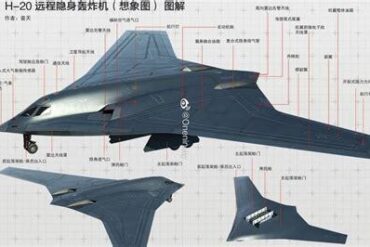
The J-20 is optimized for air superiority rather than multirole strike. Its large internal fuel volume and internal carriage of long-range missiles such as the PL-15, often assessed with engagement ranges exceeding 150 kilometers, enable early engagement from standoff distances. This contrasts with platforms like the F-35, which prioritize sensor fusion, strike versatility, and network-centric operations.
An Egyptian J-20 squadron would not negate the F-35’s strengths, but it would force opposing planners to adapt. Earlier detection, defensive maneuvering, and heavier reliance on support assets such as tankers and airborne early warning aircraft would become necessary. In regional terms, the signal would be strategic rather than numerical: Egypt would be seen as possessing a high-end counter-air tool capable of contesting airspace in new ways.
Ultimately, the persistence of J-20 talks is about strategic signaling. Egypt is communicating that its modernization is non-negotiable, its partnerships are flexible, and its options remain open. In a region where airpower defines deterrence, keeping that signal alive may be as important as any aircraft delivery itself.