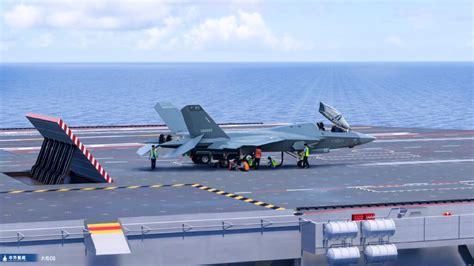
After years of anticipation and progressive development, China’s fifth-generation J-35 stealth fighter jet appears poised for full integration into naval service, marking a substantial leap in the People’s Liberation Army Navy (PLA-N)’s maritime air capabilities. With new images confirming carrier-based versions bearing navy insignias, China is edging closer to operationalizing a dual-stealth fighter fleet—joining an elite club currently occupied solely by the United States.
New Imagery Confirms J-35 Nearing Carrier Operational Status
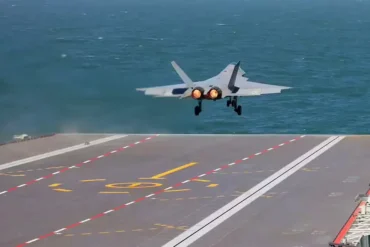
Freshly surfaced images on Chinese social media platform Weibo showcase two J-35 fighters flying in close formation, displaying distinct serial numbers “0011” and “0012” alongside unmistakable “Chinese navy” markings and the Flying Shark insignia on their tails. The visual cues, including blue-helmeted pilots—a feature seen with frontline naval aviators operating the J-15—underscore an advanced stage of naval integration.
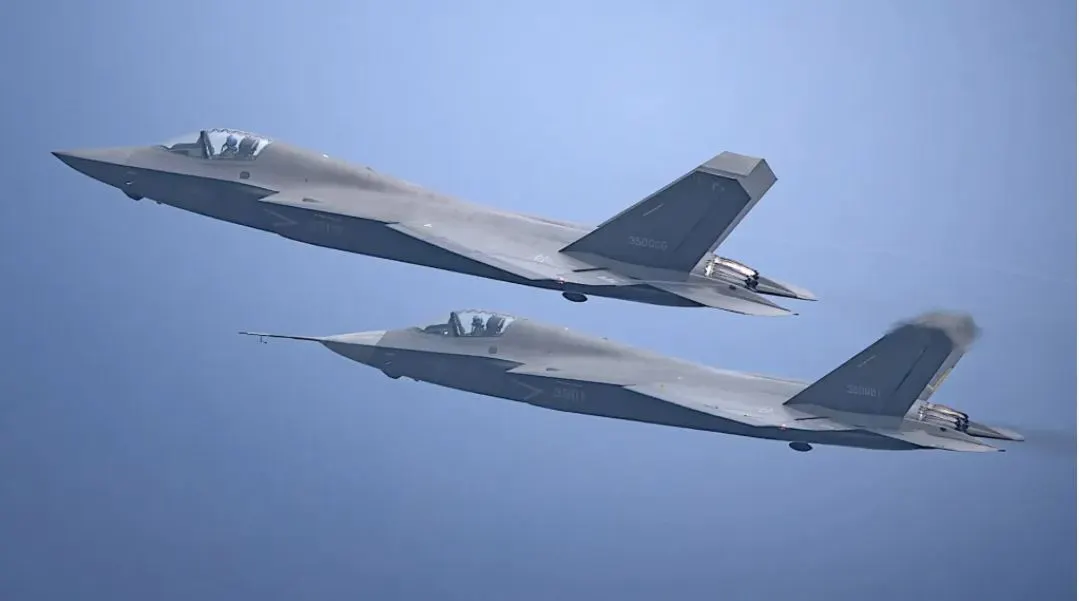
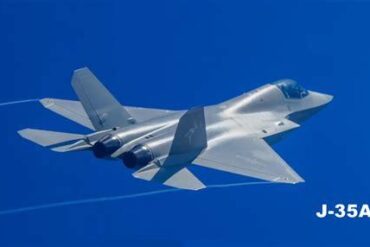
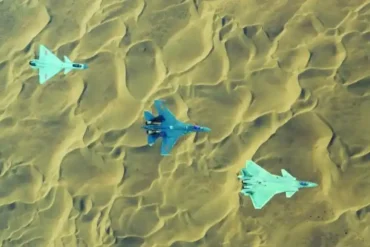
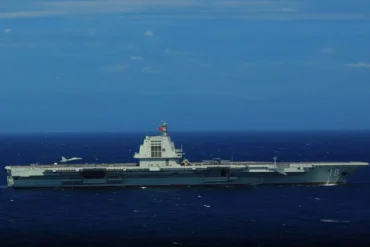
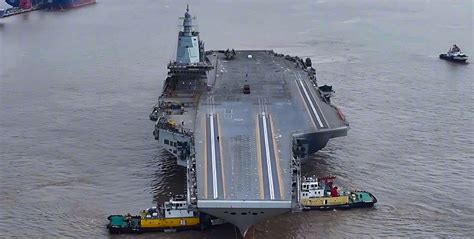
The sighting follows a previous wave of images showing land-based J-35A variants operating in conjunction with the J-20 Mighty Dragon and the J-16D electronic warfare aircraft. Experts now believe these carrier-capable J-35s are production models preparing for deployment aboard the Type 003 aircraft carrier Fujian, which has already completed multiple sea trials.
A Leap Forward for Carrier-Based Stealth Power
According to former PLA instructor Song Zhongping, the presence of navy-specific markings and operational flight characteristics strongly indicates that the J-35 has entered limited service and production, likely undergoing final evaluations aboard the Fujian. Song emphasized that these developments represent a “critical advancement” in PLA-Navy’s combat preparedness, stating:
“The Flying Shark insignia confirms the J-35 has joined the navy’s carrier aviation force. It indicates the aircraft may have been in active service and is building combat and logistical support capabilities.”
The absence of traditional pitot tubes, typically used during early prototype and test flight stages, further supports the notion that these aircraft have exited the prototype phase and entered full production.
J-35’s Role on the Fujian: Game-Changer for PLA Navy
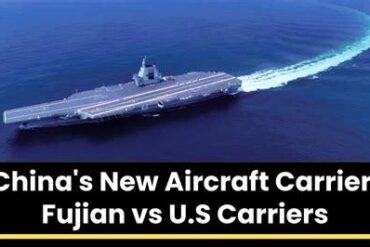
The Type 003 Fujian aircraft carrier, China’s largest and most advanced warship, is designed with electromagnetic catapult systems (EMALS)—a transformative feature enabling the launch of heavier, stealthier, and more capable aircraft such as the J-35. The aircraft carrier has already completed eight successful sea trials and is expected to become operational by the end of the year.
With the J-35’s induction, the Fujian is poised to field China’s most formidable air wing to date, surpassing legacy systems onboard the Liaoning and Shandong carriers, which still rely on ski-jump configurations that limit launch payload and aircraft weight.
Not only will the J-35 replace the aging J-15 (based on the Soviet Su-33), but its stealth characteristics, improved avionics, and extended range will provide the PLA Navy with unmatched regional reach and survivability in contested maritime environments.
J-35 vs J-35A: Key Design Differences Highlight Naval Prioritization
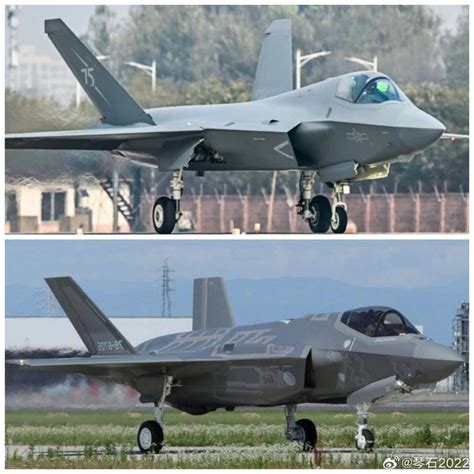
While both land- and carrier-based versions stem from the Shenyang FC-31 “Gyrfalcon” prototype, the J-35 and J-35A exhibit important technical distinctions. Andreas Rupprecht, a leading Chinese military aviation analyst, notes that the carrier-based J-35 features a completely different exhaust nozzle configuration—likely to reduce heat signatures and increase stealth effectiveness during carrier operations.
Further differences include:
- Structural reinforcement for carrier launches and arrested recoveries
- Larger wing area and tailhook integration
- Enhanced corrosion protection for maritime environments
- Redesigned landing gear and nose section to accommodate naval operations
PLA’s Stealth Fighter Strategy: Dual Platforms, Maximum Impact
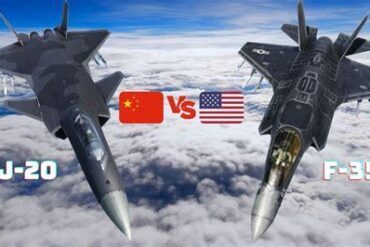
If the reports are confirmed, China would become the second country after the United States to field two distinct fifth-generation stealth fighters—J-20 for air dominance and J-35 for carrier operations. This development represents a fundamental shift in China’s aerial warfare doctrine.
- J-20 Mighty Dragon: Long-range air superiority and precision strike
- J-35 Flying Shark: Carrier-based multirole stealth capability
Both platforms have been seen operating in tandem during combat readiness drills and parade rehearsals, suggesting the emergence of a joint-force capability that blends stealth, electronic warfare, and network-centric operations.
J-35 Sightings and Production Clues from Zhuhai to CCTV
The first public appearance of the J-35A occurred during the Zhuhai Airshow in 2024, but the carrier-based J-35 has not yet been officially showcased. Nonetheless, various leaks and state media broadcasts have provided mounting evidence of its development trajectory.
A CCTV segment earlier this year revealed two green-primed J-35 airframes at a production facility, indicating early-stage manufacturing before final painting. These “behind-the-scenes” glimpses strongly indicate mass production ramp-up, which would align with projected timelines for deployment on the Fujian.
Additionally, J-35s were recently spotted flying alongside early warning aircraft and J-20s during rehearsals for the September 3 parade to commemorate the 80th anniversary of the end of World War II. These multi-platform integrations demonstrate the PLA’s emphasis on joint operations readiness.
Strategic Implications in the Indo-Pacific Theater
The emergence of the J-35 as a viable carrier-based stealth platform carries significant strategic consequences for the Indo-Pacific region. With growing tensions over Taiwan and the South China Sea, China’s ability to project airpower from blue-water carriers puts increased pressure on regional powers including:
- Japan: Currently expanding its own F-35B fleet for carrier deployment
- India: Operating INS Vikrant with MiG-29Ks but planning indigenous TEDBF stealth jets
- Philippines & Vietnam: Increasing defense ties with the U.S. and Australia
- United States: Continues Pacific Force posture via F-35Cs aboard Nimitz- and Ford-class carriers
With its dual stealth platforms, advanced carriers, and improving aerial refueling infrastructure, the PLA-N is positioning itself as a formidable blue-water force, capable of operating far beyond its traditional coastal defense perimeter.
The Road Ahead: Formal Induction and Beyond
As the countdown begins to the September 3 military parade, many expect an official unveiling and possibly even the first public carrier-deck takeoff of the J-35. The aircraft is anticipated to participate alongside:
- J-35A land-based stealth fighters
- Twin-seat J-20S variants
- Upgraded J-15T fighters
- New AEW&C platforms and drones
Military observers argue that the upcoming parade and subsequent Fujian carrier deployments could mark a turning point in China’s military aerospace capability—putting it on par, if not ahead, of traditional Western carrier aviation strategies.
Regardless of the exact timeline of formal induction, the implications are crystal clear: China’s J-35 is not just an aircraft—it is a strategic statement. One that signals Beijing’s intent to dominate the air over its maritime frontiers with stealth, speed, and staying power.