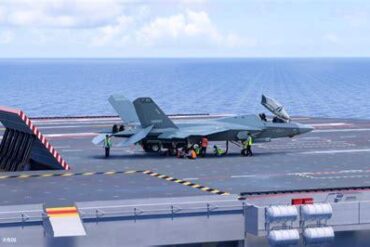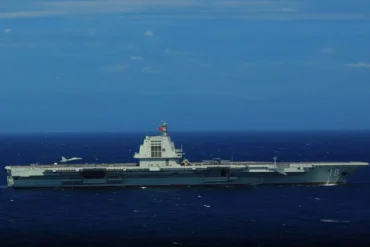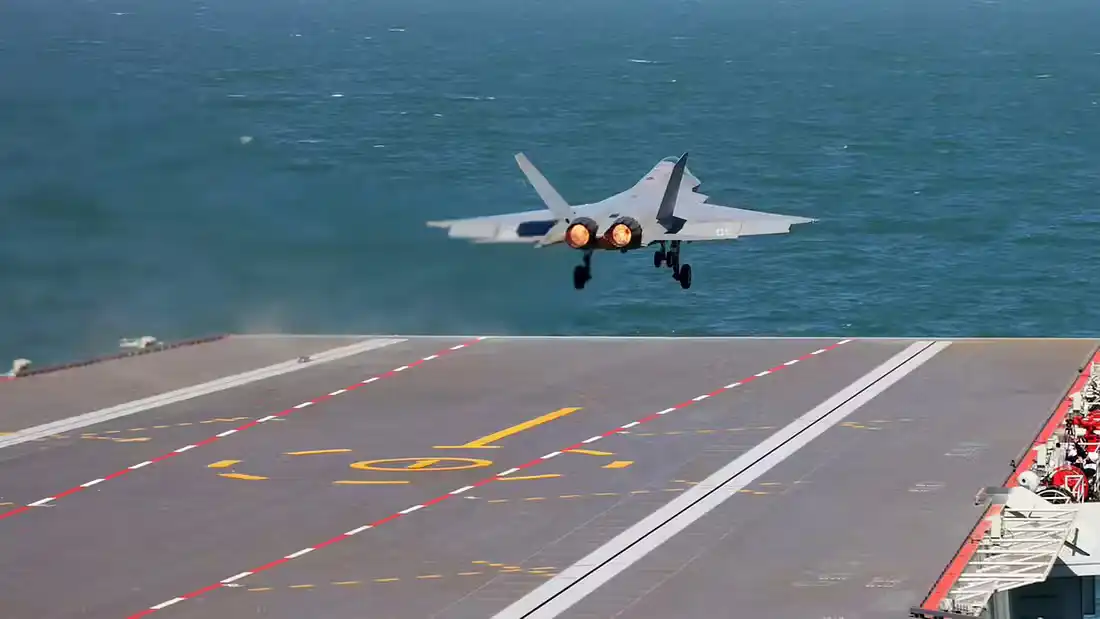
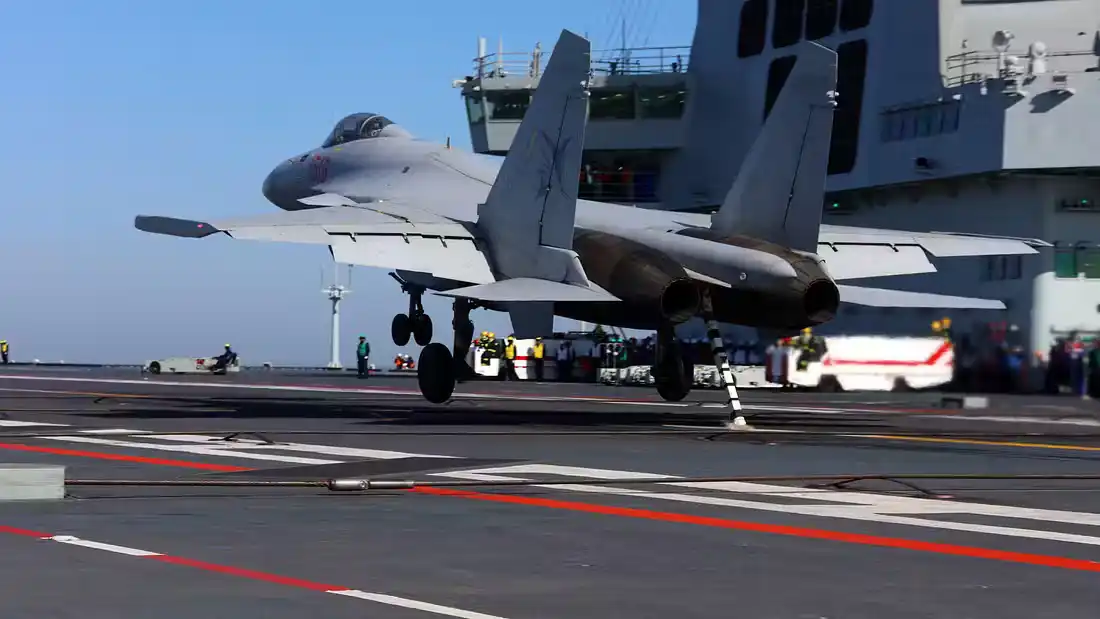
China’s newest aircraft carrier, the Fujian (Type 003), has crossed a historic threshold. For the first time, the People’s Liberation Army Navy (PLAN) has successfully conducted launch and recovery operations with the J-35 fifth-generation stealth fighter, marking the debut of an indigenous stealth jet operating from a Chinese carrier deck. The milestone is not only technological but deeply geopolitical, tilting the already delicate power balance in the South China Sea and the wider Western Pacific.
For decades, naval aviation supremacy in Asia was defined by the U.S. Navy and, to a lesser extent, Japan and India. Now, with the Fujian’s electromagnetic catapult system and its ability to launch stealth aircraft, China is signaling that it can project airpower in ways that will challenge existing naval hierarchies.
Fujian Carrier: A Leap into the CATOBAR Era
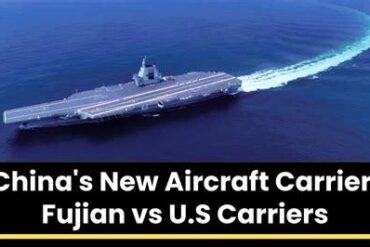
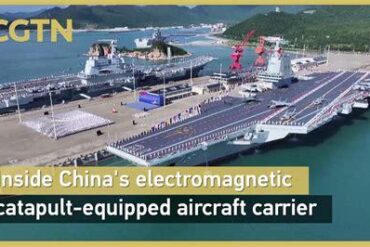
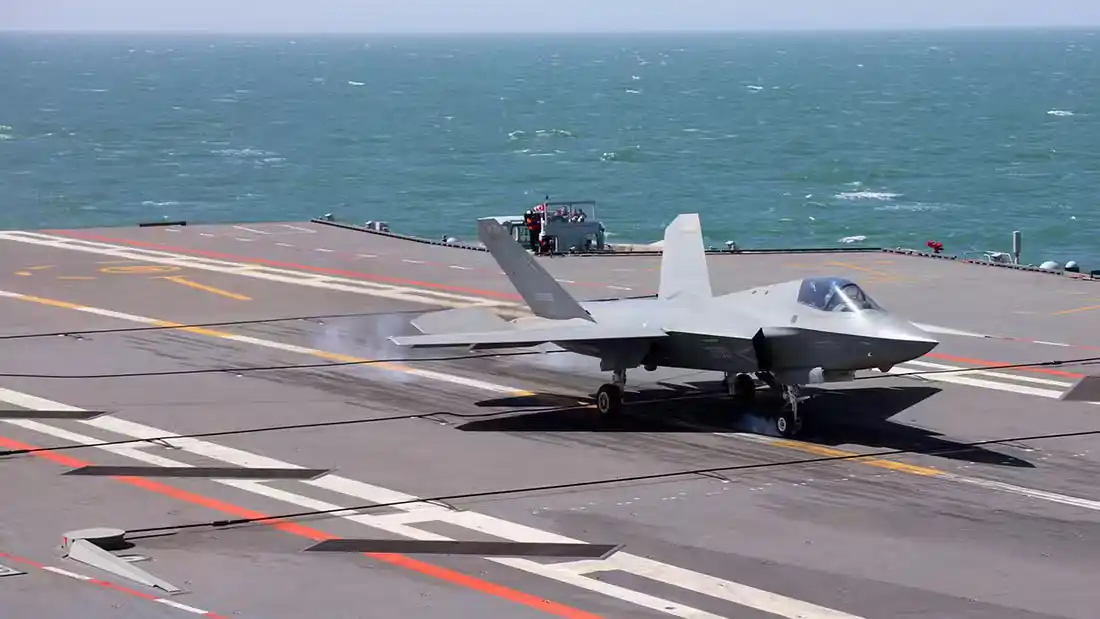
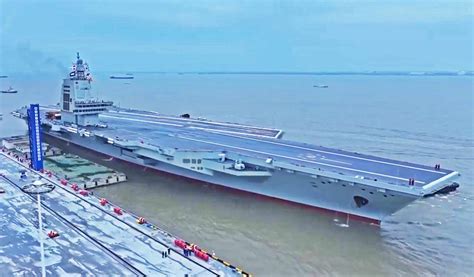
The Fujian represents a break from China’s earlier carriers, the Liaoning and Shandong, which relied on ski-jump designs that limited aircraft payload and launch efficiency. By adopting CATOBAR (Catapult Assisted Take-Off But Arrested Recovery), Beijing has matched the launch technology long monopolized by the United States.
At 80,000 tons, the Fujian is Asia’s largest carrier since World War II, designed to host a diverse and powerful air wing. Its ability to launch aircraft with heavy payloads and fuel loads dramatically expands operational reach. The inclusion of the J-35 stealth fighter, alongside the J-15 multirole jet and the KJ-600 airborne early warning aircraft, transforms it into a floating hub of advanced airpower.
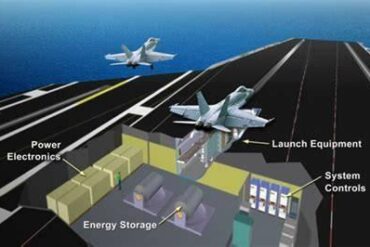
The significance is twofold: China can now field stealth aircraft at sea, and it can deploy them at a tempo and effectiveness previously impossible under ski-jump constraints. The electromagnetic catapult system, second only to the U.S. Navy’s Ford-class carriers, allows near-seamless deck operations, a major advantage in sustained conflict scenarios.
The J-35: China’s Answer to the F-35C
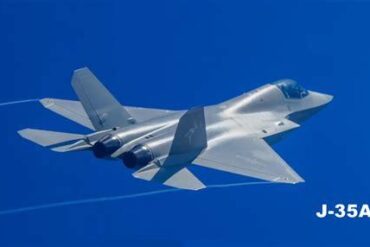
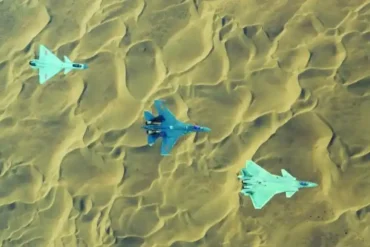
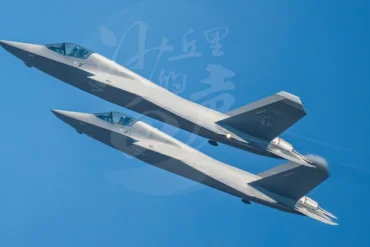
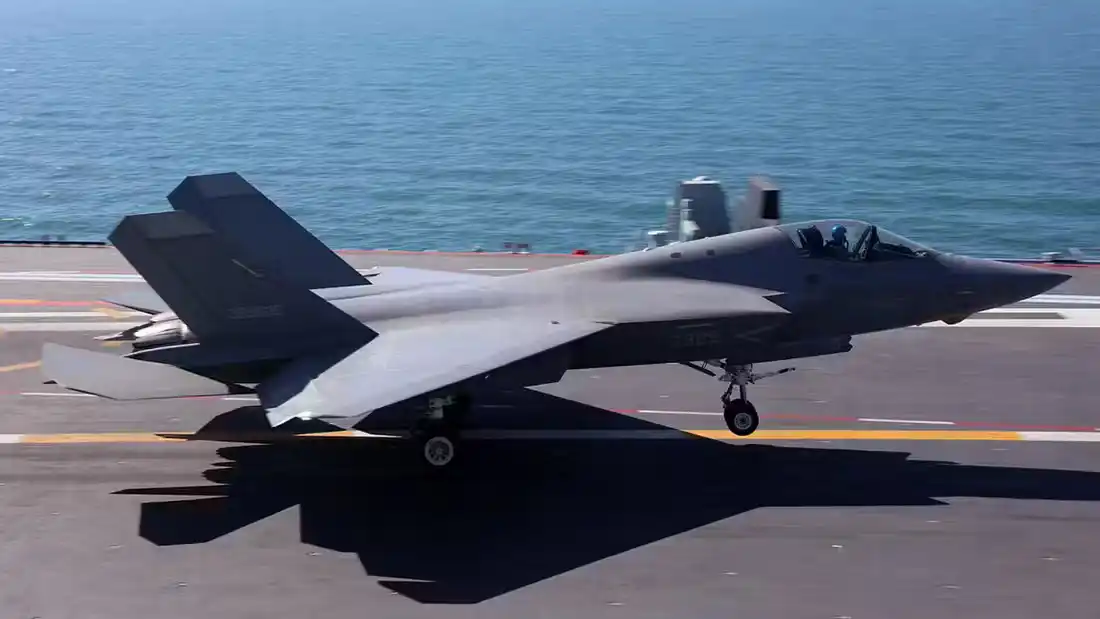
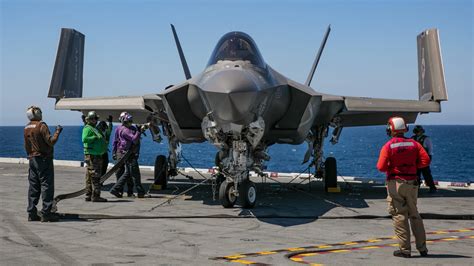
The Shenyang J-35 has long been viewed as Beijing’s direct response to the U.S. F-35C carrier variant. The fighter features stealth shaping, internal weapons bays, and advanced avionics. Its integration on the Fujian signals that China’s naval aviation ambitions are not aspirational—they are operational.
The J-35 is optimized for carrier operations with folding wings, reinforced landing gear, and the ability to carry both air-to-air and precision strike munitions. Reports suggest its range and payload are tailored for extended operations across the first island chain, threatening U.S. bases in Japan, Guam, and allied navies patrolling contested waters.
By deploying stealth aircraft, China gains the ability to penetrate adversary defenses, conduct surveillance with reduced detection, and launch precision strikes deep into rival-held maritime zones. This represents a fundamental shift in deterrence dynamics, where stealth is no longer a Western monopoly.
Strategic Implications in the South China Sea
The Fujian’s operational testing has included transits through the Taiwan Strait and maneuvers near contested areas of the South China Sea, underscoring Beijing’s intent to use the carrier as a visible tool of power projection.
China has already built militarized outposts on disputed reefs and shoals, equipped with runways, radar, and missile systems. The Fujian extends this reach dramatically, allowing Beijing to sustain air operations far from its mainland bases. A carrier group centered on Fujian could rapidly shift to hot zones, reinforce territorial claims, and enforce air defense identification zones (ADIZ) if declared.
For the United States and its allies, the development complicates freedom of navigation operations (FONOPs) and surveillance patrols. It means that any incursion into contested waters could face stealth fighters launched from a Chinese carrier, supported by airborne early warning aircraft, electronic warfare platforms, and long-range strike systems.
Regional Naval Arms Race Accelerates
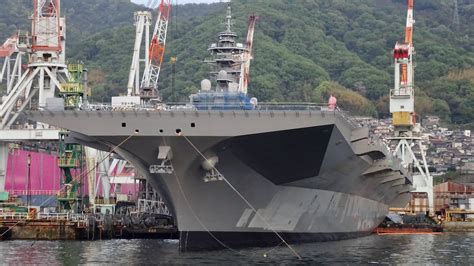
The Fujian’s emergence is already reverberating through Asia. India is deploying Rafale M fighters on its newest carrier, INS Vikrant, while Japan is converting its Izumo-class destroyers to accommodate F-35B short take-off jets. Indonesia, Australia, and even smaller Southeast Asian states are accelerating acquisitions of advanced maritime surveillance and strike systems.
These moves highlight a classic security dilemma: China’s enhancements push neighbors to modernize, which in turn drives Beijing to accelerate its own programs. The Fujian therefore acts not just as a weapon but as a catalyst for a regional arms race, heightening the risk of naval incidents spiraling into crises.
Fujian as a Technology Testbed
Beyond its immediate military role, the Fujian serves as a test platform for China’s future ambitions. The PLAN is expected to integrate unmanned combat aerial vehicles (UCAVs) into carrier decks within this decade. The Type 076 landing helicopter dock under development may be designed primarily for drone operations, further diversifying China’s maritime toolkit.
The Fujian’s electromagnetic catapults are also being used to refine technologies that could later be applied to land-based systems, including drone swarm launches and rapid scramble operations. Such versatility indicates that Beijing sees the Fujian not just as a warship but as a laboratory for next-generation warfare concepts.
Shifting Balance of Maritime Power
China’s ability to field carrier-based stealth aircraft changes the psychological and operational equation in Asia. For decades, Washington relied on carrier strike groups as the uncontested centerpiece of maritime power projection. Now, the Fujian’s presence means that China can contest U.S. dominance in the Western Pacific more credibly than ever before.
This shift is not only military but diplomatic. Smaller Southeast Asian nations—such as the Philippines, Vietnam, and Malaysia—must now calculate their maritime strategies in light of Beijing’s ability to back up claims with stealth-equipped carriers. For countries hedging between U.S. and Chinese influence, the Fujian represents a stark reminder of where the military momentum lies.
International Responses and Escalation Risks
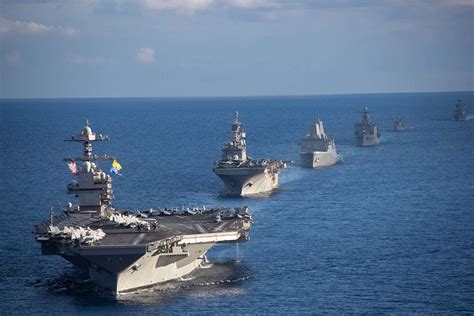
The U.S. and its allies are already recalibrating responses. Carrier strike groups continue to operate in the region, but there is growing emphasis on distributed maritime operations, submarine deterrence, and long-range strike systems like the B-21 Raider stealth bomber. The objective is to complicate China’s carrier operations and deny them uncontested dominance.
However, escalation risks are rising. A PLAN carrier group shadowing U.S. or Japanese vessels could lead to close encounters, particularly if aircraft intercepts escalate into dangerous maneuvers. The presence of stealth fighters further raises the stakes, as detection delays could create split-second decision points with strategic consequences.
Future Outlook: A New Era of Naval Rivalry
The Fujian has not yet been fully commissioned, but its sea trials with the J-35 demonstrate where Beijing’s trajectory is headed. Within the next five years, China is expected to deploy multiple carrier strike groups capable of operating across the second island chain, reaching deep into the Pacific.
The combination of stealth aircraft, catapult systems, and future drone integration positions the PLAN as a peer competitor to the U.S. Navy in Asia. While Washington retains global reach and experience, Beijing is catching up faster than anticipated. The South China Sea is no longer a one-sided theater—it is now contested space where stealth fighters can launch from both Chinese and American decks.
The question is no longer whether China can launch stealth jets—it has already proven it can. The question is how the world will adapt to a new era of naval rivalry, where every move in contested waters carries the shadow of stealth wings overhead.