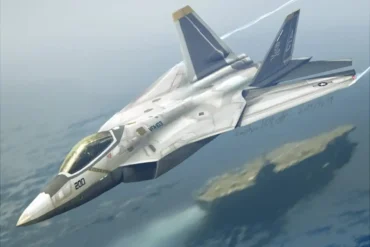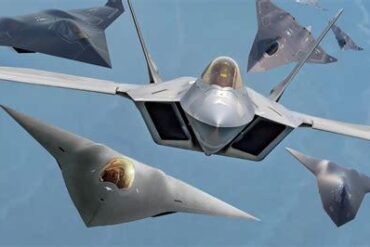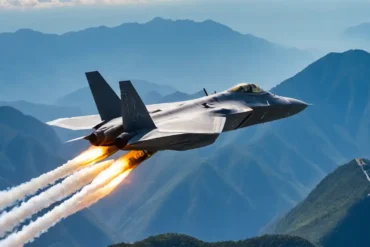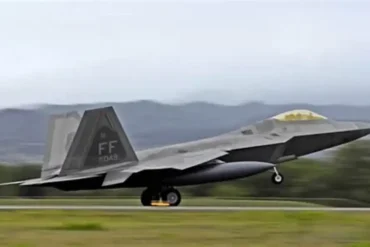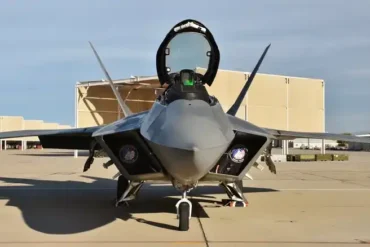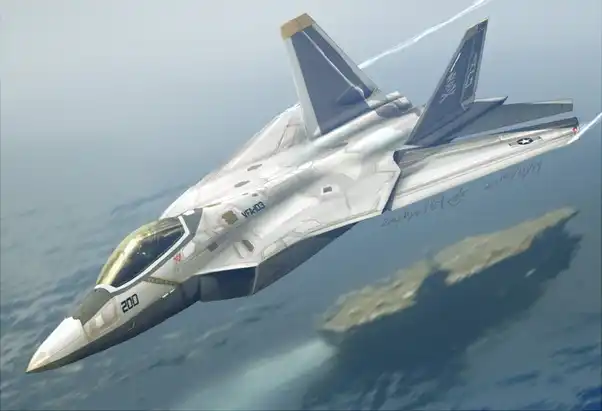
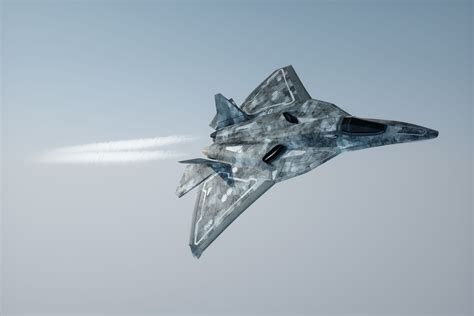
The F-22N “Sea Raptor” was a conceptual carrier-based stealth fighter developed by the United States Navy in the post-Cold War era. Designed as a naval adaptation of the F-22 Raptor, it aimed to replace the aging F-14 Tomcat and counter evolving threats from the Soviet Navy. Despite its promising capabilities, the project was ultimately abandoned due to technical challenges, high costs, and shifting defense priorities.
Background and Strategic Objectives
The Cold War naval environment was dominated by Soviet advancements in anti-ship missiles and long-range bombers, creating an urgent need for the U.S. Navy to develop a stealthy, high-performance carrier-based fighter. The F-22N was conceived as the ideal solution, leveraging the stealth, supercruise, and sensor fusion of the F-22 while being adapted for carrier operations.
Key Mission Objectives
- Air Superiority: Dominating airspace around carrier strike groups
- Multi-Role Operations: Conducting air-to-ground and anti-ship strikes
- Stealth & Survivability: Evading enemy radars and missiles with low observability
- Supersonic Interception: Quickly responding to airborne and maritime threats without afterburner reliance

Engineering Challenges and Design Modifications
Unlike its land-based counterpart, the F-22N required significant modifications to withstand the harsh conditions of carrier-based operations. These modifications introduced engineering complexities that ultimately led to the project’s cancellation.
Structural Reinforcement
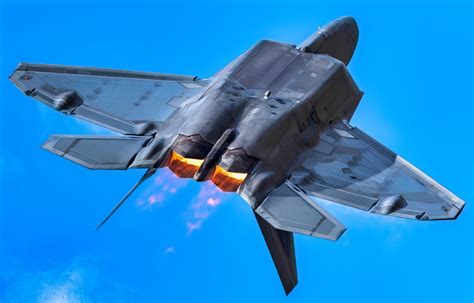
- Stronger Airframe: To endure catapult launches and arrested landings, the fuselage had to be reinforced.
- Tailhook Addition: A robust tailhook was integrated for deck landings.
- Foldable Wings: To optimize carrier deck space, the wings were hinged for folding.
Navalized Flight Enhancements
- Variable-Sweep Wing Concept: Borrowing from the F-14 Tomcat, this feature would improve low-speed carrier landings and high-speed maneuverability. However, it increased weight and radar signature, compromising stealth.
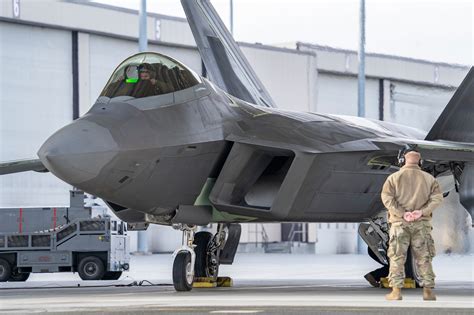
- Enhanced Landing Gear: A reinforced undercarriage was necessary to handle the high-impact stresses of carrier operations.
- Corrosion Resistance: Marine-environmental protections were essential to prevent saltwater corrosion on critical components.
Performance Capabilities
The F-22N was envisioned as a stealth fighter with cutting-edge capabilities for naval warfare.
Supercruise and Speed
- Powered by the F119-PW-100 engines, the F-22N could achieve sustained Mach 1.5+ speeds without afterburners, ensuring rapid threat interception.
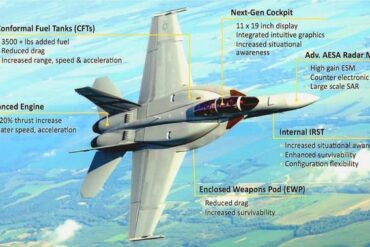
- Potential fuel capacity increases were considered to offset the extra weight and range limitations.
Stealth and Sensor Integration
- Featured the APG-77 AESA radar, providing unparalleled detection range up to 400 km.
- Electronic warfare suites and sensor fusion technology enabled first-look, first-kill capability against enemy aircraft.
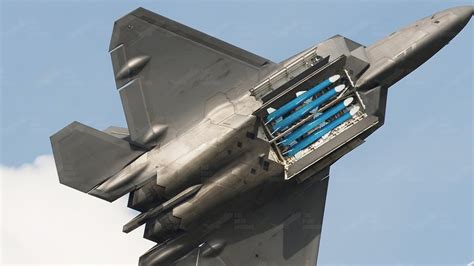
- Internal weapon bays housed AMRAAM missiles, JDAMs, and anti-ship ordnance to maintain low radar cross-section (RCS).
Armament Flexibility
- Air-to-Air: AIM-120 AMRAAM, AIM-9X Sidewinder
- Air-to-Ground: JDAM, Small Diameter Bombs
- Anti-Ship: AGM-84 Harpoon, LRASM
Cancellation and Strategic Shift
Despite its advanced design, the F-22N was never built, facing several key obstacles:
Technical and Financial Constraints
- The variable-sweep wing added weight, mechanical complexity, and reduced stealth.
- Navalizing the F-22 airframe proved exorbitantly expensive, exceeding the budget allocated for carrier aviation upgrades.
Shift to the F-35C Lightning II
- With the 2008 financial crisis, defense budgets were reduced, and priorities shifted to more cost-effective solutions.
- The F-35C, though less capable in air superiority, provided multi-role versatility, stealth, and carrier compatibility at lower costs.
Legacy and Influence on Future Naval Aviation
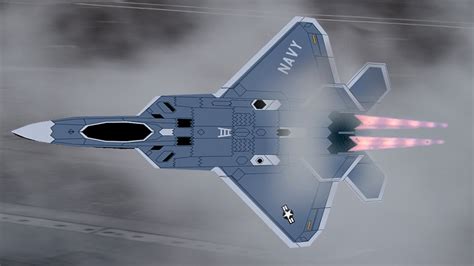
While the F-22N never entered service, its conceptual advancements influenced future carrier aviation technology.
Key Contributions
- Demonstrated the challenges of integrating stealth with carrier operations.
- Reinforced the importance of supercruise and advanced sensor fusion for future fighters.
- Influenced the development of sixth-generation naval aircraft, focusing on stealth, range, and autonomous capabilities.
Conclusion
The F-22N Sea Raptor represented an ambitious attempt to create the ultimate naval stealth fighter. Despite its cancellation, the program provided valuable insights that continue to shape naval aviation strategy. Had it been developed, the F-22N might have significantly altered the trajectory of carrier-based airpower. Instead, the F-35C and future sixth-generation fighters have taken up the mantle, incorporating the lessons learned from the Sea Raptor project.
Frequently Asked Questions
1. Why was the F-22N canceled?
The F-22N was canceled due to high costs, complex naval modifications, and strategic shifts favoring the F-35C Lightning II. Additionally, the challenges of integrating stealth with variable-sweep wings made the design impractical for production.
2. Could the F-22N have been superior to the F-35C?
In air-to-air combat, the F-22N would have likely outperformed the F-35C due to better speed, agility, and stealth. However, the F-35C offers a more affordable, multi-role solution with advanced networking and electronic warfare capabilities, making it a more feasible choice for carrier operations.
3. How did the F-22N influence future naval aircraft?
Although never built, the F-22N’s design philosophy—focusing on stealth, supercruise, and sensor fusion—has influenced the F-35C and upcoming sixth-generation carrier-based fighters, ensuring the U.S. Navy remains dominant in future naval air combat.