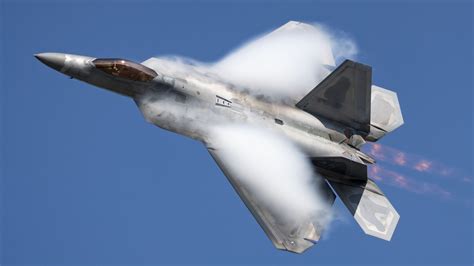
The F-22 Raptor, one of the most advanced fighter jets in the world, is renowned for its exceptional stealth capabilities, supercruise, and advanced avionics. However, one of the most critical aspects of its performance is its payload capacity. This parameter defines how much weaponry the jet can carry and how efficiently it can deliver devastating firepower while maintaining its high-speed, stealthy profile. Understanding the F-22’s payload capacity is essential to grasp the aircraft’s multifaceted role in modern warfare.
The Importance of Payload Capacity
Payload capacity is a crucial factor in the overall effectiveness of a fighter jet. It directly impacts the mission flexibility of the aircraft, allowing it to carry a range of weapons, sensors, and external fuel. For the F-22, payload capacity plays a significant role in its ability to engage in air superiority missions, close air support, and strike operations, all while maintaining the low radar cross-section (RCS) necessary for stealth.
In the case of the F-22, the internal and external payload configurations are balanced to optimize the aircraft’s stealth and combat effectiveness. This balance ensures that the aircraft can carry a variety of munitions without compromising its ability to operate undetected by enemy radar.
Internal Payload Capacity: Stealth Configuration
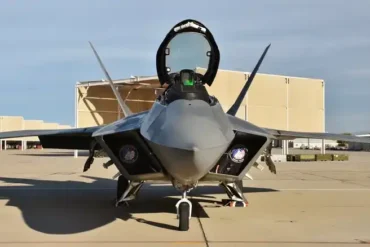
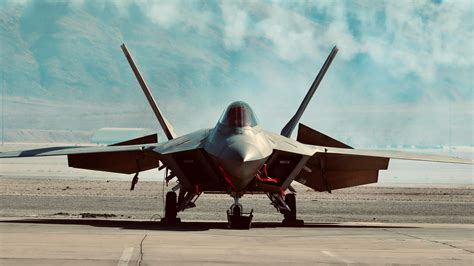
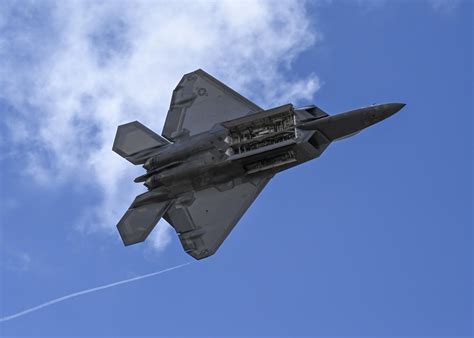
One of the defining features of the F-22 Raptor is its ability to carry weapons internally. This configuration allows the aircraft to maintain its low radar cross-section, which is approximately 0.0001 m², making it extremely difficult to detect by enemy radar. The internal weapon bays are meticulously designed to carry a variety of munitions that are essential for air-to-air and air-to-ground operations.
Main Weapon Bay
The main weapon bay of the F-22 is capable of carrying:
- 6 × AIM-120C AMRAAMs (Advanced Medium-Range Air-to-Air Missiles): These are the primary weapons for medium-range air combat. The AIM-120C is capable of engaging enemy aircraft at ranges of over 50 miles, making it a vital tool for air superiority missions.
- 2 × AIM-9X Sidewinder missiles: The AIM-9X is a short-range, infrared-guided missile designed for close-in dogfighting. Its agility and high-speed capabilities make it perfect for engaging targets at shorter ranges when other missiles are not viable.
The combination of these missiles allows the F-22 to engage enemy aircraft in multiple combat scenarios, from long-range engagements to close-range dogfights.
Side Weapon Bays
The F-22 also features side weapon bays that can carry a variety of precision-guided munitions, including:
- 2 × 1,000 lb GBU-32 JDAMs (Joint Direct Attack Munitions): These are GPS-guided bombs designed for precise targeting of ground-based assets such as enemy infrastructure, radar systems, and high-value targets.
- 8 × GBU-39 SDBs (Small Diameter Bombs): These are smaller bombs with enhanced accuracy, ideal for precision strikes on high-value, small targets. Their reduced size allows the F-22 to carry more munitions without compromising too much on the payload capacity.
The F-22’s internal weapon capacity is primarily focused on maintaining stealth while delivering precision strikes. The total internal payload capacity of the F-22 ranges from approximately 2,300 kg to 2,500 kg (5,070 lbs to 5,510 lbs), which allows it to carry a significant amount of weaponry while maintaining its low radar signature.
20mm M61A2 Vulcan Cannon
In addition to the missiles and bombs, the F-22 is equipped with a 20mm M61A2 Vulcan Cannon, which is mounted internally. This rotary cannon has a magazine capacity of 480 rounds and is designed for close-range combat. The M61A2 is capable of firing at a rate of up to 6,000 rounds per minute, making it ideal for engaging fast-moving targets or for self-defense in situations where missile lock-ons are not possible.
External Payload Capacity: Non-Stealth Configuration
While the F-22’s internal payload is optimized for stealth, there are situations where the jet may need to carry additional munitions or fuel, particularly when engaging in extended combat operations. In these cases, the F-22 can utilize its external hardpoints to carry additional missiles, bombs, or fuel tanks. However, this comes at a cost: the addition of external stores increases the aircraft’s radar cross-section (RCS) and reduces its maneuverability due to the added drag.
Maximum External Load
The F-22 can carry up to 8,000–10,370 kg (17,637 lbs to 22,860 lbs) of external payload. This includes:
- External Fuel Tanks: The F-22 can carry two 600-gallon fuel tanks under its wings to extend its operational range. These tanks are essential for long-duration missions, especially in scenarios where the aircraft needs to operate far from its base.
- Additional Missiles/Bombs: The external hardpoints can be used to carry additional air-to-air missiles, such as the AIM-120D or AIM-9X, or more JDAMs for precision strikes against ground targets.
While the external payload significantly increases the F-22’s overall capacity, the trade-off is evident. The addition of external stores increases the aircraft’s radar visibility, reducing its ability to operate undetected. Furthermore, the added weight and drag can reduce the F-22’s agility and top speed.
Unique Capabilities: Enhancing Payload Effectiveness
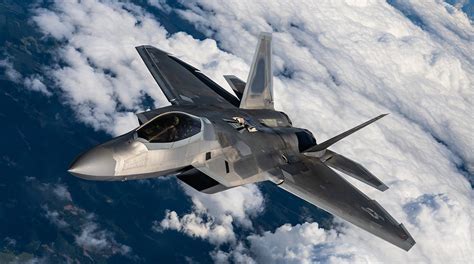
The F-22 Raptor’s design incorporates several unique capabilities that enhance its payload effectiveness in combat scenarios.
Supercruise-Enhanced Munitions
One of the most distinctive features of the F-22 is its ability to supercruise, or sustain speeds greater than Mach 1.5 without engaging afterburners. This capability allows the F-22 to carry out air-to-air and air-to-ground operations while conserving fuel and maintaining a high speed. Supercruise also enhances the range and effectiveness of the F-22’s missiles and bombs.
For example, a JDAM dropped at Mach 1.5 from 50,000 feet can hit a target over 24 miles away. This extended range gives the F-22 the ability to strike at long distances while maintaining a high-speed advantage over enemy aircraft.
Advanced Data Sharing
Another significant capability of the F-22 is its advanced data sharing system. The F-22 is equipped with an IEEE-1394B data bus, which allows for real-time targeting updates between the F-22 and other aircraft or ground assets. This reduces the reliance on external payloads for situational awareness and allows the F-22 to engage targets more effectively, using information from multiple sources.
Summary Table: F-22 Raptor Payload Configurations
| Configuration | Payload Capacity | Key Weapons | Stealth Impact |
|---|---|---|---|
| Internal | ~2,300 kg | AIM-120C, JDAMs, AIM-9X, M61A2 Cannon | Minimal (RCS ≈ 0.0001 m²) |
| External | Up to ~10,370 kg | Fuel tanks, additional missiles/bombs | Severe (Increased RCS) |
Frequently Asked Questions (FAQs)
1. How much can the F-22 carry internally?
The F-22 Raptor can carry approximately 2,300 kg to 2,500 kg of munitions internally. This includes a combination of AIM-120C AMRAAMs, AIM-9X Sidewinders, GBU-32 JDAMs, GBU-39 SDBs, and its internal M61A2 Vulcan cannon.
2. What is the trade-off between internal and external payloads?
The key trade-off is between stealth and firepower. Internal payloads preserve the aircraft’s low radar cross-section (RCS), allowing it to remain undetected. In contrast, external payloads increase the aircraft’s radar visibility but provide additional capacity for missiles and fuel, which is useful for extended missions.
3. How does supercruise impact the F-22’s payload effectiveness?
Supercruise allows the F-22 to fly at speeds greater than Mach 1.5 without using afterburners, which conserves fuel and enhances the range of missiles and bombs. This capability significantly improves the effectiveness of long-range strikes, as the F-22 can hit targets from greater distances while maintaining a speed advantage.