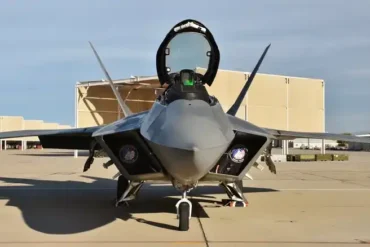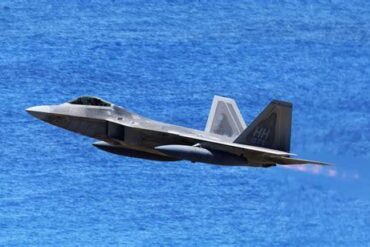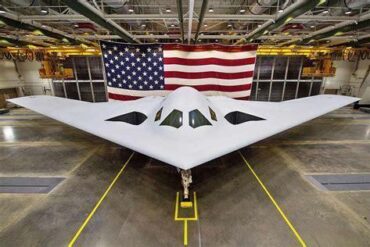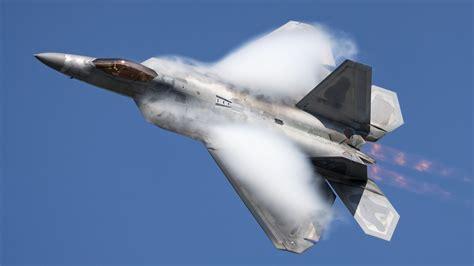
The Lockheed Martin F-22 Raptor remains the United States Air Force’s premier air superiority fighter, even as attention increasingly shifts toward the upcoming Boeing F-47 sixth-generation fighter. While the F-47 promises revolutionary capabilities, the reality of military aircraft development means the Raptor will continue serving as America’s frontline stealth fighter well into the 2030s. Rather than relying solely on expensive hardware replacements, the Air Force is implementing a comprehensive modernization effort that includes an advanced software upgrade for the aircraft’s powerful Pratt & Whitney F119 engines. This digital transformation is improving performance, extending engine life, reducing maintenance costs, and ensuring the Raptor remains combat-ready during one of the most important transitions in modern military aviation.
The engine modernization represents a broader trend across advanced aerospace programs, where software increasingly delivers meaningful performance gains without physically redesigning an aircraft. Modern fighter engines are no longer purely mechanical systems. Instead, they are highly computerized powerplants capable of extracting greater efficiency and improved performance through increasingly sophisticated digital control systems.
Although the F-22 first entered operational service in 2005, its technological foundation was years ahead of its time. Today, that same digital architecture is allowing engineers to unlock additional capability from existing hardware, demonstrating that software has become just as important as metallurgy in determining a fighter’s long-term combat effectiveness.
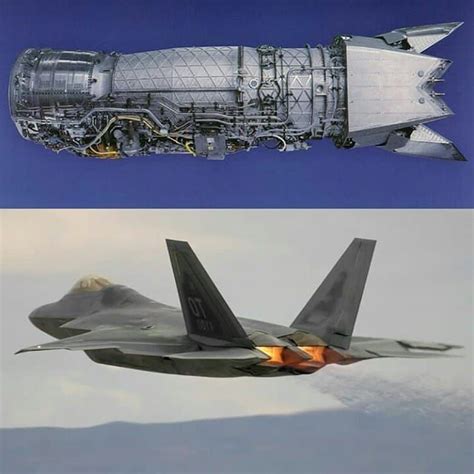
Why The F-22 Will Remain Essential Throughout The 2030s
The Air Force intends for the Boeing F-47 to become America’s next dominant air superiority platform around the beginning of the next decade. However, introducing an entirely new fighter is never a rapid process. Even after initial operational capability is achieved, manufacturers require years to produce sufficient aircraft while pilots, maintainers, and operational units gradually transition to the new platform.
History demonstrates that advanced fighter programs frequently experience schedule adjustments. The F-35 itself required years of development after entering production before many of its promised capabilities became operational. Consequently, military planners cannot simply retire the F-22 once the F-47 appears.
Instead, both aircraft are expected to operate side by side for years. During that overlap, the Raptor will continue serving as one of America’s most capable stealth fighters, making sustained investment in its performance both practical and strategically necessary.
Currently, the Air Force maintains 143 combat-coded F-22 Raptors, supported by a fleet of more than 400 Pratt & Whitney F119 engines. These aircraft collectively represent an irreplaceable component of American air dominance until sixth-generation capabilities mature.
The $1.5 Billion Engine Sustainment Program
Recognizing the importance of maintaining operational readiness, RTX—parent company of Pratt & Whitney—received a contract valued at up to $1.5 billion to sustain the F119 engine fleet.
The agreement focuses on several major objectives:
- Increasing mission readiness
- Reducing long-term maintenance costs
- Improving engine lifespan
- Enhancing engine performance through software
- Using real-time operational data instead of traditional maintenance schedules
Collectively, the F119 fleet has accumulated well over 900,000 flight hours, providing engineers with an enormous database of operational information. Rather than relying exclusively on predetermined inspection intervals developed decades ago, Pratt & Whitney is now leveraging actual engine performance data collected throughout operational service.
This shift represents one of the largest philosophical changes in military engine sustainment since the aircraft entered service.
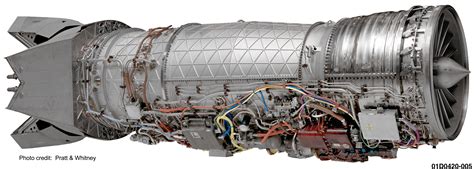
How Software Alone Can Increase Engine Performance
Many people associate performance upgrades with redesigned turbines, larger compressors, or entirely new engine hardware. Modern military engines operate differently.
The F119 utilizes an advanced Full Authority Digital Engine Control (FADEC) system that governs virtually every aspect of engine operation. Rather than relying upon mechanical controls, FADEC continuously calculates fuel flow, airflow, compressor behavior, temperature margins, and thrust requirements thousands of times every second.
By updating the software governing these calculations, engineers can safely adjust operating schedules, optimize performance envelopes, and improve engine responsiveness.
This means the Air Force can increase the aircraft’s overall kinematic performance without replacing the engine itself.
Software enhancements can optimize:
- Fuel scheduling
- Compressor operating margins
- Turbine efficiency
- Throttle responsiveness
- Engine acceleration
- Automatic operating limits
The result is measurable improvements delivered primarily through digital engineering rather than expensive hardware redesign.
Usage-Based Lifing Is Transforming Aircraft Maintenance
Perhaps the most revolutionary aspect of the modernization effort is Pratt & Whitney’s Usage-Based Lifing (UBL) system.
Traditional military maintenance follows conservative inspection intervals based largely on averages. Every engine receives maintenance after predetermined operating hours regardless of how gently or aggressively it has actually been flown.
UBL fundamentally changes this philosophy.
Instead of relying upon assumptions, engineers monitor the actual health of individual engines using real-world operational data collected during every flight.
This information creates a continuously updated digital profile for each engine, allowing maintainers to understand precisely how components are wearing throughout their service lives.
Rather than replacing parts prematurely, technicians can safely maximize component life while identifying issues before they become serious.
The benefits extend across multiple areas:
- Reduced maintenance downtime
- Better aircraft availability
- Lower sustainment costs
- Improved logistical planning
- Extended engine lifespan
- Greater confidence in fleet readiness
Program officials estimate that Usage-Based Lifing could ultimately generate approximately $800 million in lifecycle savings while simultaneously improving operational readiness.
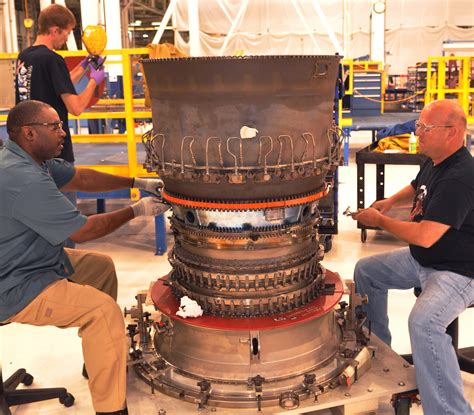
The F119 Remains One Of The World’s Most Impressive Fighter Engines
Even more than two decades after entering service, the F119 remains exceptionally capable.
Each engine generates over 35,000 pounds of thrust, with two engines powering every Raptor.
Among its defining characteristics is the aircraft’s famous supercruise capability.
Unlike earlier fighters that required fuel-hungry afterburners to sustain supersonic flight, the F-22 can cruise above Mach 1 without afterburner, reportedly reaching around Mach 1.5 under supercruise conditions.
This provides numerous tactical advantages, including:
- Greater combat radius
- Reduced infrared signature
- Lower fuel consumption
- Increased mission endurance
- Faster response times
- Better survivability
The F119 also became the technological foundation for the Pratt & Whitney F135, which powers every F-35 Lightning II currently in service.
The Midlife Upgrade Goes Far Beyond The Engines
The engine modernization forms only one component of a much broader effort to ensure the F-22 remains relevant through the 2040s.
Engineers are simultaneously upgrading numerous onboard systems to address emerging threats from increasingly sophisticated adversaries.
Planned improvements include enhanced AN/APG-77 radar capabilities, upgraded electronic warfare systems, new cockpit technologies, improved stealth coatings, passive infrared search-and-track sensors, and more capable networking systems.
These upgrades collectively strengthen the aircraft’s ability to detect, identify, and engage modern threats while reducing its own vulnerability.
Stealth improvements also continue through refinements to radar-absorbent materials, although engineers must work within the structural limitations of an airframe originally designed during the 1990s.
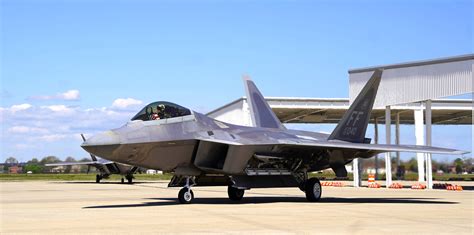
Preparing The Raptor For Collaborative Combat Aircraft
One of the most interesting aspects of the modernization program involves preparing the F-22 for Manned-Unmanned Teaming (MUM-T).
Future Raptors are expected to control autonomous Collaborative Combat Aircraft (CCA), commonly described as loyal wingman drones.
Instead of fighting alone, a single pilot may eventually command multiple autonomous aircraft carrying sensors, electronic warfare equipment, additional missiles, or reconnaissance payloads.
To support this concept, the Air Force is introducing upgraded cockpit interfaces—including tablet-based systems—that simplify control of unmanned teammates during combat missions.
This evolution dramatically expands the combat potential of each individual fighter without requiring additional pilots.
Thermal Management Has Become A New Battlefield
Modern fighter aircraft increasingly resemble flying data centers.
Powerful radars, advanced electronic warfare suites, artificial intelligence processors, encrypted communications, and sophisticated sensors all generate tremendous heat.
Managing this thermal load has become one of the greatest engineering challenges facing fifth-generation aircraft.
The F-22 pioneered many advanced cooling concepts during the 1990s, including liquid cooling systems and extensive use of fuel as a heat sink.
However, every new sensor and electronic upgrade increases the aircraft’s cooling requirements.
Although the Air Force has not publicly disclosed major thermal limitations affecting the Raptor, engineers must carefully balance additional capability against available cooling capacity throughout the modernization program.
This challenge illustrates why software optimization remains so valuable. Improving efficiency without increasing heat production helps preserve precious thermal margins.
The F-47 Will Introduce Adaptive Cycle Engines
While software upgrades continue extending the F-22’s usefulness, the future belongs to an entirely new generation of propulsion technology.
The F-47 is expected to utilize Next-Generation Adaptive Propulsion (NGAP) engines currently under development by both GE Aerospace and Pratt & Whitney.
Unlike traditional turbofan engines featuring two airflow paths, adaptive-cycle engines introduce a third airflow stream.
This additional airflow can be redirected depending on mission requirements.
During high-performance operations, the engine prioritizes maximum thrust.
During long-range cruise, airflow shifts to maximize fuel efficiency.
The concept resembles selecting different gears in an automobile, allowing the engine to optimize itself for changing flight conditions automatically.
These engines also promise significantly greater electrical generation capacity, supporting increasingly demanding sensors, processors, communications equipment, and potentially future directed-energy weapons.
Why Software Is Becoming As Important As Hardware
Perhaps the most important lesson from the F-22 modernization effort is that software has become a strategic capability in its own right.
Decades ago, improving fighter performance typically required new compressors, redesigned turbines, or entirely new engines.
Today, digital control systems allow engineers to unlock additional performance through increasingly sophisticated algorithms informed by enormous quantities of operational data.
Artificial intelligence, predictive maintenance, digital twins, and advanced analytics are transforming military aviation just as dramatically as improvements in materials science.
The F-22’s ongoing engine upgrade illustrates how software can simultaneously increase readiness, reduce costs, improve maintenance planning, enhance aircraft performance, and extend fleet lifespan without fundamentally redesigning the engine itself.
America’s Air Dominance Depends On Continuous Evolution
The F-22 Raptor was originally designed to dominate twenty-first century air combat, yet its relevance continues because the aircraft has never remained technologically static.
Instead of treating the Raptor as a finished product, the Air Force continues refining nearly every aspect of its capability—from engines and sensors to stealth, networking, electronic warfare, and autonomous teaming.
The Pratt & Whitney F119 software update perfectly demonstrates this philosophy. By combining digital engine controls with real-time maintenance analytics, Usage-Based Lifing, and broader midlife modernization efforts, the Air Force is extracting substantially greater capability from an already extraordinary aircraft.
Although the F-47 represents the future of American air superiority, the transition will unfold gradually rather than overnight. Until sufficient sixth-generation fighters enter operational service, the F-22 will continue carrying much of the nation’s air dominance mission.
Far from fading into obsolescence, the Raptor is entering a new phase of its operational life—one in which software, predictive analytics, and intelligent engineering ensure that a fighter conceived during the 1990s remains among the world’s most formidable combat aircraft well into the 2030s and potentially beyond.