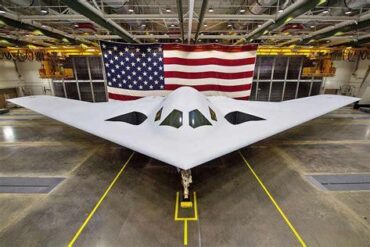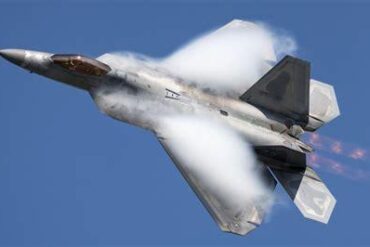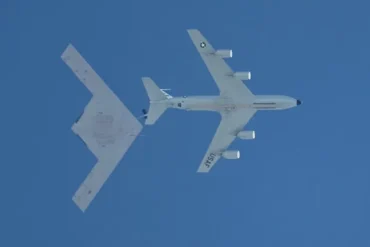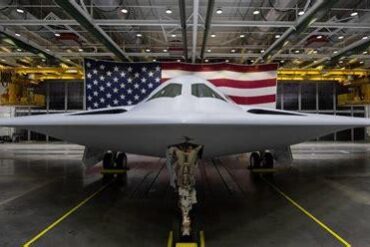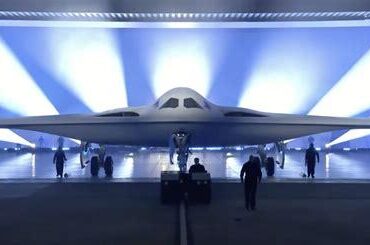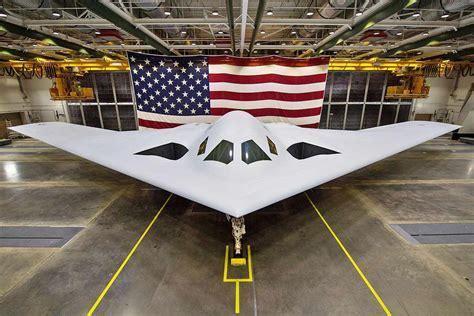
The emergence of the B-21 Raider marks a structural shift in how long-range strike aircraft are conceived, built, and sustained. Rather than evolving from analog roots and later absorbing digital upgrades, this bomber was shaped entirely within a digital ecosystem. That distinction is not cosmetic or incremental; it defines how the aircraft behaves across its entire lifecycle, from design validation to combat employment. In practical terms, the Raider is less a traditional platform with software added on top and more a continuously evolving digital system that happens to fly.
What makes this shift particularly significant is the way it aligns with modern warfare itself. Contemporary conflicts are increasingly defined by contested data environments, rapid electronic disruption, and the constant need for systems that can adapt faster than adversary countermeasures. The B-21 was not simply designed to survive within that reality but to operate as a native participant in it, where software updates, sensor fusion, and network resilience matter as much as aerodynamic efficiency or payload capacity.
Unlike earlier bombers that required decades of incremental modernization, the Raider was structured from the beginning around modular architecture, virtual engineering environments, and digitally mediated sustainment. This approach compresses feedback loops between design, testing, and operational deployment, enabling engineers and operators to interact with the aircraft as a living digital model rather than a static machine.
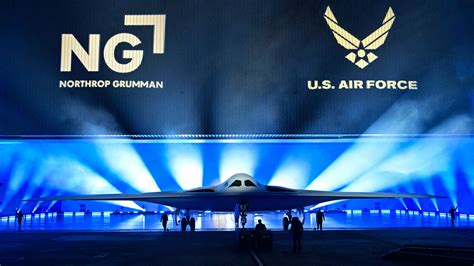
Digital Engineering as the Foundation of the B-21 Raider
The most fundamental difference between the B-21 and its predecessors lies in how it was created. Instead of relying on sequential physical prototyping, engineers constructed a fully integrated digital environment where aerodynamics, structural loads, stealth performance, and mission systems could be tested simultaneously. This digital backbone functioned as a single source of truth, shared across manufacturing teams, software developers, and Air Force operators.
This method dramatically reduced uncertainty during development. Design changes that once required physical rework could be evaluated in simulation almost immediately, allowing engineers to explore hundreds of variations without slowing production. The result is a bomber that entered physical testing with far fewer unknowns than any previous strategic aircraft program. The transition from design to flight testing was not just faster but more coherent, because every subsystem had already been validated within the same virtual environment.
Equally important is how this digital foundation extends beyond development. The same modeling environment used to design the aircraft continues to support updates and modifications throughout its service life. This creates a continuous loop between operational data and engineering refinement, ensuring that improvements can be deployed without disrupting the entire platform architecture. In effect, the B-21 is designed to be perpetually in development, even after entering service.
Software-Defined Mission Systems and Open Architecture Integration
At the core of the Raider’s operational advantage is its software-defined mission system architecture. Unlike legacy bombers where avionics and sensors are tightly bound to specific hardware configurations, the B-21 separates functionality into modular software layers that can be updated independently. This decoupling of hardware and software is what enables rapid capability evolution without requiring extensive physical modification.
In earlier platforms, introducing a new sensor or communication suite often meant long periods of depot-level maintenance and certification. The B-21’s architecture eliminates much of that friction by allowing new capabilities to be integrated through software updates and modular hardware interfaces. This means that as adversary systems evolve, the Raider can adapt its sensing, targeting, and communication capabilities in a much shorter timeframe.
This open architecture also enables more sophisticated mission integration. The aircraft is designed to process and fuse data from multiple onboard and offboard sources, allowing it to function as both a strike platform and a node within a larger combat network. Even when external connectivity is limited, onboard processing ensures continuity of operations, reducing dependence on vulnerable communication channels.
The result is a system that behaves less like a fixed aircraft and more like a distributed computing environment in the sky, where capabilities can be expanded, refined, or replaced through software evolution rather than structural redesign.
Legacy Bomber Constraints in a Pre-Digital Design Era
To understand the significance of the B-21’s architecture, it is essential to consider how earlier bombers were built. Aircraft such as the B-52, B-1B, and B-2 were products of design philosophies rooted in analog engineering and Cold War operational assumptions. Their systems were revolutionary for their time but inherently tied to the technological constraints of their eras.
The B-52, for example, was designed around mechanical navigation systems and pre-planned mission profiles. Its longevity is a testament to its structural robustness, but its digital integration had to be layered on decades after its original design. The B-1B introduced more advanced avionics and early digital controls, yet its architecture still reflects a hardware-centric mindset where upgrades are constrained by physical compatibility.
The B-2 Spirit represented a major leap in stealth and mission capability, but even it was not built with modern open systems architecture in mind. Its mission systems are highly integrated and proprietary, which makes upgrades complex, time-consuming, and dependent on specialized facilities. While each of these aircraft remains formidable, their foundational designs limit how quickly they can evolve in response to new threats.
The B-21 breaks this pattern by eliminating the separation between platform and upgrade cycle. Instead of adapting a legacy structure to accommodate digital systems, it was created as a digital structure from the outset, allowing adaptability to be a core feature rather than an afterthought.
Operating in Contested and Degraded Information Environments
Modern warfare increasingly assumes that connectivity cannot be guaranteed. GPS signals may be jammed, satellite links may be degraded, and data networks may be actively contested. The B-21 is designed specifically to operate under these conditions, relying on onboard intelligence rather than continuous external input.
Through advanced sensor fusion, the aircraft can integrate radar data, electronic support measures, infrared sensing, and preloaded mission intelligence into a unified situational picture. This onboard processing reduces reliance on external networks, allowing the bomber to maintain operational effectiveness even in isolated or heavily disrupted environments.
This design philosophy reflects a broader shift in military thinking. Rather than assuming persistent connectivity, systems are now being built to degrade gracefully. The B-21 embodies this principle by ensuring that critical mission functions remain intact even when communication pathways are compromised. It is not dependent on perfect information flow; it is structured to operate under uncertainty.
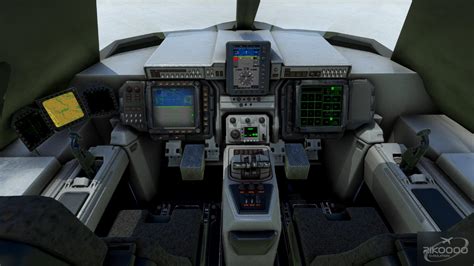
Stealth Integration, Sustainment, and Operational Readiness
Stealth has always been central to the Raider’s identity, but its implementation reflects a more modern understanding of sustainability. Earlier stealth aircraft required intensive maintenance cycles to preserve low observable characteristics, limiting sortie generation and increasing operational overhead. The B-21 is designed to reduce this burden significantly.
Its materials and surface treatments are engineered for durability, enabling repeated operations without the same level of maintenance downtime required by earlier stealth platforms. This is critical for a bomber intended to operate from dispersed or forward locations, where maintenance infrastructure may be limited. The emphasis is not just on being invisible to radar but on remaining operationally available under real-world conditions.
Sustainment is also digitized. Predictive maintenance systems monitor component health continuously, allowing crews to anticipate failures before they occur. This reduces unexpected downtime and improves fleet readiness, creating a more reliable operational tempo. In combination with its modular systems architecture, this ensures that the aircraft remains mission-capable even under high operational stress.
Continuous Evolution and the Future of Digital Airpower
The most transformative aspect of the B-21 Raider is not any single technology but the philosophy of continuous evolution embedded within it. Unlike legacy bombers that remain largely static between major upgrade cycles, the Raider is designed to evolve continuously through software updates, sensor integration, and iterative design refinement.
This creates a fundamentally different relationship between aircraft and operator. The platform is no longer a fixed tool but a dynamic system that responds to changing mission requirements and threat environments in near real time. As adversary capabilities evolve, so too can the Raider’s software, sensors, and mission logic, without waiting for structural redesigns.
In this sense, the B-21 represents the convergence of aerospace engineering and digital systems theory. It reflects a future in which airpower is defined less by physical form and more by computational adaptability. When operational squadrons begin full deployment, the United States will field a bomber that does not simply perform missions but continuously refines how those missions are executed.
The significance of this shift extends beyond a single aircraft. It signals a broader transition toward fully digital warfare ecosystems, where platforms are interconnected, software-driven, and capable of rapid adaptation across multiple domains. The B-21 is not just the next step in bomber development; it is the first step into a new operational paradigm where airpower is defined by code as much as by airframe.