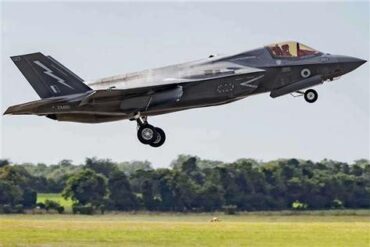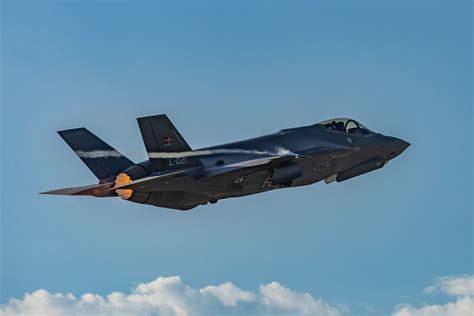
The F-35 Lightning II has long been marketed as the crown jewel of modern airpower—a stealth-enabled, sensor-fused, networked combat aircraft designed to dominate contested skies. Yet behind the dramatic footage of precision strikes over Iran lies a more complicated reality. While these jets have operated aggressively in recent operations, including the high-tempo campaign known as Operation Epic Fury, a critical weakness has quietly emerged: software stagnation that leaves the aircraft operating without its most important upgrades.
This contradiction—between battlefield performance and developmental shortfalls—reveals a deeper issue within the F-35 program. The aircraft may still penetrate defended airspace, but its future edge is increasingly at risk, especially as adversaries modernize at pace.
Combat Success Over Iran Masks a Deeper Technical Gap
In recent weeks, F-35s have played a central role in sustained strike operations over Iranian territory. These missions have targeted air defense networks, missile infrastructure, and command facilities, leveraging the jet’s stealth characteristics to enter contested airspace early in the strike cycle. The aircraft’s ability to act as both a sensor node and precision strike platform has enabled coordinated attacks with other assets, including carrier-based aircraft and electronic warfare systems.
Reports of F-35s flying low over cities such as Isfahan during pre-dawn strikes underscore a striking reality: the aircraft is still capable of operating in environments where traditional fighters would struggle to survive. Its low observable design, combined with advanced targeting systems, continues to deliver real-world results.
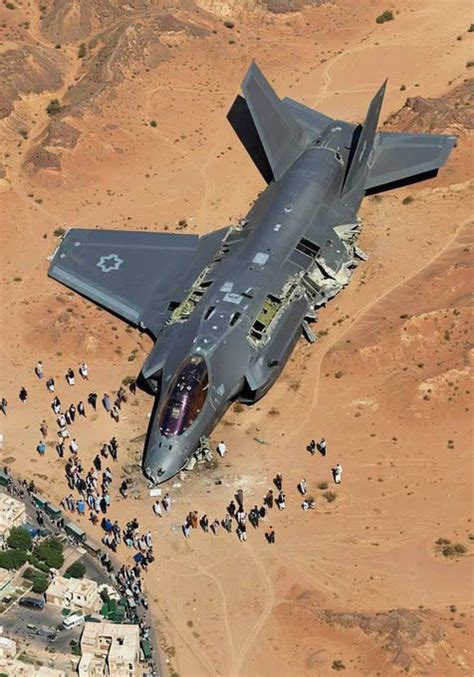
However, these missions are being carried out with a significant limitation. Many of the jets deployed in the region are operating with older TR-2 software, lacking the next-generation Technology Refresh-3 (TR-3) upgrade that is supposed to unlock the aircraft’s full combat potential.
TR-3 Upgrade: The Missing Backbone of Future Capability
The TR-3 upgrade is not a minor software patch—it is a foundational overhaul of the F-35’s internal architecture. Designed to support the ambitious Block 4 modernization program, TR-3 introduces new processing power, expanded memory, and upgraded cockpit displays. In practical terms, it transforms the aircraft into a more capable data-processing hub, enabling faster decision-making and integration of next-generation weapons.
Think of TR-3 as replacing the jet’s internal brain with a vastly more powerful system. The upgrade promises:
- 37 times more processing power
- 20 times greater memory capacity
- Enhanced ability to manage complex sensor data in real time
This leap is essential for handling the growing demands of modern warfare, where aircraft must process massive streams of information from radar, infrared sensors, and networked platforms simultaneously.
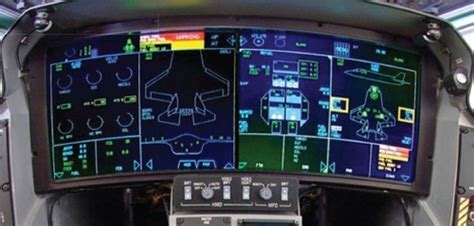
Yet despite its importance, TR-3 has struggled to reach operational maturity. According to Pentagon assessments, the upgrade has been “predominantly unusable” for much of the past year due to stability issues and unresolved deficiencies. This has forced operational units to continue flying with legacy systems, effectively locking the aircraft out of its next-generation capabilities.
Software Stagnation and the Breakdown of Agile Development
The F-35 program was designed around an agile software development model, intended to deliver continuous improvements over time. In theory, this approach allows the aircraft to evolve rapidly, incorporating new capabilities in response to emerging threats.
In practice, however, the system has faltered. Testing reports indicate that the program has failed to meet key performance and scheduling benchmarks, with software development falling behind expectations year after year. Instead of accelerating capability delivery, the process has become bogged down in delays, rework, and incomplete functionality.
This stagnation has real consequences. Without stable TR-3 integration, the broader Block 4 upgrade cannot be fully realized. That means critical enhancements—many of which remain classified—are effectively stalled. These are believed to include:
- Advanced radar systems with improved tracking and resistance to jamming
- Upgraded electro-optical targeting systems
- Enhanced distributed aperture sensing
- Integration of new, more capable weapons
Each of these elements is designed to ensure the F-35 remains viable against increasingly sophisticated adversaries. Without them, the aircraft risks falling behind the very threats it was built to counter.
Operational Reality: Fighting Today with Yesterday’s Systems
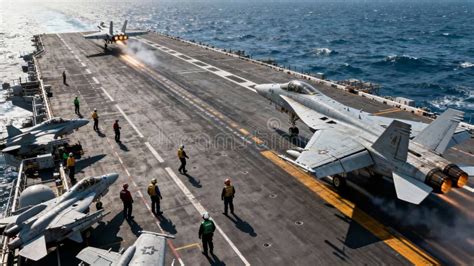
Despite these challenges, F-35s continue to fly combat missions daily. Aircraft deployed aboard carriers such as the USS Abraham Lincoln and USS Gerald R. Ford have conducted persistent strike operations, working alongside Super Hornets and electronic warfare aircraft to maintain pressure on Iranian targets.
This highlights a critical point: the F-35 is still highly capable even in its current configuration. Its stealth, sensor fusion, and networking abilities provide a decisive advantage over legacy platforms.
But the gap between current capability and intended capability is widening. Pilots are effectively operating a system that is incomplete, relying on hardware designed for future software that has yet to fully materialize. This mismatch creates inefficiencies and limits the aircraft’s ability to adapt in real time to evolving threats.
Rising Costs and Expanding Timelines
The delays surrounding TR-3 and Block 4 are not just technical—they are financial. The F-35 program is already the most expensive military aviation project in history, with total lifecycle costs projected to approach $2 trillion. Continued delays in software development threaten to push these costs even higher.
Originally, all Block 4 capabilities were expected to be fielded by 2026. That timeline has since slipped to 2029, with some projections suggesting that even a reduced set of capabilities may not be fully delivered until 2031 or beyond.
These delays create a cascading effect. As upgrades are postponed, older systems must be maintained longer, increasing sustainment costs and complicating logistics. At the same time, adversaries continue to advance, narrowing the technological gap that once defined Western airpower.
Strategic Implications: A Narrowing Edge in Future Conflicts
The situation raises an uncomfortable question: how long can the F-35 maintain its dominance without its intended upgrades? While the aircraft has performed effectively over Iran, that environment does not fully represent the challenges posed by near-peer competitors.
Countries such as China are rapidly advancing their own stealth and counter-stealth technologies, investing heavily in integrated air defense systems, electronic warfare, and next-generation sensors. In such environments, the margin for error shrinks dramatically.
Without TR-3 and Block 4, the F-35 risks entering future conflicts with reduced survivability and effectiveness, particularly against sophisticated detection networks designed to counter stealth platforms.
The Transition Gap: Between Legacy Dominance and Future Warfare
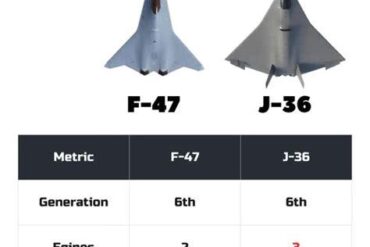
Compounding the issue is the broader transition within U.S. airpower. The gradual retirement of the F-22 Raptor and the long development timeline of next-generation platforms like the F-47 create a capability gap that the F-35 is expected to fill.
This places enormous pressure on the program to deliver its promised upgrades on time. The aircraft is not just another fighter—it is the backbone of allied air forces for decades to come. Any delay in its evolution has ripple effects across multiple services and partner nations.
Conclusion: A Stealth Fighter at a Crossroads
The F-35 remains a formidable aircraft, as demonstrated by its operations over Iran. Its ability to penetrate defended airspace and coordinate complex strike missions underscores its enduring value. But beneath that success lies a growing concern: a critical dependence on software upgrades that are not arriving fast enough.
The TR-3 delay is more than a technical hiccup—it is a warning sign. In an era where software defines combat capability, stagnation in development can erode even the most advanced hardware advantages. The aircraft’s future effectiveness depends not just on its design, but on its ability to evolve at the speed of modern threats.
For now, the F-35 continues to fly, fight, and succeed. But its long-term dominance will hinge on whether its promised upgrades can finally catch up with the demands of the battlefield.