The debate over air base capacity in the UK is not a narrow disagreement between Washington and London. It is a stress test of how modern American power actually works. For decades, the United States has assumed that its closest allies would provide not just symbolic support but concrete operational access when crises erupt. What recent tensions have exposed is that physical airfield capacity does not equal guaranteed political authorization. In strategic terms, that distinction changes everything.
The United Kingdom has long been treated as a secure anchor in the US global basing network. Its geography, infrastructure, and institutional alignment with Washington made it more than a partner; it functioned as a dependable rear-area hub for projecting airpower into Europe, the Middle East, and beyond. When British leaders hesitate to approve offensive operations launched from their soil, the concern in Washington is not emotional. It is structural. It forces planners to reconsider timelines, force distribution, and assumptions that have been baked into doctrine for generations.
Recent friction surrounding potential action against Iran brought this into focus. Reports that London would not automatically authorize the use of Royal Air Force bases for offensive strikes underscored a deeper vulnerability. The United States does not lack aircraft, munitions, or crews. What it cannot manufacture overnight is political consent. And without that consent, even the most capable runway becomes strategically conditional.
Strategic Geography: Why The United Kingdom Remains Central To US Airpower
The United Kingdom occupies a position that military planners quietly adore. It sits between North America and Eurasia, close enough to operational theaters to be effective, yet distant enough from immediate front lines to reduce vulnerability. This geographic balance is rare. It allows aircraft to deploy rapidly toward Europe, the Arctic, or the Middle East without being stationed inside politically volatile regions.
During the Second World War, Britain served as the essential staging ground for Operation Overlord. More than 1.5 million American troops transited through the country before the Normandy landings. That was not a temporary convenience. It cemented a strategic logic that persisted through NATO’s formation and the Cold War. The UK became embedded in US force structure planning as a stable transatlantic bridge rather than a provisional wartime outpost.
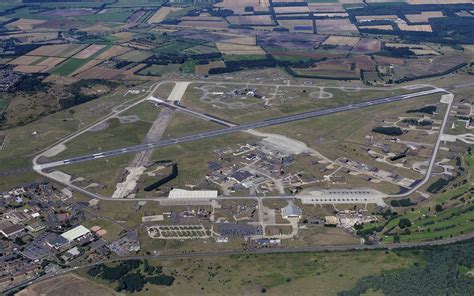
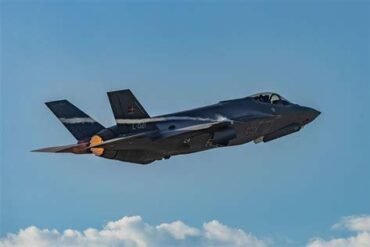
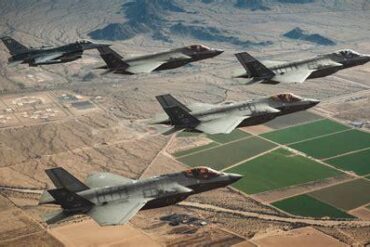
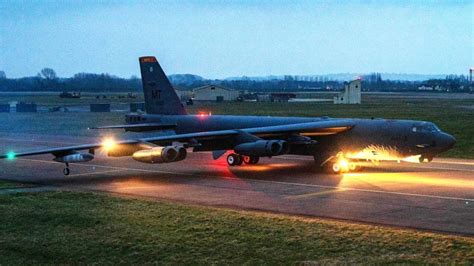
Installations such as RAF Lakenheath, RAF Mildenhall, and RAF Fairford evolved into pillars of American airpower in Europe. Lakenheath hosts advanced fighter aircraft, including F-15s and increasingly F-35s. Mildenhall supports aerial refueling and special operations. Fairford provides a forward operating location for strategic bombers like the B-52 and B-1, with a runway exceeding 10,000 feet—long enough to accommodate fully loaded heavy bombers.
Geography is not just about map aesthetics. It translates directly into combat efficiency. Aircraft launching from the UK can carry heavier weapons loads because they burn less fuel reaching operational zones than aircraft departing from more distant bases. Shorter transit times reduce aircrew fatigue and increase time on station. The strain on aerial refueling fleets decreases. In high-intensity conflict, these margins compound quickly. Every mile saved in transit is fuel that can be converted into endurance or payload.
Because of these advantages, US contingency plans long treated Britain as a secure logistics and command hub. The assumption was not merely that the bases existed, but that they would be available when required. That assumption is now under scrutiny.
Physical Capacity Versus Political Authorization
There is no serious debate about British airfield capability. RAF bases hosting US forces are among the most advanced in Europe. They feature hardened aircraft shelters, secure fuel storage, modern communications networks, and expansive ramp space capable of sustaining high sortie rates. On paper, the capacity is unquestionable.
The constraint lies elsewhere. Under UK law and bilateral agreements, American forces stationed in Britain cannot conduct offensive combat missions without explicit authorization from the British government. That approval is not procedural window dressing. It is a sovereign decision point shaped by legal interpretation, parliamentary pressure, and domestic political risk.
For American planners, this introduces a variable that is difficult to quantify. A base that is physically ready but politically uncertain becomes a conditional asset. In a rapidly unfolding crisis, waiting for approval can alter response timelines. In deterrence theory, time is not neutral. Delays can signal hesitation. Hesitation can invite miscalculation.
The distinction between capacity and access may sound technical, but it strikes at the heart of operational credibility. If adversaries believe that allied political constraints will limit US options, they may calculate that Washington’s response will be slower or narrower than advertised. Deterrence depends not only on capability but on perceived willingness and cohesion.
Domestic Legal And Political Constraints In Britain
British caution does not emerge from thin air. It is rooted in domestic legal frameworks and political memory. Unlike the US executive branch, which possesses broad authority to deploy forces, British governments must navigate a more intricate web of legal interpretation and parliamentary scrutiny.
Allowing foreign forces to launch strikes from UK territory can be interpreted as direct participation in hostilities. That carries implications under international law and potentially exposes the government to judicial review. Since the Iraq War, British leaders have been acutely sensitive to accusations of supporting military action without clear legal grounding. Public opinion remains wary of entanglement in conflicts perceived as discretionary.
In scenarios involving Iran, the risks multiply. Tehran has explicitly warned that countries facilitating attacks could be treated as adversaries. For London, granting basing access is not a symbolic gesture. It could transform the UK into a direct target. Leaders must weigh alliance solidarity against the possibility of retaliation and domestic backlash.
This does not signal a collapse of the US-UK alliance. It reflects a sober calculation about risk tolerance in specific contingencies. Yet from Washington’s perspective, the nuance matters less than the uncertainty it creates. Strategic planning thrives on predictability. Politics thrives on contingency. The tension between those two realities is now visible.
Operational Consequences For US Airpower Flexibility
American air strategy is built on flexibility. The ability to surge forces, shift targets, and sustain operations over extended periods depends on a distributed network of bases. The UK plays a central role in that architecture because it offers proximity without extreme vulnerability.
When access to British bases is restricted or uncertain, alternatives exist but come at a cost. Operating from more distant continental bases increases flight times and reduces on-station endurance. Relying more heavily on aircraft carriers introduces constraints in sortie generation and deck space. Carrier air wings are powerful, but they are not infinite. Weather, maintenance cycles, and competing missions limit sustained output.
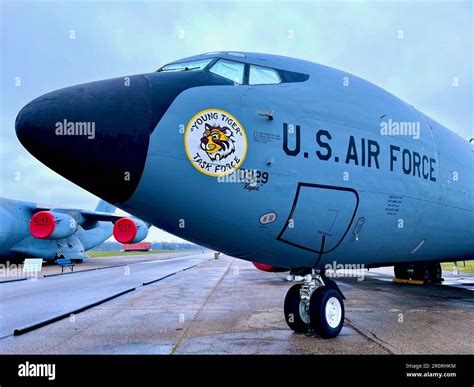
Aerial refueling becomes the chokepoint in such scenarios. Tanker fleets are finite, high-value assets. Every additional mile flown by strike aircraft increases dependence on refueling. Tankers themselves become targets in contested environments. The more a campaign relies on them, the more fragile its operational tempo becomes.
These operational realities do not render US power ineffective. They do, however, complicate rapid dominance in the early phase of conflict. Speed and scale are decisive in shaping adversary expectations. If the opening moves appear constrained, escalation dynamics can shift unpredictably.
Alliance Signaling And The Domino Concern
The United Kingdom’s stance carries symbolic weight beyond its territory. As one of Washington’s closest and most militarily capable allies, British hesitation signals that even the deepest partnerships have boundaries. For other host nations, this can function as precedent.
Governments in Europe and elsewhere hosting US forces face their own domestic pressures. Public opinion, coalition politics, and regional sensitivities influence their decision-making. If Britain can impose limits without severe diplomatic fallout, others may feel emboldened to do the same under similar circumstances.
From a deterrence perspective, alliance predictability is a strategic asset. When adversaries perceive fragmentation or hesitation within allied coalitions, they may gamble that political divisions will slow collective action. The risk is not immediate alliance breakdown. It is incremental erosion of credibility.
The United States has long relied on the assumption that NATO allies, particularly the UK, would provide access in high-stakes scenarios. Repeated instances of conditional approval could force a recalibration of that assumption. The domino effect is not inevitable, but it is a concern that planners must consider.
Long-Term Strategic Adjustments In US Force Posture
Concerns about air base capacity in the UK ultimately point to a broader structural issue in American strategy: global reach is increasingly dependent on host-nation consent. That consent is influenced by domestic politics in ways Washington cannot fully control.
In response, the United States has been investing in capabilities designed to reduce reliance on specific geographic nodes. Long-range strike systems, including next-generation bombers and stand-off munitions, allow operations from greater distances. Expanded carrier aviation offers maritime flexibility. Autonomous and unmanned platforms extend reach without permanent basing.
These adaptations provide strategic independence, but they are not cost-free. Long-range systems require substantial investment and complex sustainment. Carrier operations are resource-intensive. Unmanned platforms depend on secure communications networks vulnerable to disruption. Land-based operations from allied territory remain, in many scenarios, the most efficient option.
The paradox is clear. The United States possesses unmatched military capability, yet its effectiveness is increasingly shaped by political permission. That reality does not diminish American power. It reframes it. Strategy must account not only for hardware and geography, but for democratic decision-making in allied capitals.
The Future Of US-UK Military Cooperation
The US-UK defense relationship remains one of the most integrated in the world. Intelligence sharing, nuclear cooperation, joint exercises, and interoperability run deep. Temporary friction over basing access does not erase decades of institutional alignment.
Yet the episode serves as a reminder that alliances are living systems, not static guarantees. Domestic politics evolve. Legal interpretations shift. Public tolerance for risk fluctuates. Strategic planners must adapt to this dynamic environment rather than assume continuity.
For Washington, that adaptation involves diversifying basing options, strengthening diplomatic engagement, and incorporating political variables more explicitly into contingency planning. For London, it involves balancing alliance obligations with domestic accountability and strategic autonomy.
The concern over air base capacity in the UK is therefore not a narrow technical issue. It is a window into how twenty-first-century power projection actually functions. Military infrastructure can be built, expanded, and modernized. Political consent must be earned, maintained, and renewed.
In an era where rapid escalation can unfold within hours, the difference between available and authorized matters profoundly. The United States worries not because British runways are too short or fuel depots too small. It worries because predictability is the currency of deterrence, and unpredictability—even among friends—changes the calculus of power.